A big blank wall is strangely intimidating. You walk past it every day, you know it needs something, and yet every idea feels either too small, too expensive or too permanent. So it stays white for another year, and the room never quite feels finished.
Large walls are common in Egyptian apartments, especially in newer compounds with open living and dining areas and tall ceilings. They are also an opportunity. A well-dressed large wall becomes the anchor of the whole room, the thing guests notice first and the backdrop for every family photo. This guide gives you a clear method and seven approaches, so you can choose the one that suits your home and budget.
First, Measure and Decide the Job
Before shopping, grab a tape measure. Note the width and height of the wall, and the width of any furniture placed against it: a sofa, a console, a bed or a dining sideboard.
Then decide what job the wall should do:
- Be the focal point of the room, drawing the eye on entry.
- Support the furniture in front of it, framing a sofa or bed.
- Add warmth and softness to a space with hard floors and few textiles.
- Make the room feel bigger or brighter.
- Add storage or display space for books, plants and objects.
Most walls can do two of these at once, but rarely all five. Knowing the priority stops you from buying a piece you love that does not solve the problem.
The Sizing Rules That Fix Most Walls
Nearly every disappointing wall has the same cause: the decor is too small. Use these guidelines as a starting point.
- Above furniture, art or a grouping should cover roughly two-thirds to three-quarters of the furniture’s width.
- On a wall with no furniture, aim to cover around 60 to 75 percent of the visible wall area you are treating, not the whole wall.
- Hang the centre of the arrangement around 145 to 155 cm from the floor, unless it sits above furniture.
- Above a sofa, leave about 20 to 25 cm between the sofa back and the bottom of the frame.
If your budget does not stretch to one huge piece, do not buy a small one. Instead, use one of the grouping strategies below to build scale from several affordable pieces.
Approach One: One Oversized Statement Piece
The simplest, most elegant solution is a single large piece. It looks confident and calm, and it works in minimalist and classic rooms alike.
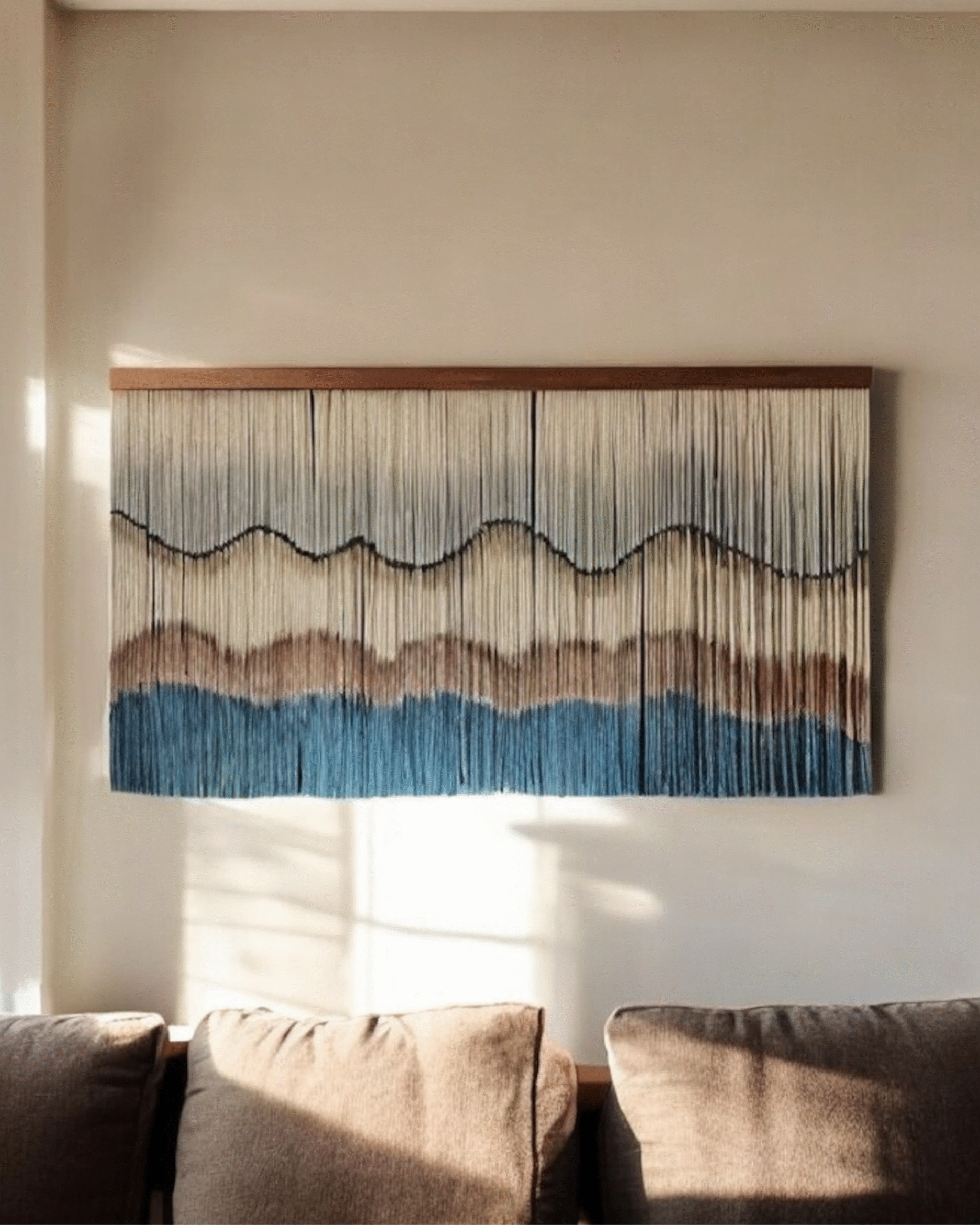
Textile art is a wonderful choice at this scale because it adds softness as well as presence. The Coastal Wave Macrame Wall Hanging Tapestry has the size and texture to hold a large living room wall on its own, and its wave pattern brings a gentle sense of movement. For a deeper bohemian look, the Large Boho Macrame Wall Hanging fills the wall with rich knotted texture.
If you prefer painted art, a large hand-painted canvas becomes an instant focal point. The Crimson Bloom Large Scale Peony Canvas brings bold colour to a neutral room.
Approach Two: The Multi-Panel Set
A set of panels designed to hang together gives you the scale of a large artwork with more flexibility. You can space the panels wider on a long wall or closer together on a shorter one.
The “Aura of Ancestors” 4-Piece Segmented Wooden Wall Art is a strong example: four wooden sections that read as one bold composition. Keep the gaps between panels equal, usually 4 to 6 cm, so the set reads as one piece rather than four separate ones.
Approach Three: The Grid or Cluster
Grouping several smaller pieces is the most budget-friendly way to cover a big wall. There are two main styles.
The Grid
Identical or similar pieces arranged in neat rows look modern and orderly. Sets of round wall plates or matching frames suit this perfectly. A grid of two sets of wall plates, such as the Ocean Treasures Hand-Painted Wooden Wall Plates, can cover a wide wall with a coastal feel.
The Organic Cluster
Mixed shapes and sizes, arranged around a central anchor piece, feel relaxed and personal. Start with the largest piece slightly off-centre, then add smaller pieces outward, keeping spacing consistent. The Verdant Rings Coiled Artisan Wall Tapestry (Set of 4) works beautifully as a cluster, because its round coiled pieces can be arranged in many configurations.
How to plan any grouping:
- Cut paper templates for each piece.
- Tape them on the wall with painter’s tape.
- Live with the layout for a day or two.
- Mark nail positions through the paper, then hang.
Approach Four: Mirrors for Light and Space
A large mirror is a practical answer to a big wall, especially in an apartment with limited daylight. Placed opposite or beside a window, it doubles the light and visually widens the room. A framed decorative mirror counts as art in its own right.
For a long wall, consider a large mirror flanked by two smaller pieces, or a mirror above a console with a lamp and plant on either side. The handmade Bohemian Decoupage Tile Wall Mirror brings colour and craft, so the wall feels decorated even before you add anything else.
Approach Five: Shelves That Display and Store
Floating shelves turn a dull wall into a living display. They suit families who like to change things often, because books, plants and objects can be rearranged in minutes.
A softer option is the Macrame Wall Hanging Shelf, which combines textile art with wooden shelves for small plants or keepsakes. Hang two or three at staggered heights to fill a large wall with texture and greenery.
Shelf styling tips:
- Leave about a third of each shelf empty so it does not look cluttered.
- Mix vertical items (books standing, tall vases) with horizontal ones (books stacked, trays).
- Repeat two or three colours across all the shelves.
- Put heavier items at the ends, near the brackets.
Approach Six: Let Furniture and Plants Do the Work
Not every large wall needs something hung on it. Sometimes the best answer is what stands in front of it.
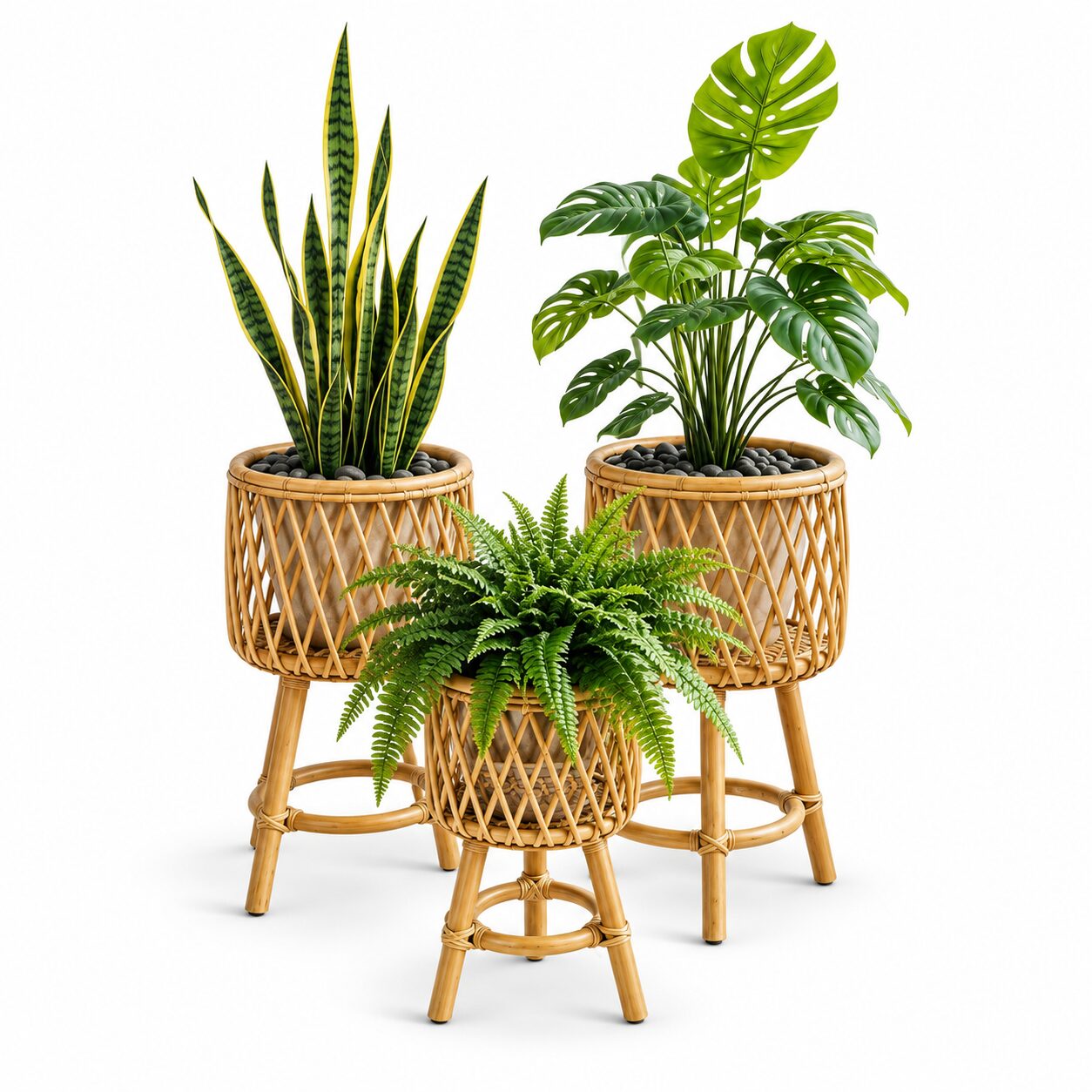
- A tall plant in a corner breaks up a long wall and softens it. The Artificial Banana Tree Plant has broad tropical leaves that cover a lot of wall with one piece.
- A console or bench with a lamp creates a vignette at human height.
- A hammock chair or swing hung in front of a wall makes it a destination rather than a backdrop.
- A large floor vase with dried branches adds height and form.
Combining one hung piece with a plant and a piece of furniture often looks more natural than covering the wall entirely.
Approach Seven: Combine Two Ideas
The most designed-looking walls usually combine two of the approaches above. A few pairings that work well:
- A large textile hanging above a sofa, plus a tall plant at one end.
- A mirror in the centre, flanked by two macrame shelves.
- A cluster of wall plates above a console with a lamp and vase.
- A multi-panel wooden artwork above a bench with baskets underneath.
Lighting the Wall After Dark
A large wall looks completely different at nine in the evening than it does at noon. In many Egyptian homes, the living room is busiest after sunset, when family visits, Ramadan evenings and long conversations happen. If the wall is lit only by a ceiling fixture, textured pieces lose their depth and painted art looks flat.
Add a light source that grazes the wall from the side or below. A floor lamp beside the sofa, a pair of table lamps on a console, or a pendant hung near the wall all work. Side lighting is especially kind to macrame, carved wood and woven pieces, because it throws small shadows that reveal every knot and groove. Choose warm-white bulbs so the wall glows rather than glares, and check the effect at night before you decide the wall is finished.
Matching the Wall to the Room’s Style
The approach you choose should suit the character of the room, not just the size of the wall.
- Modern and minimal rooms look best with one large abstract piece, a clean grid or a single oversized mirror. Keep frames slim and colours restrained.
- Bohemian rooms welcome textile hangings, macrame shelves, woven baskets and a cluster of mixed pieces with plenty of texture.
- Classic rooms suit symmetrical arrangements: a central mirror or painting flanked by matching smaller pieces, often above a console.
- Coastal rooms come alive with wave-patterned textiles, hand-painted wall plates in blues and sands, and natural wood.
If your home mixes styles, as many Egyptian homes do, let the largest piece of furniture in the room guide the choice. A carved wooden sofa calls for something warm and crafted; a low modern sofa suits cleaner lines.
Common Mistakes to Avoid
- Going too small. One small frame on a big wall makes the wall look bigger and emptier.
- Hanging everything too high. Art should relate to the furniture and to people’s eye level.
- Uneven spacing. In a grouping, inconsistent gaps look accidental.
- Ignoring light. A beautiful piece on a dark wall needs a lamp or spotlight nearby.
- Filling every centimetre. Breathing room around a piece is part of the design.
- Skipping the template step. Paper templates prevent extra holes and regret.
Quick Checklist
- Wall and furniture measured
- The wall’s main job decided
- Art covers two-thirds to three-quarters of the furniture width
- Centre of the arrangement near 150 cm, or 20 to 25 cm above furniture
- Grouping spacing consistent
- Paper templates tested on the wall
- One plant or furniture piece added for depth
- Light checked in the evening as well as the day
From Blank to Beautiful
A large empty wall is not a problem to solve quickly; it is the biggest canvas in your home. Measure, decide what you want it to do, then choose one confident approach or combine two. The result is a room that finally feels complete.
Browse handmade wall hangings, wooden wall art, mirrors and shelves at coccarohome.com and find the piece your wall has been waiting for.
Shop the Look
- Coastal Wave Macrame Wall Hanging — EGP 5,300 — A large textile statement that holds a wall on its own.
- Large Boho Macrame Wall Hanging — EGP 8,000 — Rich knotted texture for a deep bohemian look.
- Aura of Ancestors 4-Piece Wooden Wall Art — EGP 16,000 — Four panels that read as one bold composition.
- Crimson Bloom Peony Canvas — EGP 18,000 — A large hand-painted focal point full of colour.
- Verdant Rings Coiled Wall Tapestry (Set of 4) — EGP 3,600 — Flexible round pieces for an organic cluster.
- Ocean Treasures Wooden Wall Plates — EGP 1,600 — An affordable way to build a grid with scale.
- Bohemian Decoupage Tile Wall Mirror — EGP 6,048 — Adds light, depth and handmade colour.
- Macrame Wall Hanging Shelf — EGP 1,728 — Texture and display space in one piece.
- Artificial Banana Tree Plant — EGP 3,692 — Broad leaves that soften a long wall.
- Waves of Earth and Sky Abstract Wall Art — EGP 10,800 — Textured abstract art for modern living rooms.