Think back to the best hotel room you ever stayed in. Maybe it was a sea-view room in Sahl Hasheesh, a boutique place in Zamalek, or a honeymoon suite somewhere far away. You probably cannot remember the exact colour of the walls, but you remember the feeling: walking in, putting your bag down and exhaling. The bed looked impossibly inviting. Nothing was out of place. The light was soft and the air felt still.
That feeling is not an accident, and it is not only about money. Hotel designers follow a short list of principles that can be applied to any bedroom, including a modest one in a busy city apartment. This guide breaks those principles down so you can borrow the calm without the room service bill.
Why Hotel Rooms Feel So Restful
A good hotel room is designed for one purpose: rest. There is no laundry pile, no work desk buried under papers, no exercise bike draped in clothes. Every object has a reason to be there, and the room is edited until only those objects remain.
Three things create most of the effect:
- A dominant, perfectly made bed that is the clear focus of the room.
- A restrained palette, usually neutral, with texture doing the decorative work.
- Layered, low lighting with lamps rather than a single ceiling light.
Everything else in this guide supports one of those three ideas.
Step One: Edit Like a Hotel Housekeeper
Before buying anything, remove everything that does not belong in a bedroom. This is the least glamorous step and the most important one.
Walk around the room with a basket. Collect anything related to work, cleaning, exercise, children’s toys or paperwork. Clear the top of the dresser except for two or three objects. Clear the floor completely. Hotels look spacious partly because you can see so much floor.
If you genuinely have no other space for some of these things, give them closed storage inside the bedroom. A lidded basket or a closed cupboard is fine; an open pile is not. The goal is a room where your eye rests instead of searching.
Step Two: Build the Hotel Bed
The bed is the star. In a hotel, it is made with care every single day, and it is layered so it looks plump and generous.
Start With White or Soft Neutrals
Hotels favour white bedding for a reason. It looks clean, it can be washed hot, and it makes the bed feel fresh. If pure white feels too stark for your taste, choose ivory, soft grey or pale sand. Keep the sheets, duvet cover and pillowcases in the same colour family so the bed reads as one calm block.
Layer for Depth
Hotel beds rarely have just a duvet and two pillows. They build in layers:
- Fitted sheet pulled tight with no wrinkles.
- Duvet in a crisp cover, folded down at the top to show the sheet or the cover’s reverse.
- Sleeping pillows, usually four on a double bed, two stacked on each side.
- Decorative cushions, two or three, in a texture rather than a loud pattern.
- A throw or bed runner across the foot of the bed.
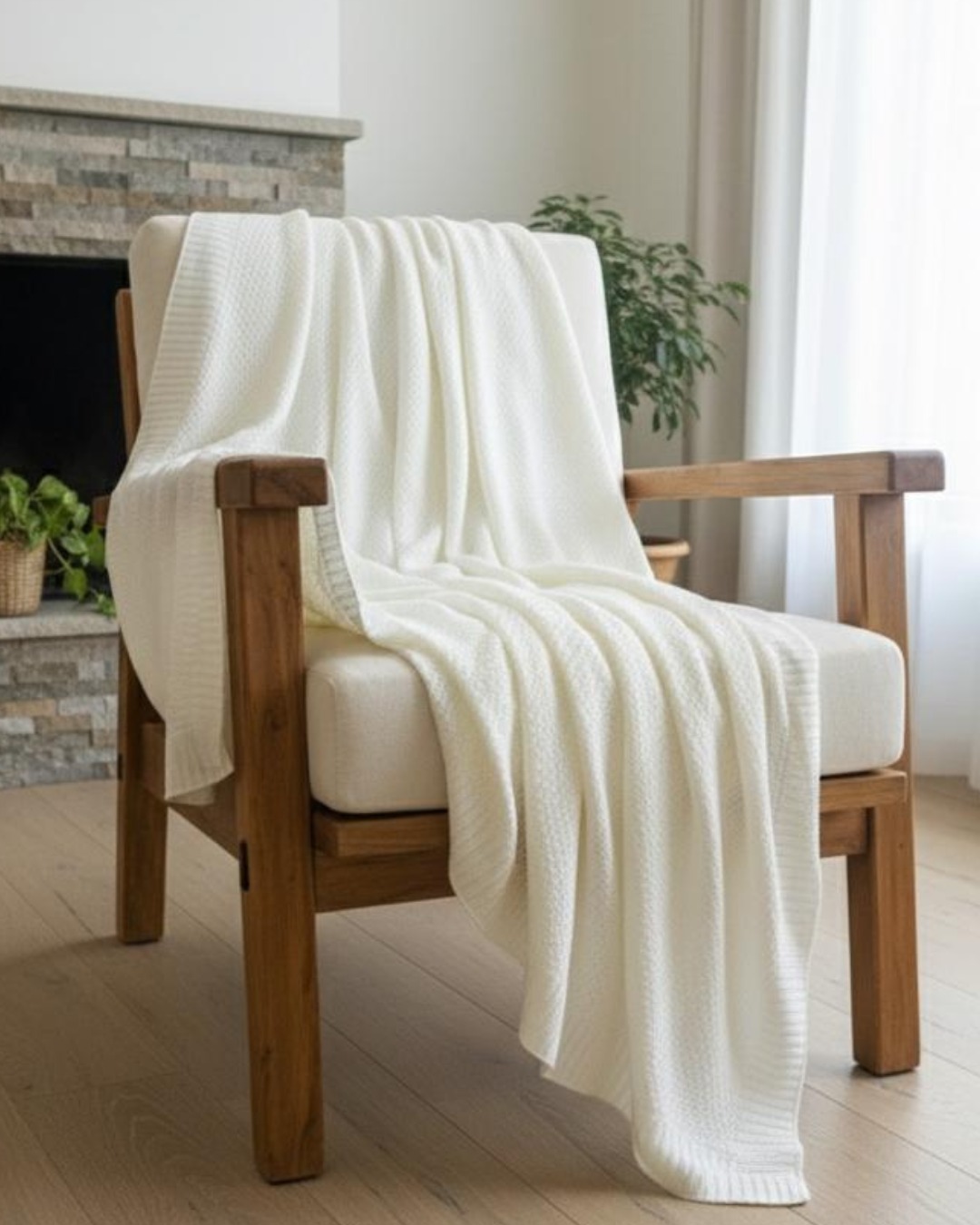
That last layer is the one most people skip, and it is the one that makes a bed look styled. A Handmade Knitted Cotton Waffle Throw folded across the bottom third adds texture against smooth white bedding and is practical too: it is there for a nap or a cool evening without pulling back the whole duvet.
Keep Cushions Quiet
The cushions on a hotel bed are usually restrained: one or two textures, one accent colour at most. A neutral lumbar in front of the sleeping pillows is a classic hotel move. The Boho Neutral Lumbar Cushion suits this perfectly, adding a long horizontal line and an organic texture without introducing a busy pattern. For softness, a Plush White Wool-Style Cushion on each side adds a touch of luxury.
Fillers make a real difference. Hotel cushions look full because they are. A generous Plain White Cushion Filler keeps covers plump instead of sagging by the end of the week.
Step Three: Light It Like a Hotel
Very few good hotel rooms rely on a single overhead light. Instead they use several sources at different heights, each one warm and soft.
- Bedside lamps on both sides, usually matching, with fabric shades.
- A reading light or a lamp angled for reading in bed.
- A soft light elsewhere, such as a floor lamp in the corner or a lamp on the dresser.
Matching lamps on both bedside tables are the single most hotel-like thing you can add to a bedroom. They create instant symmetry and frame the bed. A pair of Antique Folk Art Table Lamps gives the bedside a crafted, characterful look while still keeping the symmetry that makes hotel rooms feel ordered.
Choose warm white bulbs rather than cool white. Cool light keeps you alert; warm light tells your body it is evening. If you can, put lamps on dimmers or use bulbs with lower brightness for night-time.
Step Four: Choose a Calm, Consistent Palette
Hotel rooms usually stick to a tight palette: two or three neutrals, one accent colour, and a lot of natural texture.
A Palette That Works in Egyptian Light
Strong sunlight can make bright colours feel loud by midday, and Cairo dust shows on very dark surfaces. Soft neutrals tend to work beautifully:
- Base: white, ivory or warm off-white walls and bedding.
- Middle tones: sand, taupe, light wood, natural jute.
- Accent: one colour, such as sage, dusty blue, terracotta or charcoal, used sparingly in a cushion, a vase or the rug.
Let Texture Do the Decorating
When colour is restrained, texture becomes essential, or the room feels flat. Combine smooth cotton bedding with a knitted throw, a woven rug, a wooden tray and a matte pottery vase. Each one catches light differently and the room feels rich without a single pattern.
Step Five: Add Hotel Details
The small details are what make a hotel feel considered.
The Rug Under the Bed
A rug that extends at least half a metre beyond the sides of the bed means your feet land on something soft every morning. A neutral, flat-woven rug suits the hotel look; the Off-White Handmade Kilim Rug with Lined Pattern adds a subtle stripe that grounds the bed without stealing attention.
A Bench or Seat
Many hotel rooms have a bench at the foot of the bed or a small stool by the dresser. It gives you somewhere to sit while putting on shoes and stops clothes landing on the bed. The Ottoman Stool works as a footstool, a makeup seat or a small side table depending on where you place it.
A Tray for the Essentials
A tray on the dresser or a side table, holding a carafe, two glasses and perhaps a small plant, is classic hotel styling. The Acacia Wood Serving Tray is the right size for this and protects the furniture from water rings.
One Statement Object
Hotels often have one sculptural piece: a tall vase in the corner, a striking lamp or a single large artwork. A Pearl Pottery White Floor Vase in an empty corner fills the space with quiet presence and needs nothing else around it.
Step Six: Hide Everything Else
The secret of hotel calm is that the clutter is somewhere else. At home, it has to go somewhere in the room.
- Spare blankets and pillows: in a large woven basket at the foot of the bed or in the wardrobe.
- Chargers: routed behind furniture, with only the cable end visible.
- Daily items: a lidded box on the dresser for watches, jewellery and keys.
- Clothes: never on the chair. A hook behind the door or a basket for clothes worn once.
A Woven Rope Basket for Blankets beside the bed holds an extra throw and pillows, and it looks like part of the decor rather than storage.
A Note on Scent and Sound
Hotels think about the senses you cannot see. A faint, consistent scent, such as a vanilla candle lit for a few minutes in the evening and blown out before sleep, makes the room feel familiar each night. Heavy curtains, a thick rug and soft textiles all absorb street noise, which matters in busy neighbourhoods where horns and late-night traffic carry upward.
Step Seven: Make It a Ritual
A hotel room is reset every day by someone else. At home, a five-minute morning routine keeps the look alive:
- Make the bed fully, including the cushions and the throw.
- Clear the bedside tables of glasses and mugs.
- Put clothes away or into the laundry basket.
- Open the curtains and let the room air out.
That is all. Five minutes and the room is ready to welcome you back in the evening.
Common Mistakes
- Too many cushions. Five is generous; nine means you spend ten minutes making the bed every morning.
- Mismatched bedding. Patterned sheets with a different patterned duvet and three colours of pillowcases will never read as calm.
- One light source. A single ceiling light makes any room feel like an office.
- Visible clutter. The most beautiful bedding cannot compete with a chair covered in clothes.
- Thin fillers. Flat cushions and limp pillows undo all your effort.
- Skipping the throw. Without a layer at the foot of the bed, it looks unfinished.
Quick Checklist
- Work, exercise and laundry removed from the bedroom
- White or soft neutral bedding in one colour family
- Four sleeping pillows plus two or three decorative cushions
- A throw folded at the foot of the bed
- Matching lamps on both sides with warm bulbs
- A rug extending beyond the bed
- A tray with water and glasses
- Closed storage for everything else
Check In Every Night
A hotel-style bedroom is really a room that has been edited, layered and lit with care. Start by clearing what does not belong, make the bed the hero, add soft light and natural texture, and keep a short daily ritual. The result is a room you can retreat to every night, not just on holiday.
Find throws, cushions, lamps, rugs and trays to build your own hotel-style retreat at coccarohome.com.
Shop the Look
- Handmade Knitted Cotton Waffle Throw — EGP 1,300 — The finishing layer folded across the foot of the bed.
- Boho Neutral Lumbar Cushion — EGP 1,100 — A quiet, organic lumbar for the front of a hotel-style bed.
- Plush White Wool-Style Cushion — EGP 990 — Soft, luxurious texture against crisp white bedding.
- Plain White Cushion Filler — EGP 162 — Keeps every cushion full and hotel-plump.
- Antique Folk Art Table Lamp — EGP 4,400 — Buy two for symmetrical, hotel-style bedside lighting.
- Off-White Handmade Kilim Rug — EGP 2,344 — A soft neutral landing for your feet each morning.
- Ottoman Stool — EGP 4,104 — Seat, footstool or side table in one small piece.
- Acacia Wood Serving Tray — EGP 594 — Holds a carafe and glasses like a hotel welcome tray.
- Pearl Pottery White Floor Vase — EGP 1,620 — A single sculptural piece for an empty corner.
- Woven Rope Basket for Blankets — EGP 918 — Hides spare pillows and throws in plain sight.