A child’s room has more jobs than any other room in the house. It is a bedroom, a playroom, a reading nook, a homework station and, on some afternoons, a fort. It also has to keep up with a person who changes faster than anyone else in the family. The nursery that was perfect for a newborn feels too babyish for a four-year-old, and the cartoon theme a six-year-old begged for may be embarrassing by ten.
The secret to a kids’ room that works is to separate the permanent from the playful. Keep the big pieces simple and flexible, and let the personality come from accessories that are easy and affordable to swap. This guide shows you how to do that, with practical ideas for storage, soft surfaces, themes and safety.
Plan the Room Around How Your Child Lives
Before you choose a single cushion, think about how the room is used day to day.
- How old is your child now, and how will the room need to change in two or three years?
- Is the room shared with a sibling? Shared rooms need clear zones and duplicate storage.
- Where do toys actually end up? Plan storage where the mess happens, not where you wish it happened.
- Is there a place for quiet time? Reading and winding down are just as important as play.
- How much natural light does the room get? Egyptian summer sun can be intense, so consider where the bed and play area sit relative to the window.
Most Egyptian apartments have compact children’s rooms, which makes smart planning even more important. A clear floor is worth more than one more piece of furniture.
Keep the Foundation Simple
The foundation is the furniture and colours that will stay for years: the bed, the wardrobe, the wall colour and the main rug.
Choose calm base colours
Soft neutrals such as warm white, beige, pale grey or muted sage make a flexible backdrop. They let you add colour through accessories and change the theme later without repainting. If your child wants a bold colour, consider one accent wall or a painted headboard area rather than the whole room.
Invest in quality where it counts
A good mattress, a sturdy wardrobe and a comfortable rug are worth spending on. Themed accessories can be cheaper and changed more often.
Storage That Children Can Actually Use
The biggest challenge in any kids’ room is toys. The solution is storage that is low, open and easy for small hands to use. If putting toys away takes more than a few seconds, it will not happen.
Woven baskets are the hero
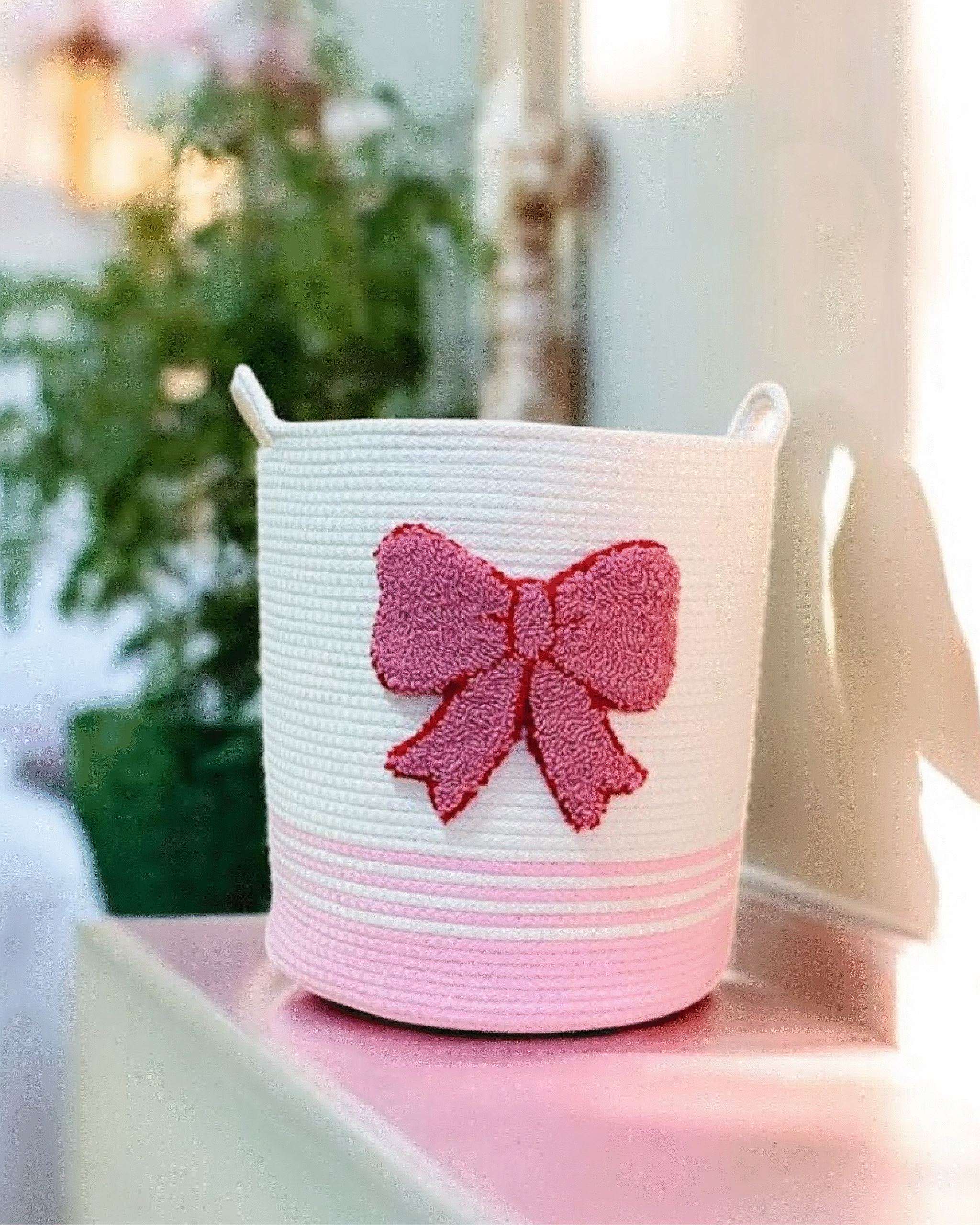
Soft woven baskets are ideal for children’s rooms. They have no sharp edges, they are light enough to carry, and they look far more attractive than plastic bins. A large basket like the Pink Ribbon Cotton Rope Toy Basket can hold stuffed animals and bigger toys, and its playful bow detail makes tidying feel a little more fun.
For a boy’s room or a nautical theme, the Bear on the Ship Jute Toy Basket has an embroidered sailor bear that children love.
Use baskets with lids for small items
Building blocks, puzzle pieces and art supplies need closed storage. The Pink Bow Cotton Rope Basket with Lid keeps small items contained and doubles as a decorative piece on a shelf.
Storage tips that work
- Label baskets with pictures for children who cannot read yet.
- Keep everyday toys at floor level and rotate the rest from a high shelf every few weeks.
- Use a matching set so the room looks calm even when every basket is full.
- Add a hanging organiser behind the door for small accessories, hair clips or socks.
Soft Surfaces for Play and Rest
Children spend a lot of time on the floor, so a soft, washable rug is essential. It also absorbs noise, which neighbours in Egyptian apartment buildings will appreciate.
A play rug with a fun shape turns the floor into part of the decor. The Crochet Bear Play and Nap Rug is made from soft cotton and gives toddlers a cosy spot for play and afternoon naps. For a dinosaur fan, the Dinosaur Crochet Play Mat is a statement piece that doubles as a play mattress.
Cushions and floor seating
Plush cushions make a reading corner irresistible. The Teddy Bear Face Cushion is soft sherpa fleece and gives a bed or reading nook a friendly focal point. A few floor cushions and a low basket of books are all you need for a reading corner.
Nursery Details for the Youngest Children
For babies and toddlers, gentle details matter most. Soft textures, calming colours and a few handmade touches make a nursery feel peaceful.
- A crib mobile gives babies something soothing to watch. The Ocean-Themed Crochet Baby Mobile is handmade with a calm sea theme.
- A light blanket is useful for tummy time and cooler evenings. The Handmade Crochet Baby Blanket is lightweight and breathable, which suits the Egyptian climate.
- A tissue box cover keeps wipes and tissues handy but tidy near the changing area.
- A soft toy that matches the room theme becomes a comforting companion.
Coordinated nursery sets
If you prefer a matching look, coordinated storage sets make it easy. The Bear on the Ship Nautical Storage Set brings together several woven baskets in one theme, so the nursery looks pulled together from day one.
Themes That Grow With Your Child
Themes are fun, but they need to be easy to change. The trick is to keep the theme in accessories rather than in furniture or paint.
Themes that last
Some themes naturally grow with children because they are not tied to a specific age or character:
- Ocean and nautical with blues, whales and sailboats
- Animals and nature with bears, birds and botanicals
- Soft pastels and bows for a gentle, classic look
- Adventure and dinosaurs for curious explorers
How to switch themes easily
When your child outgrows a theme, you only need to change a few items: cushion covers, a blanket, a wall piece and the storage accents. The bed, wardrobe and base colours stay the same. This keeps redecorating affordable and quick.
Make Room for Learning and Creativity
As children grow, their rooms need space for homework, drawing and hobbies alongside play.
A small desk zone
Even a narrow desk against the wall gives an older child a place to focus. Place it near natural light if possible, add a comfortable chair at the right height, and use a small basket or tray to hold pens and pencils. Keep the desk clear of toys so homework time feels different from playtime.
Display their work
Children love to see their drawings and crafts on show. A simple wire with clips, a cork board or a wall shelf turns their art into part of the decor and builds confidence. Rotate the display every few weeks so it stays fresh.
A place for books
A low bookshelf or a basket of books next to a floor cushion encourages reading. Face some books forward so children can see the covers, which makes them more likely to pick one up.
Shared Rooms for Siblings
Many Egyptian families have siblings sharing a room, which brings its own challenges.
- Give each child a zone. A rug, a shelf or a wall section that belongs to each child helps avoid arguments.
- Duplicate the essentials. Matching baskets in different colours let each child keep track of their own toys.
- Choose a shared theme. A neutral theme such as nature or ocean works for siblings of different ages and genders.
- Use bunk beds or a trundle to free up floor space for play.
- Create one shared play area in the middle of the room with a soft rug.
Caring for Kids’ Room Textiles
Children’s rooms see spills, crayons and sticky hands every day. A simple routine keeps textiles fresh.
- Wash cushion covers and blankets every week or two.
- Shake out and vacuum rugs weekly, more often during dusty seasons.
- Spot-clean spills immediately with a damp cloth.
- Air out woven baskets in the shade occasionally.
- Keep a spare set of cushion covers so the room never looks bare on laundry day.
Safety First
Children’s rooms need an extra layer of thought. Before you finish decorating, run through these basics:
- Anchor wardrobes, bookcases and tall furniture to the wall.
- Keep cords from lamps and curtains out of reach.
- Choose rugs with non-slip backing or add a grip pad underneath.
- Avoid small decorative items that toddlers could swallow.
- Keep window areas clear of climbable furniture.
- Use soft, lightweight storage rather than heavy lidded chests that can trap fingers.
- Hang mobiles and wall decor securely, and remove mobiles once a baby can sit up and reach them.
Common Mistakes in Kids’ Room Decor
- Over-theming. A room with character wallpaper, character bedding and character furniture is hard and costly to update.
- Storage that is too high. If a child cannot reach it, they cannot tidy it.
- Too much furniture. Children need floor space to play.
- Forgetting a quiet zone. Every child needs a calm place to read and rest.
- Choosing fabrics that are hard to wash. Spills happen daily. Pick washable cushion covers and rugs.
- Ignoring the child’s opinion. Let older children choose some accessories so they feel ownership of their space.
Quick Checklist for a Kids’ Room
- Neutral base colours that can adapt
- A soft, washable rug
- Low, open storage baskets for toys
- Lidded baskets for small items
- A reading corner with cushions
- A theme expressed through easy-to-swap accessories
- Furniture anchored and cords out of reach
- A quiet, calm zone for rest
Create a Room They Will Love Growing Up In
A kids’ room does not need to be expensive or elaborate. It needs to be safe, easy to keep tidy and full of small details that make your child smile. Build a flexible foundation, choose storage your child can actually use, and let the fun come from handmade accessories that can change as they grow.
Discover our collection of kids’ storage, play rugs, cushions and nursery decor at coccarohome.com, handmade with care and delivered across Egypt.
Shop the Look
- Pink Ribbon Cotton Rope Toy Basket — EGP 1,890 — A generous toy basket with a playful bow detail.
- Bear on the Ship Jute Toy Basket — EGP 1,890 — Nautical storage with an embroidered sailor bear.
- Pink Bow Cotton Rope Basket with Lid — EGP 2,592 — Keeps small toys and art supplies neatly contained.
- Crochet Bear Play and Nap Rug — EGP 4,800 — A soft cotton floor mat for play and naps.
- Dinosaur Crochet Play Mat — EGP 5,800 — A statement play mattress for young dinosaur fans.
- Teddy Bear Face Cushion — EGP 1,300 — A cuddly focal point for a bed or reading nook.
- Ocean-Themed Crochet Baby Mobile — EGP 1,944 — A calming handmade mobile for the nursery.
- Handmade Crochet Baby Blanket — EGP 1,188 — A light, breathable blanket for little ones.
- Bear on the Ship Nautical Storage Set — EGP 2,790 — Coordinated baskets for a pulled-together nursery.
- Soft Plush Teddy Bear — EGP 1,404 — A comforting companion that suits many room themes.