Every year, a week or so before Eid, kitchens across Egypt fill with flour, ghee and powdered sugar. Kahk, ghorayeba, biscuits and petit four come out of home ovens in batch after batch, and someone’s arms ache from kneading and beating by hand. It is usually around this time that people start asking the same question: would a kitchen machine make this easier, and is it worth the money and the counter space?
The honest answer is that it depends on how, and how often, you bake. A kitchen machine is a big purchase and a big object. For some households it becomes the heart of the kitchen. For others it becomes a very expensive shelf. This guide helps you work out which one you will be.
What a Kitchen Machine Actually Does
A kitchen machine, often called a stand mixer, is a powerful motor in a heavy base with a large bowl that the attachments rotate inside. Unlike a hand mixer, you do not hold it. You add ingredients and let it work while you do something else.
Most come with three core tools:
- Dough hook: kneads bread, pizza, feteer and other yeasted doughs.
- Beater (flat paddle): creams butter and sugar, mixes cake batters, cookie doughs and kahk mixtures.
- Whisk: whips cream, egg whites and light sponges.
Some models accept extra attachments for other jobs, but for baking, these three do almost all of the work. Check what is included with any specific model before you buy, as accessories vary.
Where a Kitchen Machine Really Shines
Bread and Yeasted Doughs
Kneading bread properly by hand takes ten to fifteen minutes of real effort. A dough hook does it while you wash up or prepare a filling. If you make your own bread, pizza bases, fino rolls or sweet breads regularly, this alone can justify the machine.
Large Batches for Eid and Ramadan
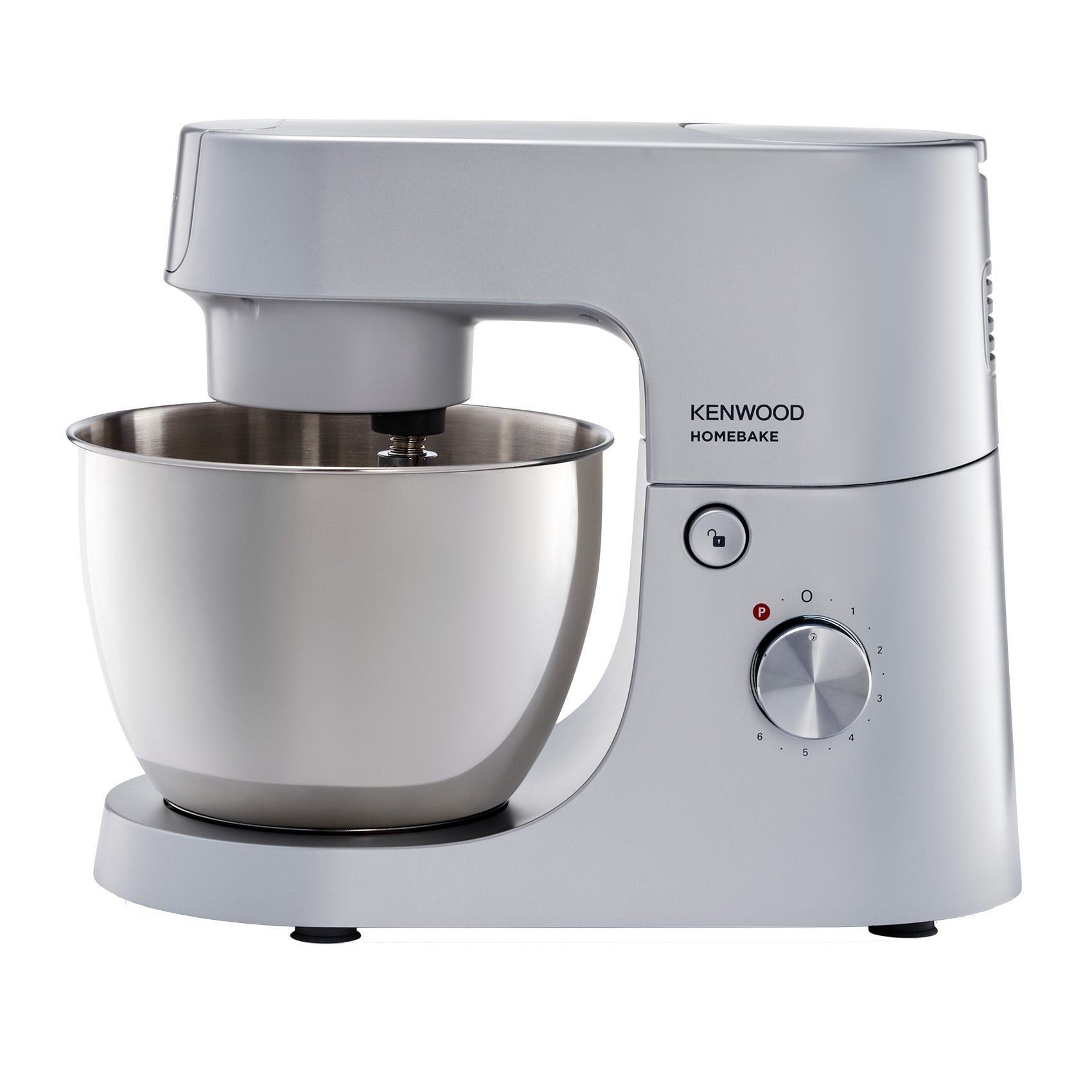
The big advantage of a machine with a large bowl is volume. Making kahk for an extended family, or biscuits to share with neighbours, means working with a lot of dough. A Kenwood HOMEBAKE Stand Mixer with a 5L bowl lets you mix much larger quantities in one go than a hand mixer ever could. Many families bake in two or three big batches rather than seven or eight small ones.
Meringues, Sponges and Whipped Cream
Whipping egg whites to stiff peaks by hand is exhausting. A stand mixer does it consistently and leaves your hands free to add sugar slowly, which is what gives meringues and pavlovas their gloss. Light sponge cakes for birthdays rely on well-whipped eggs too.
Consistency
A machine mixes evenly every time. Butter and sugar get properly creamed, batters have no hidden pockets of flour, and doughs reach the same texture batch after batch. For people who sell baked goods from home, a growing small business in Egypt, consistency matters as much as speed.
Where You Can Do Without One
A kitchen machine is not necessary for every kind of baking.
- Basbousa and many syrup cakes are mixed with a spoon.
- Simple loaf cakes and muffins come together with a whisk or a hand mixer.
- Small quantities of cream or batter are easier with a hand blender and whisk attachment, which cleans faster.
- Pastry like feteer meshaltet relies more on technique and stretching than on long kneading.
If you bake a cake once a month and make kahk once a year, a good hand blender with a whisk, like the Braun MultiQuick 5 with Whisk and Chopper, may be all you need.
The Honest Pros and Cons
Advantages
- Frees your hands and saves real physical effort.
- Handles large batches for family occasions.
- Gives consistent results.
- Makes bread baking far more practical.
- A sturdy machine can last many years with good care.
Disadvantages
- A significant purchase.
- Heavy and large; it needs a permanent home on the counter to be used regularly.
- Takes up space in smaller apartment kitchens.
- Overkill if you rarely bake.
A Simple Test: Will You Use It?
Answer these questions honestly.
- Do you bake at least once or twice a week, or would you if it were easier?
- Do you make bread, pizza or other yeasted dough?
- Do you bake in large quantities for Eid, Ramadan or family gatherings?
- Do you have a spot on the counter where a heavy machine can stay permanently?
- Do you sell, or plan to sell, home-baked goods?
If you answered yes to three or more, a kitchen machine is very likely worth it. If you answered yes to one or none, invest in a good hand blender with a whisk and spend the difference on quality bakeware and ingredients.
Choosing the Right Kitchen Machine
Bowl Size
Bowl capacity decides how much you can make at once. A 5L bowl suits most families and handles generous Eid batches. Larger bowls are useful for very big quantities or small home businesses. The Kenwood Electric Stand Mixer KHH05 in white has a 5L bowl and six speeds, which is a practical range for cakes, biscuits and doughs.
Motor Power
Heavier doughs, like bread or stiff biscuit doughs, need a strong motor. Wattage is one indication, though build quality matters too. The Kenwood Chef XL Kitchen Machine, with a 1,200W motor, comes from Kenwood’s well-known Chef line and is aimed at people who bake often.
Speeds
More speeds give finer control: slow for folding in flour so it does not fly everywhere, fast for whipping. Most bakers rely on a few speeds again and again, so do not pay extra only for a higher number.
Weight and Stability
A heavier machine stays put when kneading stiff dough. Lighter machines can walk across the counter if overloaded. Place your machine on a stable, flat surface and never leave it running unattended with heavy dough.
Cleaning
Check whether the bowl and tools are easy to remove and wash. A splash guard, if included, saves cleaning flour off the walls.
Kitchen Machine or Food Processor?
People often confuse the two, and some product names add to the confusion. The difference is in the movement. A food processor spins a blade fast at the bottom of a wide bowl to chop, slice and grate. A kitchen machine moves its tools slowly around a deep bowl to mix, knead and whip. A food processor can bring a small pastry dough together, but it cannot knead bread for ten minutes or whip a big bowl of cream to soft peaks.
If you bake, the kitchen machine is the tool you want. If you mostly prepare salads, fillings and taameya, a food processor makes more sense. Some keen home cooks own both, and they rarely overlap.
Caring for Your Machine
- Wipe the base with a damp cloth after each use; flour gets everywhere.
- Wash the bowl and tools promptly, before dough dries hard on them.
- Check the manual before putting any tool in a dishwasher; some finishes do not like it.
- Store attachments together so the whisk does not end up lost at the back of a drawer.
- Cover the machine with a cloth between uses to keep dust off, especially in dusty months.
Tips for Getting the Most From Your Machine
- Keep it on the counter. An appliance that has to be lifted out of a cupboard every time is used far less than one that stays ready.
- Start slow. Always begin on the lowest speed when adding flour or sugar, then increase.
- Do not overload. Respect the maximum dough quantity in the manual; overloading strains the motor.
- Scrape the bowl. Stop the machine and scrape down the sides once or twice for even mixing.
- Rest the motor. For long kneading sessions, follow the manual’s guidance on run times.
- Bring ingredients to room temperature. Butter and eggs cream and whip far better when not straight from the fridge. In Egyptian summers this takes minutes; in winter, plan ahead.
- Unplug before changing tools. Always.
Making Space for a Baking Corner
A kitchen machine works best as part of a small baking station. Gather everything you need in one zone so baking feels easy rather than a production.
- Keep flour, sugar and baking powder in lidded containers on a shelf above the machine.
- Store cutters, kahk moulds and piping tips together in a Jute Storage Basket with Wooden Lid so they do not scatter through drawers.
- Use a large tray to cool and carry biscuits. An Acacia Wood Serving Tray doubles as a pretty way to present kahk and biscuits to guests.
- Keep freshly baked bread covered on the table with a Handwoven Food Cover with Dome Design, which looks lovely and keeps flies away in warm weather.
Common Mistakes to Avoid
- Buying for occasional baking. If you bake twice a year, the machine will mostly sit idle.
- Storing it out of reach. A heavy machine in a high cupboard rarely comes down.
- Starting on high speed. Flour clouds and splattered batter follow.
- Ignoring dough limits. Overloading can damage the motor.
- Using cold butter. It will not cream properly, no matter how powerful the machine.
- Choosing by colour alone. Bowl size, motor and stability matter more.
Quick Checklist
- I bake often enough to justify the machine
- I make bread or large batches for occasions
- I have a permanent counter spot near a socket
- I have chosen a bowl size that suits my batches
- I know which attachments are included
- I have a plan for storing moulds, cutters and ingredients nearby
Bake More, Knead Less
A kitchen machine is worth it when it turns baking from an occasional effort into a regular pleasure. If your family’s Eid tradition involves mountains of kahk, if fresh bread is something you love making, or if you are building a small home baking business, it will repay its place on your counter many times over. If you bake only now and then, a good hand blender with a whisk will serve you well, and you can always upgrade later.
Explore kitchen machines and baking essentials at coccarohome.com.
Shop the Look
- Kenwood Chef XL Kitchen Machine — EGP 40,949 — A 1,200W machine from Kenwood’s Chef line for frequent bakers.
- Kenwood HOMEBAKE Stand Mixer — EGP 14,624 — A 5L bowl and 1,400W motor for generous Eid batches.
- Kenwood Electric Stand Mixer KHH05, White — EGP 15,209 — Six speeds and a 5L bowl in a fresh white finish.
- Braun MultiQuick 5 with Whisk and Chopper — EGP 5,615 — For occasional bakers who need a whisk for small batches.
- Acacia Wood Serving Tray — EGP 594 — Cool, carry and present kahk and biscuits beautifully.
- Handwoven Food Cover with Dome Design — EGP 1,059 — Keeps fresh bread and sweets covered on the table.
- Jute Storage Basket with Wooden Lid — EGP 1,188 — Stores moulds, cutters and piping tips in one place.
- Woven Jute Snack Serving Bowls, Set of 5 — EGP 1,134 — Serve biscuits and petit four to guests in handmade bowls.
- Heritage Wood Raw Edge Cutting Board — EGP 1,000 — A rustic board for slicing and serving homemade bread.