Some materials shout. Leather speaks quietly, then gets better with every passing year. A single leather detail, a handle on a basket or a strap on a placemat, can make an ordinary object feel tailored and considered. It adds a hint of luxury without demanding attention.
You do not need a leather sofa to enjoy the material. In fact, small leather accents are often the smartest way to use it, especially in warm climates like Egypt’s. This guide explains what to know about leather, where small leather touches work best and how to look after them.
Why Leather Works in a Home
Leather brings qualities that few other materials offer together.
- Warmth: its colour and surface soften rooms full of tile, glass and metal.
- Structure: leather holds shape, so it is perfect for handles, straps, trims and covers.
- Durability: good leather withstands years of handling.
- Patina: leather develops a soft sheen and deeper colour over time, telling the story of its use.
- Contrast: it pairs beautifully with soft, natural fibres like jute, cotton and rattan, sharpening their rustic look.
That last point is why leather has become such a favourite partner for handwoven decor. A woven basket with leather handles reads as both handmade and refined.
A Little Leather Background
Egypt’s Leather Heritage
Leatherwork has deep roots in Egypt. Ancient Egyptians tanned hides for sandals, bags and furniture, and the trade has continued for centuries in Cairo’s historic tanning district and the workshops supplying markets like Khan el-Khalili. Leather poufs, bags and camel-leather goods remain familiar sights for Egyptians and visitors alike.
How Leather Is Made
Raw hides are preserved through tanning, which stops them from decaying and makes them soft and usable.
- Vegetable tanning uses natural tannins from bark and plants. It is slow and produces firm leather that develops a rich patina.
- Chrome tanning is faster and creates softer, more water-resistant leather in a wide range of colours. It is the most common method worldwide.
Common Leather Grades
You will often see these terms on leather goods:
- Full-grain: the top layer of the hide with its natural surface intact. The most durable and the best at developing patina.
- Top-grain: the top layer, lightly sanded and finished for a more uniform look.
- Split or suede: lower layers of the hide, softer and napped.
- Bonded leather: leather scraps bonded together with other materials. Less durable.
- Faux or vegan leather: synthetic materials designed to look like leather.
When a product is described simply as leather, the specific grade is not always stated. For small accents like handles and trims, what matters most is that the piece is well stitched and attached.
Where Small Leather Accents Shine
On the Coffee Table
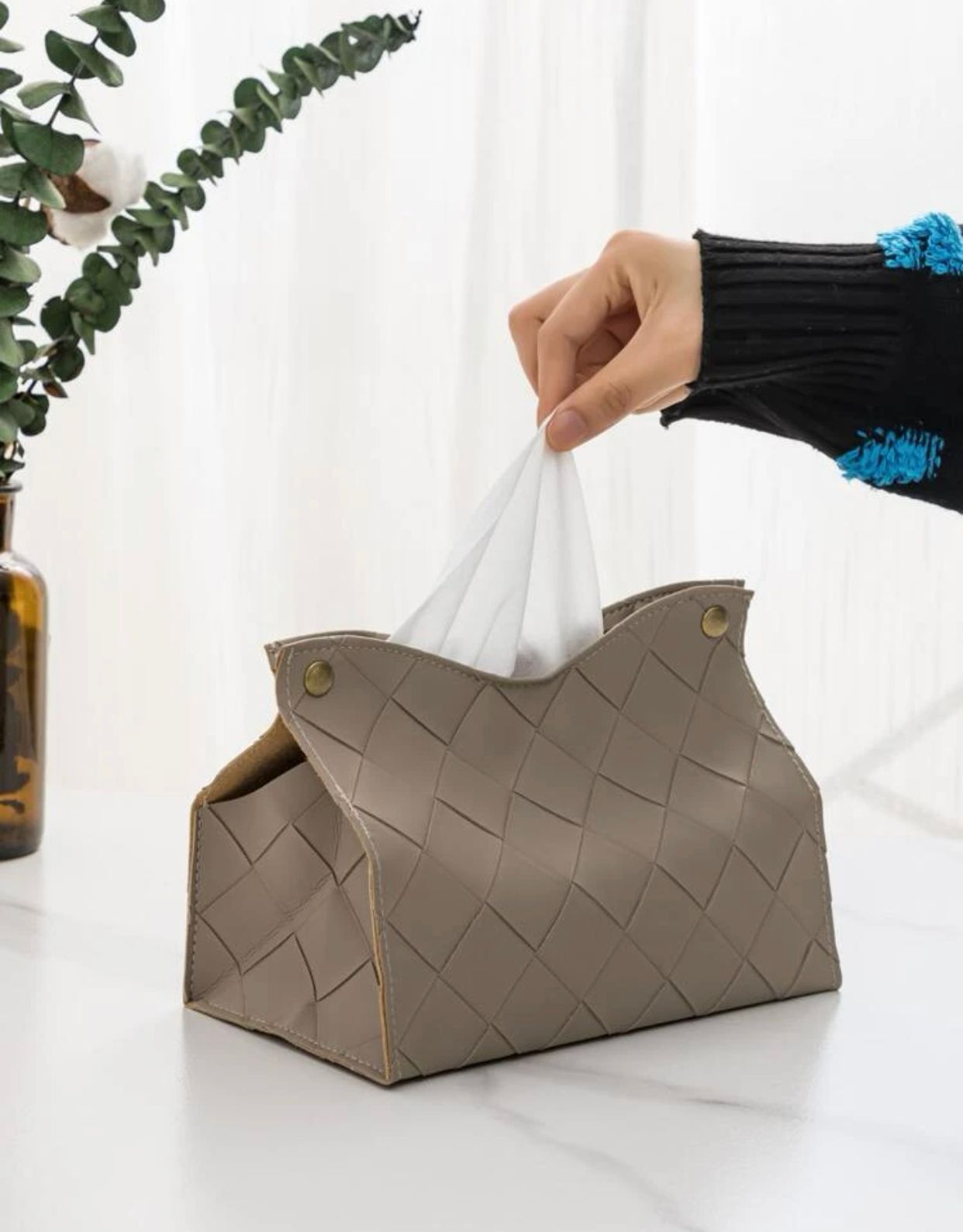
The tissue box is one of the most visible objects in an Egyptian living room, yet it is usually ignored. A Solid Leather Tissue Box Cover changes that instantly. It looks tailored, feels substantial and suits modern, classic and industrial interiors alike.
Coasters are another easy upgrade. The Premium Cotton Rope Coasters Set pairs soft rope with a small leather branding detail, a subtle touch that makes the set look finished.
On the Dining Table
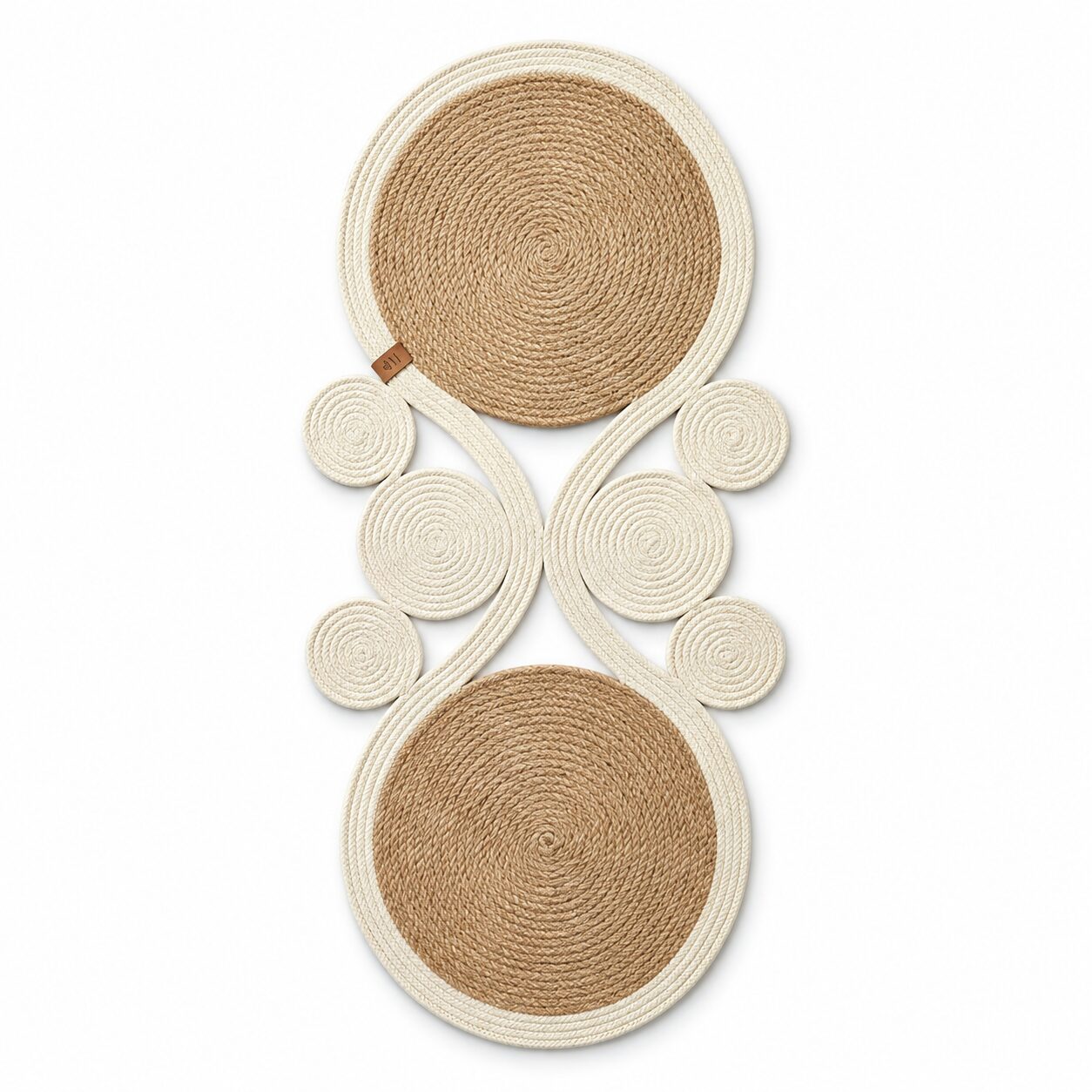
Leather trims add polish to woven table linen. The Artisan Rope Placemats with Braided Leather Accent combine neutral coiled rope with a braided leather detail, ideal for a rustic or modern farmhouse table. They work equally well for an everyday family dinner and for setting a generous iftar table.
On Baskets and Storage
Leather handles are where the material truly earns its place. They are stronger and more comfortable to grip than rope loops, and they lift a basket’s look.
How to Style Leather Accents
Balance Leather With Softness
Leather is firm and smooth. Pair it with knitted throws, cotton cushions, linen curtains and woven rugs so the room feels inviting rather than hard.
Repeat the Tone
If you introduce cognac-brown leather on a basket handle, echo it with a wooden tray, a brown cushion or a picture frame. Two or three repetitions make the choice look intentional.
Mix Metals Thoughtfully
Leather looks especially good with brass, black iron and antique gold. Metal rivets and buckles reinforce the crafted feel.
Let Natural Fibres Lead
In most rooms, leather works best as the accent rather than the main event. Jute, rattan, halfa and cotton can carry the room’s texture, with leather adding definition at the edges.
Leather Across Styles
- Industrial: dark leather with black metal and concrete or grey tones.
- Modern farmhouse: tan leather with jute, white cotton and wood.
- Boho: leather straps on woven baskets surrounded by plants and macrame.
- Classic: rich brown leather with wood, brass and patterned rugs.
Leather Room by Room: A Quick Plan
If you want to introduce leather gradually, think of one small accent per room, chosen for the job it will do.
Living Room
A leather tissue box cover on the coffee table, plus one basket with leather handles beside the sofa for throws. That is often enough to give the whole room a tailored feel. If your sofa is fabric, these small touches bring welcome contrast.
Dining Room
Placemats with leather trim, coasters with a leather detail, and perhaps a woven bread basket with leather handles. Keep the rest of the table simple, with white or cream plates and natural cotton napkins, so the leather details stand out.
Bedroom
A leather-handled basket at the foot of the bed for spare blankets, or a small one on a dresser for scarves and accessories. Leather adds a grown-up note to a bedroom without making it feel heavy.
Bathroom
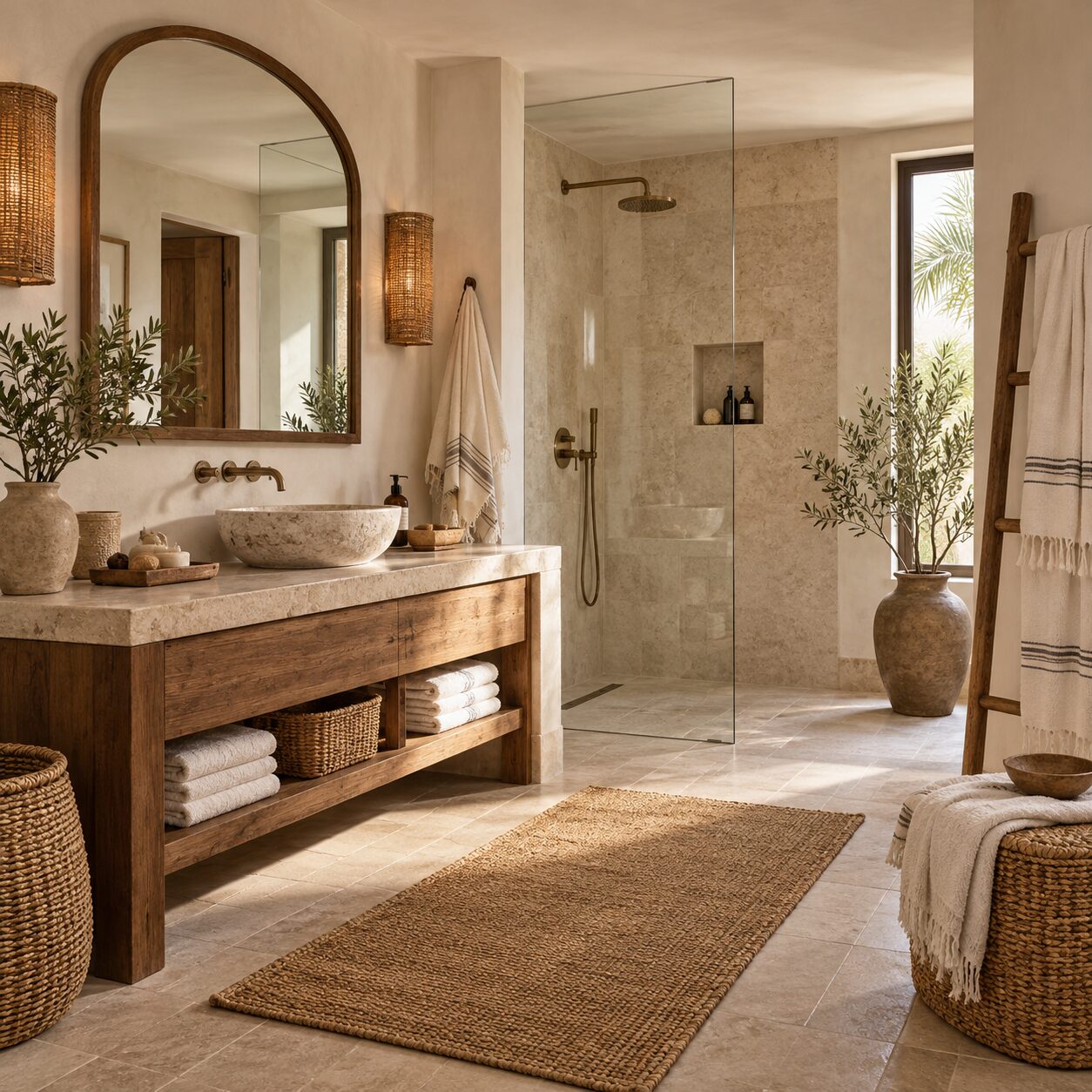
Leather and steam are not ideal companions, so keep leather to well-ventilated bathrooms and away from the shower. A woven basket with leather handles on an open shelf, holding rolled towels, works well if the room dries quickly.
Balcony
A hanging basket with a leather handle can hold a trailing plant on a shaded balcony wall. Move it indoors during the hottest months or if it is exposed to strong afternoon sun.
Entrance
A leather-handled basket by the door catches scarves, umbrellas and shopping bags, and creates a polished first impression for guests.
Gifting Leather Accents
Small leather pieces make excellent gifts because they feel premium without being extravagant. A leather tissue box cover suits a housewarming; a set of rope coasters with leather branding works for a colleague or host. Add a short care note so the recipient knows how to keep the leather supple.
Leather and the Egyptian Climate
Leather is natural skin, so it responds to its surroundings.
- Heat and strong sun can dry leather, fade its colour and cause cracking. Keep leather accents away from sunny windowsills and heaters.
- Humidity in coastal cities can encourage mildew if leather stays damp. Ensure good airflow.
- Dust settles into leather’s texture. Regular wiping keeps it fresh.
Caring for Leather Accents
- Dust regularly with a soft, dry cloth.
- Wipe spills immediately. Blot, do not rub, with a barely damp cloth.
- Avoid harsh cleaners, alcohol and household sprays, which strip natural oils.
- Condition occasionally. A small amount of leather conditioner every few months keeps leather supple, especially in dry weather. Test first on a hidden spot.
- Let wet leather dry naturally, away from direct heat. Never use a hairdryer.
- Store with air. Avoid plastic bags; a cotton cover lets leather breathe.
For mixed-material pieces such as rope placemats or jute baskets with leather handles, clean the woven part gently and avoid soaking the whole piece, so the leather stays dry.
Common Mistakes
- Too much leather in one room. A leather sofa, leather chairs and leather accessories together feel heavy, especially in summer.
- Placing leather in direct sun. Fading and cracking follow.
- Soaking mixed-material pieces. Water damages leather trims and handles.
- Using strong cleaning sprays. They dry out the surface.
- Expecting leather to stay unchanged. Patina is part of its beauty.
Quick Checklist
- Use leather as an accent: handles, trims, covers and straps
- Pair leather with soft, natural fibres for balance
- Repeat the leather tone in wood or textiles
- Keep leather away from sun, heat and moisture
- Dust weekly and condition every few months
- Clean mixed-material pieces carefully to keep leather dry
A Detail That Ages Well
Leather accents prove that small details can transform a room. A leather tissue box cover, a basket with leather handles or a placemat with a braided leather trim adds warmth, structure and a quiet sense of quality. With a little care, those details will only grow richer with time.
Find leather-accented tissue boxes, baskets, placemats and coasters at coccarohome.com and add a touch of tailored warmth to your home.
Shop the Look