Think of the last time you sat down at a table set with placemats. Before anyone served a single dish, the table already told you something: that someone had thought about this meal, that each seat had been made ready, that you were expected. That is the quiet power of a placemat. It marks out a personal space, frames the plate and turns a bare table into a setting.
Placemats are also hard-working. They protect wood from heat rings and scratches, catch the inevitable drops of tahini and juice, and make cleaning up after a family meal faster. And because they come in so many materials and shapes, they are one of the easiest ways to change the character of a dining room without replacing anything else.
This guide covers everything you need to choose well: the main materials and how each behaves, round versus rectangular shapes, sizing, care, and styling ideas for weekday dinners and festive tables alike.
What a Placemat Actually Does
Before choosing a style, it helps to be clear about the job. A good placemat should:
- Protect the table from heat, moisture and scratches from cutlery and plates.
- Define each place setting, so the table looks organised even when it is busy.
- Add texture and colour at the level where people actually look while they eat.
- Be easy to clean, because it will meet food every day.
Different materials balance these jobs differently. A thick woven mat protects beautifully but needs a shake rather than a wipe. A smooth fabric mat washes easily but offers less heat protection. Knowing which job matters most in your home makes the choice simple.
Placemat Materials Compared
Jute
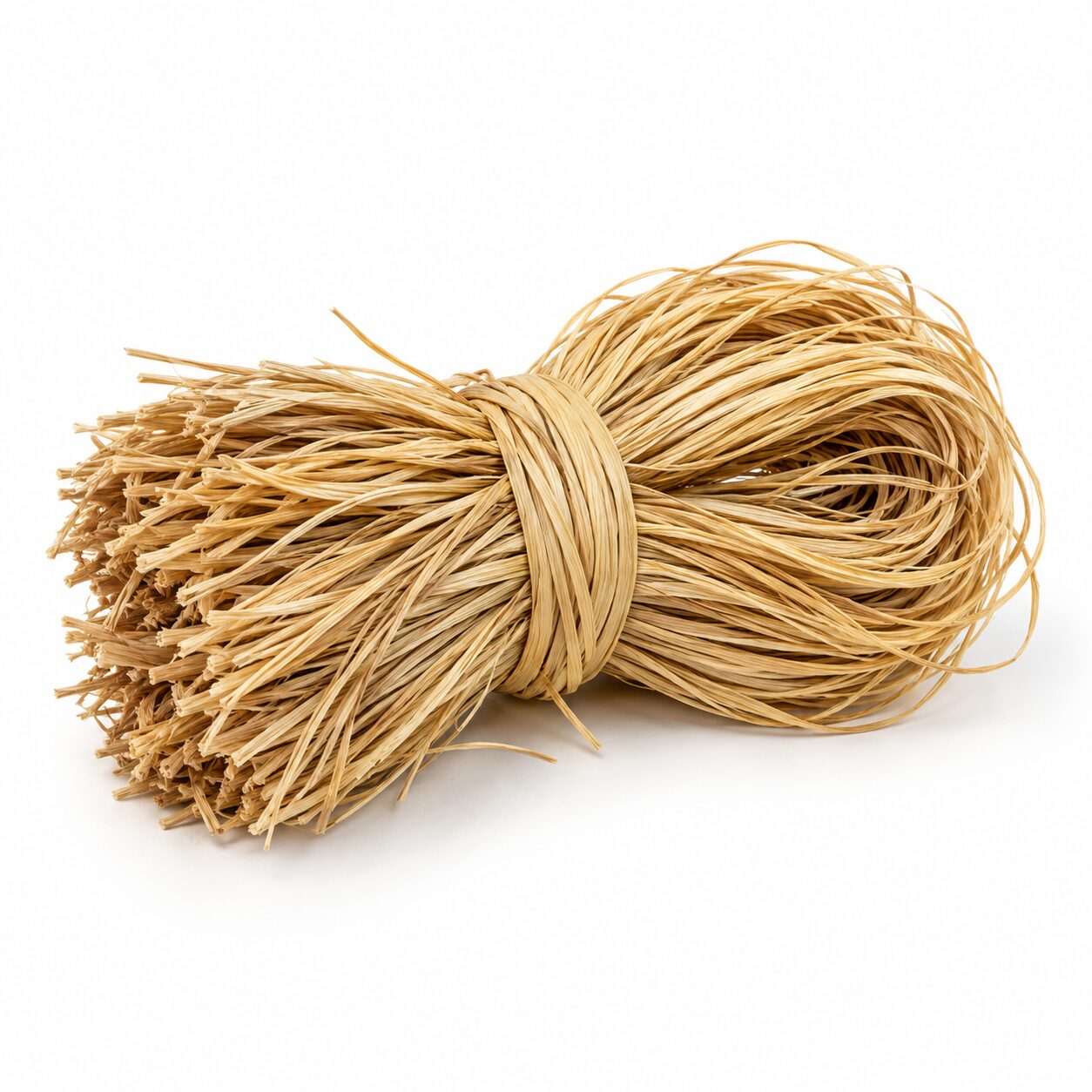
Jute is a natural plant fibre with a warm, golden-brown colour and a slightly rough, honest texture. It brings an earthy, relaxed feel to a table and pairs well with wood, pottery and greenery.
Jute placemats are sturdy and give good protection from warm plates. Because the fibre is natural, they should be kept away from standing water and dried flat if they get damp. Crumbs are best removed with a shake or a soft brush. A simple Handwoven Natural Jute Table Mat is a dependable everyday choice that suits almost any table style, from rustic to modern.
Cotton Rope
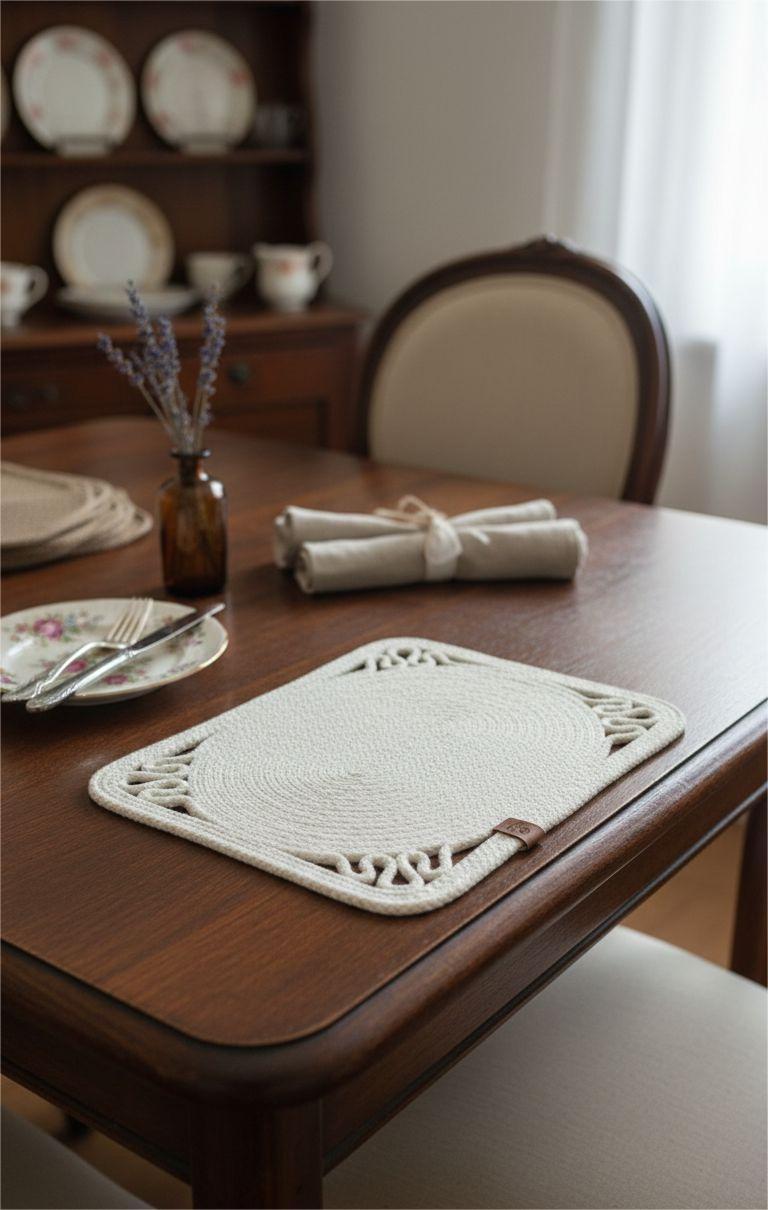
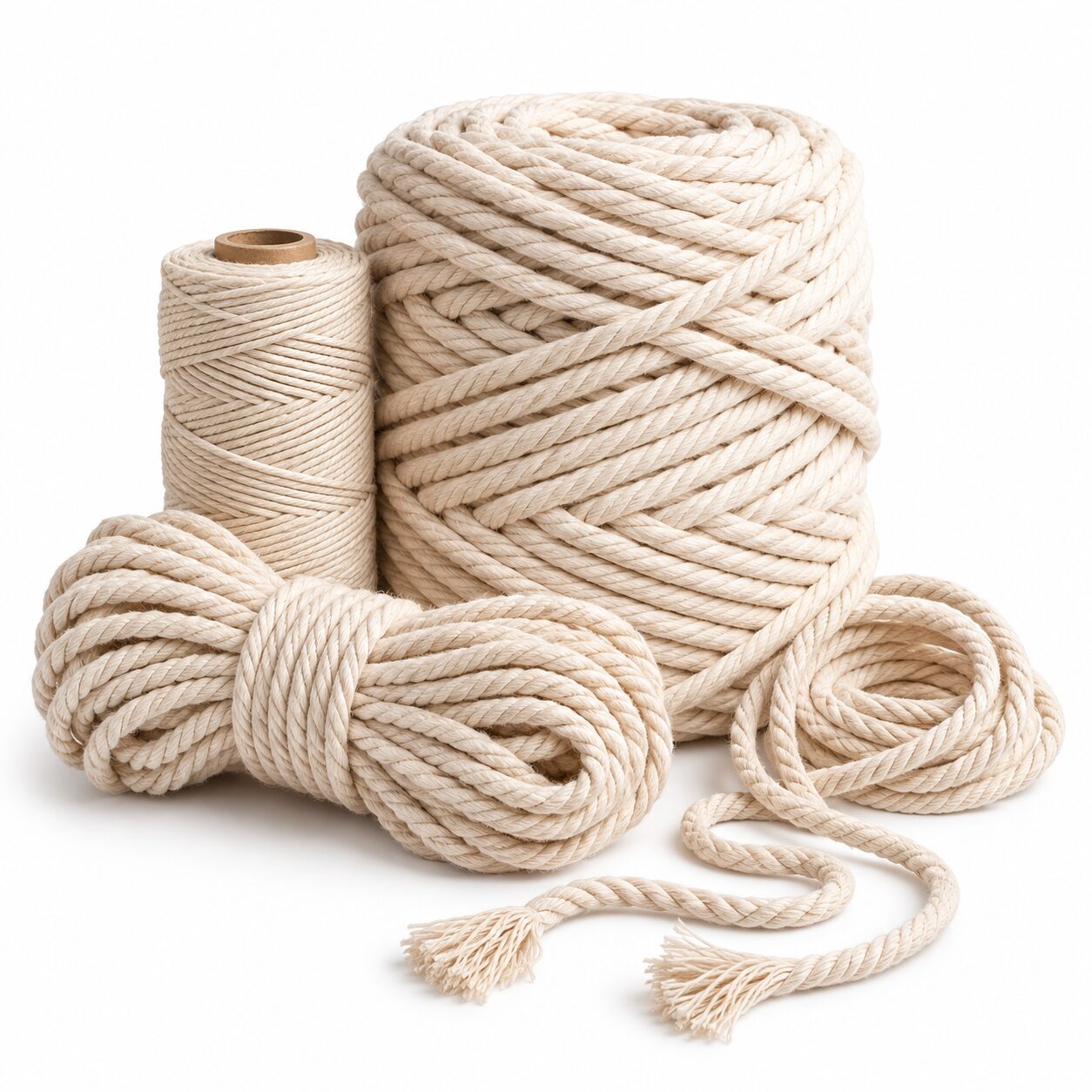
Cotton rope placemats are coiled or braided from thick cord, often in natural cream, off-white or mixed colours. They feel softer than jute, look a little more refined and often have a sculptural, handmade quality.
The Artisan Rope Placemats with Braided Leather Accent are a good example of how rope can feel polished: a neutral coiled mat finished with a braided leather detail that suits both rustic farmhouse tables and cleaner, modern dining rooms. Rope mats are thick enough to cushion plates and quiet the clink of ceramic on wood, which makes meals feel calmer.
Halfa
Halfa is a grass woven by hand in Egypt for generations, used for baskets, mats and trays. It has a lighter, straw-like colour and a fine woven pattern. Halfa pieces bring a strong sense of local craft to the table and look especially fresh in summer.
Even if you choose another material for the main placemat, halfa works wonderfully in smaller pieces. A Halfa Woven Round Coaster beside each plate repeats the natural texture at a smaller scale and gives glasses their own place.
Fabric: Cotton and Linen
Fabric placemats are flat, light and machine washable in most cases. They are the practical choice for households with young children or for tables that see three meals a day. Linen has a soft, slightly crumpled elegance; cotton is crisp and easy.
Fabric mats offer less heat protection, so use a trivet under very hot dishes. They are also easy to store, since they fold flat in a drawer.
Leather and Mixed Materials
Leather accents, wood beads and contrasting stitching add a finished, tailored look. Mixed-material mats often combine the warmth of natural fibre with a smarter detail, which makes them suitable for both everyday use and guests.
Round or Rectangular: Choosing a Shape
Rectangular Placemats
Rectangular mats are the classic choice. They hold a dinner plate, cutlery on both sides and a glass at the top right corner. They line up neatly along the edges of rectangular tables and give a clean, orderly look.
Choose rectangular mats when:
- Your table is rectangular or square.
- You like to lay out a full place setting with knife, fork and spoon.
- You want a more formal or structured look.
Round Placemats
Round mats feel softer and more relaxed. They echo the shape of the plate and look especially good on round tables, where rectangles can feel like they are fighting the curve.
Choose round mats when:
- Your table is round or oval.
- You set plates with cutlery resting on the plate or in a central holder.
- You want a casual, bohemian or coastal mood.
Round mats also work on rectangular tables as a deliberate contrast. A row of round woven mats on a long wooden table looks relaxed and modern, especially with simple white plates.
Oval Placemats
Oval mats sit between the two. They give the space of a rectangle with the softness of a circle and suit tables of any shape.
Getting the Size Right
Placemats need enough room to hold a full setting without crowding the neighbour.
- Rectangular mats generally measure around 30 to 35 cm deep and 40 to 48 cm wide. That holds a 27 cm dinner plate with cutlery on both sides.
- Round mats usually measure 35 to 40 cm across, which leaves a border around a standard dinner plate.
- Spacing: allow about 60 cm per person along the table, so mats do not touch and elbows have room.
- Edge placement: set each mat about 2 to 3 cm from the table edge. Flush with the edge looks tidy; hanging over looks careless.
Always check the dimensions listed on the product page against your plates. Egyptian dinner plates for family meals are often generous, and a mat that is too small makes a full plate look cramped.
Styling Ideas for Every Occasion
The Everyday Family Table
Keep it simple and practical. Natural mats in jute or rope, plain plates, a jug of water and a small bowl of greens or bread in the middle. Add a cutlery holder so everyone can help themselves; the Wooden Cutlery Organizer with Decorative Tiles keeps spoons and forks tidy and adds a touch of colour without taking over the table.
Layering With a Runner
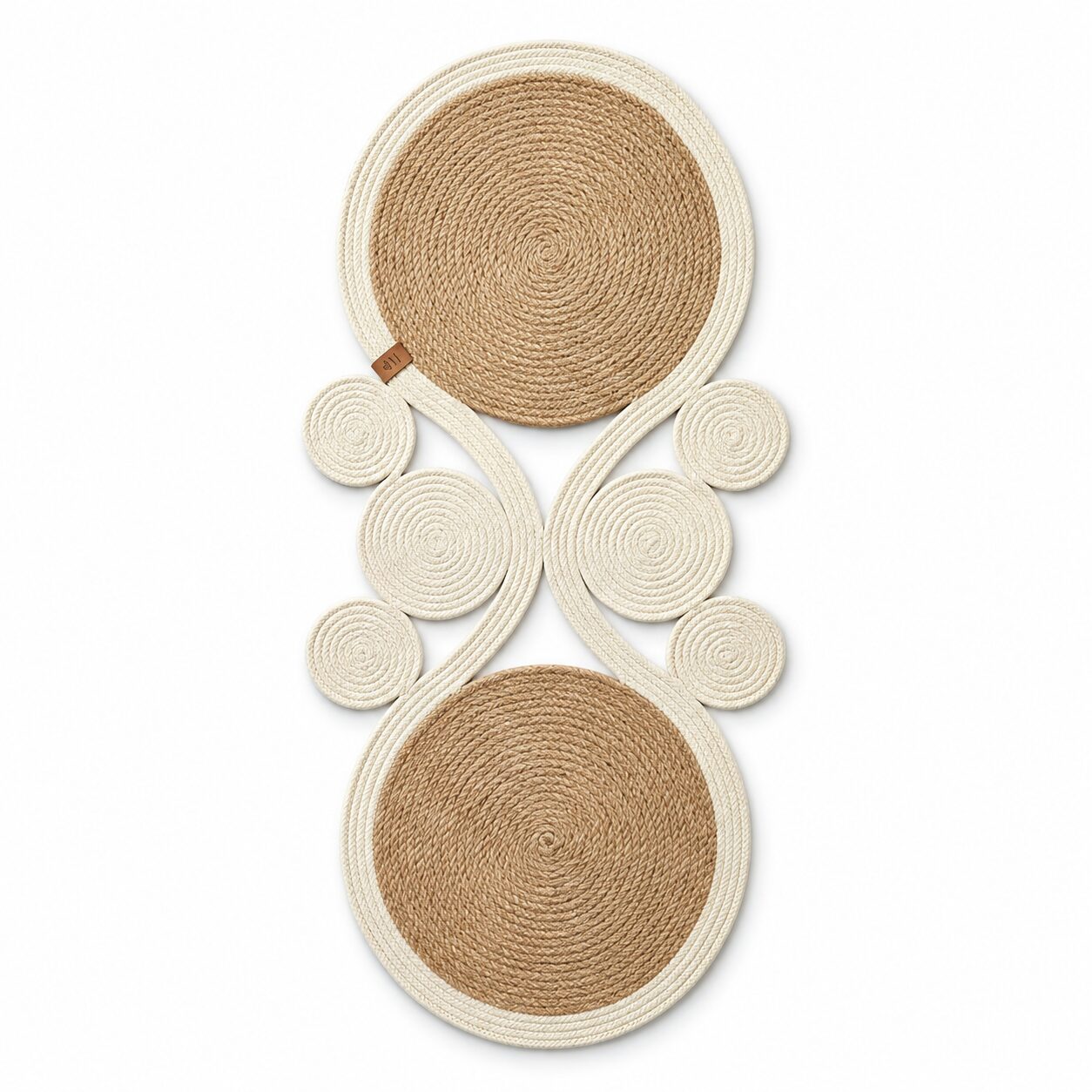
Placemats and a runner can work together beautifully. Lay the runner down the centre of the table and set placemats on either side, slightly overlapping the runner’s edges or sitting just beside them. Use contrasting textures: a smooth linen runner with woven mats, or a jute runner with fabric mats.
For a coordinated look without effort, a set that already pairs table linen and coasters helps. The Oval Crochet Table Runner with 6 Coasters gives you a handmade centre and matching small pieces in one go.
The Ramadan and Eid Table
For iftar and Eid lunches, the table is fuller than usual: dates, juices, soup, salads and several main dishes. Choose mats that protect well and can handle heat, such as thick rope or jute. Add warmth with candles, lanterns and a richer runner, and keep the mats neutral so the food and festive pieces stand out.
A woven food cover is a practical, good-looking addition for these long meals, keeping bread or sweets protected while guests arrive. The Handwoven Jute Food Cover fits naturally on a table set with woven mats.
The Summer Lunch
Go light: halfa, off-white rope or pale linen, with blue and white ceramics, lemons in a bowl and a few green stems. Round mats feel especially breezy in summer.
Outdoor and Balcony Dining
Balcony meals are part of life for much of the Egyptian year. Choose mats that are easy to shake out and bring indoors when the wind brings dust, and avoid leaving natural fibres out overnight where dew can dampen them.
Caring for Your Placemats
Good care keeps placemats looking new for years.
- Shake after every meal. Crumbs trapped in a weave are the main reason woven mats look tired.
- Spot clean quickly. Blot spills with a damp cloth and a little mild soap. Do not rub hard, which can push the stain deeper.
- Dry flat. Natural fibres can lose their shape if they are folded or hung while damp.
- Avoid soaking jute and halfa. These fibres prefer a light clean to a full wash.
- Store flat. Stack mats in a drawer or on a shelf rather than rolling them.
- Rotate sets. If you have two sets, swap them every few weeks so they wear evenly.
Common Mistakes to Avoid
- Mats that are too small for your plates. Check the size before buying.
- Placing mats right at the edge or hanging over. Leave a small border of table.
- Ignoring the table shape. Rectangles fight round tables; consider round or oval mats.
- Using thin fabric mats under very hot dishes. Add a trivet.
- Matching everything. Mats, runner and napkins in one identical fabric look flat. Mix textures.
- Folding damp natural mats. They can warp and develop marks.
Quick Checklist
- Choose the material for your main need: protection, washability or texture
- Match the shape to your table: rectangular, round or oval
- Rectangular mats roughly 30 to 35 by 40 to 48 cm; round mats 35 to 40 cm
- Allow about 60 cm of table per person
- Add coasters for glasses and a cutlery holder for family-style meals
- Shake, spot clean and dry flat
- Keep a second set for guests and occasions
Set the Table, Set the Mood
Placemats are small, affordable and surprisingly powerful. The right set protects your table, organises every seat and brings handmade texture to the place where your family spends some of its best hours. Start with one set that suits daily life, then add a second for celebrations, and enjoy the way a few woven circles or rectangles change the feeling of every meal.
Browse jute, cotton rope and halfa table pieces at coccarohome.com and find the placemats that suit your table.
Shop the Look