A rug is the quiet hero of a room. It pulls furniture together, softens hard floors, absorbs echo, adds colour and pattern, and gives bare feet somewhere warm to land on winter mornings. In Egyptian homes, where ceramic tiles, porcelain and marble floors are the norm, a well-chosen rug can transform a room that feels cold and scattered into one that feels finished and inviting.
Yet rugs are also one of the easiest things to get wrong. Too small, and the room looks disconnected. Wrong material, and it sheds, stains or fades within a season. Wrong placement, and furniture seems to float. This guide covers the three decisions that matter most, size, material and placement, so you can choose a rug with confidence.
Why the Right Rug Matters
Before getting into the rules, it helps to understand what a rug actually does in a room:
- Defines zones. In open-plan apartments, a rug marks where the living area ends and the dining area begins.
- Connects furniture. A rug that sits under the front legs of your sofa and chairs makes them read as one group.
- Adds warmth. Tiled floors can feel cold in winter. A rug makes the room feel cosier instantly.
- Reduces noise. Rugs absorb sound, which matters in apartment buildings with neighbours below.
- Sets the palette. A patterned rug can give you the colour story for cushions, throws and art.
Step One: Get the Size Right
The most common rug mistake is buying one that is too small. A small rug in the middle of a large room looks like a floating island. When in doubt, go bigger.
Living room
There are three common approaches:
- All legs on. The rug is large enough for all furniture legs to sit on it. This looks luxurious and works in spacious rooms.
- Front legs on. The front legs of the sofa and chairs sit on the rug, the back legs sit on the floor. This is the most versatile option and suits most Egyptian living rooms.
- Floating. The rug sits only under the coffee table. This works only in small spaces, and the rug should still be larger than the coffee table by a good margin on every side.
As a general guide, leave around 30 to 45 centimetres of bare floor between the edge of the rug and the walls in a typical room.
Bedroom
- Under the bed. The rug should extend at least 45 to 60 centimetres beyond each side of the bed so your feet land on it when you get up. Place it starting from roughly the lower two thirds of the bed, leaving the nightstands on the bare floor.
- Runners on each side. If a large rug is not practical, two runners along the sides of the bed work well.
- At the foot of the bed. A smaller rug or a round rug can sit at the foot of the bed or beside it as a soft landing.
Dining room
The rug must be large enough that chairs stay on it even when pulled out. Add roughly 60 to 75 centimetres to each side of the table. A rug that catches chair legs every time someone sits down quickly becomes frustrating.
Entrance and hallways
Use a runner or a small rug that leaves some floor visible on both sides. Choose a flat weave that does not catch the door.
Step Two: Choose the Right Material
Material decides how a rug feels, how it wears and how easy it is to clean. In Egypt, dust, heat and busy family life all play a role.
Kilim rugs
Kilims are flat-woven rugs with a long tradition across Egypt, the Middle East and North Africa. They are thin, durable and reversible in many cases, and their geometric patterns suit both traditional and modern homes. Because they are flat, they are easy to shake out and vacuum, which is a real advantage in dusty cities.
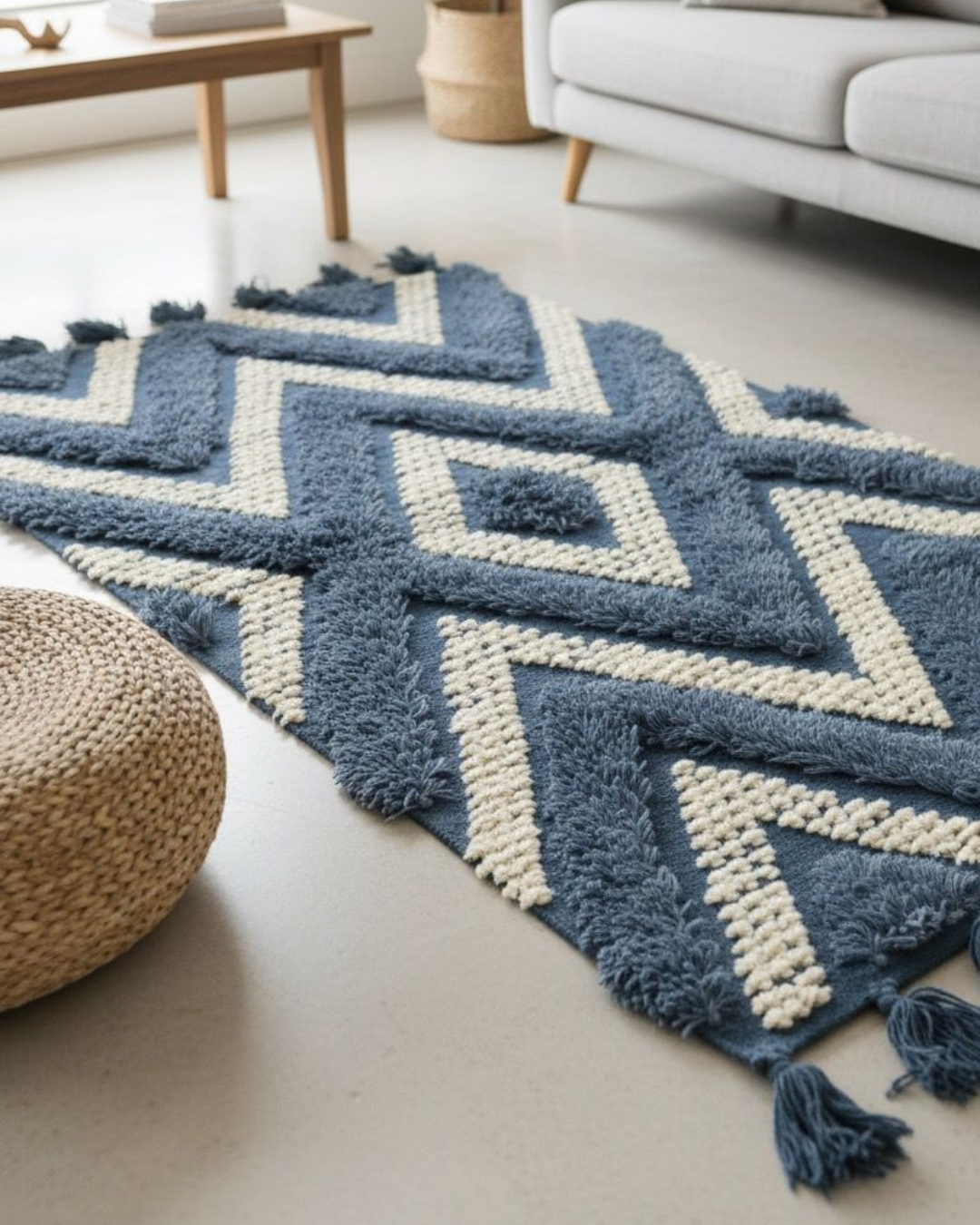
The Handmade Kilim Navy and Beige Carpet is our best-selling rug, with a classic pattern that grounds a living room without overwhelming it. For a softer, more textured look, the Handwoven Geometric Kilim Area Rug combines a tufted pattern with tassel fringe for a boho feel.
Wool kilims
Wool adds softness and natural resilience. The Handmade Kilim Wool Rug in Off-White, Grey and Mustard brings warmth to bedrooms and living rooms, especially in the cooler months.
Halfa rugs
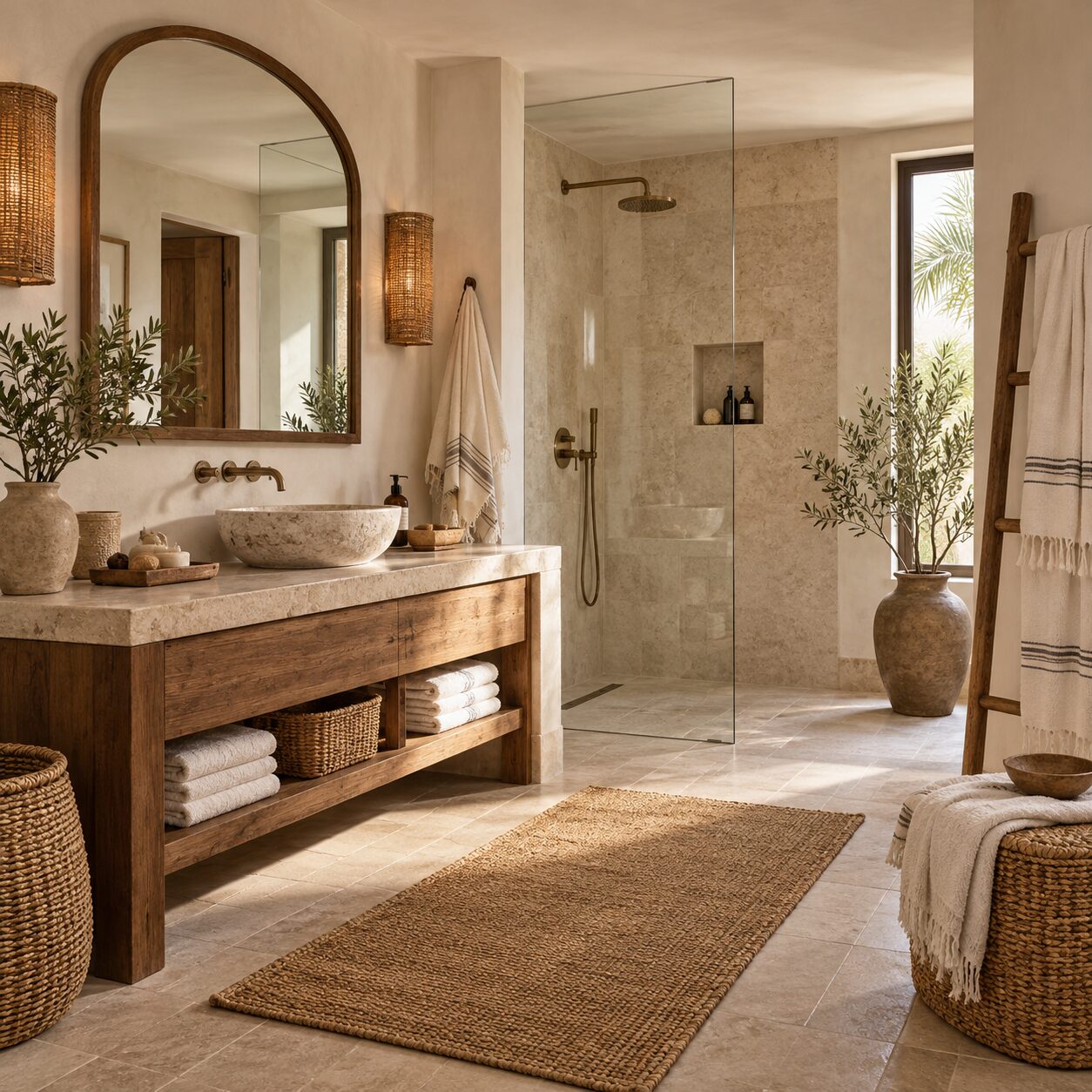
Halfa is a natural grass woven by hand in Egypt. Halfa rugs bring an earthy, textured look that suits relaxed, natural interiors and covered outdoor areas. They are best for lower-traffic spots and should be kept dry. The Oval Halfa Rug works well beside a bed, in an entrance or on a covered balcony.
Jute and cotton blends
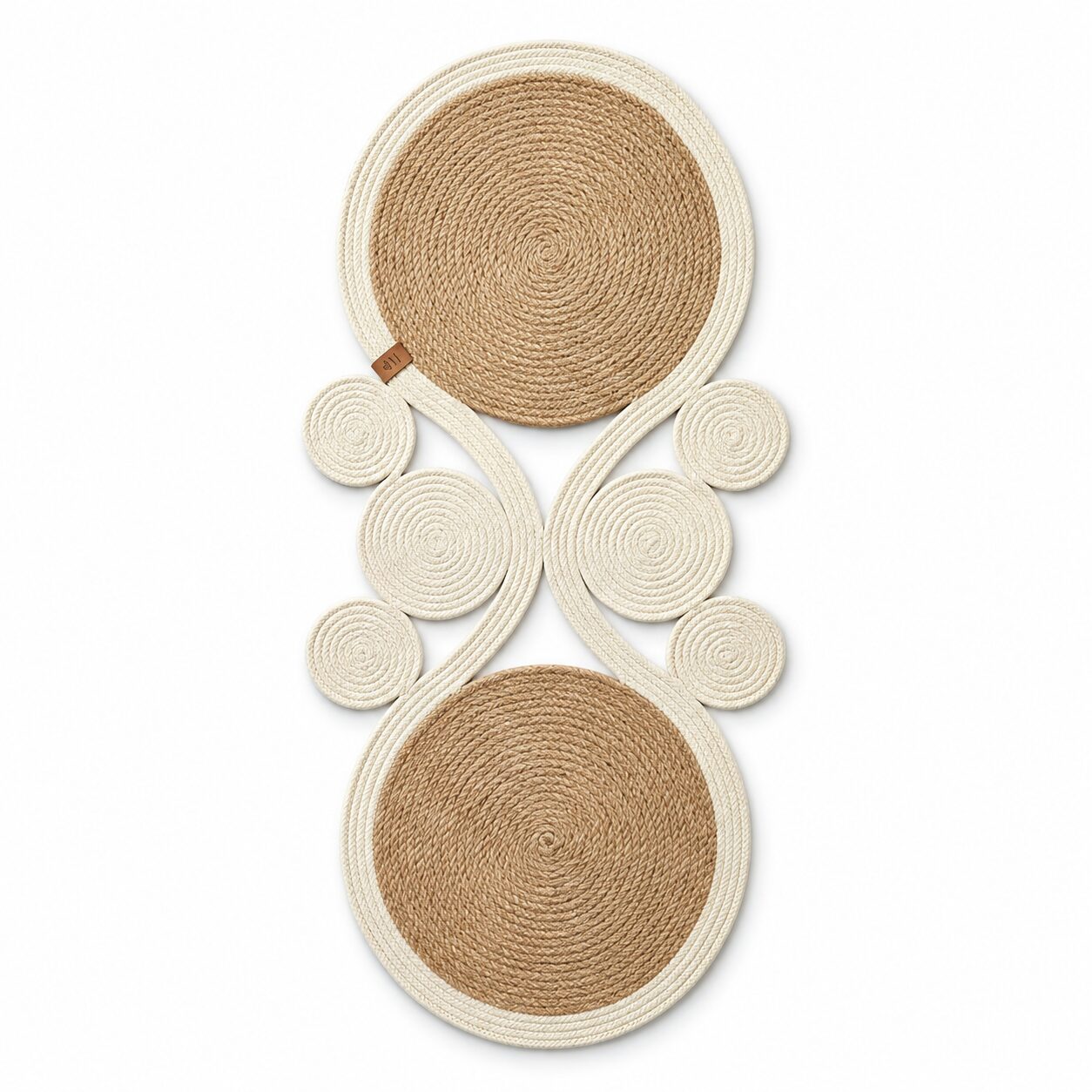
Jute brings a natural, organic texture, and blending it with cotton adds softness. The Jute and Off-White Earthen Circle Rug is a beautiful option for a reading corner or under a round coffee table.
Crochet rugs
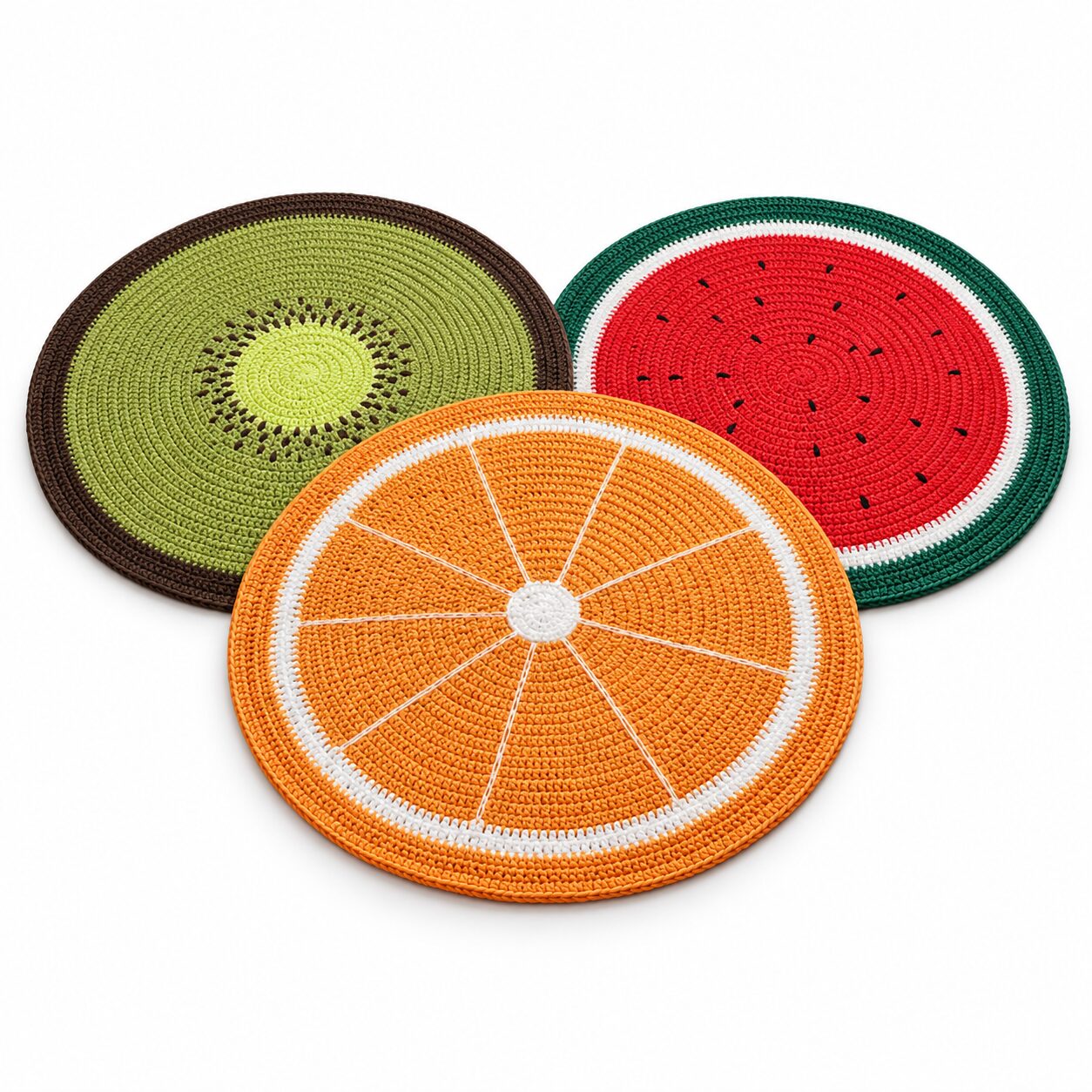
Handmade crochet rugs are soft, decorative and full of character. They work best in bedrooms, children’s rooms and reading nooks where foot traffic is lighter. The Round Crochet Mandala Rug brings an intricate, vintage-inspired pattern.
Quick material comparison
- Kilim (cotton): durable, flat, easy to clean, ideal for living rooms and dining rooms.
- Kilim (wool): softer and warmer, great for bedrooms and cooler seasons.
- Halfa: natural and textured, best for low-traffic and covered outdoor areas.
- Jute blends: organic look, good for reading corners and relaxed spaces.
- Crochet: soft and decorative, best for bedrooms and kids’ rooms.
Step Three: Nail the Placement
Once you have the right size and material, placement brings everything together.
Centre the rug on the furniture, not the room
In many rooms, the furniture grouping is not exactly in the middle. Align the rug with the sofa and coffee table rather than the walls.
Keep it parallel
A rug should run parallel to the main piece of furniture, usually the sofa or the bed. Diagonal placement rarely works unless it is a deliberate design choice in a very large room.
Layer for depth
Layering a smaller patterned rug over a larger plain one adds depth and interest. A round crochet or halfa rug on top of a neutral kilim can create a relaxed, collected look.
Round rugs
Round rugs soften a room full of straight lines. Use them under round dining tables, in reading corners, under a hanging swing or in an entrance.
Choosing Colour and Pattern
- For busy families and children, a medium-toned patterned rug hides everyday marks better than a plain light one.
- For small rooms, lighter colours make the space feel bigger.
- For neutral rooms, a patterned rug adds interest without needing new furniture.
- For patterned sofas or curtains, choose a simpler rug so the room does not feel busy.
- To tie a room together, pick cushion or throw colours directly from the rug.
Caring for Your Rugs
A little routine care helps rugs last for many years.
- Vacuum or shake out weekly, more often in dusty seasons.
- Rotate every few months so sun and footfall wear the rug evenly.
- Blot spills immediately with a clean cloth. Do not rub.
- Use a rug pad to prevent slipping and reduce wear.
- Keep natural fibres like halfa and jute dry.
- Avoid strong direct sun for long periods to reduce fading.
- Air rugs out occasionally in shade on a dry day.
Rugs Room by Room: Practical Scenarios
Rules are easier to apply when you can picture them. Here are some common Egyptian home layouts and what tends to work.
The L-shaped sofa living room
Many Egyptian living rooms are built around a large L-shaped sofa. Choose a rug large enough for the front legs of both sections to sit on it, and centre it on the coffee table rather than the room. A rectangular kilim usually works better than a round rug here.
The open living and dining space
In apartments where the living and dining areas share one space, use two rugs to create two zones. They do not need to match, but they should share a colour. For example, a patterned kilim under the sofa and a plainer rug in a similar tone under the dining table.
The small bedroom
If the bed nearly fills the room, skip the large rug and place a soft runner or round rug on the side you get out of bed. It gives the same warm landing without crowding the floor.
The reception or salon
Formal salons often have classic furniture. A traditional kilim pattern or a rich wool rug suits them well and makes the room feel less formal and more welcoming.
The entrance
A hardwearing flat-woven rug or a natural fibre mat catches dust before it spreads through the house, which is especially valuable in Cairo.
Seasonal Rug Swaps
Some Egyptian families switch rugs with the seasons, and it is a smart habit.
- In summer, lighter and thinner rugs such as cotton kilims, jute and halfa keep rooms feeling fresh.
- In winter, thicker wool rugs and crochet rugs add warmth to cold tiled floors.
- Before storing, clean the rug, let it dry fully, roll it with the pile facing inward and wrap it in cotton rather than plastic.
- When bringing it back out, air it in the shade for a few hours before placing it.
Rotating rugs this way also spreads wear across several pieces, so each lasts longer.
Common Mistakes When Buying a Rug
- Buying too small. The most frequent and most visible mistake.
- Ignoring traffic. A delicate rug in a busy hallway will wear quickly.
- Skipping the rug pad. Rugs slide on tiled floors, which is a safety risk.
- Choosing pale colours for a family room. Light rugs show marks quickly with children and guests.
- Blocking doors. Check that doors open freely over the rug.
- Putting natural fibres in damp spaces. Halfa and jute do not like bathrooms or wet areas.
- Forgetting to measure. Mark the rug size on the floor with tape before you buy.
Quick Checklist Before You Buy
- Room measured and rug size marked with tape
- Placement style chosen: all legs, front legs or floating
- Material matched to traffic and room use
- Colour chosen to hide or show marks as needed
- Rug pad planned for tiled floors
- Doors checked for clearance
- Care routine understood
Ground Your Room With the Right Rug
The right rug makes a room feel complete. Choose a generous size, match the material to how the room is used, and place it so it connects your furniture. Whether you love the timeless pattern of a kilim, the natural texture of halfa or the softness of crochet, there is a rug that will bring warmth to your floors for years.
Browse our handmade kilim, halfa, jute and crochet rugs at coccarohome.com and find the perfect foundation for your room, with delivery across Egypt.
Shop the Look
- Handmade Kilim Navy and Beige Carpet — EGP 2,484 — A best-selling classic pattern that grounds any living room.
- Handwoven Geometric Kilim Area Rug — EGP 4,450 — A soft boho rug with tufted pattern and tassel fringe.
- Handmade Kilim Wool Rug in Off-White, Grey and Mustard — EGP 2,592 — Warm wool texture for bedrooms and cooler seasons.
- Handmade Kilim Rug in Beige and Navy — EGP 2,754 — A clean lined pattern for modern living rooms.
- Florida Kilim Rug — EGP 2,430 — A crisp beige and black rug for contemporary spaces.
- Oval Halfa Rug — EGP 2,700 — Natural Egyptian halfa for a bedside or entrance.
- Natural Halfa Round Rug — EGP 1,404 — A round natural rug for reading corners and covered balconies.
- Jute and Off-White Earthen Circle Rug — EGP 2,268 — An organic texture for relaxed living spaces.
- Round Crochet Mandala Rug — EGP 3,100 — A soft, intricate rug for bedrooms and reading nooks.
- Moroccan-Inspired Optical Kilim Rug — EGP 6,000 — A bold ivory and black statement for a modern room.