A table runner is one of those pieces that looks effortless when it is right and oddly awkward when it is wrong. Too short and it floats in the middle of the table like a forgotten scarf. Too long and it drags into laps, catches on chairs and pulls a glass of juice to the floor when someone stands up. Too wide and it swallows the plates. The fabric, the colour and the texture all matter, but size is what decides whether a runner looks deliberate.
The good news is that runner sizing follows a few simple rules. You need a tape measure, five minutes and a clear idea of how you use your table. This guide walks through the measurements for every common table shape, explains when to break the rules, and shows how to choose a runner that suits the way Egyptian families actually eat and gather.
Start With Three Measurements
Before you look at a single runner, measure your table. Write down these three numbers:
- Table length from end to end, along the longest side.
- Table width across the middle.
- The drop you want at each end, which is how far the runner hangs over the edge.
If you have an extendable table, measure it in both positions. Many apartments in Cairo and Alexandria have tables that seat six on a normal day and stretch to eight or ten for Friday lunch or Eid. You may decide to buy for the everyday size and simply let the runner sit shorter on the extended table, which looks perfectly fine as long as it is centred.
Also note what sits on your table most of the time. A table that always holds a fruit bowl, a tissue box and a vase needs a runner wide enough to carry them comfortably. A table that is cleared after every meal can take something narrower and more decorative.
How Long Should a Table Runner Be?
There are three classic length options. Each creates a different look.
Option One: The Overhang
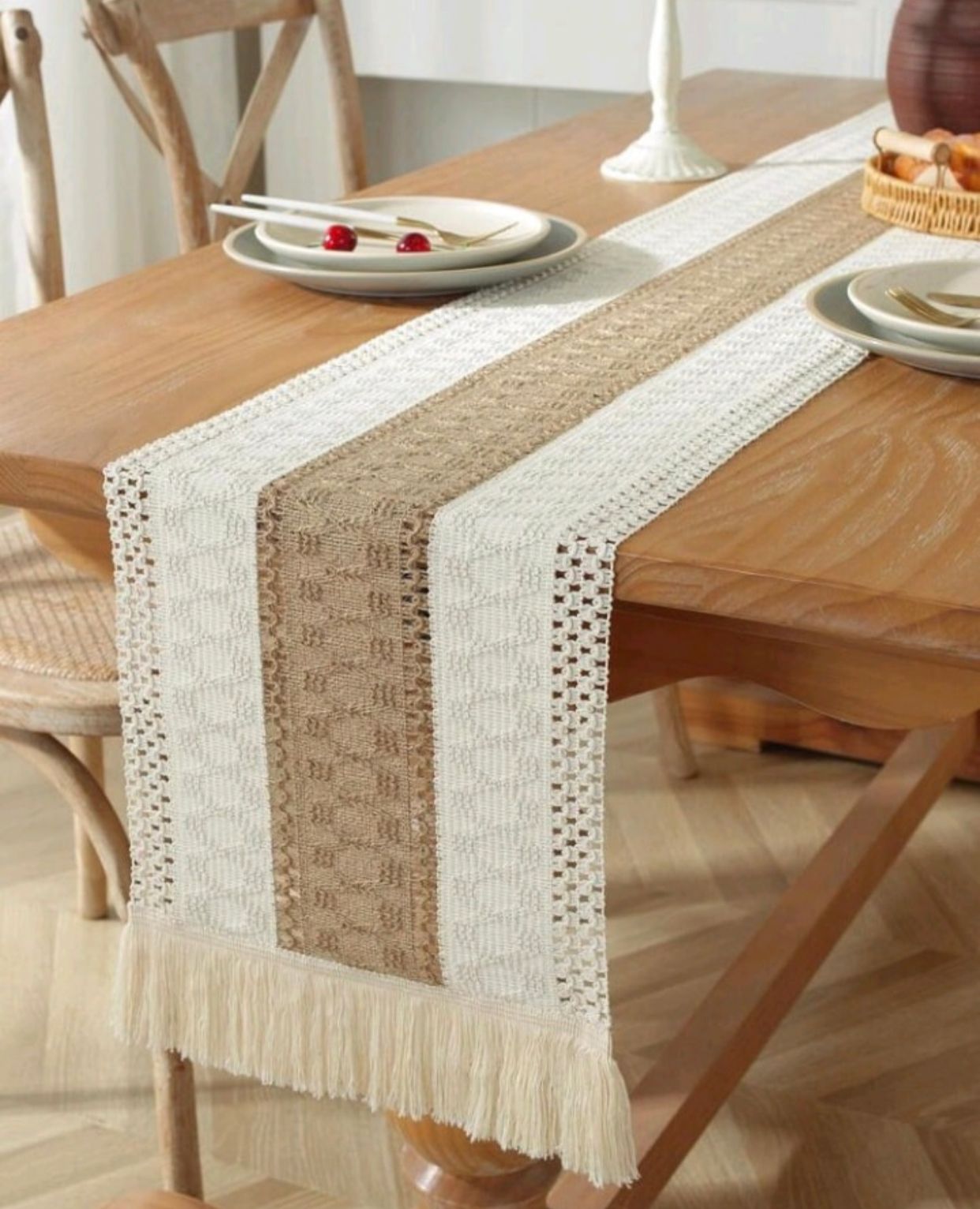
This is the most traditional choice. The runner runs the full length of the table and hangs over each end by roughly 15 to 30 centimetres. To find your ideal length, add twice your chosen drop to the table length.
For example, a 180 cm table with a 20 cm drop at each end needs a runner of about 220 cm. A 160 cm table with the same drop needs about 200 cm.
A few practical points:
- Keep both drops equal. An uneven overhang is the first thing the eye catches.
- Do not let the runner reach chair-seat height. On most dining tables, a drop longer than about 30 cm starts to touch knees.
- Tassels count. If the runner has fringe or tassel ends, include them in the length, because they add to the drop.
A tasselled runner such as the Tassel Macrame Hollow-Out Table Runner looks especially graceful with a modest overhang, because the tassels move freely past the table edge instead of bunching on the surface.
Option Two: Edge to Edge
Some people prefer a cleaner, more modern look where the runner stops exactly at the table edge or just short of it. Here the runner length equals the table length, or is a few centimetres shorter.
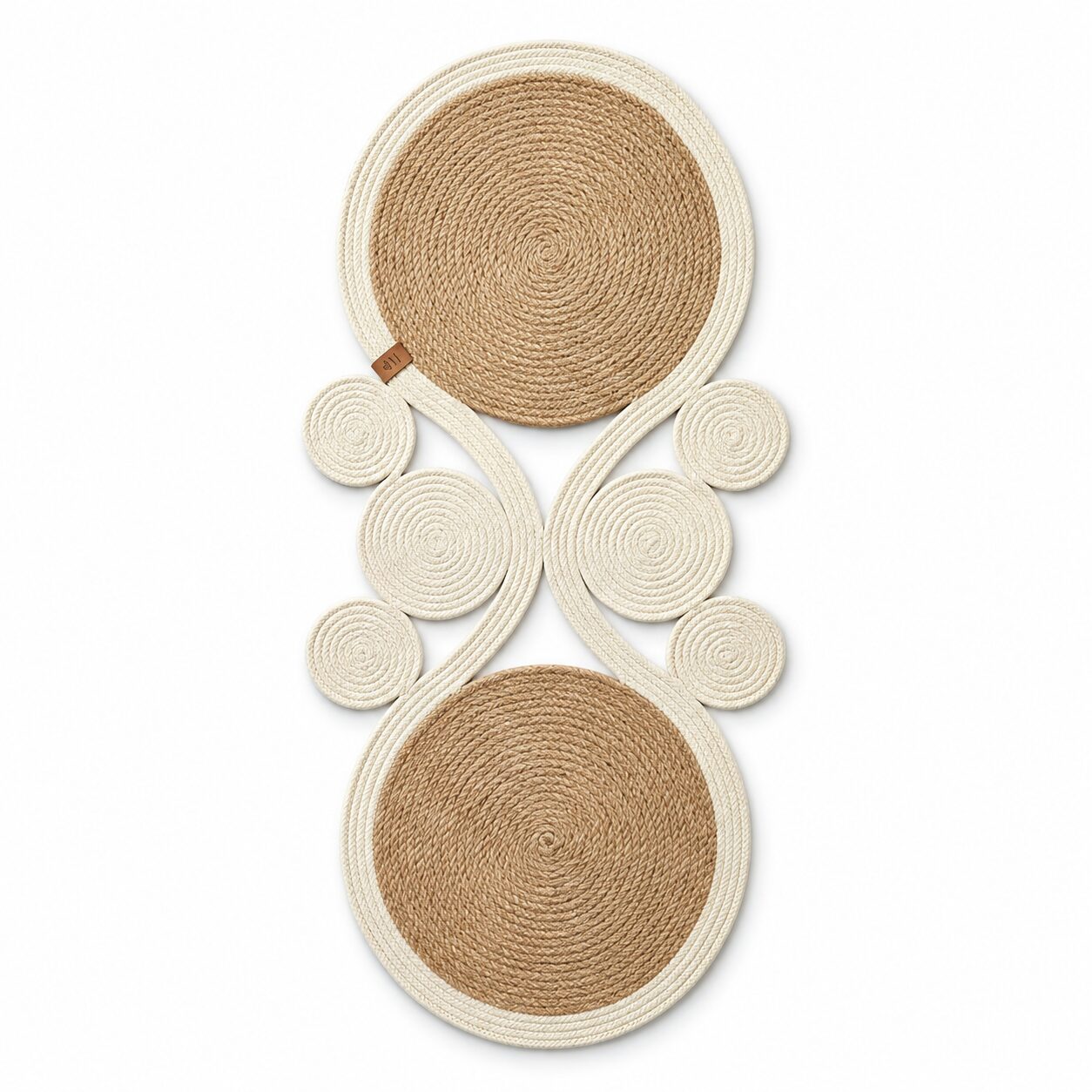
This is a smart choice for households with small children, for tables pushed against a wall, and for heavy handwoven runners made of jute or rope that do not drape well. A thick braided runner like the Waves Off-White Rope Table Runner has a structured, sculptural quality that looks best lying flat on the surface rather than hanging over the edge.
Option Three: The Centre Strip
A shorter runner that covers only the centre of the table, leaving 20 to 40 cm of bare wood at each end, is a good option for long tables, oval tables and kitchen tables. It acts like a stage for a centrepiece rather than a cover.
To size it, aim for roughly two thirds of the table length. On a 180 cm table, that is a runner of about 120 cm.
How Wide Should a Table Runner Be?
Width matters as much as length, yet it is the measurement most people ignore. The general rule is that a runner should be about one third of the table’s width.
- A table 90 cm wide suits a runner around 30 cm wide.
- A table 100 cm wide suits a runner around 33 to 35 cm wide.
- A narrow table of 75 to 80 cm looks best with a slimmer runner of 25 to 28 cm.
Why one third? It leaves enough bare table on each side for plates, glasses and cutlery to sit flat, so nothing wobbles on the edge of the fabric. If a plate sits half on the runner and half on the table, the runner is too wide.
There is one exception. If you plan to use the runner as the main surface for serving dishes, family-style, a slightly wider runner is useful. Large platters of rice, molokhia and roasted chicken need room, and a wider strip down the middle protects the table from heat and spills.
Sizing for Different Table Shapes
Rectangular Tables
These are the easiest. Use the overhang formula for length and the one-third rule for width. Rectangular tables also suit a second technique: crossing runners. Lay one runner along the length and two or three shorter runners across the width, one in front of each pair of facing chairs. The cross runners then act as shared placemats.
For crossing runners, the width-wise pieces should be the table width plus a small drop on each side, and they look best when they match or complement the main runner.
Round Tables
A round table cannot take a full-length runner in the usual way, because there is no long axis. You have three good choices:
- A single runner across the diameter, with a short, equal drop on both sides. Measure the diameter and add twice the drop.
- Two runners crossed in the middle, forming a plus sign. This works well for four people, with each person sitting at the end of a runner.
- A round centre mat instead of a runner. A circular woven piece like the Round Braided Cotton Table Mat sits beautifully in the middle of a round table and holds a vase or a tray without fighting the shape of the table.
For a round mat, aim for about one third of the table’s diameter. A 120 cm round table suits a centre mat of roughly 40 cm.
Oval Tables
Oval tables look best with a runner that respects their soft ends. An oval runner, or a straight runner that stops short of the curve, keeps the lines in harmony. The Oval Cotton and Jute Table Runner follows the curved shape naturally, so it suits oval tables and also softens the corners of a rectangular one.
If you use a straight runner on an oval table, choose the centre-strip length so the corners of the runner never hang off the curved edge.
Square Tables
On a square table, a single runner can look like it is pointing somewhere. Two crossed runners are usually more balanced, as is a square or round centre mat. If you only want one runner, run it parallel to the side you see most, such as the side facing the living room.
Coffee Tables, Consoles and Sideboards
Runners are not only for dining tables. They protect and dress any long surface.
- Coffee tables: choose a runner that stops 5 to 10 cm short of each end. Overhang on a low table looks untidy and gets kicked.
- Console tables in the entrance: a runner the full length of the console, with a short drop or none, frames keys, a lamp and a small plant.
- Sideboards and buffets: aim for a runner about 15 to 20 cm shorter than the sideboard, so the wood shows at both ends. This is where you will set out desserts and tea glasses when guests visit, so a heat-tolerant runner is a sensible choice.
For a surface that holds hot dishes, the Elegant Geometric Heat-Resistant Table Runner, made from cotton and jute, is a practical pick for sideboards that double as serving stations.
Matching the Runner to How You Use the Table
Size is not only about centimetres. It is also about daily life.
For Everyday Family Meals
If the family eats at the table every day, a runner that is easy to shake out or wash is worth more than one that is perfect on paper. Choose a centre-strip or edge-to-edge length so it stays clear of elbows, and a flat weave that does not trap crumbs.
For Formal Dinners and Celebrations
For Ramadan iftar, Eid lunch or a family engagement dinner, a full-length runner with a graceful overhang makes the table feel dressed for an occasion. This is when an embroidered or kilim runner shows at its best. The Kilim Table Runner, handwoven in cotton and designed for a four to six seater table, brings pattern and colour to the centre while leaving plenty of room for serving dishes on either side.
For Kitchen and Breakfast Tables
Small kitchen tables usually look best with a short centre runner or with crossing runners used as placemats. A long runner on a 100 cm table leaves almost no room for anything else.
Common Mistakes to Avoid
- Guessing the size. Always measure the table and check the dimensions on the product page before you buy.
- An uneven drop. Centre the runner carefully. A runner that hangs 40 cm on one side and 10 cm on the other looks accidental.
- Too wide for the table. If plates sit half on, half off the runner, go narrower.
- Forgetting the tassels. Fringe and tassels add length. Include them when calculating the drop.
- Ignoring the chairs. A runner that brushes the knees of seated guests is too long, however good it looks when the table is empty.
- Choosing a stiff runner for a long drop. Thick jute and rope runners do not hang softly. Use them edge to edge or as a centre strip.
Quick Checklist
- Measure table length, width and your preferred drop
- Overhang length = table length + twice the drop (15 to 30 cm each side)
- Edge-to-edge length = table length or slightly less
- Centre-strip length = about two thirds of the table length
- Width = about one third of the table width
- Round tables: runner across the diameter, two crossed runners, or a round centre mat
- Check the exact dimensions on the product page before ordering
- Pick a material that suits how often you use the table
The Right Length, the Right Look
A well-sized runner does quiet work. It draws the eye along the table, gives the centrepiece a place to sit, protects the surface and makes even an ordinary Tuesday dinner feel cared for. Once you know your three measurements, choosing one becomes simple, and you can focus on the enjoyable part: the texture, colour and handmade character that make the table feel like yours.
Explore handwoven jute, macrame, kilim and embroidered runners at coccarohome.com, measure your table, and find the runner that fits it perfectly.
Shop the Look