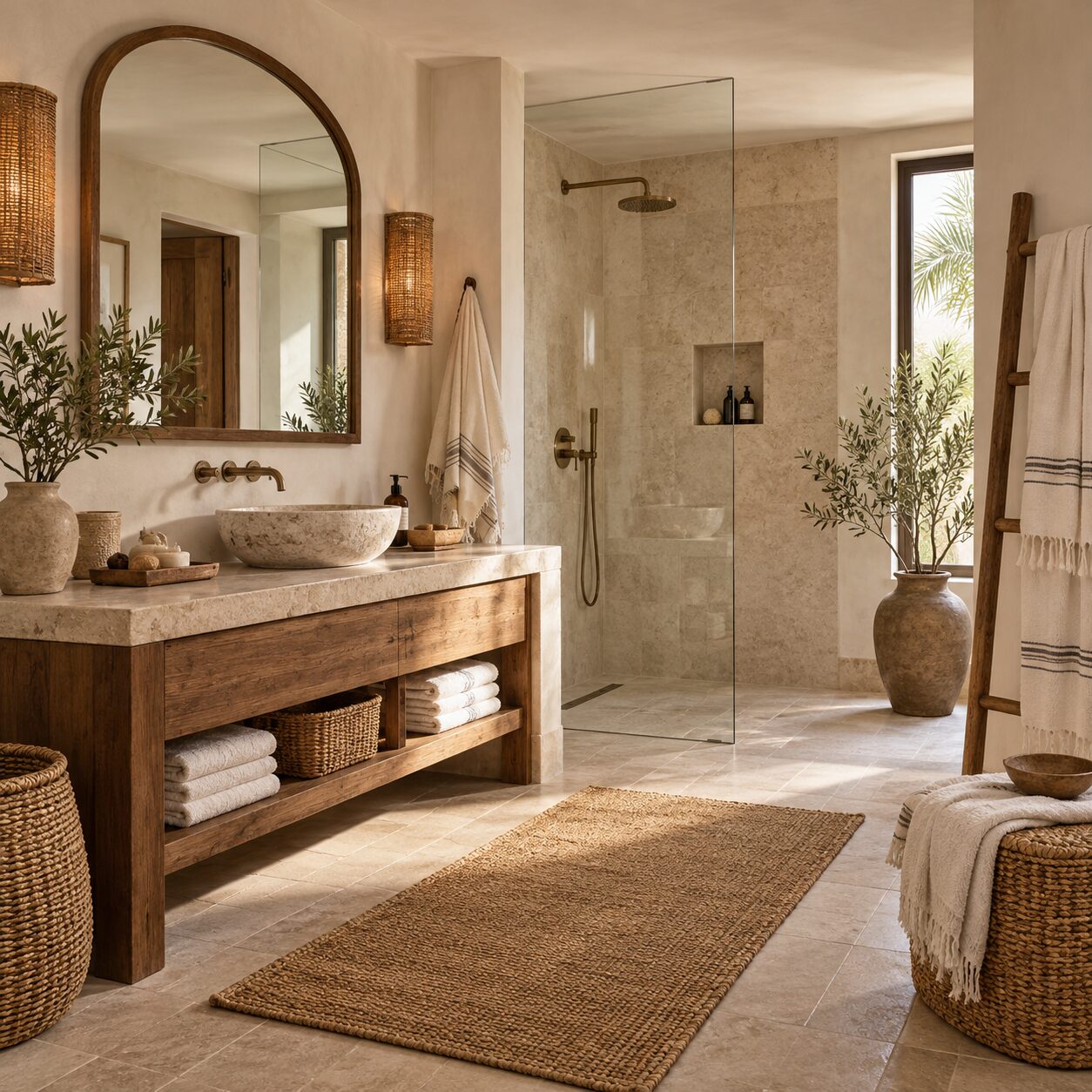
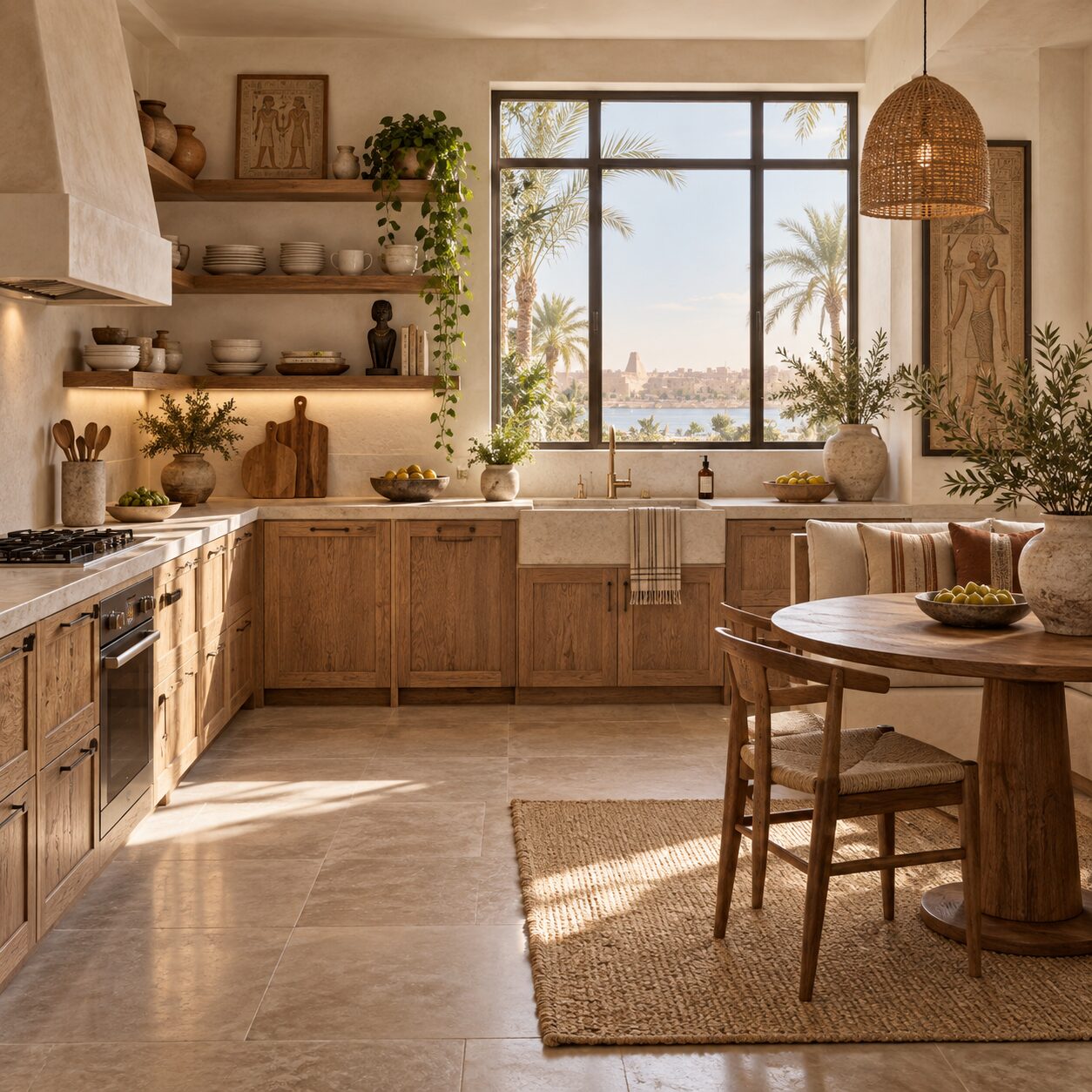
Walk into a room with white walls, grey tiles and glossy furniture, and it can feel polished yet strangely cold. Now picture the same room with a wooden tray on the coffee table, a knitted throw over the sofa arm, a jute basket by the door and a linen cushion catching the afternoon light. Nothing structural has changed, but the room suddenly feels lived in and inviting. That is the power of warm wood and natural textiles.
Wood and natural fibres have furnished Egyptian homes for centuries, from carved mashrabiya screens and inlaid boxes to cotton that became famous around the world. Today they are the easiest way to soften modern apartments and make any style, from boho to modern, feel human. This guide explains how to choose wooden accents, mix wood tones with confidence, layer natural textiles, and keep everything looking its best in our climate.
Why Wood and Natural Textiles Work So Well Together
Wood and natural fabrics share qualities that make them natural partners.
- They add warmth. Wood’s golden and brown tones and the soft texture of cotton, linen and wool counterbalance cool tiles, glass and metal.
- They age gracefully. Natural materials develop character with use, while many synthetics simply look worn.
- They connect the home to nature, which many people find calming, especially in dense city neighbourhoods.
- They are flexible. Wood and natural textiles suit almost every decor style, so they rarely go out of fashion.
- They carry craft. Many wooden and woven pieces are handmade, so each one has small variations that make it unique.
Start Small: Wooden Accents That Make a Big Difference
You do not need a new dining table to bring wood into your home. Small accents deliver much of the effect for a fraction of the cost and effort.
Trays
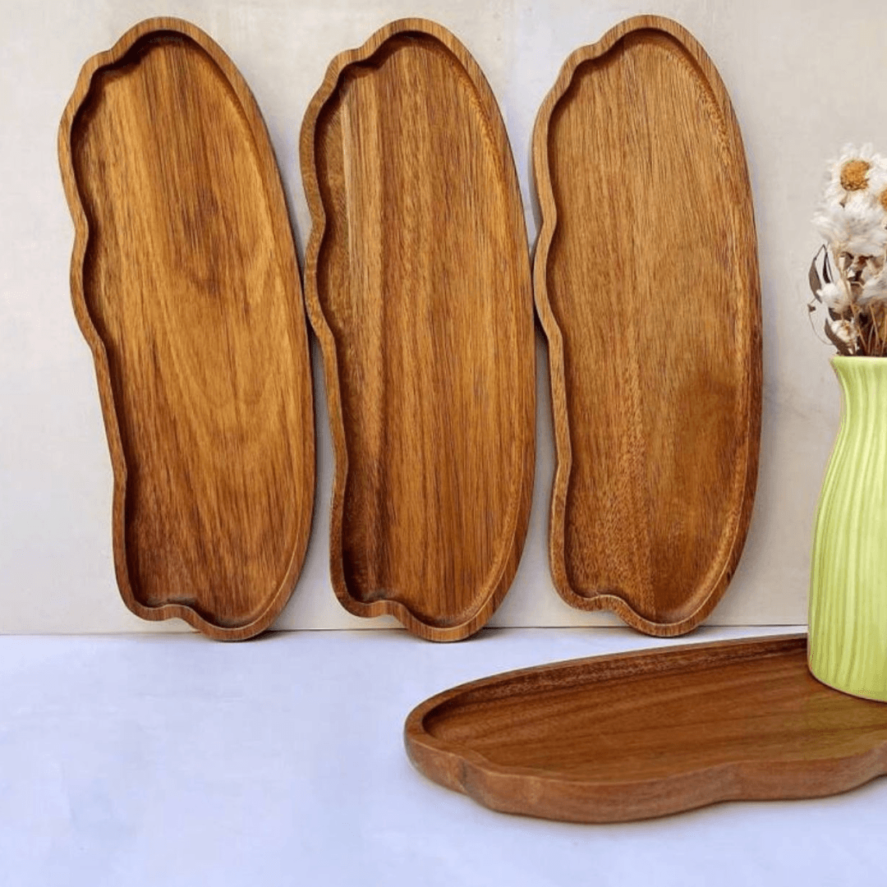
A wooden tray is one of the most useful decor pieces you can own. It organises a coffee table, carries tea to guests, and gathers candles, books and plants into a neat composition. The Acacia Wood Serving Tray is a versatile everyday choice, while a Natural Tree Disc Tray cut from solid elm shows off the rings and raw edge of the wood, bringing a true piece of nature to a console or side table.
Coasters
Coasters are small but visible, and they protect your other wooden furniture from rings. A set of Handcrafted Wooden Mandala Coasters adds pattern and warmth to every cup of tea.
Candle Holders and Beaded Garlands
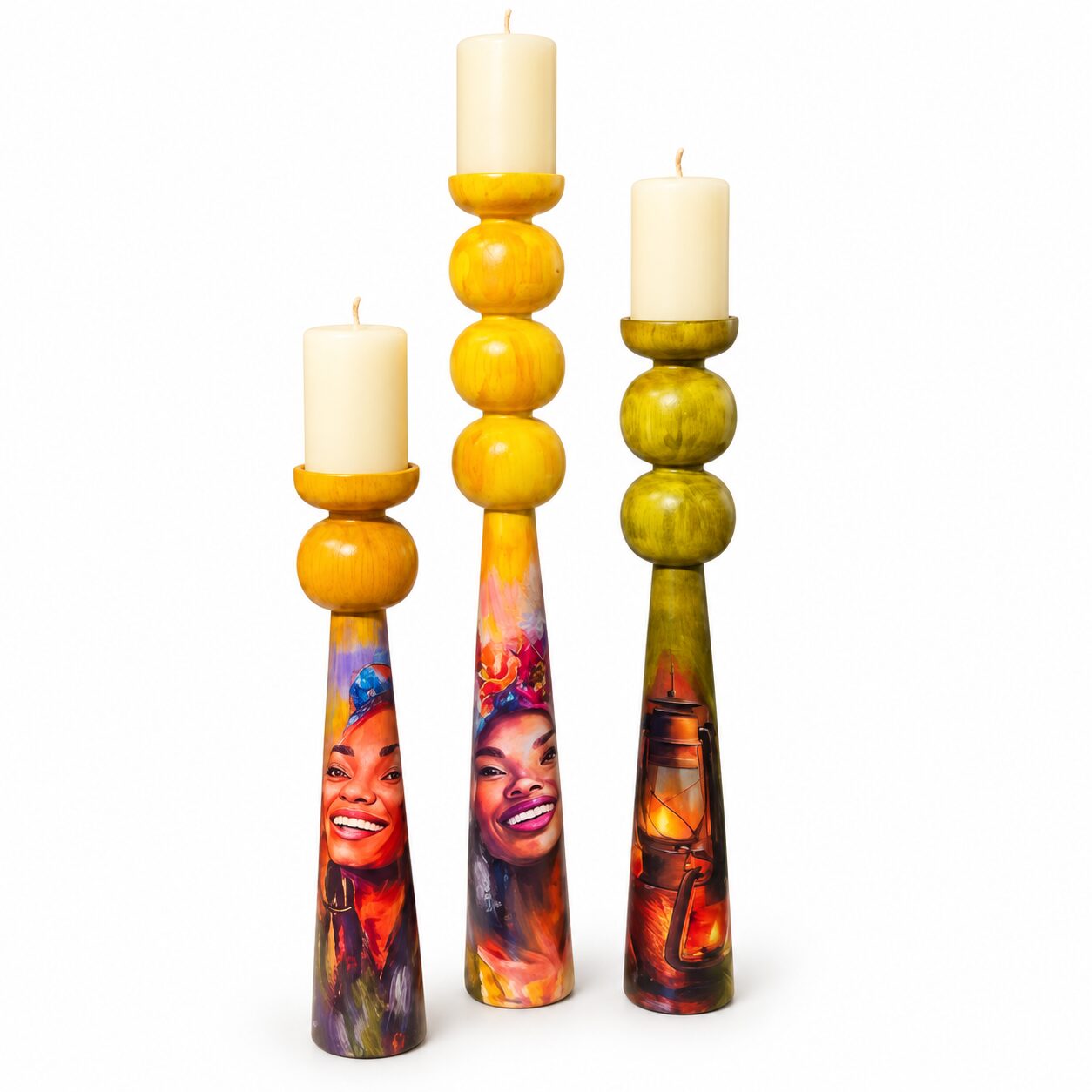
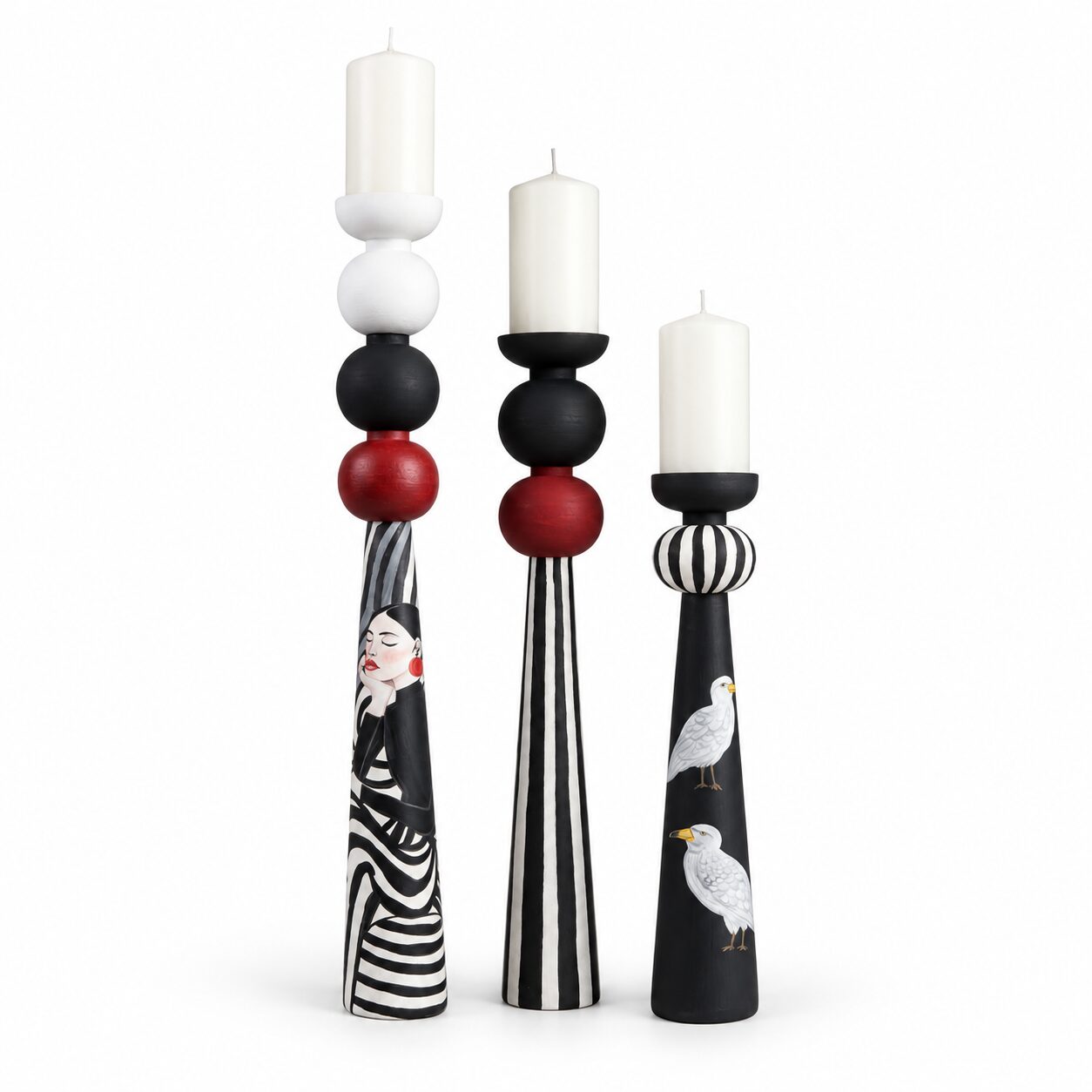
Wooden candle holders add height and glow, and wooden bead garlands draped over a tray or a stack of books bring a relaxed, handmade touch.
Wall Pieces
Wood on the wall draws the eye upward and warms plain paint. Consider hand-painted wooden wall plates, a carved panel, or a mirror with a wooden frame.
Plant Stands
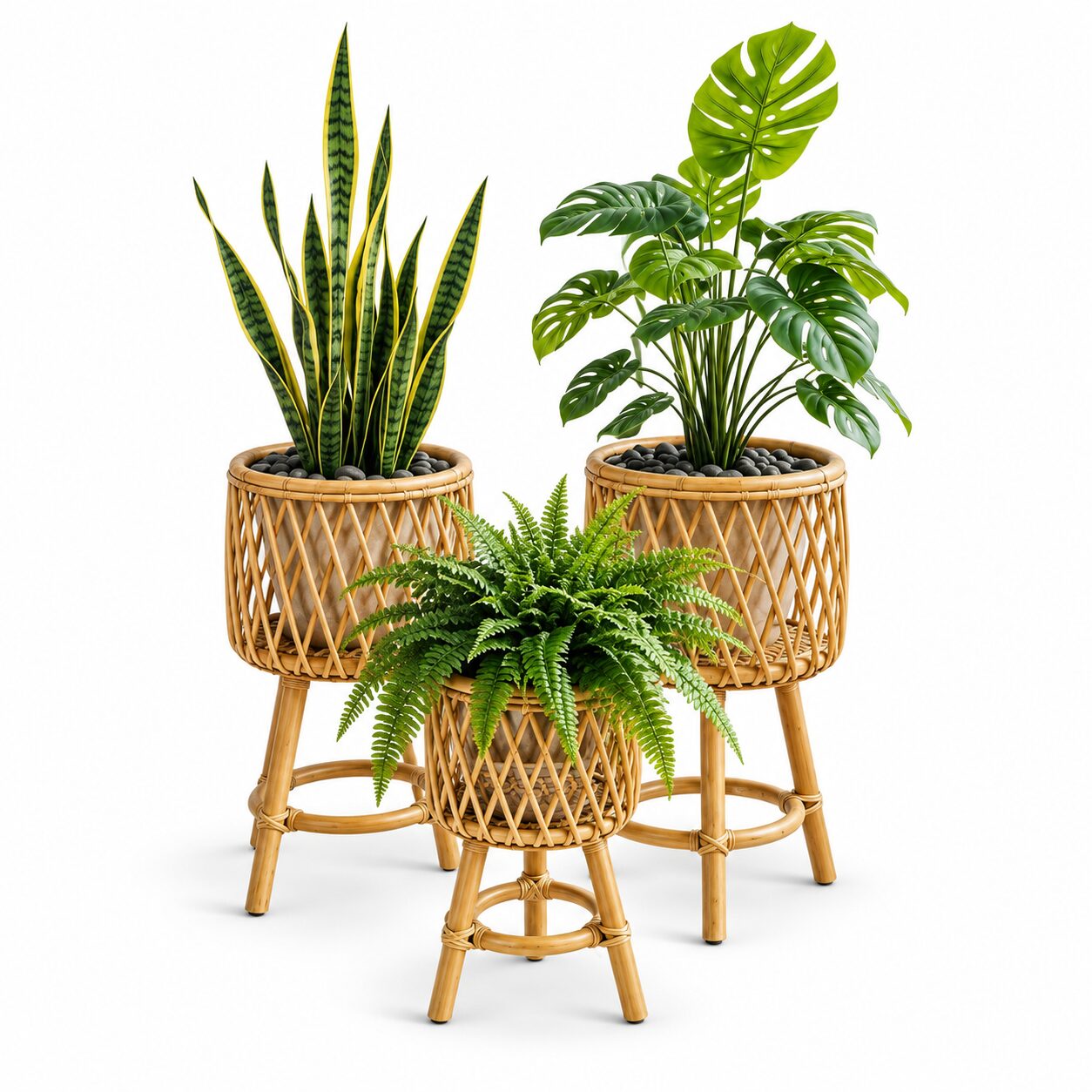
A wooden plant stand lifts greenery to eye level and fills an empty corner. The combination of wood and leaves is one of the most natural pairings in decor.
Go Bigger: Wooden Furniture as a Focal Point
Once you have a few accents, consider one larger wooden piece to anchor a room.
- An accent chair with a wooden frame softens a living room and invites reading. The Handcrafted Nordic Lounge Chair, with a solid wood frame and woven rope seat and backrest, is a perfect example of wood and natural fibre working together in one piece.
- A side table in wood, particularly one with inlay or hand-painting, becomes a conversation piece.
- Storage furniture such as a wooden bench or cabinet brings warmth while hiding clutter.
When you add a large wooden piece, keep the accessories around it simple so the grain and craftsmanship can be appreciated.
How to Mix Wood Tones Without Clashing
One of the most common worries is whether different woods can live in the same room. They can, and mixing them usually looks richer than matching everything. Follow a few guidelines:
- Pick a dominant tone. Let one wood tone, often the largest piece such as a floor or dining table, lead. Other tones then act as accents.
- Match the undertones. Woods have warm (red, orange, yellow) or cool (grey, ash) undertones. Mixing woods with similar undertones feels harmonious even if the shades differ.
- Create contrast deliberately. Pair light and dark woods with clear difference, such as pale acacia with dark walnut-toned pieces. Similar-but-not-quite-matching tones look like a mistake; clear contrast looks intentional.
- Repeat each tone at least twice. A dark wood candle holder on the shelf feels connected if a dark wood frame appears elsewhere in the room.
- Use a rug or textile as a bridge. A rug that sits between wood tones, or contains both colours, visually links the pieces.
- Mind the grain. Mixing a busy grain with a quiet one balances the room. Too many strong grains together can feel chaotic.
Layering Natural Textiles
Natural textiles are the soft partner to wood. Layering them adds depth, comfort and sound absorption, which is welcome in tiled Egyptian homes.
Cotton
Cotton is breathable and easy to live with, perfect for our warm climate. Knitted cotton throws, crochet baskets and woven runners bring softness without heat. A Chunky Knitted Nordic Throw draped over a sofa or at the foot of a bed adds texture and is ideal for air-conditioned evenings.
Linen
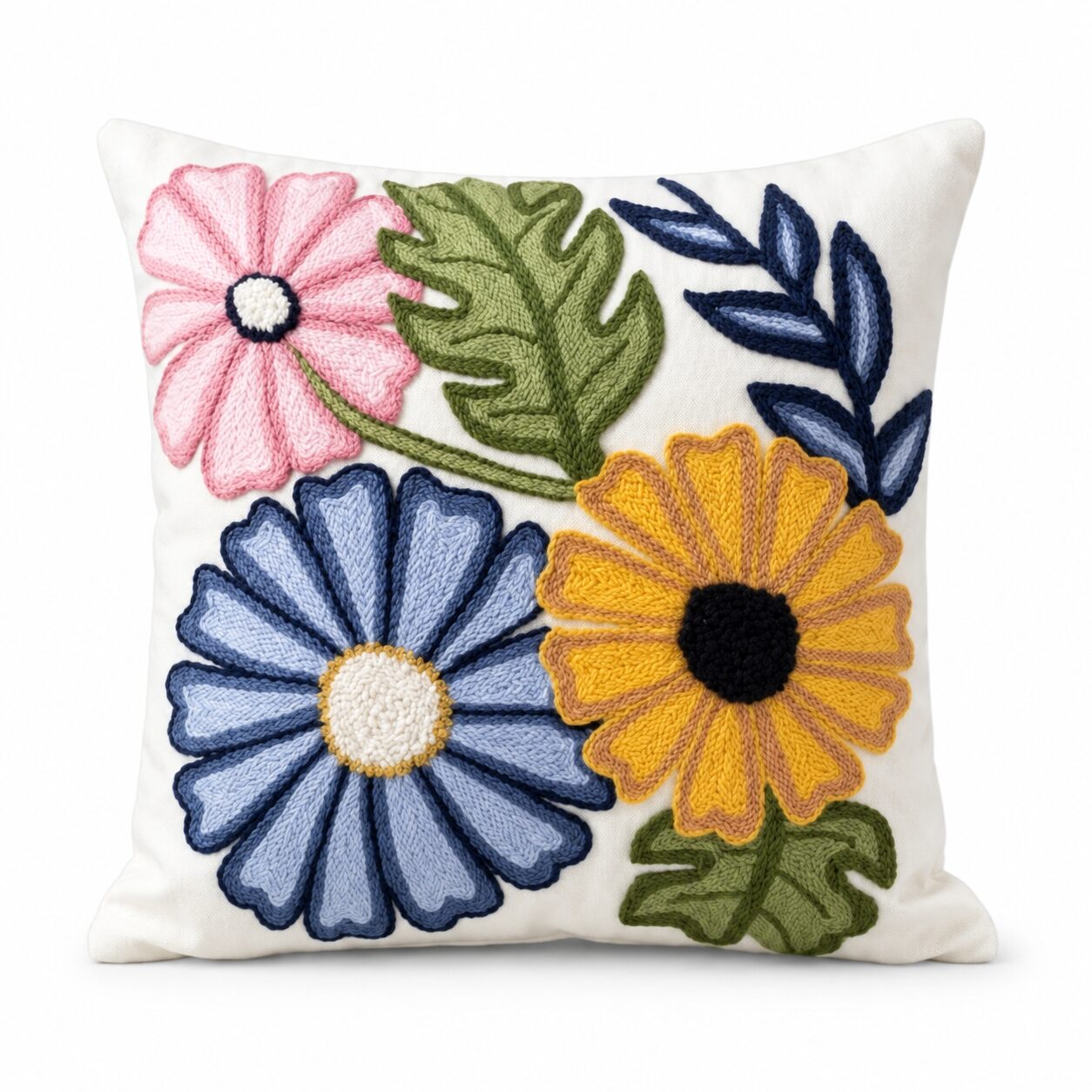
Linen has a relaxed, slightly crumpled look that feels effortless and natural. It pairs beautifully with light woods. A Palm Leaves Tufted Cushion in cotton and linen brings a soft botanical note that echoes wood and plants.
Jute and Halfa
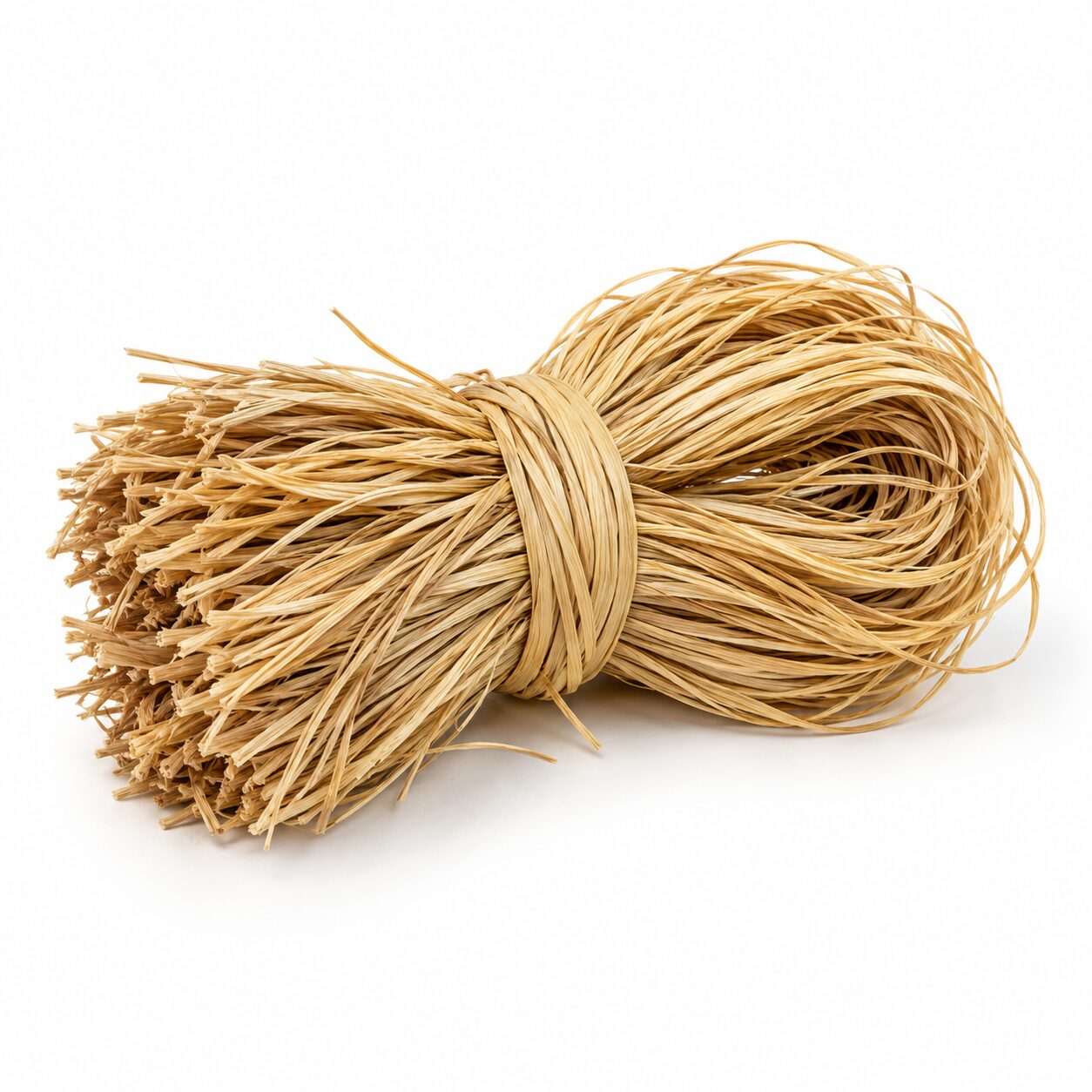
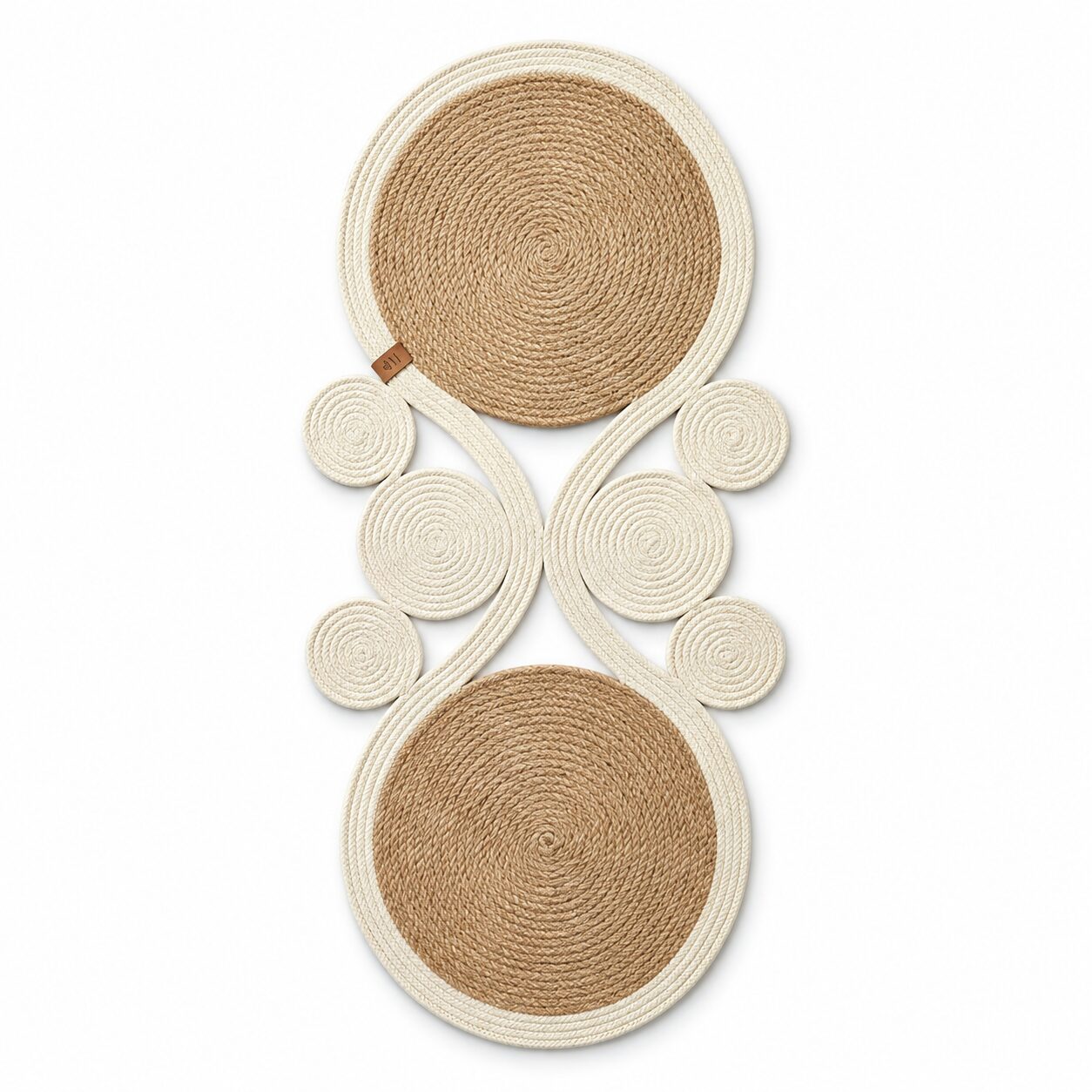
These coarser fibres add rustic texture at floor level and in storage. A Jute Storage Basket with Wooden Lid is a perfect example of wood and fibre combined: practical storage that looks like decor.
Kilim and Woven Runners
Flat-woven cotton kilims bring pattern and colour. On a wooden dining table, a Kilim Table Runner protects the surface and adds a handmade, traditional motif that makes everyday meals feel special.
How to Layer
- Mix textures, not just colours. Combine a chunky knit with smooth linen and rough jute in one area.
- Use three layers. For example, a rug on the floor, a throw on the sofa and cushions on top.
- Keep a restrained palette. Natural tones such as cream, sand, olive and brown let texture take the lead.
- Add one pattern. A kilim cushion or runner provides interest without overwhelming the natural calm.
Room-by-Room Ideas
Living Room
Put a wooden tray on the coffee table with candles and a small plant, drape a knitted throw over the sofa, add linen and kilim cushions, and finish with a jute or halfa rug.
Dining Room
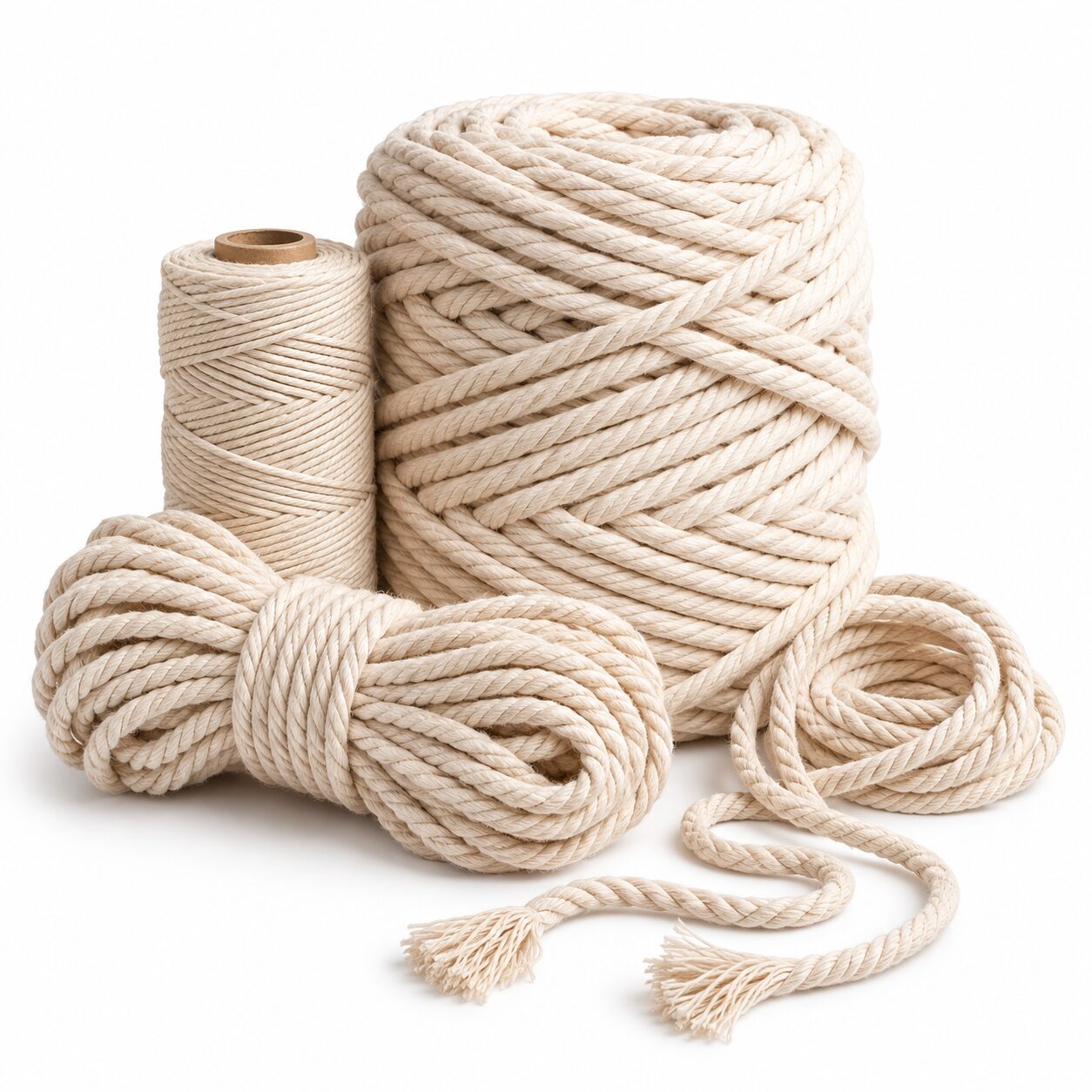
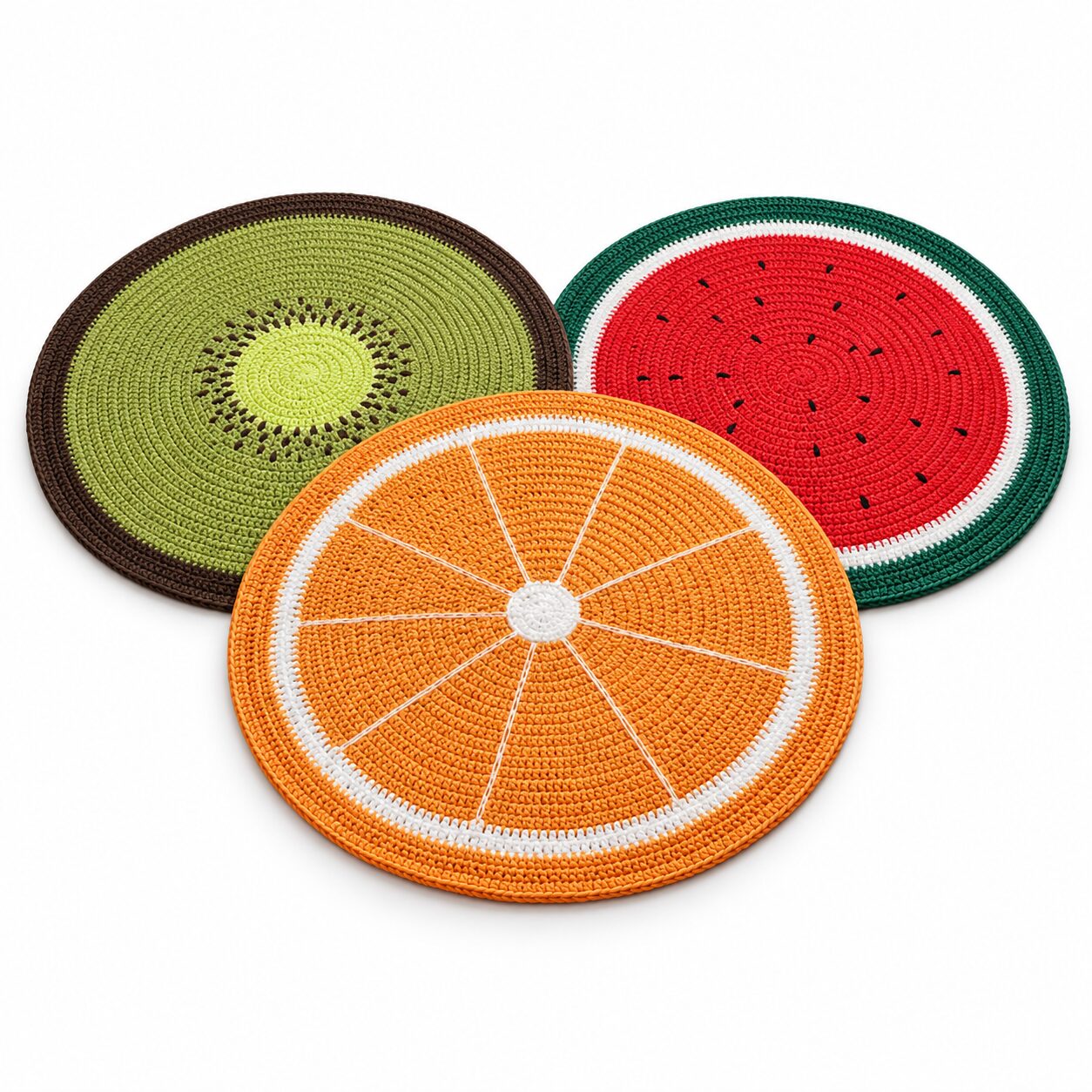
Let the wooden table show. Use a woven runner instead of a full tablecloth, add rope or jute placemats, wooden coasters and a pottery vase with greenery.
Bedroom
Choose cotton or linen bedding in soft neutrals, a knitted throw at the foot of the bed, a wooden lamp or candle holder on the bedside table, and a woven basket for spare blankets.
Entrance
A wooden bench or console, a jute basket for shoes or bags, and a wooden-framed mirror make a warm first impression.
Kitchen
Wooden serving boards, a jute bread basket and linen tea towels bring warmth to a hard-surfaced room.
Adjusting Wood and Textiles Through the Seasons
Wood stays in place all year, but the textiles around it can change with the weather, keeping the room comfortable and fresh.
Summer
Egyptian summers are long and hot, so lighten the layers. Fold away heavy throws, switch to cotton and linen cushion covers in pale sand and cream, and roll up thick rugs in favour of flat-woven cotton or halfa, which feel cooler underfoot. Pale woods look especially fresh in bright summer light.
Winter
When evenings turn cool, bring back chunky knits, add an extra cushion or two, and lay a thicker rug in the living room. Darker wood accents and candlelight make the room feel cosy.
Ramadan and Eid
Festive seasons are a good time to bring out wooden serving trays, cutlery caddies and kilim runners for long family meals, then return to your everyday layers afterwards.
Caring for Wood in the Egyptian Climate
Our climate is kind to wood in some ways and challenging in others.
- Dust often. Use a soft, dry cloth, especially after windy and dusty days. Dust is abrasive and dulls finishes over time.
- Avoid soaking. Wipe spills immediately and never leave wooden trays or coasters sitting in water.
- Use coasters and mats. Cold glasses sweat in the heat and can leave rings.
- Protect from harsh sun. Direct afternoon sun can fade and dry wood. Use sheer curtains and rotate pieces near windows.
- Keep away from AC vents. Constant cold, dry air can cause some wood to crack.
- Condition when needed. Untreated or oiled wood may benefit from occasional conditioning with a suitable wood oil; always check the care note for your piece first, as painted and lacquered finishes need different care.
- Wash textiles regularly. Natural fabrics hold dust and odours, so follow each label and dry them in the shade.
Common Mistakes to Avoid
- Matching every wood exactly. It looks flat. Mix tones with intention.
- Too much of one wood. A room with wood floors, wood walls and wood furniture in the same shade can feel heavy. Break it up with textiles and plants.
- Forgetting texture. Wood with only smooth fabrics can feel dull. Add knits, weaves and jute.
- Choosing synthetic look-alikes everywhere. They rarely deliver the same warmth or age as gracefully.
- Placing wood in wet areas without care. Bathrooms and sinks need extra attention.
- Overcrowding surfaces. Let wooden pieces breathe so the grain can be seen.
Quick Checklist
- Add at least one wooden tray and one set of wooden coasters
- Choose a dominant wood tone and one or two accent tones
- Repeat each wood tone at least twice in a room
- Layer three natural textiles: cotton, linen and jute or halfa
- Keep a restrained, natural colour palette with one pattern
- Add a wooden plant stand or candle holder for height
- Use a rug or runner to bridge different woods
- Dust wood regularly and protect it from water, sun and AC blasts
- Check care notes before oiling or washing
A Home That Feels Warm to the Touch
Warmth in a home is not just about temperature. It is about materials that invite you to touch, sit and stay. By bringing in wooden accents, mixing tones with confidence and layering cotton, linen, jute and kilim, you can turn even the most modern apartment into a space that feels grounded and welcoming. Start with a tray and a throw, and let the rest grow naturally.
Discover handcrafted wooden trays, coasters, candle holders and furniture, along with natural cotton, linen and jute textiles, at coccarohome.com, with delivery across Egypt.
Shop the Look