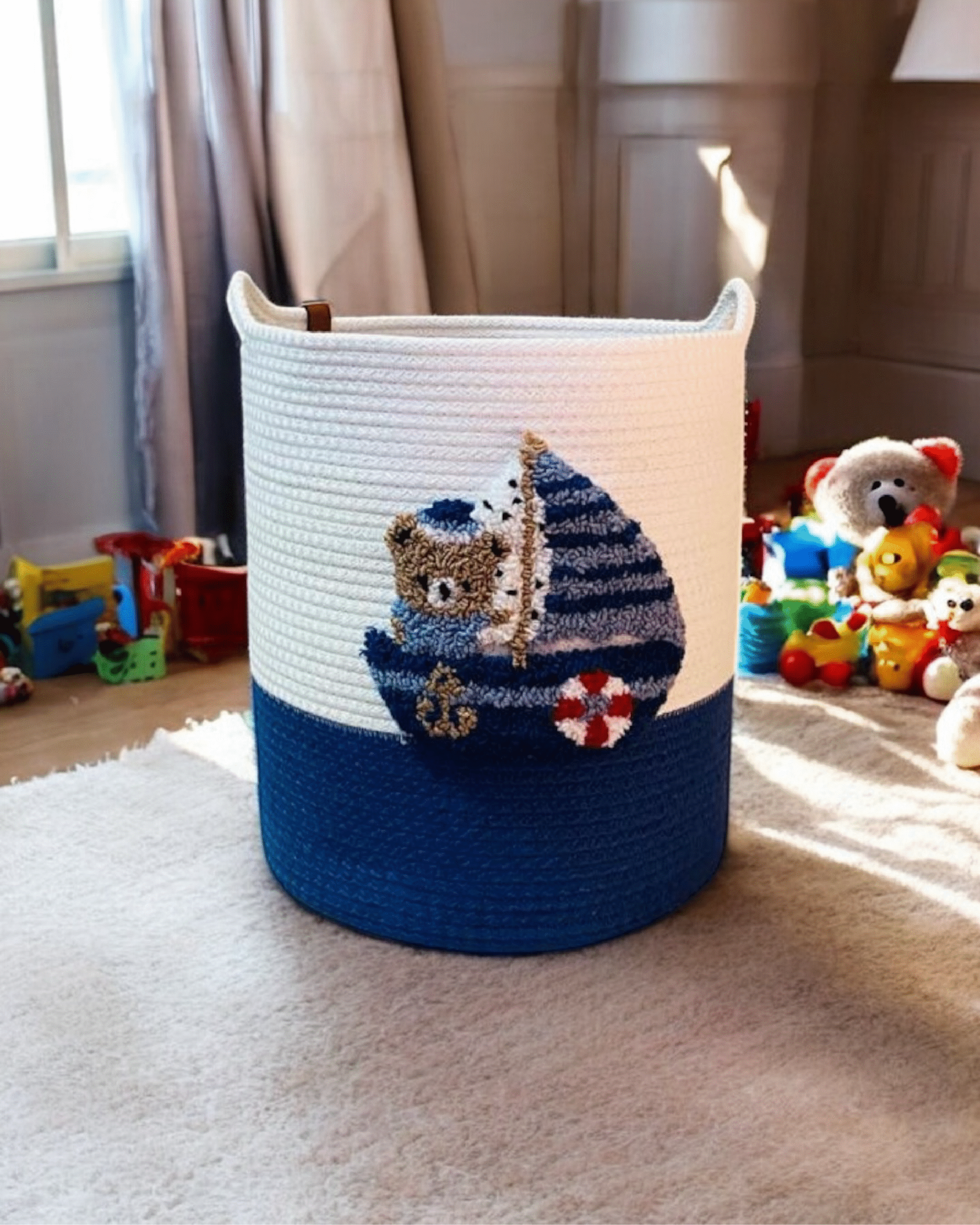
The last weeks of summer always end the same way. One day the children are sleeping until noon and living in swimsuits; the next, there are uniforms to iron, books to cover, a stack of supply lists from three different teachers and an alarm set for six in the morning. For many Egyptian families, September and October are as busy as Ramadan, just with more homework. Within a fortnight, the children’s room has disappeared under school bags and toys, and even a cheerful Bear on the Ship Jute Toy Basket is overflowing.
School success is not only about tutors and textbooks. A home that is organised for the school year makes mornings calmer, homework more focused and evenings less stressful for everyone. The good news is that you do not need a large house or a full renovation. You need a few clearly defined zones, storage your children can actually use, and some simple routines the whole family agrees on.
Start With a Summer Reset
Before buying a single notebook, spend one afternoon clearing out the remains of last year and of summer.
Sort Last Year’s Things
- Uniforms and shoes: try everything on. Outgrown items go to younger cousins, neighbours or charity.
- Books and notebooks: keep a few meaningful pieces of work, and recycle the rest.
- Stationery: test every pen and marker, sharpen pencils and throw away dried-out glue sticks.
- Toys: summer often brings new toys. Let children choose a few older ones to give away to make room.
Make a List of What You Actually Need
Combine the school supply lists with what you already have. You will usually find you need far less than you expected, and you avoid the August scramble in crowded stationery shops.
Create a Launch Pad by the Door
The most stressful moment of the school day is the ten minutes before leaving. A “launch pad” near the entrance solves most of it: one spot where everything needed to walk out of the door lives.
What the Launch Pad Needs
- A place for each child’s bag. Hooks on the wall or a basket on the floor, one per child, labelled with their name.
- A shoe zone. School shoes go in the same place every afternoon.
- A small container for keys, bus cards and pocket money.
- A wall pocket for papers. Permission slips, notes from teachers and receipts need somewhere visible. A Hanging Jute Wall Basket keeps them off the console and in plain sight.
Encourage children to pack their bags the night before and put them on the launch pad. In the morning, there is nothing to search for.
Design a Study Corner That Works
Homework is easier when children have one consistent place to do it. It does not need to be a separate room; a corner of the bedroom, a section of the dining table or a desk in the living room works perfectly.
The Essentials
- A flat surface at the right height. Feet should rest flat on the floor or a footrest, and elbows should be level with the desk.
- Good light. Daylight is ideal, but evening homework needs a desk or table lamp positioned on the opposite side of the writing hand, so the hand does not cast a shadow.
- Supplies within reach. Pencils, erasers, rulers and colours in containers on the desk, not in a bag on the floor.
- No screens nearby, except when the work requires them.
Storage for the Desk
Small collapsible fabric cubes, such as the Bohemian Fabric Storage Cube, are ideal on a desk or a shelf above it. Use one for pens and pencils, one for colours and craft supplies, and one for flashcards or small revision notes. Because they are soft and light, younger children can carry them to the dining table and back without breakage.
For shared tables, keep each child’s supplies in their own basket. When homework is finished, the basket goes back on the shelf and the table is ready for dinner.
Organise the Children’s Rooms
A child’s room has to work as a bedroom, a playroom and often a study, all at once. The key is storage they can reach and understand without help.
Toys and Books
- Low, open baskets for toys mean children can see what they have and tidy it themselves.
- One category per basket: building blocks in one, soft toys in another, cars in a third.
- Picture labels for children who cannot read yet.
- Front-facing book display for younger readers, because children choose books by their covers.
Themed baskets make tidying feel less like a chore. A sailor-themed jute basket or a Teddy Bear Jute Toy Basket gives soft toys and blocks a home that children are happy to use, and the natural jute suits the rest of the house as the children grow.
Clothes
Lay out the week’s uniforms on Sunday evening. A hanging organiser in the wardrobe, with one section per school day, takes the guesswork out of mornings. Keep sports kits in a separate, clearly marked basket so they are not forgotten on PE days.
Smooth Out School Mornings
Mornings set the tone for the whole day. A few preparations the evening before make a dramatic difference.
The Evening Routine
- Bags packed and placed on the launch pad.
- Uniforms ironed and laid out.
- Lunchboxes prepared or at least planned.
- Water bottles washed and ready to fill.
- A quick check of tomorrow’s timetable.
Ironing a week of uniforms on Sunday is a time saver in itself. A dependable iron like the Braun TexStyle 1 Steam Iron with its non-stick soleplate makes the weekly task quicker. Always unplug the iron and let it cool out of children’s reach.
Breakfast and Lunchboxes
Prepare a breakfast station the night before: bowls, cups, cereal, honey and a tray ready on the counter. For lunchboxes, a Philips Sandwich Maker turns plain bread and cheese into a warm toasted sandwich in minutes. Keep a small basket in the fridge or cupboard with ready-to-pack snacks so children can help assemble their own lunches.
Set Up a Family Command Centre
With school, tutoring, sports clubs and family visits, the week fills quickly. A shared family calendar in a visible place keeps everyone informed and reduces last-minute surprises.
What to Track
- School exams and project deadlines
- Tutoring sessions and clubs
- Days off and school events
- Family occasions and visits
A Handmade Wooden Perpetual Wall Calendar in the kitchen or entrance makes checking the date part of the morning routine, and it is a lovely way for younger children to learn the days and months. Pair it with a simple weekly whiteboard or paper planner for appointments.
A Paper System
School generates paper. Give each child one folder or basket for papers that need a parent’s attention, and check it every evening. Once a month, go through saved artwork and keep only the favourites.
Make Room for Rest
A good school year is not only about organisation. Children need somewhere to wind down after a long day.
A Reading Nook
A floor cushion, a soft throw and a small basket of books in a corner of the bedroom becomes a calm retreat. Reading before bed, instead of screens, helps children settle and sleep better.
Screen-Free Evenings
Agree as a family on screen times, and charge devices outside bedrooms overnight. A basket in the living room where phones and tablets “sleep” after a certain hour makes the rule easy to follow.
Plan Ahead for Exam Season
The routines you build in September pay off most in January and May, when mid-year and final exams arrive and the whole household quietly rearranges itself around revision. A little planning now saves a lot of tension later.
Turn the Study Corner Into a Revision Zone
- Clear the desk completely except for the subject being studied. One subject, one pile, one task at a time.
- Add a wall timetable showing exam dates and a simple daily revision plan, so children can see their progress.
- Keep a water bottle and a small bowl of healthy snacks on the desk to avoid constant trips to the kitchen.
- Set up a quiet hour in the evening when the television is off for everyone, not just the student.
Support Without Pressure
Exams in Egypt can be stressful, particularly in the years that count towards university places. Keep the home calm: regular meals, consistent bedtimes and short breaks for fresh air on the balcony help more than late-night cramming. Younger siblings can be given their own quiet activity at the same table, so they feel included rather than shut out.
When exams are finished, reset the study corner together, archive the year’s notes and celebrate. Marking the end of a busy term is as important as preparing for it.
Common Mistakes to Avoid
- Buying supplies before sorting what you already have.
- Storage too high for children to reach. If they cannot reach it, they cannot tidy it.
- Homework in a different spot every day. Consistency helps concentration.
- Leaving everything to the morning. Bags, uniforms and lunches should be ready the night before.
- Paper piles. Without a system, school notes and forms get lost.
- Over-scheduling. Children need free time to rest and play.
Quick Checklist
- Last year’s uniforms, books and stationery sorted
- A launch pad by the door with bag, shoe and paper spots
- A consistent study corner with good light and supplies within reach
- Low, labelled toy and book baskets in children’s rooms
- Uniforms ironed and laid out weekly
- A breakfast and lunchbox routine prepared the night before
- A visible family calendar
- A calm reading nook and agreed screen times
A Calmer School Year Starts at Home
You cannot control exam timetables or traffic on the school run, but you can make home the calm, organised base that supports your children through the year. Start with the launch pad and the study corner, give every item a home children can reach, and build small routines into your evenings. By the second week of term, the whole family will feel the difference.
Find baskets, organisers, lamps and practical home essentials for the new school year at coccarohome.com.
Shop the Look