Think about the homes you remember most fondly. Chances are you remember how they smelled before you remember how they looked: bakhour drifting through a grandmother’s hallway on a Friday, fresh mint in a tea glass, orange blossom water in the kitchen before a feast, jasmine sold on the corniche in summer. Scent and soft light are the invisible layers of decor. They do not show up in photos, yet they decide whether a room feels merely tidy or truly welcoming.
This guide covers how to use candles and scent deliberately, from choosing and styling candle holders to building a scent plan for each room, with the safety habits that should come with every flame.
Why Light and Scent Matter So Much
Our brains link smell closely to memory and emotion, which is why a single familiar scent can transport you back years. Warm, low light has a similar effect on mood: it signals the end of the working day and invites people to slow down.
Together, candles and scent do things furniture cannot:
- They change the mood in minutes. Lighting a few candles transforms a room for an evening without moving anything.
- They make guests feel expected. A pleasant scent at the door tells visitors the home was prepared for them.
- They mark rituals. A candle at dinner, bakhour after Friday cleaning, or a lit corner for evening reading turns routine into ritual.
- They soften hard spaces. Modern apartments with tiled floors and white walls can feel cold. Flickering light adds movement and warmth.
Choosing Candles: Shape, Size and Purpose
Not every candle suits every spot. Think about how you will use it.
Tea Lights
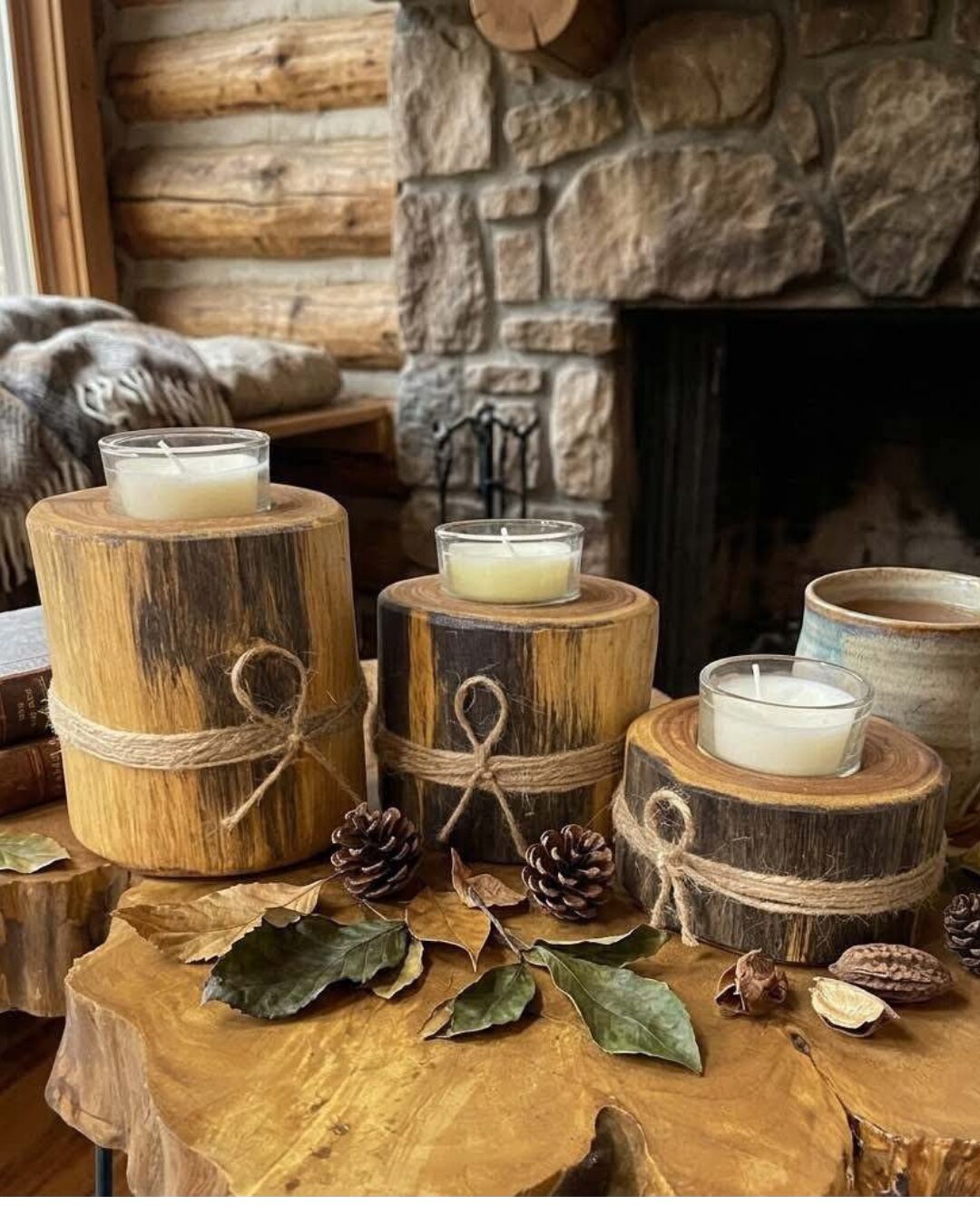
Small, inexpensive and safe in a holder, tea lights are the easiest way to add a glow. Use them in groups on a dining table, a windowsill or a tray. A Set of Three Wooden Tea Light Holders gives rustic warmth and makes a ready-made centrepiece.
Pillar Candles
Pillars are thick and stable, and they burn for a long time. They look elegant on a coffee table, a console or a fireplace-style shelf. A Vanilla Pillar Candle in white is a classic starting point that suits almost any colour scheme.
Decorative and Sculptural Candles
Some candles are as much about form as about flame. Shell-Shaped Concrete Candles bring a coastal, handmade feel to a bathroom shelf or bedside table, while a Carved Acacia Bowl Candle adds the warmth of natural wood.
A Note on Unlit Candles
Candles look beautiful even when they are not burning. A styled group of candles in holders is decor in its own right, and you can light them only on special evenings.
Candle Holders: Where the Style Really Lives
The holder often matters more than the candle itself. It sets the style and protects your surfaces.
- Wooden holders feel warm, natural and grounded. They suit boho, farmhouse and Scandinavian rooms.
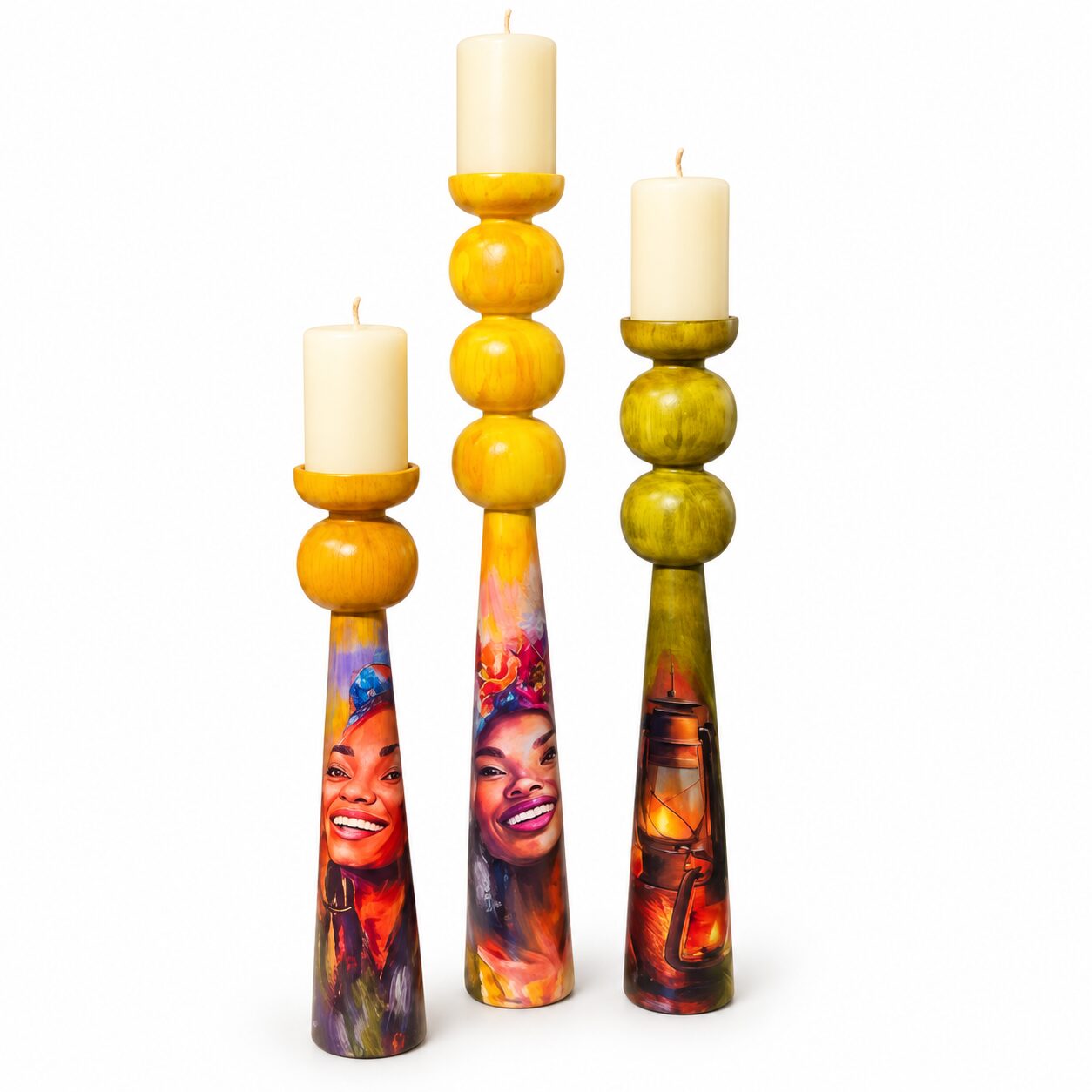
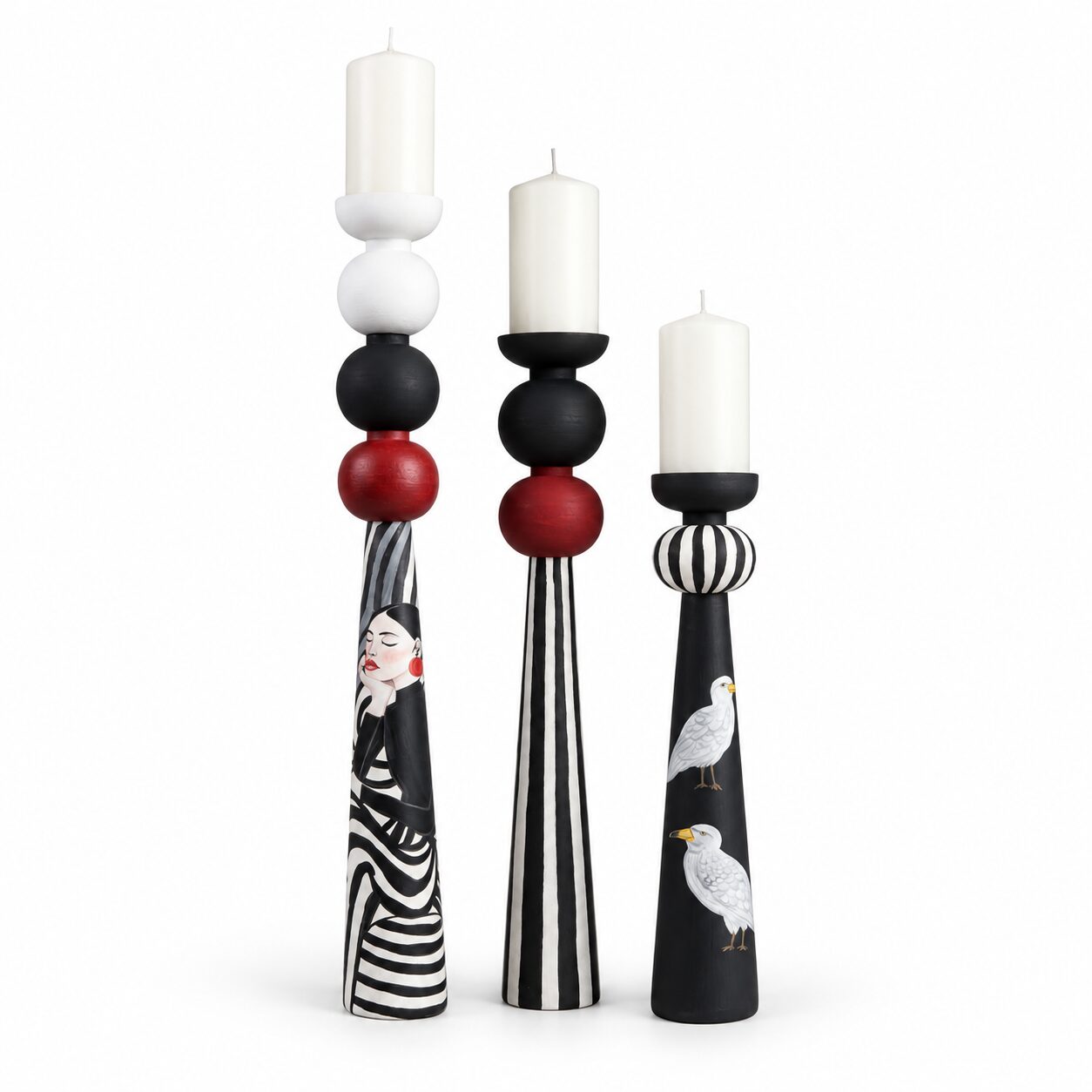
- Hand-painted holders add colour and artistry and work as statement pieces even in daylight.
- Tall and short pairs create height variation, which always looks more intentional than candles of the same size lined up.
The Botanica Hand-Painted Wooden Candle Holders come as a set of three, painted with botanical designs that turn a sideboard into a small gallery. For a darker, more classic look, the Dark Wood Candle Holder Set of 2 pairs a tall and a short turned stand for instant height contrast.
How to Style Candles Like a Designer
A few design principles make the difference between “some candles on a table” and a considered arrangement.
- Group in odd numbers. Three or five candles look more natural than two or four.
- Vary the heights. Combine tall, medium and low pieces for a rhythm the eye enjoys.
- Use a tray to unify. A tray turns separate objects into one composition and catches any drips. The Acacia Wood Serving Tray is a lovely base for a coffee table candle group.
- Add something natural. Tuck in a few dried stems, a small plant or a stone. Texture makes the arrangement feel alive.
- Mind sightlines at the table. Keep dining candles either low, below eye level, or tall and slim, so guests can see each other.
- Repeat materials. If your holders are wood, echo wood elsewhere in the room, such as coasters or a frame.
A woven Handmade Halfa Vase filled with dried or artificial stems sits beautifully next to a candle group and adds height without more flames.
Building a Scent Plan, Room by Room
Scent works best when it is planned. Using the same strong fragrance everywhere becomes overwhelming, while a thoughtful plan gives each room its own character.
Entrance
This is your first impression. Choose something light and fresh, never heavy. Many Egyptian homes burn a little bakhour near the door before guests arrive; if you do, do it early enough that the smoke clears and only the fragrance remains.
Living Room
This is where people spend time together, so aim for warm, comforting notes: vanilla, amber, sandalwood or a gentle oud. Keep it subtle enough that it does not compete with food and tea.
Dining Area
Keep this room almost neutral. Food should be the main aroma at mealtimes. If you light candles here, unscented or very lightly scented ones are best.
Kitchen
Fight cooking smells rather than masking them. Ventilate while cooking, then simmer water with orange peel, cinnamon or cloves for a natural, homely scent.
Bedroom
Choose calming notes like lavender or soft florals. Never fall asleep with a candle burning; enjoy it while you read, then blow it out.
Bathroom
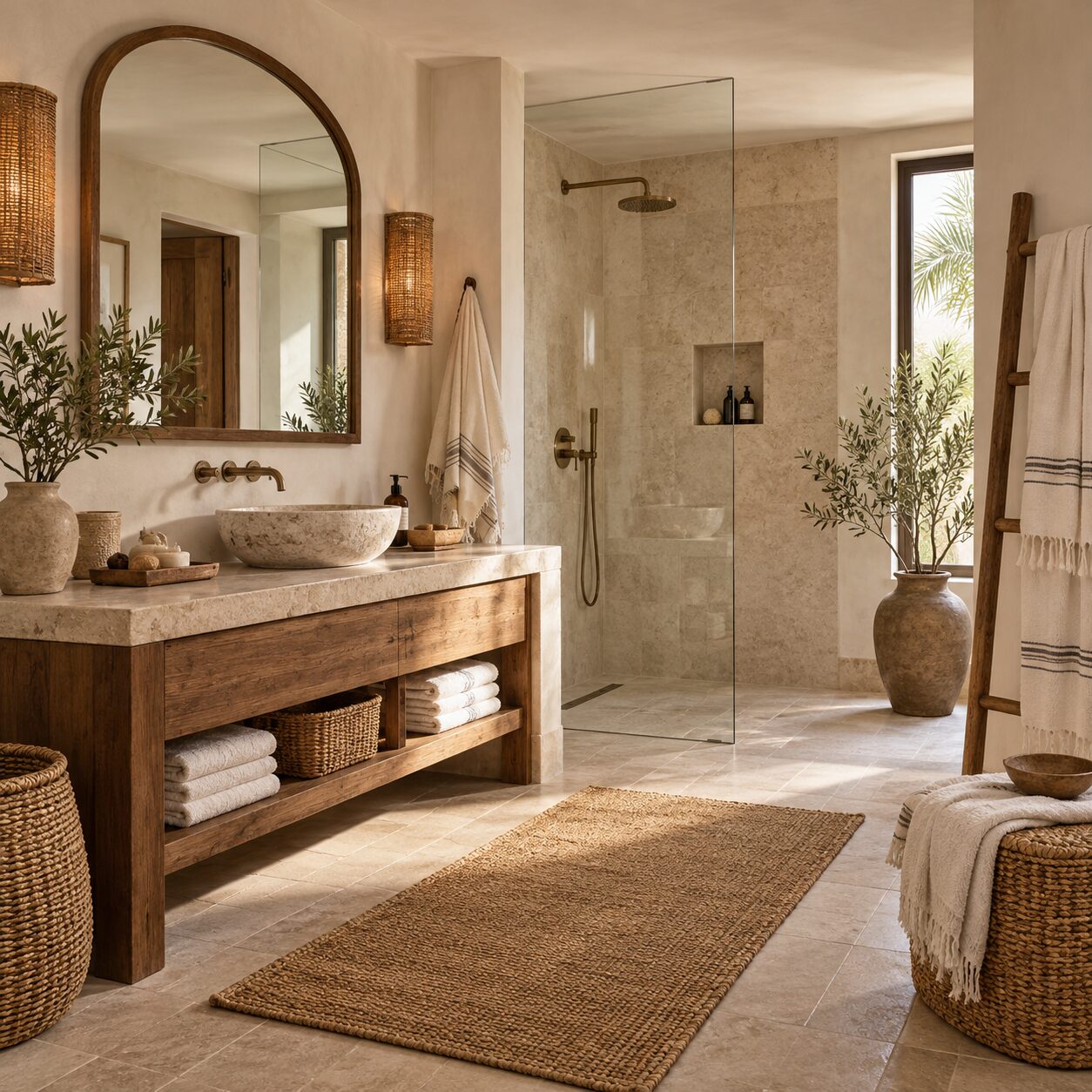
Fresh, clean scents work best here: citrus, eucalyptus, or jasmine. A small decorative candle on a shelf adds a spa feeling.
Natural Ways to Scent Your Home
Candles are only one tool. Egyptian homes have long used simple, natural methods:
- Bakhour and oud for special occasions and Fridays
- Fresh mint on the kitchen counter or in a glass on the table
- Jasmine and ful flowers in a small bowl in summer
- Orange blossom or rose water lightly sprayed on linens
- Coffee beans in a small bowl, which also absorb odours
- Sun-dried laundry, which brings its own fresh smell into the house
Candles and Scent Through the Year
Your home’s atmosphere can follow the calendar, just as your cushions and table linens do.
Ramadan and Eid
Evenings are the heart of Ramadan, so this is the season for soft light. Group candles near the iftar table and in the living room where the family gathers after taraweeh, and keep scents warm and gentle: oud, amber and a little bakhour before guests arrive. For Eid, add fresh flowers and lighter, brighter notes to match the celebratory mood.
Winter Evenings
Cairo winters are short but real, and a chilly evening is the perfect excuse for a candle-lit reading corner with a throw. Warm spices like cinnamon and clove suit the season.
Long Summers
When it is hot, heavy scents feel oppressive. Switch to citrus, mint and jasmine, light candles only after sunset when the house has cooled, and rely more on unlit candle arrangements as decor during the day.
Start With a Clean Base
No candle can hide a stale room. Scent is most effective when it sits on top of fresh air and clean textiles.
- Open windows early in the morning, before the heat builds, to air the house.
- Wash cushion covers, throws and table runners regularly; fabrics hold cooking and smoke odours.
- Vacuum rugs and upholstery, especially after dusty days.
- Empty bins daily and clean drains weekly.
- Clean the air conditioner filters, which can circulate musty smells.
Candle Safety: Non-Negotiable Habits
A beautiful home must be a safe one. Follow these habits every time you light a flame:
- Never leave a burning candle unattended, not even for “just a minute” in another room.
- Keep candles away from curtains, cushions, dried flowers and paper. Leave generous space around every flame.
- Keep them out of reach of children and pets. Place them high or on a tray at the back of a table.
- Avoid drafts. Air conditioners, fans and open windows make flames flicker, smoke and burn unevenly.
- Use a heat-safe holder or plate under every candle so wax and heat do not damage surfaces.
- Trim the wick to around half a centimetre before each lighting to reduce smoke and soot.
- Do not let a candle burn to the very bottom. Stop when little wax is left.
- Extinguish before bed and before leaving the house.
If you love the glow but worry about safety, place candles in holders on a tray, keep a snuffer nearby, and use them mainly when you are in the room and awake.
Common Mistakes to Avoid
- Too many competing scents. A vanilla candle, a floral spray and bakhour all at once confuse the nose. Choose one scent per room.
- Heavy fragrance in small rooms. A small apartment fills quickly. Start subtle and increase if needed.
- Scented candles at dinner. They clash with food. Save them for the living room.
- Candles in a straight line. Vary heights and group them instead.
- Ignoring the holder. A great candle in a flimsy or mismatched holder looks unfinished.
- Covering smells instead of removing them. Clean and ventilate first, then add scent.
- Placing candles under the AC. The draft wastes wax and creates soot.
Quick Checklist
- Air the house and wash textiles before adding scent
- Choose one main scent for each room
- Pick candles by purpose: tea lights for groups, pillars for long burns
- Choose holders that match your style: wooden, hand-painted, or tall and short pairs
- Group candles in odd numbers on a tray
- Add a natural element such as dried stems in a vase
- Keep dining candles low or slim and lightly scented
- Keep every flame away from fabric, children and drafts
- Trim wicks and never leave candles burning unattended
A Home You Can Feel
The most memorable homes engage every sense. When the light is soft, the air is fresh and a gentle scent greets you at the door, a room feels cared for in a way no single piece of furniture can achieve. Start with a clean base, choose a few candles and holders you love, give each room its own mood, and light them safely.
Discover our candles, wooden and hand-painted candle holders, trays and vases at coccarohome.com, with delivery across Egypt.
Shop the Look