Close your eyes and run your hand along a sofa. You can tell a velvet cushion from a raffia one instantly, and a tufted punch needle design from smooth cotton. Touch is how we really experience cushions, yet most of us choose them by colour alone, scrolling past photos and picking whatever matches the curtains.
Fabric changes everything about a cushion: how it feels against bare arms in August, how it survives children and coffee, how it catches lamplight in the evening and how often it needs washing. This guide breaks down the most common cushion cover fabrics and textures, what each does well, where it struggles, and how to combine them so your sofa looks rich and feels even better.
Why Fabric Matters More Than Pattern
A beautiful pattern on the wrong fabric is a short-lived pleasure. A pale velvet cushion on a family sofa will show every handprint; a scratchy weave on a bedroom pillow will be pushed to the floor every night. Choosing fabric first means the cushion keeps looking good and keeps being used.
There are three questions to ask before anything else:
- Who will touch it? Children, guests, pets, or mostly adults relaxing?
- Where will it live? A formal reception room, a family TV corner, a bedroom, a balcony?
- When will it be used? All year, or mostly in the cooler months?
Cotton: The Everyday Workhorse
Cotton is breathable, soft and easy to live with, which makes it the natural choice for Egyptian summers. It stays cool against skin, washes well and comes in every weave from smooth to chunky.
Best For
Family living rooms, children’s rooms, balconies and anywhere cushions get daily use. Many handwoven and embroidered covers are cotton-based, so you can have craftsmanship without fragility.
What to Watch
Plain cotton can wrinkle and fade in direct sun, so rotate cushions near bright windows. Woven or textured cotton holds its shape better than very thin cotton.
A Lines Pattern Woven Cotton Cushion shows how cotton can carry texture and pattern at the same time while staying practical for daily life.
Linen and Cotton-Linen Blends: Relaxed and Airy
Linen has a slightly nubby, natural look that feels effortless. Blended with cotton, it softens and becomes easier to care for.
Best For
Summer styling, coastal or neutral schemes, and anyone who loves a relaxed, slightly rumpled look. Linen pairs beautifully with jute, halfa and raw wood.
What to Watch
Linen creases by nature. If you like crisp, plumped cushions, choose a blend rather than pure linen. The Palm Leaves Tufted Cushion in Cotton and Linen combines that airy base with a raised botanical pattern, so the texture comes from the design as well as the fabric.
Velvet: Depth and Glow
Velvet has a short, dense pile that catches light, making colours look deeper and richer. It instantly adds a sense of luxury to a room.
Best For
Evening spaces, formal reception rooms and the cooler months between November and March. Velvet looks especially good in jewel tones and printed designs.
What to Watch
Velvet can feel warm in midsummer and attracts dust, so it suits rooms with air conditioning or seasonal rotation. Brush it gently rather than scrubbing. The Heritage Songbird Velvet Cushion is a good example of how velvet makes a printed design look almost painted.
Plush and Fluffy Textures: Instant Comfort
Plush cushions have a soft, furry surface that invites touch. They read as cosy even in a completely white palette.
The Plush White Wool-Style Cushion is the kind of piece people reach for first when they sit down. It brings softness to a sofa full of flatter weaves and adds a winter feel without any colour change at all.
Keep plush cushions away from busy eating areas, and shake them out regularly so the pile stays lifted.
Tufted and Punch Needle: Raised Pattern You Can Feel
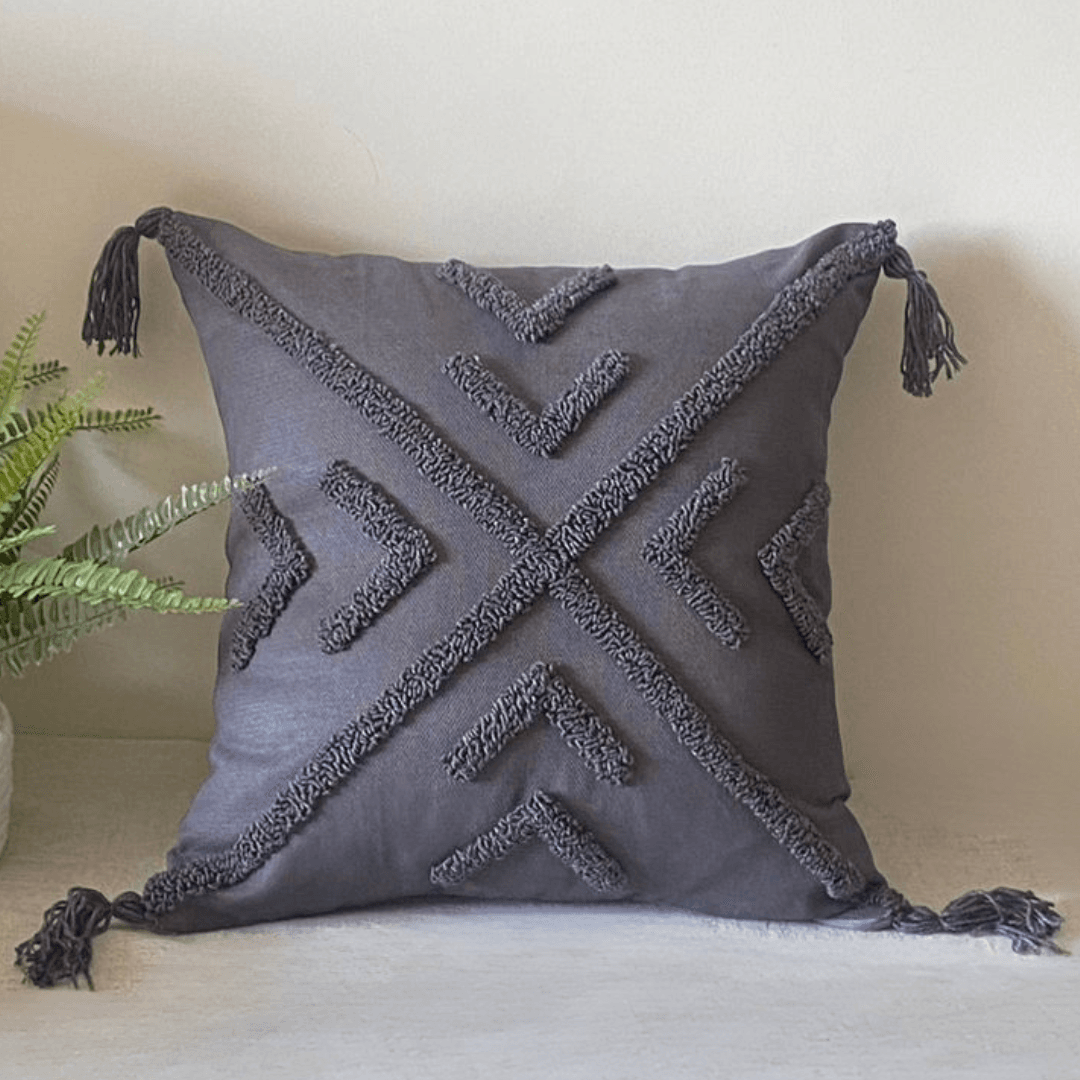
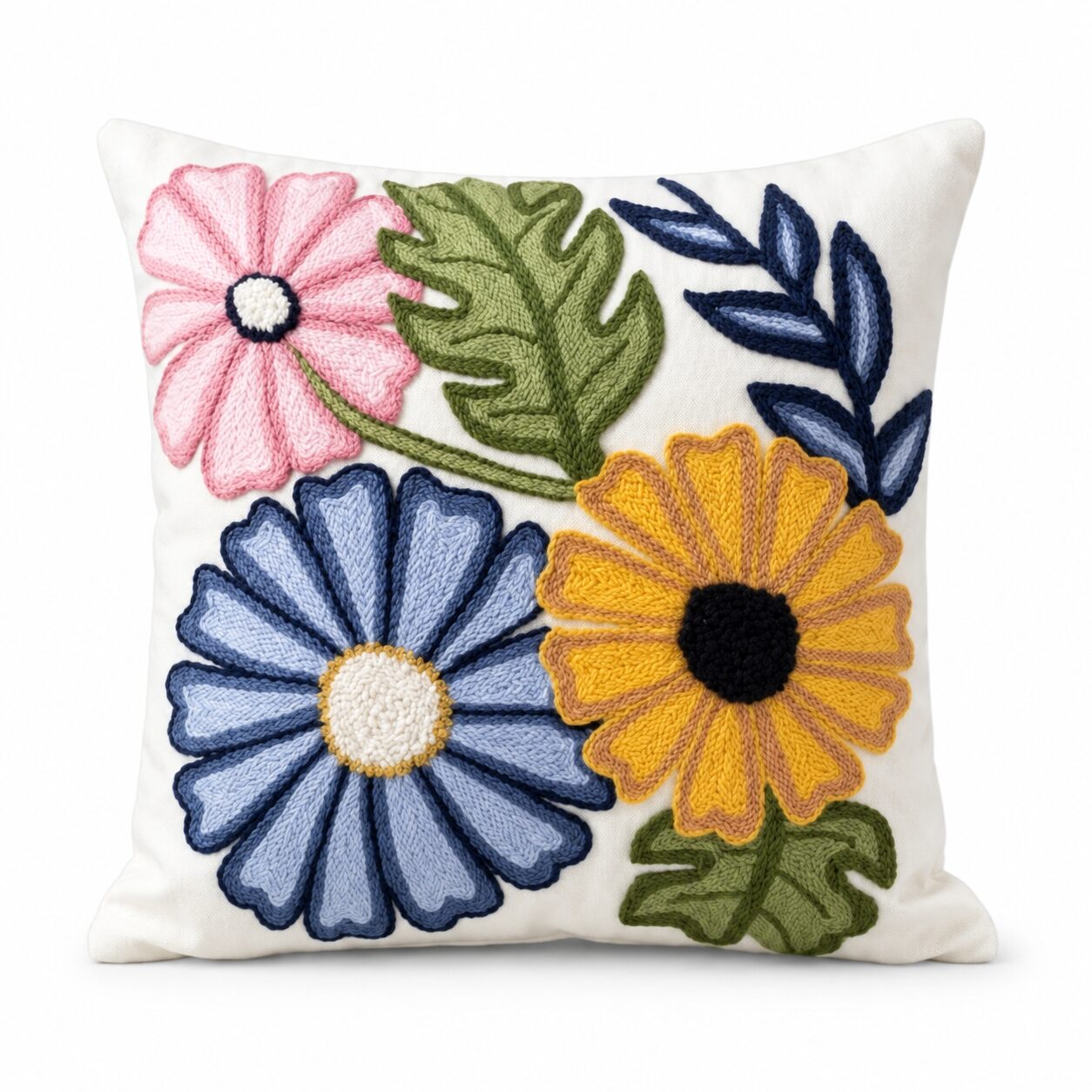
Tufted and punch needle cushions have loops of yarn pushed through a base fabric, creating a raised, tactile surface. The pattern literally stands up from the cushion.
Best For
Statement cushions in the front layer of a sofa, bedrooms, and any room that needs personality. Tufted designs give handmade character and look good from across the room.
What to Watch
Loops can snag on rings, buckles or pet claws, so they are better suited to adult seating than toddlers’ play corners. The Punch Needle Embroidered Boho Cushion shows how this technique adds depth even to a neutral palette.
Woven Natural Fibres: Kilim, Wool, Raffia and Hemp
This family brings the strongest handmade feeling into a room, and it suits Egypt’s long tradition of weaving.
Kilim and Wool
Flat-woven kilim cushions are hard-wearing and graphic. A Handmade Kilim Wool Tufted Cushion combines wool’s warmth with an off-white and cafe palette that suits many sofas. Wool feels best in cooler months and naturally resists everyday grime.
Boucle and Textured Weaves
Boucle has small looped yarns that give a nubbly, cloud-like surface. The Textured Boucle Kilim Lumbar Cushion brings that texture in a soft off-white, perfect for layering in front of smoother cushions.
Raffia and Hemp
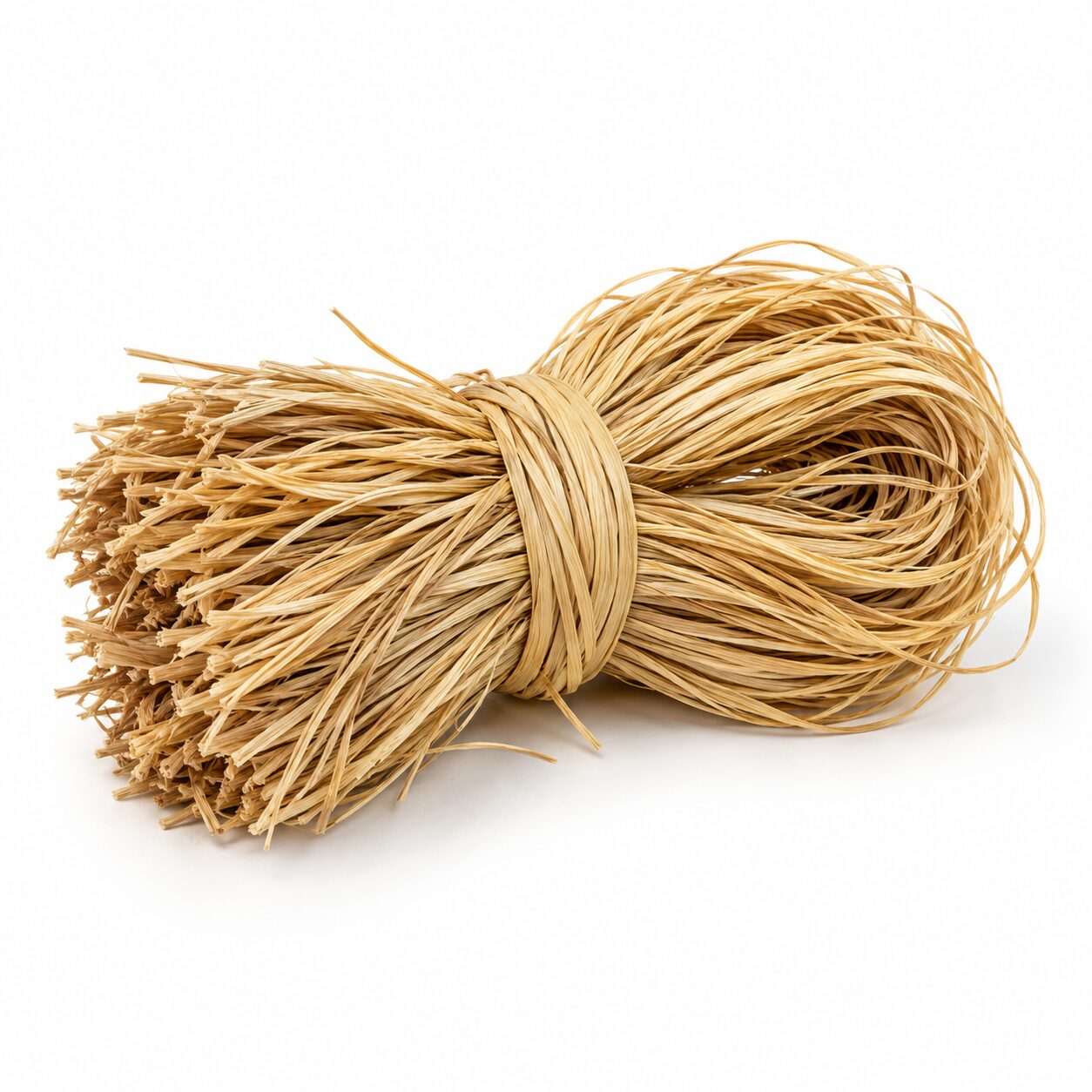
Raffia and hemp are crisp and natural, bringing a summer, beach-house mood. A Handwoven Raffia Cushion with Black Stripes adds structure and pattern at once. These fibres are more decorative than snuggly, so place them at the ends of a sofa rather than where people rest their heads.
Macrame: Knotted and Bohemian
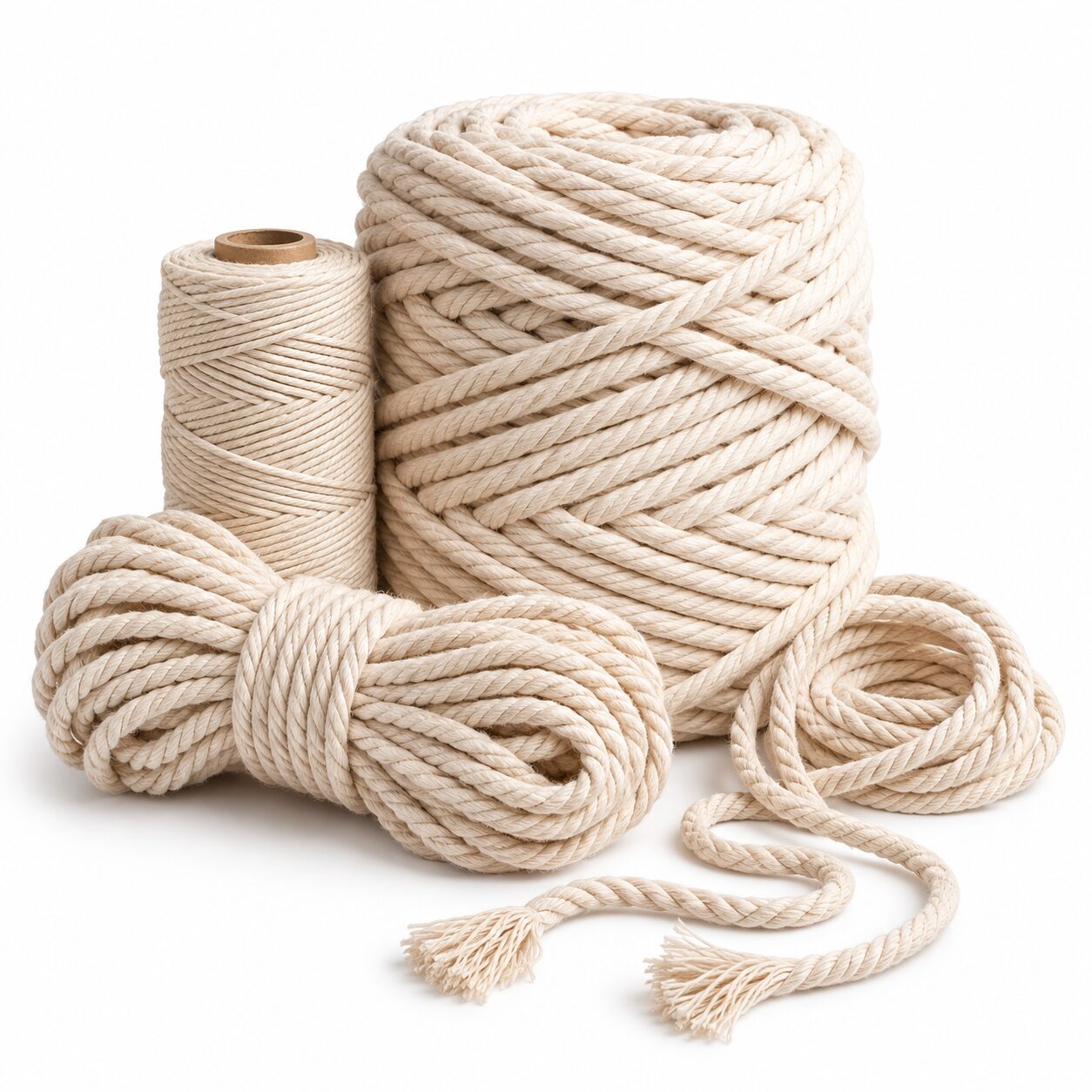
Macrame cushions are made from knotted cotton cord, giving a sculptural, open texture. They are an easy way to bring a boho mood into a living room or bedroom.
The Macrame Woven Throw Cushion layers beautifully in front of a solid cushion, where the solid colour shows through and highlights the knots. Macrame is best as an accent rather than a whole sofa’s worth, since too many open textures can look busy.
Embroidered Covers: Craft in the Details
Embroidery sits somewhere between pattern and texture. Stitched threads create a slight relief on the surface, so light catches the design differently from a printed fabric. Embroidered covers are usually made on a cotton or canvas base, which keeps them practical, while the stitching adds handmade value.
They suit bedrooms and quieter living rooms, where people sit and look at details up close. Florals, birds and botanical motifs are common, and they pair well with plain linen or plush cushions that let the stitching stand out. Avoid putting several heavily embroidered cushions side by side; one or two is enough to give the arrangement a focal point.
Matching Fabric to the Room
Each room asks something different from a cushion.
Living Room
This is the hardest-working space, so choose durable cotton, kilim and woven covers for the back row, and save velvet or tufted pieces for the front where they are admired more than leaned on.
Bedroom
Comfort against skin matters most. Soft cotton, plush and gentle embroidery are better choices than raffia or rough weaves, which can catch on hair and bedding.
Balcony and Outdoor Seating
Pick cotton covers that can be removed and washed easily. Bring cushions indoors during dusty or windy days, and avoid leaving delicate textures in direct afternoon sun.
Children’s Rooms
Washable cotton is the clear winner. Skip loops and fringes that little fingers love to pull.
How to Combine Textures on One Sofa
A sofa looks expensive when textures vary, even if colours do not. Use this simple formula:
- One smooth base: cotton or a fine weave in a solid colour.
- One soft piece: velvet or plush, for depth and comfort.
- One raised texture: tufted, punch needle or boucle.
- One natural accent: kilim, raffia, macrame or hemp.
On a smaller sofa, choose three of the four. Keep the colour palette tight when textures are this varied, perhaps two main colours and a neutral, so the eye enjoys the contrast of surfaces rather than being pulled in every direction. The contrast between smooth and raised, soft and crisp, is what gives the arrangement life.
Seasonal Fabric Swaps
Changing only the covers is the easiest seasonal refresh.
- Summer: cotton, linen blends, raffia and light macrame. Cool to the touch and easy to wash.
- Winter: velvet, plush and wool kilim. Warm colours and soft surfaces.
- Ramadan and Eid: keep the fabrics practical for long gatherings, and bring in festive motifs through embroidered or tufted fronts.
Store off-season covers folded in a lidded basket so they stay clean and ready.
Care Tips by Fabric
- Cotton and linen: wash covers on a gentle cycle, reshape while damp, and dry out of harsh midday sun.
- Velvet: brush lightly and spot clean; avoid crushing it when storing.
- Tufted and punch needle: spot clean and avoid wringing, which can loosen loops.
- Kilim, raffia and macrame: shake out dust regularly and spot clean carefully.
- All cushions: a full Plain White Cushion Filler keeps covers looking plump and protects their shape.
Common Mistakes to Avoid
- Choosing by colour alone. The wrong fabric undoes the right colour.
- One texture everywhere. Five smooth cushions look flat however lovely the print.
- Delicate fabrics in busy spots. Keep velvet and loops away from snack zones and small children.
- Ignoring the season. Heavy wool in July is a cushion nobody will lean on.
- Thin fillers. A beautiful cover on a flat filler always looks tired.
Quick Checklist
- Fabric chosen for who uses the room and when
- At least three different textures on the sofa
- Breathable cotton or linen for summer
- Velvet, plush or wool for winter
- Raised textures in the front layer, smooth ones at the back
- Full fillers inside every cover
- A storage basket for off-season covers
Feel Before You Choose
The best cushions are the ones you want to touch. Start with a practical base, add one soft piece and one handmade texture, and let the season guide the rest. Your sofa will look richer, and more importantly, it will feel like the most comfortable seat in the house.
Discover cotton, velvet, tufted, kilim, raffia and macrame cushions at coccarohome.com.
Shop the Look