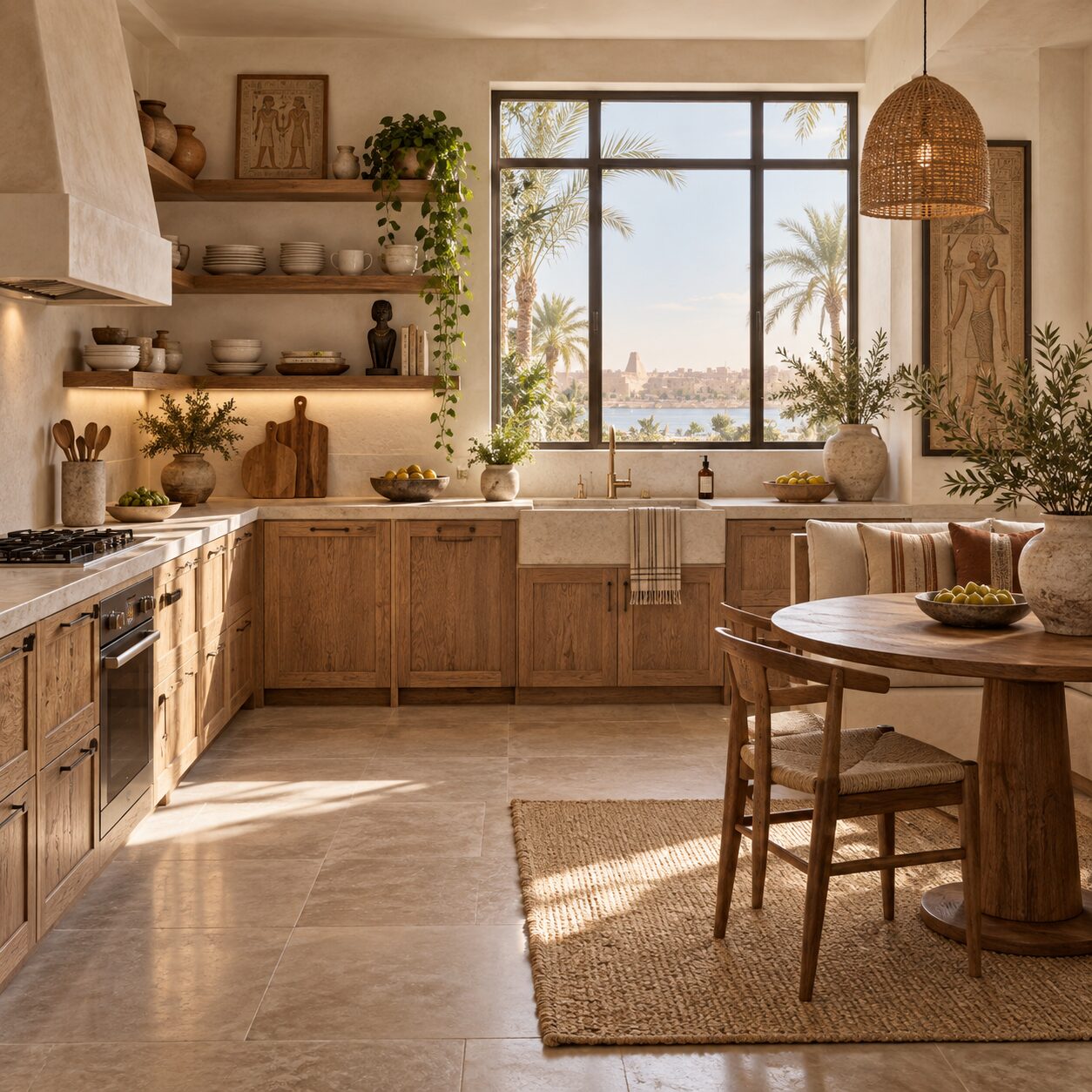
Most of us put all our energy into the dining table. We choose the runner, polish the trays, set out the placemats for Eid lunch, and then sit down in a room whose walls are bare, whose sideboard is a dumping ground for keys and bills, and whose only light is a single harsh bulb overhead. The table looks lovely. The room around it does not.
A dining room is experienced from a seated position, often for a long time. During Ramadan iftar or a Friday family lunch, people spend an hour or more looking at the same walls and the same corner. That is why the space beyond the table deserves as much thought as the table itself. This guide walks through the three areas that make the biggest difference: the walls, the sideboard and the light.
Start With What Your Guests Actually See
Before buying anything, sit in each chair around your table and look up. What does each person face? Usually one long wall gets the most attention, and the wall behind the head of the table frames whoever sits there. These are the walls that matter.
Make a quick note of three things:
- The focal wall: the one most chairs face, or the one you see when you walk into the room.
- The sideboard wall: where your buffet, console or cabinet stands.
- The awkward corner: almost every dining room has one, often beside a window or behind a door.
Once you know these, you can plan decor that works from the chairs rather than from the doorway. It sounds obvious, but many dining rooms are decorated for a photograph taken from the entrance, not for the people who eat there.
Dining Room Walls: Scale Is Everything
The most common wall mistake in dining rooms is choosing art that is far too small. A single small frame floating above a two-metre sideboard looks lost. Dining room walls usually need either one large piece or a grouping that reads as one shape.
A Mirror for Light and Depth
A mirror is one of the best things you can hang in a dining room. It bounces daylight around during lunch, reflects candlelight in the evening and makes a narrow room feel wider. Hang it so it reflects something pleasant, such as a window or a pendant light, not the kitchen door.
The Handcrafted Bohemian Wall Mirror with Decoupage Tile Frame brings colour and handmade detail to the wall, so the mirror becomes art as well as a light source. For a warmer, more classic dining room, the Wooden Wall Mirror with Golden and Copper Mosaic Inlay suits rich wood furniture and evening entertaining.
Wall Plates and Groupings
Decorative wall plates belong in dining rooms almost by tradition, and a set of five creates a generous grouping without the cost of a large painting. Arrange them in a loose arc above the sideboard, or in a tight cluster on the wall facing the table. The Desert Oasis Hand-Painted Wooden Wall Plates bring warm, earthy tones that sit naturally with wooden dining sets.
A few tips for hanging a grouping:
- Lay the pieces on the floor first and photograph the arrangement you like.
- Trace each piece on paper, cut out the shapes and tape them to the wall.
- Keep five to eight centimetres between pieces so they read as a group.
- Hang the centre of the grouping roughly at eye level for a seated person, which is lower than you think.
Art Height in a Dining Room
In a living room, the middle of a painting usually sits around 150 cm from the floor. In a dining room, many designers lower that slightly, because people view the art while seated. Above a sideboard, leave about 20 to 30 cm between the top of the furniture and the bottom of the frame so the two feel connected.
The Sideboard: Your Dining Room’s Stage
A sideboard, buffet or console is the hardest-working piece in a dining room. It holds serving dishes, takes the overflow during big family gatherings and, between meals, acts as a display surface. Styled well, it pulls the whole room together.
The Triangle Rule
The easiest way to style a sideboard is to build a loose triangle:
- Something tall at one end: a lamp, a tall vase or a large branch arrangement.
- Something medium in the middle or at the other end: a tray with candle holders, a bowl or a smaller vase.
- Something low to tie them together: a stack of books, a small dish or a decorative box.
Asymmetry looks more relaxed. Symmetry, with matching lamps at each end, looks more formal and suits classic dining rooms. Choose one approach and stick to it.
A Tray Keeps It Useful
A large decorative tray makes a sideboard both beautiful and practical. It corrals small items, gives candle holders a defined home and can be lifted off in one movement when you need the surface for serving. The Birds of Paradise Mother-of-Pearl Decorative Tray is the kind of piece that looks like a heritage object even when it is simply holding a pair of candles.
Height From Natural Forms
A tall pottery vase with dried stems or a few branches adds height without blocking the wall art behind it. The Rustic Beige Pottery Pitcher Vase suits a relaxed dining room, and its handle gives it a homely, farmhouse feel. Pair it with a few Artificial Eucalyptus Stems for greenery that stays fresh through the summer heat.
Keep a Clear Serving Zone
When Egyptian families host, the sideboard turns into a buffet within minutes. Leave at least half the surface easy to clear. Decor that can be moved in one go, on a tray or in one basket, means you are not hunting for somewhere to put six candle holders while guests wait for the food.
Layered Lighting: The Secret to a Dining Room That Feels Good
Lighting does more for the mood of a dining room than any other single element. One bright ceiling light makes food look flat and faces look tired. Layers of light make the same room feel warm and generous.
Layer One: The Pendant or Chandelier
The light above the table sets the tone. Hang it so the bottom sits about 75 to 85 cm above the tabletop. Too high, and the light floats away from the table; too low, and it blocks the view across.
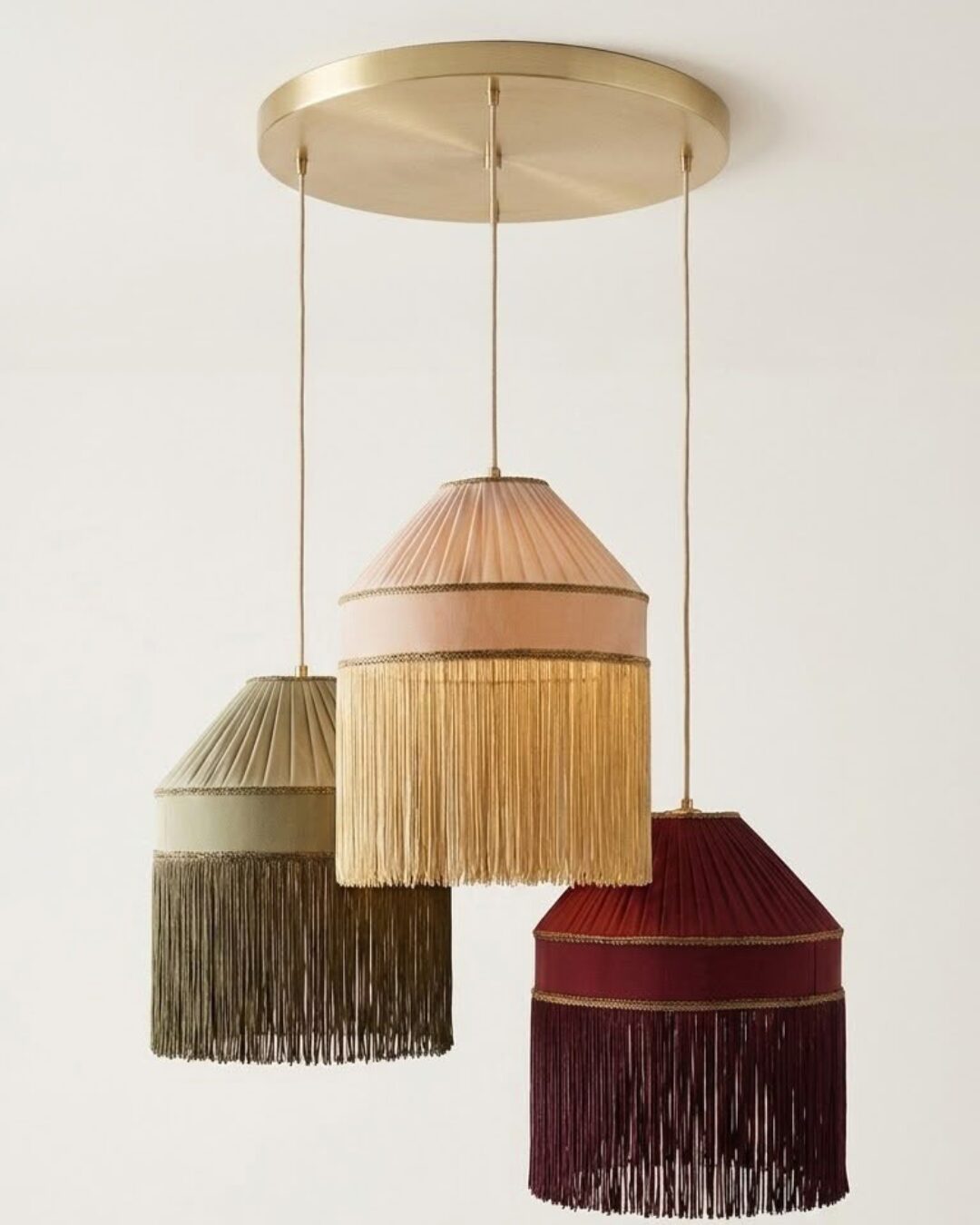
The Seraphina Pleated Satin and Tassel 3-Light Cluster Chandelier gives a soft, elegant glow and a sense of occasion. For a lighter, boho dining area, the Handmade Macrame Hanging Pendant Lamp Shade filters light through knotted cotton and casts lovely patterns on the walls.
Choose warm-white bulbs for dining spaces. Cool daylight bulbs suit a kitchen work surface but feel clinical over a dinner table.
Layer Two: Lamps on the Sideboard
A table lamp on the sideboard is the single most underused idea in Egyptian dining rooms. It adds a second, lower source of light, so the room glows even when the chandelier is dimmed. A hand-painted lamp also doubles as decor. The Indigo Botanica Hand-Painted Artisan Table Lamp works beautifully as the tall point of the sideboard triangle.
Layer Three: Candlelight
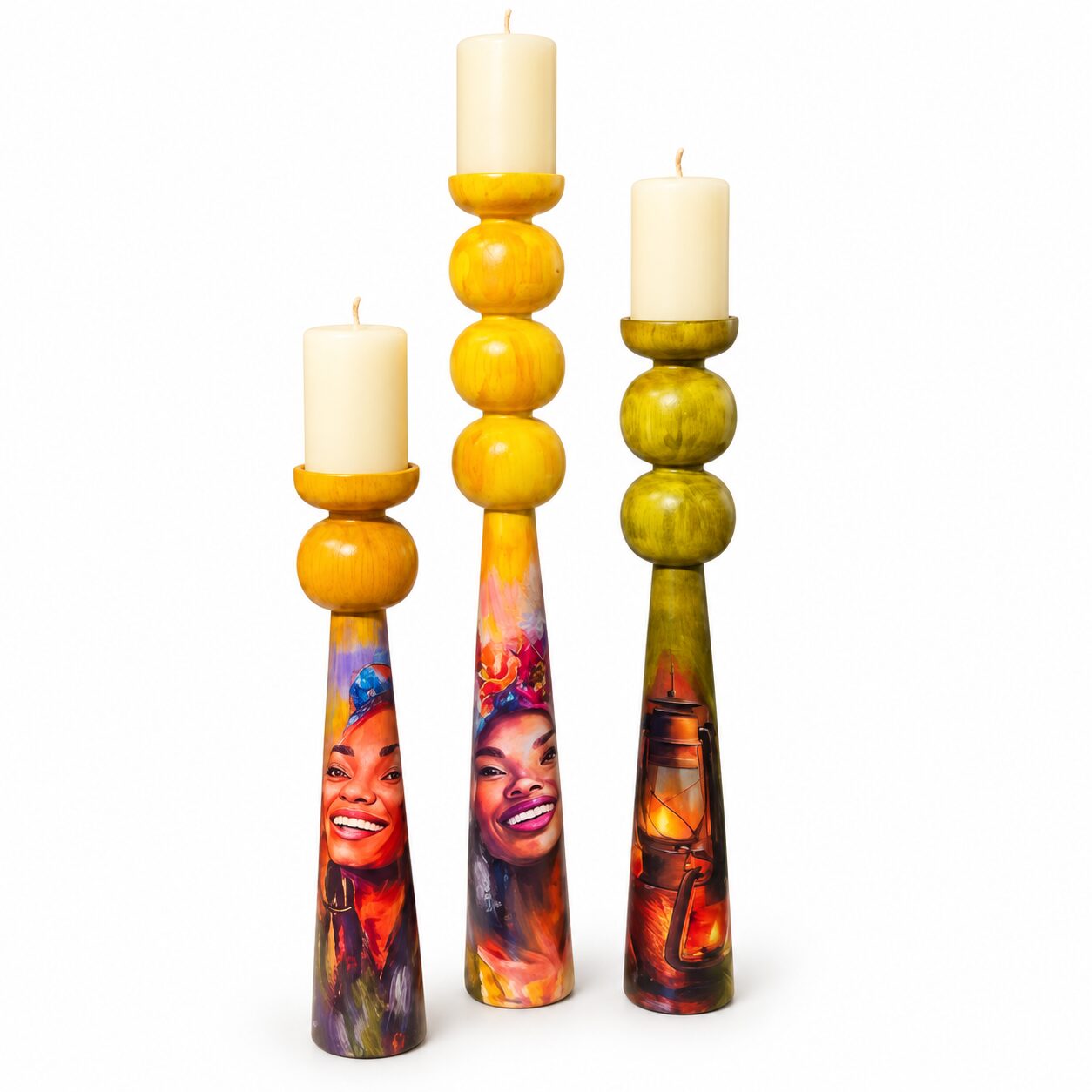
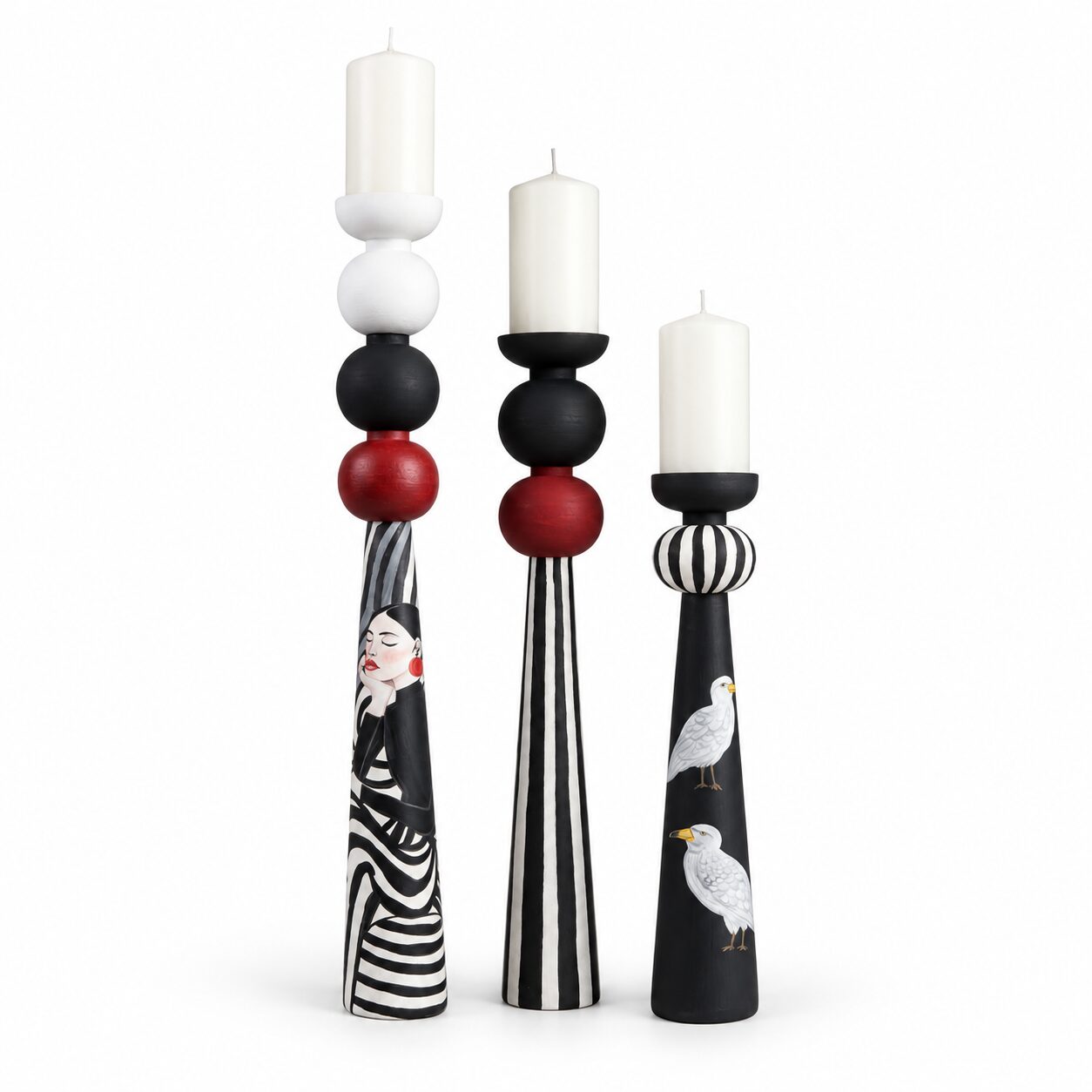
Candles are the final layer, and the one that makes a dinner feel special. Group candle holders in odd numbers on the sideboard or along the table centre. Sets of hand-painted wooden holders, like The Botanica Hand-Painted Wooden Candle Holders, bring colour even when unlit. Always keep real flames away from curtains, dried flowers and anywhere children can reach.
The Awkward Corner
Remember that corner you noted at the start? It is a perfect home for a statement plant. A large artificial tree softens hard edges, fills vertical space and never needs watering, which helps in rooms that receive little light. The Large Artificial Olive Tree with Fruits has a Mediterranean character that feels right in an Egyptian home.
Other corner ideas:
- A slim side table with a lamp, for an extra layer of light.
- A tall woven basket holding spare table linen.
- A pouf or small chair that can be pulled to the table when an extra guest arrives.
Bringing It Together for Occasions
The beauty of decorating beyond the table is that the room becomes ready for occasions with very little effort. For Ramadan, add lanterns to the sideboard and swap the candle holders for warmer tones. For Eid, place fresh flowers in the tall vase and set a festive tray at the centre of the sideboard. For a birthday or engagement gathering, dim the chandelier and let the sideboard lamp and candles carry the room.
Because the walls and light are already working, these small changes feel complete instead of patched together.
Common Mistakes to Avoid
- Art that is too small. If it looks lost on the wall, it is. Size up or group pieces.
- Hanging art too high. Remember people view it sitting down.
- A cluttered sideboard. If you cannot clear it in a minute for serving, it holds too much.
- One harsh overhead light. Add a lamp and candles before buying anything else.
- Cool white bulbs. They make food and faces look grey.
- Ignoring the corners. An empty corner makes even a beautiful table feel unfinished.
- A pendant hung too high. It should relate to the table, not the ceiling.
Quick Checklist
- Focal wall identified from the seated position
- One large piece or a cohesive grouping on that wall
- A mirror placed to reflect light, not clutter
- Sideboard styled with tall, medium and low elements
- A tray to keep sideboard decor movable
- Pendant or chandelier hung 75 to 85 cm above the table
- At least one table lamp on the sideboard
- Candles grouped safely in odd numbers
- A plant or useful piece in the awkward corner
A Room Worth Lingering In
A beautiful table is only half of a beautiful dining room. When the walls have presence, the sideboard tells a story and the light wraps the room in warmth, every meal feels a little more like an occasion, and guests stay at the table long after the last plate is cleared.
Explore handmade mirrors, wall plates, lamps, trays and candle holders at coccarohome.com and give your dining room the attention its table already enjoys.
Shop the Look
- Bohemian Decoupage Tile Wall Mirror — EGP 6,048 — A colourful handmade mirror that brightens the focal wall.
- Wooden Wall Mirror with Golden Mosaic Inlay — EGP 7,452 — Warm golden and copper tones for a classic dining room.
- Desert Oasis Wooden Wall Plates (Set of 5) — EGP 1,600 — An easy, generous grouping above the sideboard.
- Seraphina 3-Light Cluster Chandelier — EGP 13,500 — Soft pleated light with a real sense of occasion.
- Macrame Hanging Pendant Lamp Shade — EGP 5,700 — Knotted texture and patterned light for boho dining areas.
- Indigo Botanica Hand-Painted Table Lamp — EGP 4,950 — The tall, glowing anchor of a styled sideboard.
- Birds of Paradise Mother-of-Pearl Tray — EGP 3,700 — Keeps sideboard decor beautiful and easy to move.
- The Botanica Hand-Painted Candle Holders (Set of 3) — EGP 3,800 — Colourful candlelight for long family dinners.
- Rustic Beige Pottery Pitcher Vase — EGP 1,620 — Adds height and a homely touch to the sideboard.
- Large Artificial Olive Tree — EGP 2,700 — Fills the awkward corner with Mediterranean greenery.