Some people walk into a pale, minimal room and feel peace. Others feel as if something is missing. If you belong to the second group, if you love colour, pattern, art on every wall and a story behind every object, you may be a maximalist at heart.
Maximalism is the joyful opposite of “less is more”. It celebrates abundance: layered textiles, saturated colours, collections proudly displayed and rooms that feel rich, personal and alive. But there is a fine line between a maximalist home and a cluttered one. The difference lies in intention. This guide shows how to embrace more while keeping the room coherent, comfortable and calm enough to live in.
Maximalism Versus Clutter
Before buying a single thing, it helps to understand what separates the two.
Clutter is accidental. Objects pile up because nobody decided where they belong. Colours clash because no one chose them together. Surfaces fill with things that are neither useful nor loved.
Maximalism is curated. Every object has been chosen, every colour relates to another, and every arrangement has a shape. A maximalist room can hold a hundred things and still feel organised, because there is a system underneath.
A simple test: if you could explain why each item in the room is there, and why it sits where it does, you are decorating. If you cannot, you are storing.
Why Maximalism Feels at Home in Egypt
Egyptian design history is anything but minimal. Think of the painted walls of ancient tombs, the dense geometry of Islamic mashrabiya, the layered textiles of a Bedouin tent or the colour of a Khan El Khalili lantern shop at night. Abundance, pattern and craft run deep in our visual culture.
Maximalism also suits the way Egyptian families live. Homes host large gatherings, hold heirlooms from several generations and fill with gifts from relatives and travels. Rather than hiding these things away, maximalism gives you permission to display them with pride.
Rule One: Start With a Focal Point
Even the fullest room needs somewhere for the eye to land first. Without a focal point, a maximalist room feels chaotic.
Choose one hero piece per room. It might be a dramatic mirror, a large painting, a statement rug or a striking piece of furniture. Then arrange everything else to support it.
The Bohemian Decoupage Tile Mirror is a perfect maximalist hero: a handcrafted frame of colourful decoupage tiles that turns a wall into a work of art. Hang it above a console, then build out around it with candle holders, a tray and a plant. Because a mirror reflects the room back, it also doubles the sense of richness.
Rule Two: Build a Colour Story
The secret to successful maximalism is not using fewer colours. It is using colours that talk to each other.
Choose a Dominant Family
Pick one colour family to lead the room: jewel tones such as emerald, sapphire and ruby; warm earth tones such as terracotta, ochre and olive; or tropical brights such as coral, turquoise and leaf green. Most of your larger pieces should belong to this family.
Add Two Supporting Colours
Choose two colours that appear repeatedly in smaller doses. In a jewel-toned room, for example, gold and blush pink might support the main palette.
Repeat, Repeat, Repeat
Every colour should appear at least three times in the room, in different places and objects. Repetition is what turns a riot of colour into a deliberate scheme. If a red cushion sits on the sofa, echo that red in a painting, a candle holder and a tray.
A Geometric Multicolour Tufted Cushion is a useful tool here: because it contains several colours at once, it can link many other pieces in the room together.
Rule Three: Mix Patterns With Intention
Pattern is the lifeblood of maximalism. To mix it well, vary three things: scale, type and density.
- Scale. Combine one large pattern, one medium and one small. Three large patterns side by side fight for attention.
- Type. Mix families of pattern: florals, geometrics, stripes, animal prints and folk motifs.
- Density. Balance busy patterns with calmer ones that have more background showing.
A Cushion Combination That Works
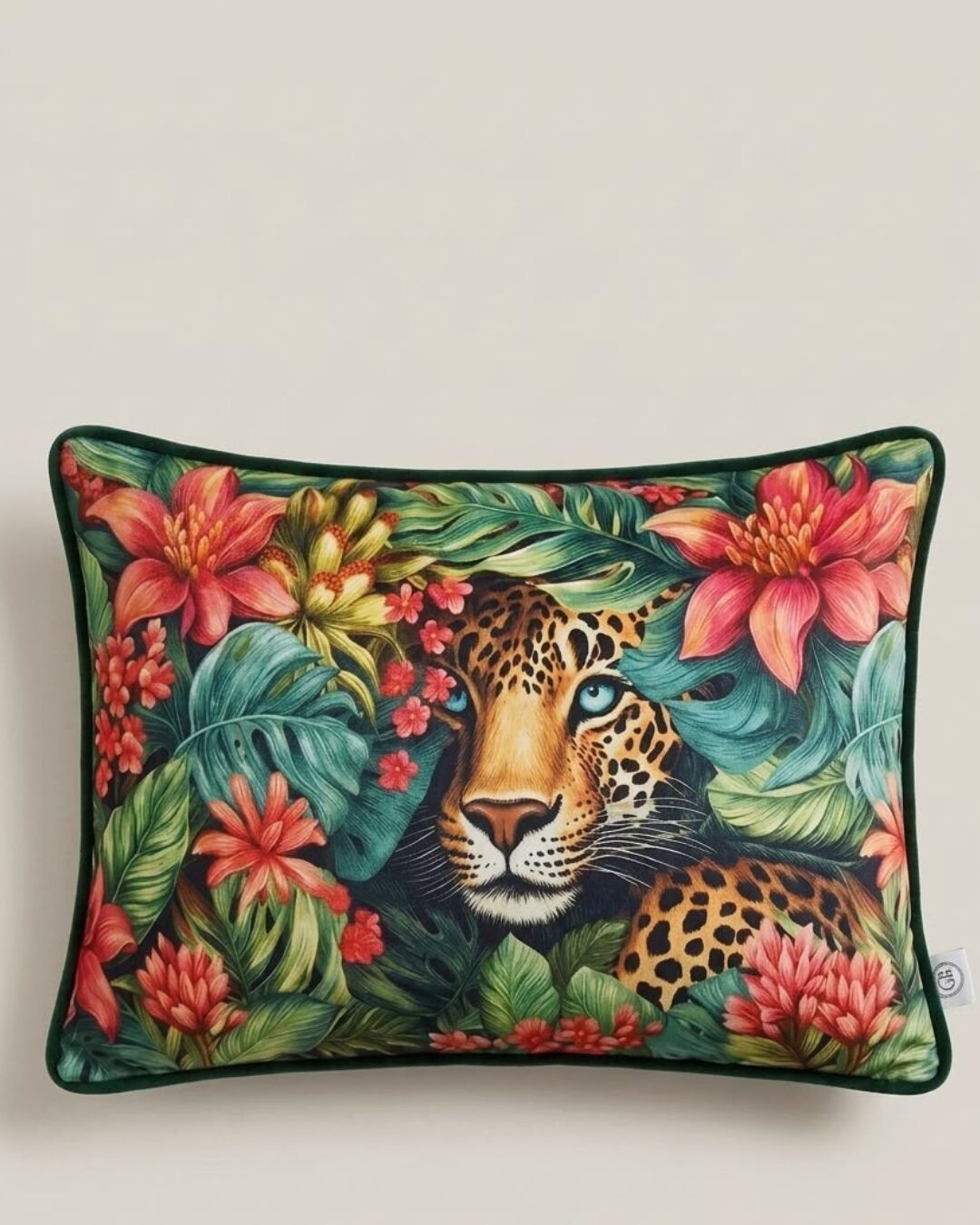
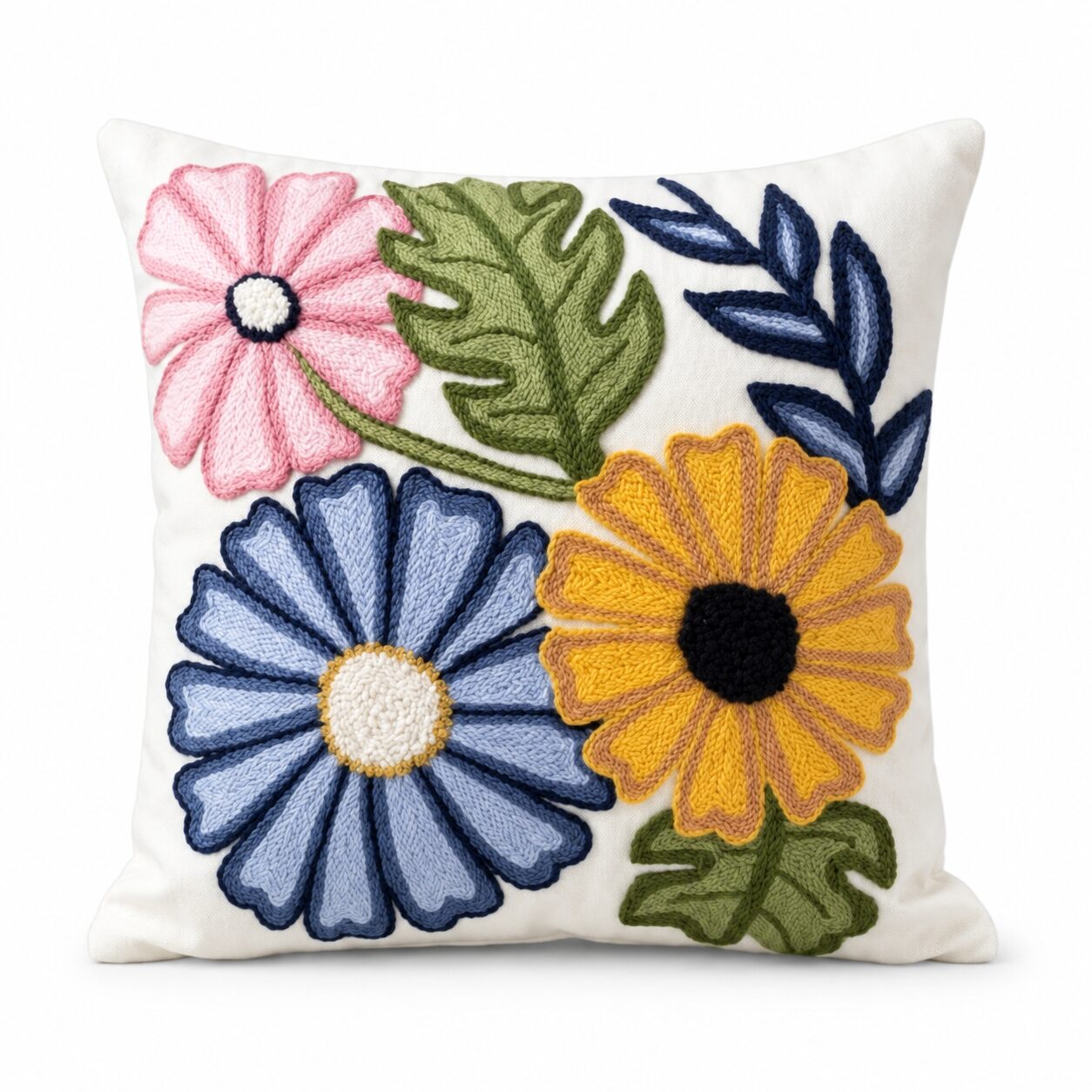
Try this on a sofa: a bold botanical print, a smaller geometric kilim, a tropical embroidered piece and one solid velvet in a colour pulled from the others. The Exotic Leopard Botanical Velvet Cushion brings animal print and greenery together in one rich fabric. Beside it, the Tropical Parrot Embroidered Cushion adds colourful, handmade detail. A multicolour kilim cushion grounds both with traditional geometry.
The common thread between them is colour. As long as the patterns share at least one or two tones, they will read as a family.
Rule Four: Layer, Do Not Scatter
Maximalism is about layers, and layers need structure.
On the Floor
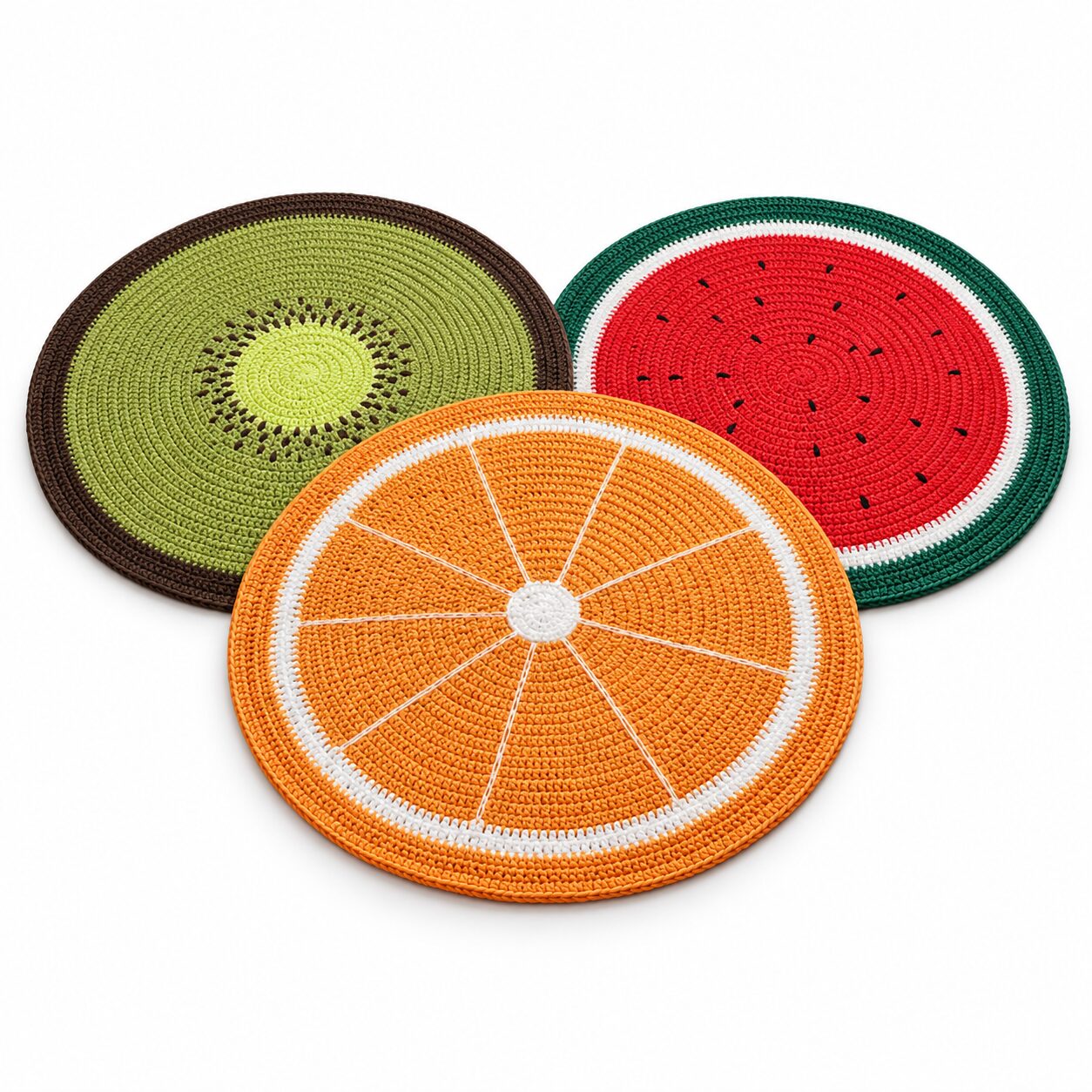
Layer a smaller patterned rug over a larger natural one. A Multicolour Round Crochet Rug placed over a plain jute rug under a reading chair creates a cosy, defined zone.
On the Sofa
Combine cushions of different sizes and shapes, a throw in a contrasting texture and perhaps a lumbar cushion at the front. The Colourful Cozy Squares Crochet Throw brings granny-square nostalgia and a burst of colour in one handmade piece.
On Surfaces
Build surfaces in layers too: a tray as a base, then a stack of books, then an object on top, with a candle or vase beside it. The tray is key, because it gathers small things into one unit. The Birds of Paradise Mother-of-Pearl Tray is the kind of piece that looks beautiful even empty, and turns a group of objects into a composition.
Rule Five: Display Collections Like a Curator
Collections are a maximalist’s treasure, whether they are vintage mugs, hand-painted ceramics, souvenirs or books. The way you show them matters.
- Group like with like. A shelf of mugs looks intentional; mugs scattered across five rooms look forgotten.
- Use repetition. A collection of similar objects in different colours is striking.
- Vary height. Use books, stands or small boxes to lift some pieces above others.
- Frame the group. A tray, a shelf or a cabinet gives the collection a clear boundary.
- Rotate. Store part of the collection and swap pieces each season to keep the display fresh.
Gallery Walls
A gallery wall is maximalism’s natural habitat. Mix paintings, wall plates, mirrors and textiles. Keep spacing consistent, roughly five to eight centimetres between frames, and plan the arrangement on the floor first. The Symphony in Crimson Round Wall Art, a set of five wooden pieces, can form the core of a gallery and set its colour story.
Plants, Light and Life
Go Big With Greenery
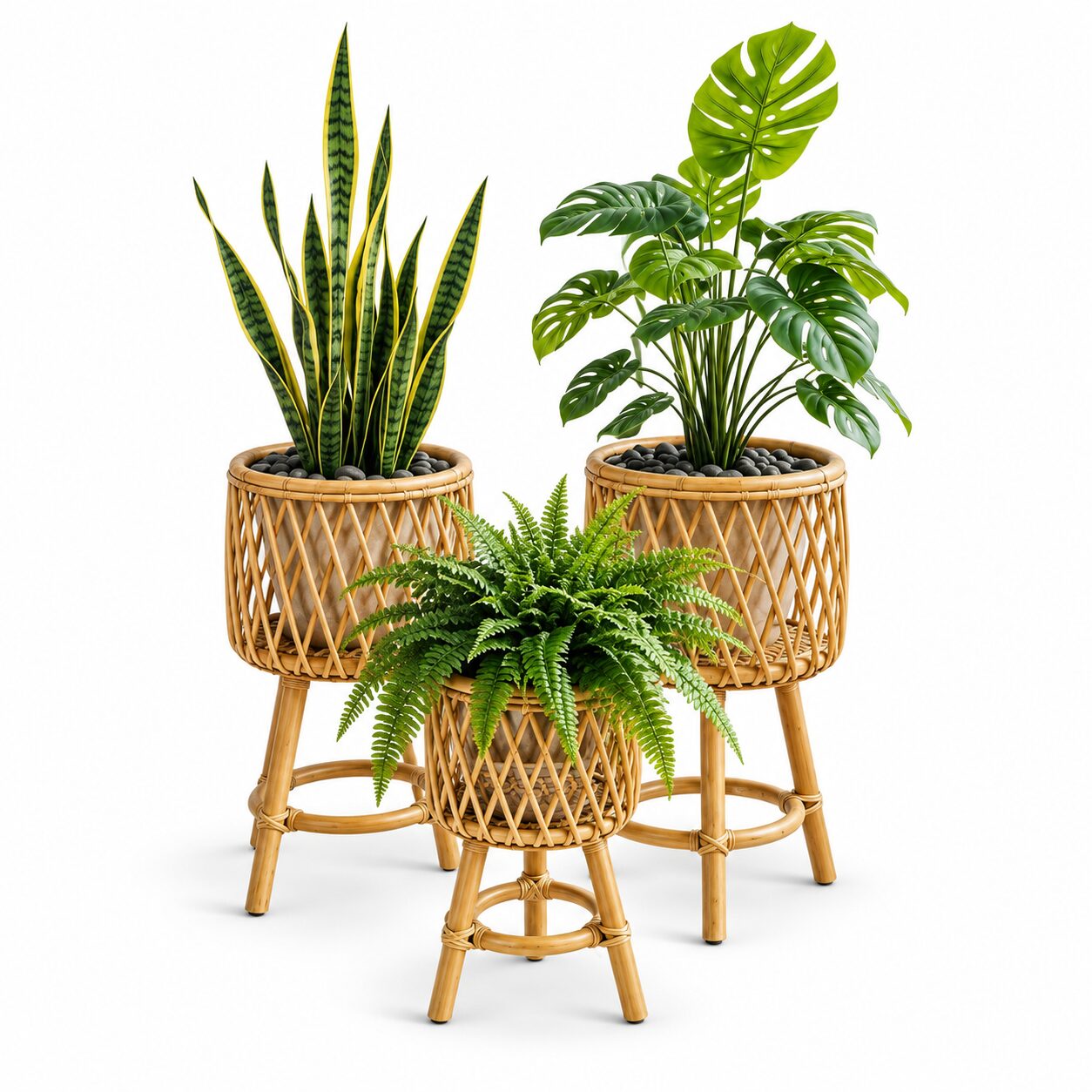
Maximalist rooms love large, dramatic plants. A tall banana plant in a corner adds height and tropical energy. Where light or care is a challenge, a high-quality artificial plant offers the same effect with no watering during a busy week.
Layer Your Lighting
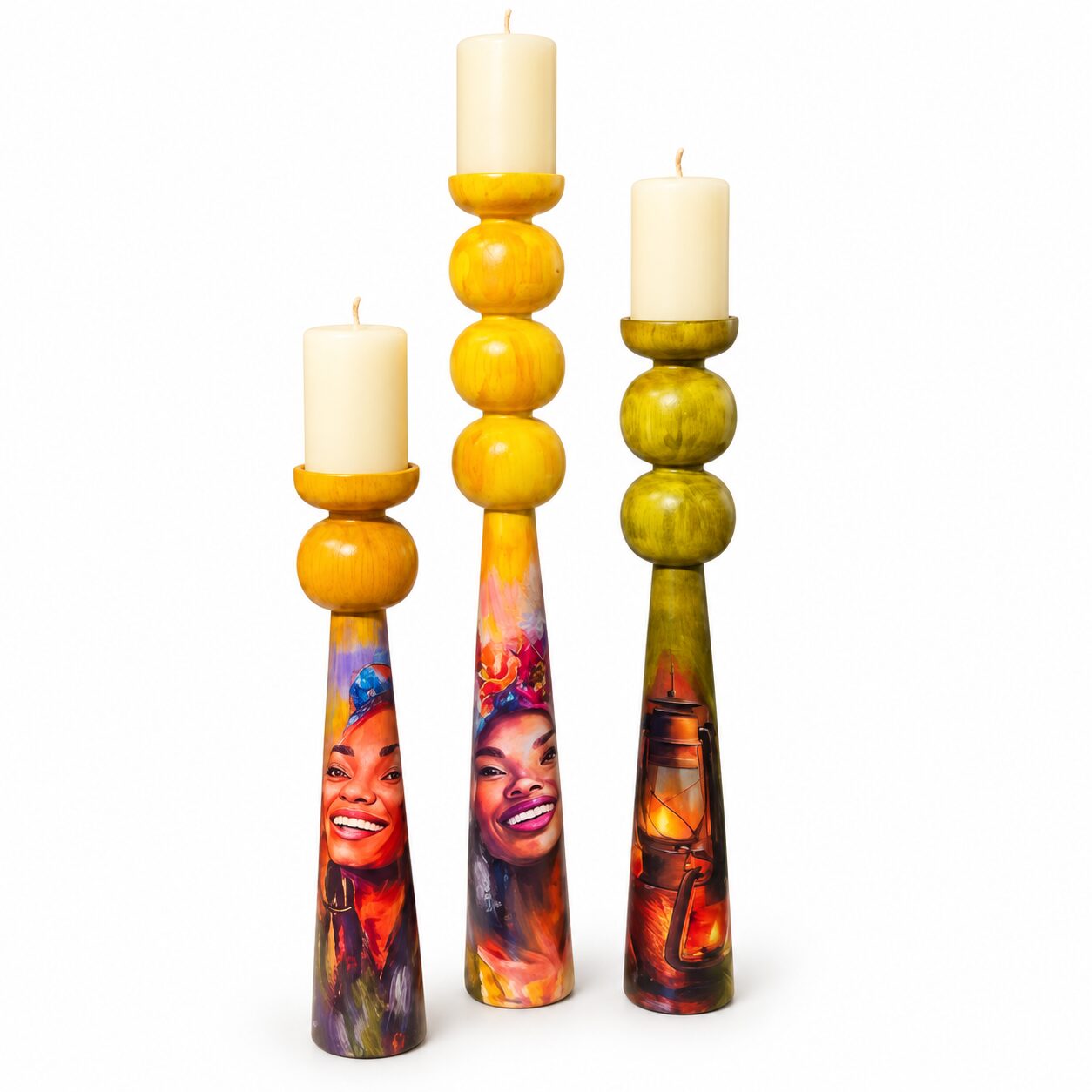
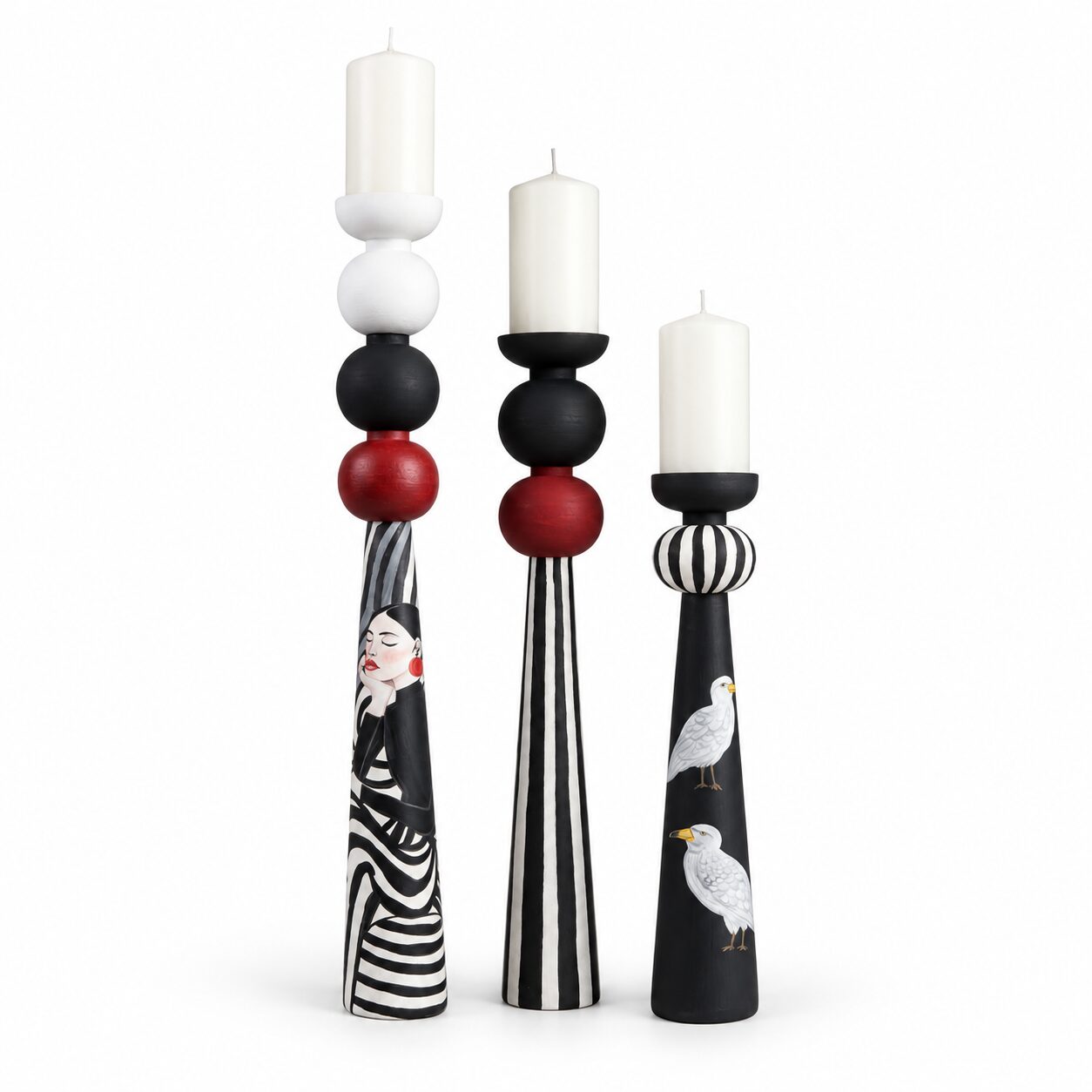
Use several light sources at different heights: a ceiling light, a table lamp, a floor lamp and candles. Hand-painted candle holders, such as the Carnival and Form set, add colour even when unlit and create a warm, flickering glow at night.
Maximalism in a Small Apartment
Many people assume maximalism needs a big villa with high ceilings. In fact, it can make a small apartment feel cosier and more characterful than a sparse approach ever could. The key is to be strategic.
- Go vertical. Use wall space for art, plates and shelves so the floor stays clear. A gallery wall that reaches towards the ceiling makes a room feel taller.
- Choose a tighter palette. In a small room, two or three colours repeated everywhere look rich; six colours can feel crowded.
- Let pattern do the work. One patterned rug, curtains or a wall of art can bring as much energy as dozens of objects.
- Pick multi-purpose pieces. A decorative pouf that doubles as a seat, or a beautiful basket that hides toys, adds personality without stealing space.
- Use mirrors. A large, decorative mirror reflects colour and light, making a compact room feel bigger and more layered at the same time.
Small spaces also benefit from a clear focal point even more than large ones. If a narrow living room has one dramatic wall, the other walls can stay simpler, and the room will still read as confidently maximalist.
Keeping It Livable
Maximalism must still work for daily life, especially in a busy family home.
- Hide the boring things. Chargers, paperwork and cleaning supplies belong in closed storage. Lidded baskets and cabinets keep the real clutter out of sight so the curated pieces can shine.
- Leave walking space. Floors and pathways should stay clear.
- Keep one quiet zone. A plain wall or a calm corner gives the eye somewhere to rest.
- Clean as you go. More objects mean more dusting. Choose pieces that are easy to wipe or wash.
- Edit seasonally. Every few months, remove anything you no longer love.
Common Mistakes to Avoid
- No colour plan. Random colours look accidental. Choose a palette and repeat it.
- All patterns at the same scale. Vary large, medium and small.
- Every surface full. Even maximalist rooms need pauses.
- No focal point. Without a hero piece, the room has no starting place.
- Cheap filler. Maximalism works best with pieces you truly love, not with objects bought only to fill space.
- Forgetting function. If you cannot put down a cup of tea, the coffee table is too full.
Quick Checklist
- One dominant colour family with two supporting colours
- Every colour repeated at least three times
- Patterns mixed in different scales and types
- One clear focal point per room
- Rugs, cushions and surfaces built in layers
- Collections grouped and framed
- Closed storage for everyday clutter
- At least one quiet spot for the eye to rest
Live Loud, Live Well
Maximalism is about joy: surrounding yourself with the colours, patterns and objects that make you happy. Done thoughtfully, it creates homes full of personality, warmth and story, homes that feel unmistakably yours.
Start with a hero piece, build a colour story around it, and layer with handmade textiles and art. You will find colourful cushions, hand-painted decor, mother-of-pearl trays and statement mirrors to begin your maximalist home at coccarohome.com.
Shop the Look
- Bohemian Decoupage Tile Mirror — EGP 6,048 — A colourful handcrafted hero piece for any wall.
- Geometric Multicolour Tufted Cushion — EGP 960 — Many colours in one cushion to link a whole scheme.
- Exotic Leopard Botanical Velvet Cushion — EGP 1,100 — Animal print and greenery in rich velvet.
- Tropical Parrot Embroidered Cushion — EGP 1,800 — Bold, handmade colour for a layered sofa.
- Multicolour Kilim Cushion — EGP 1,059 — Traditional geometry that grounds bolder prints.
- Colourful Cozy Squares Crochet Throw — EGP 3,600 — Granny-square colour in a handmade throw.
- Multicolour Round Crochet Rug — EGP 4,850 — A playful layer for a reading corner.
- Birds of Paradise Mother-of-Pearl Tray — EGP 3,700 — A stunning base that turns objects into a composition.
- Symphony in Crimson Round Wall Art — EGP 2,000 — Five wooden pieces to anchor a gallery wall.
- Carnival and Form Candle Holders — EGP 5,600 — Hand-painted colour that glows at night.