People who have never spent January in Egypt imagine endless sunshine. Anyone who has lived through it knows better. Our homes are built to stay cool: tiled floors, high ceilings, thick walls and large windows that are a blessing in August turn into something else entirely on a damp night in Alexandria or a desert-cold evening in Upper Egypt. Very few apartments have central heating, so when the temperature drops, families reach for blankets, hot drinks and, increasingly, electric heaters.
A good heater can make winter genuinely comfortable. A badly chosen or carelessly used one can be expensive to run, ineffective and, at worst, dangerous. This guide explains the main types, how to choose the right one for each room, and the safety habits every household should follow.
Understanding Egyptian Winter Comfort
Before buying, it helps to understand why Egyptian homes feel cold. It is often not the air temperature alone, but a combination of factors:
- Cold floors. Ceramic, porcelain and marble tiles pull warmth from your feet.
- Draughts. Older windows and balcony doors let cold air seep in.
- Humidity. Coastal cities feel colder than the thermometer suggests because damp air carries heat away from the body.
- Large rooms. High ceilings and open reception areas take longer to warm.
That is why the best winter strategy is never just a heater. It is a heater plus rugs, throws, closed curtains and a few simple habits. We will cover those too.
The Main Types of Electric Heaters
Oil-Filled Radiators
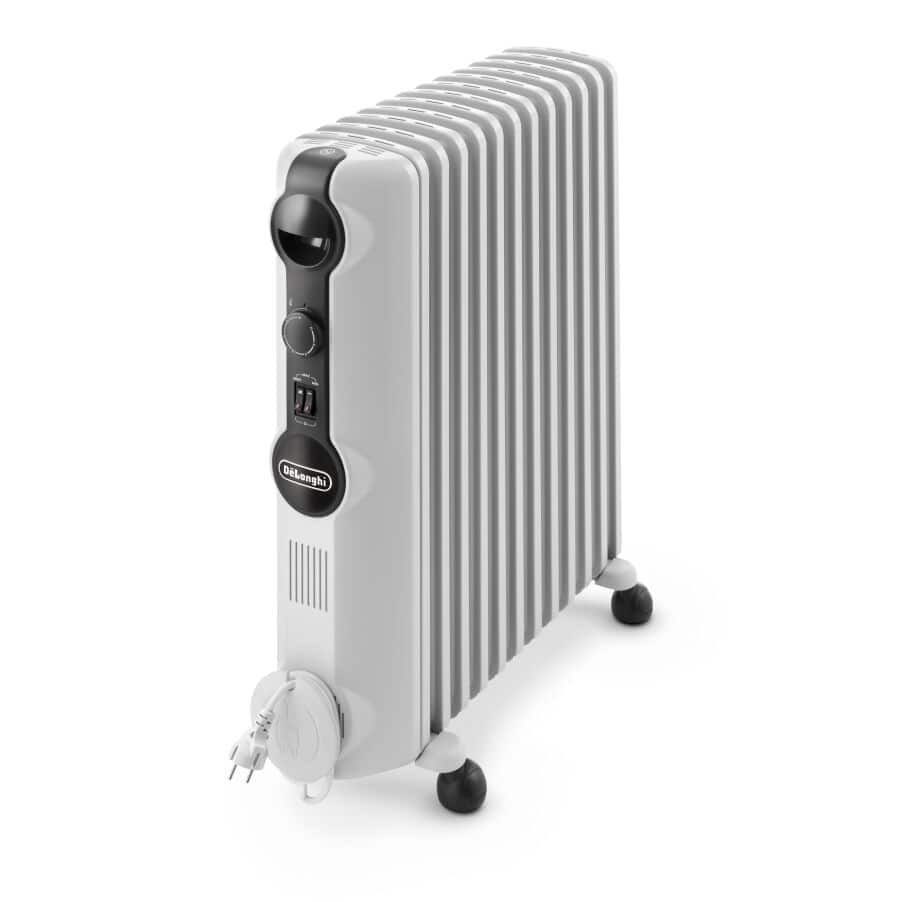
An oil-filled radiator looks like a small set of metal fins on wheels. Inside, sealed oil is heated by an electric element, and the oil warms the metal, which then gives off steady, gentle heat into the room. It never needs refilling.
Oil radiators are slow to warm up, but they keep radiating heat for a while after they switch off, and the heat feels soft and even. They are silent, which makes them a favourite for bedrooms and children’s rooms. The DeLonghi Radia-S Oil Radiator and the DeLonghi 2,000W Oil Heater in Gray are classic examples of this type.
An oil radiator suits you if:
- You want to heat a bedroom or living room for several hours.
- You value silence for sleeping or studying.
- You do not mind waiting a little for the room to warm.
Fan Heaters
A fan heater blows air over a heating element, pushing warm air into the room quickly. It is the fastest way to take the chill off a room, which makes it ideal for short bursts: warming the bathroom before a shower, heating a room for an hour in the evening, or warming a home office first thing in the morning.
The DeLonghi Verticale Edge Fan Heater is a 2,000W fan heater in a slim vertical design and a soft green colour, so it does not look out of place in a living room. Fan heaters make some noise and the warmth fades quickly once you switch them off.
Ceramic Desk Heaters
A small ceramic fan heater warms you, rather than the whole room. The DeLonghi Capsule Desk Ceramic Fan Heater runs at 360W, a low wattage designed for a desk or a small personal space. It is ideal if you work or study at a desk in a cold room and only need warmth around your legs and hands.
Choosing the Right Heater for Each Room
Bedrooms
Silence and steady warmth matter most. An oil radiator is usually the best choice. Warm the room for an hour before bed, then switch off or lower the setting. Do not sleep with any heater running right beside the bed, and never cover it.
Living Rooms
Large reception rooms are hard to heat fully. Focus on the seating area. An oil radiator placed near the sofa, combined with a rug underfoot and throws on the sofa, makes a family evening comfortable without trying to heat every corner of a big room.
Home Office and Study Corners
A desk heater warms you directly and uses far less power than heating the whole room. This is a smart choice for students studying for exams through the winter.
Bathrooms
Water and electricity need extra caution. Only use a heater in a bathroom if the manufacturer’s manual explicitly allows it, keep it well away from water, and never touch it with wet hands. Many families warm the bathroom from the doorway or the hallway for a few minutes before a shower, then remove the heater.
Sizing: How Much Heat Do You Need?
Wattage gives you a rough idea of heat output. A 2,000W heater is a common size for an average bedroom or medium living area. A 360W desk heater is personal heating only.
Think about:
- Room size. Larger rooms need more output or more time.
- Insulation. A room with old windows or an outside wall loses heat faster.
- How long you need warmth. Short bursts favour fan heaters; long evenings favour oil radiators.
A heater that is too small for a room will run constantly without ever making it comfortable. A heater that is too large wastes electricity.
Running Costs and Smart Use
Electric heaters turn electricity into heat very directly, so the cost comes down to wattage multiplied by hours. A 2,000W heater running for five hours a night uses far more than a 360W desk heater running for the same time. With tiered electricity pricing, heavy winter use can push a household into a higher bracket, so it pays to be deliberate.
- Heat people, not empty space. Warm the room you are sitting in, and close its door.
- Pre-warm, then reduce. Run the heater on a higher setting to take the chill off, then turn it down or off once the room is comfortable.
- Use the thermostat if your heater has one. It stops the heater running flat out when the room is already warm.
- Let an oil radiator coast. Because oil holds heat, you can often switch it off a little before you leave the room or go to bed.
Electric Heater Safety: The Rules That Matter
This is the most important part of the guide. Read your heater’s manual, and follow these general safety habits in every room.
Placement
- Keep at least one metre of clear space around the heater. Curtains, sofas, beds, clothes and paper must stay well away.
- Place it on a flat, stable floor, never on a rug with deep pile, a bed or a chair.
- Keep it out of walkways where someone could trip over it or its cable.
- Never use it to dry clothes or towels.
Electricity
- Plug heaters directly into a wall socket. Never use a multi-plug extension for a heater.
- Do not run a heater on the same socket or circuit as a kettle, iron or other high-power appliance.
- Check the cable and plug regularly. A plug that feels hot, or a cable that is damaged, is a warning sign: stop using it and have it checked.
- In older buildings with weak wiring, ask an electrician whether your sockets can safely handle a high-wattage heater.
Children and Pets
- Choose a spot where children cannot reach or knock the heater over.
- Teach children that heaters are hot and are not toys.
- Keep pets’ beds and blankets away from the heater.
Supervision
- Switch heaters off when you leave the house or the room for long.
- Switch off before sleeping unless the manual clearly states the heater is designed for overnight use, and even then, keep it well clear of bedding.
- Check the manual for safety features such as overheat protection or tip-over switches, and do not assume a feature exists if it is not listed.
Staying Warm Without Running the Heater All Day
A heater works best as part of a whole-home approach. These habits can make your rooms feel warmer and reduce how long the heater needs to run.
- Add rugs. A thick rug over cold tiles changes how warm a room feels. A Handmade Kilim Rug in Navy and Beige adds warmth underfoot and pattern to a winter living room.
- Layer throws. Keep a throw on every sofa and armchair. The Chunky Knitted Nordic Throw is one of our most loved pieces for exactly this reason.
- Close curtains at sunset. Heavy curtains trap a layer of warmer air near windows.
- Seal draughts. A rolled towel along the bottom of a balcony door helps more than you might think.
- Open curtains on sunny days. Let free winter sunshine warm the room in the afternoon.
- Dress the bed for winter. An extra blanket at the foot of the bed, like a Handmade Knitted Cotton Waffle Throw, means you can switch off the heater earlier.
- Warm drinks. Sahlab, hot milk with honey and ginger tea are part of an Egyptian winter for good reason.
Common Mistakes to Avoid
- Using extension cords. The most common electrical risk with heaters.
- Placing heaters near curtains or beds. Fabric and heat do not mix.
- Drying laundry on a heater. A serious fire risk.
- Buying one heater for the whole flat. Heat the rooms you use, when you use them.
- Running a heater in an empty room. Wasted electricity.
- Ignoring the cold floor. A rug often does more for comfort than turning the heater up.
Quick Checklist
- I have chosen the heater type for each room: oil radiator, fan heater or desk heater
- The wattage suits the room size
- It plugs directly into a wall socket, never an extension
- It has at least one metre of clear space around it
- Children and pets cannot reach or knock it over
- I switch it off when leaving the room and before sleeping
- I have rugs, throws and curtains working alongside it
A Warm, Safe Winter at Home
Egyptian winters are short, but they are real, and a home that feels warm makes those months something to enjoy: long evenings with family, hot drinks, films under a blanket. Choose a heater that fits each room, follow the safety rules without exception, and let rugs and throws do part of the work.
Explore electric heaters, throws and rugs for winter at coccarohome.com.
Shop the Look
- DeLonghi Radia-S Oil Radiator — EGP 11,700 — Quiet, steady oil-filled warmth for bedrooms and living rooms.
- DeLonghi 2,000W Oil Heater, Gray — EGP 10,529 — A classic oil radiator for long winter evenings.
- DeLonghi Verticale Edge Fan Heater — EGP 3,509 — A slim 2,000W fan heater for quick warmth.
- DeLonghi Capsule Desk Ceramic Fan Heater — EGP 1,403 — Low-wattage personal warmth for a desk or study corner.
- Chunky Knitted Nordic Throw — EGP 1,944 — A soft, chunky layer for the sofa on cold nights.
- Handmade Knitted Cotton Waffle Throw — EGP 1,300 — An extra blanket for the foot of the bed.
- Cashmere Black and White Abstract Throw — EGP 1,944 — A graphic throw that adds warmth and style.
- Handmade Kilim Rug in Navy and Beige — EGP 2,484 — Covers cold tiles with handmade warmth.
- Handwoven Geometric Kilim Area Rug — EGP 4,450 — A tufted, fringed rug for a cosy winter living room.