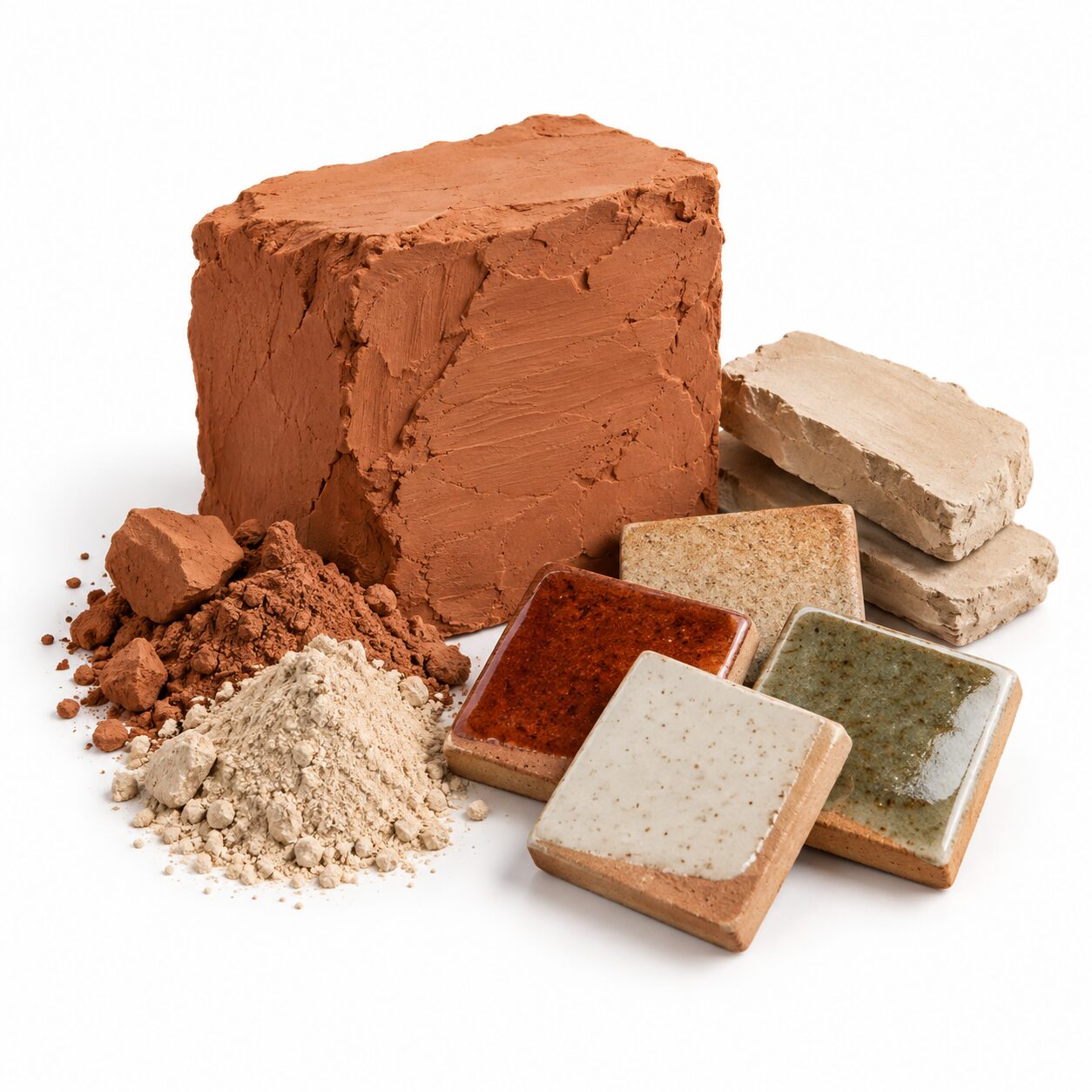
Pick up a piece of handmade pottery and you can feel the difference before you even look at it. The weight is slightly uneven, the glaze pools a little deeper in one spot, and the base carries the faint mark of the wheel or the potter’s hand. That small irregularity is exactly why ceramics make a house feel lived in rather than staged. Egypt has one of the oldest pottery traditions on earth, from the clay water jars of Upper Egypt to the workshops of Fustat and Tunis village in Fayoum, and bringing a little of that craft into a modern apartment connects your home to something much older than any trend.
The good news is that pottery is not only for display shelves. The best ceramic pieces are the ones you use every day: the mug you reach for at breakfast, the vase that holds whatever branches you picked up this week, the planter that sits by the window. This guide walks through how to choose, place and care for handmade pottery so it earns its space in every room.
Why Handmade Pottery Works in Almost Any Home
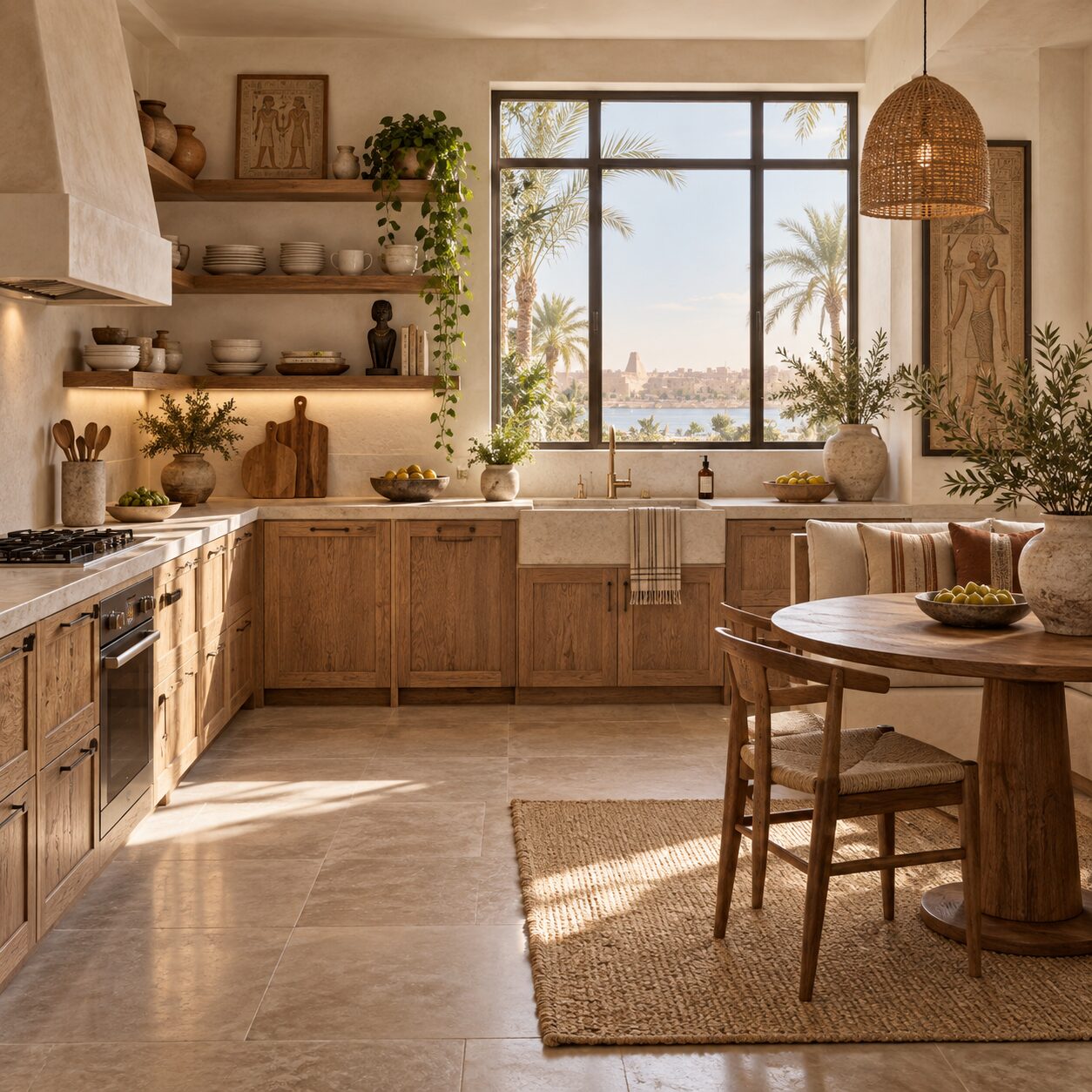
Ceramics sit comfortably between styles. A matte earthy vase looks right in a minimalist living room, a hand-painted mug brings colour to a neutral kitchen, and a textured planter softens a modern balcony. Because clay is a natural material, it pairs easily with the other natural textures that suit Egyptian homes so well: jute, halfa, cotton, wood and linen.
There are a few practical reasons pottery is worth the investment:
- It adds weight and presence. A single substantial vase can anchor a console or corner that would otherwise need several smaller objects.
- It brings texture without clutter. A glaze, a carved pattern or a raw clay finish gives the eye something to rest on, even in a pared-back room.
- It is honest about being handmade. Small variations in shape and colour mean no two pieces are identical, which makes your arrangement genuinely yours.
- It ages well. Good ceramics do not go out of date the way printed or plastic decor can. A pot you buy today will look just as right in ten years.
Start With One Statement Vase
If you are new to decorating with pottery, begin with one piece that has real scale. A tall or wide vase placed on the floor beside a sofa, at the end of a hallway, or on a sideboard does more work than a row of small ornaments.
A floor-standing piece like the Pearl White Floor Vase is a good example. Its light colour keeps it from feeling heavy in a smaller apartment, and it looks equally good empty or filled with dried pampas, palm fronds or tall artificial stems. If your room already leans neutral, a deeper finish such as the Olive Metallic Tall Vase adds a quiet sheen that catches evening light.
How to place a statement vase
- Give it breathing room. Leave at least a hand’s width of empty space around it so it reads as a deliberate choice, not an afterthought.
- Anchor it to something. Place it beside a piece of furniture, a doorway or a plant stand rather than floating in the middle of a wall.
- Mind the height. On a console, a vase roughly one third to one half the height of the mirror or artwork above it tends to look balanced.
- Think about traffic. In homes with young children or pets, choose a spot away from the main walkway, or go for a wider, lower base that is harder to knock over.
Build a Tabletop Vignette With Pottery
A vignette is simply a small, considered grouping of objects. Pottery is ideal for this because pieces of different heights and finishes naturally look like they belong together.
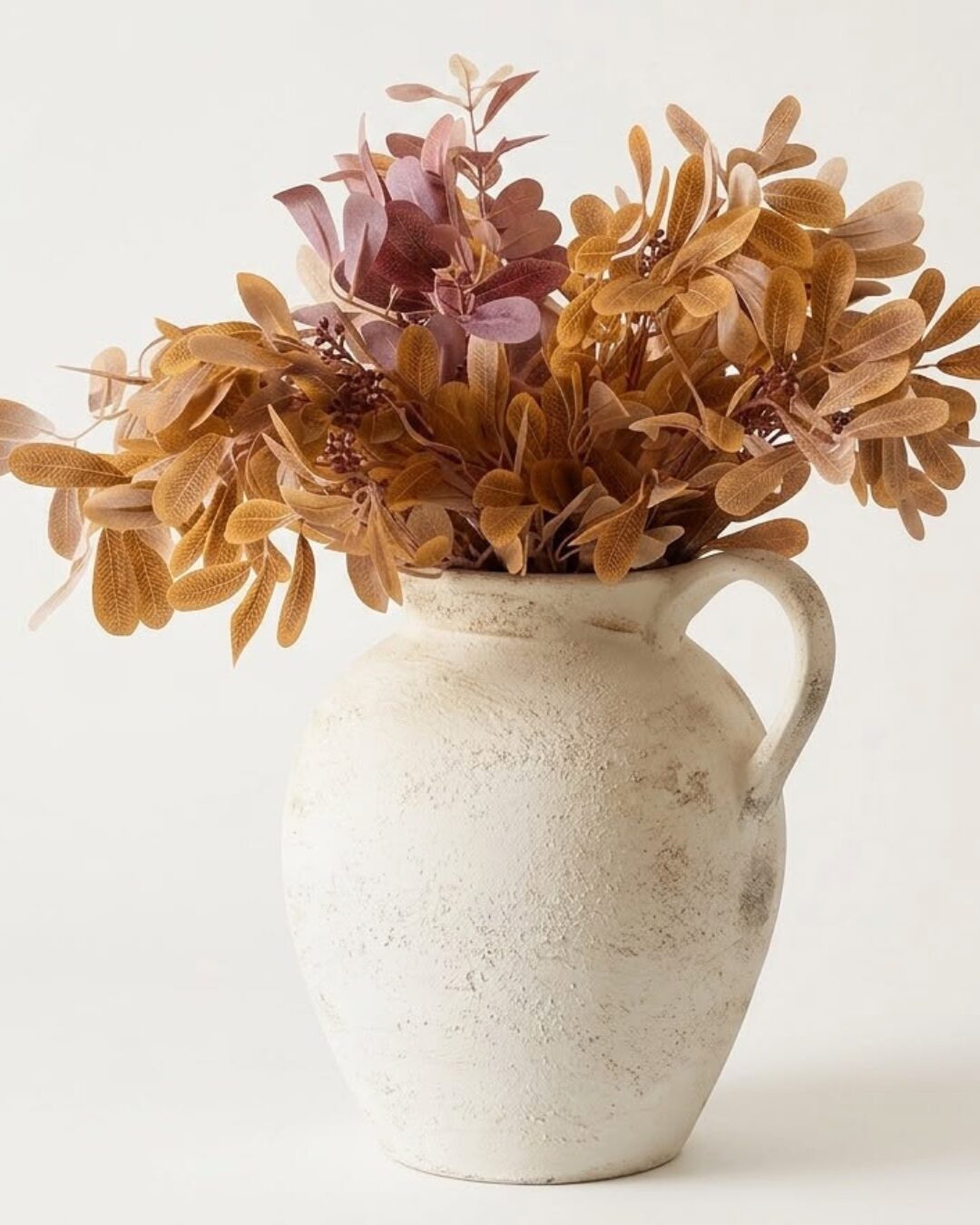
A simple formula that works almost every time is to combine three elements: something tall, something medium, and something low and wide. For example, a pitcher-style vase, a smaller rounded vase, and a shallow tray or bowl. The Rustic Beige Pitcher Vase is one of our most loved pieces for exactly this reason. The handle gives it a farmhouse character, and it holds a few stems of eucalyptus or olive branches beautifully.
The rule of odd numbers
Groupings of three or five feel more natural to the eye than pairs or fours. If you have two vases you love, add a third object of a different material, such as a carved wooden candle bowl or a stack of books, to complete the group.
Mix finishes, repeat colours
A vignette looks cohesive when the colours repeat but the textures change. Try a glossy blue vase next to a matte cream one, then pull the blue into a cushion or a mug elsewhere in the room. The Earthy Blue Handcrafted Vase and the Earthy Green Handcrafted Vase share the same artisan finish, so they can sit together or be split between two rooms to link the spaces.
Bring Pottery Into the Kitchen and Coffee Corner
The kitchen is where handmade ceramics really prove their value. A mug made by hand changes the small ritual of morning coffee or evening tea. It feels better in the hand, and it looks better on the counter than a mismatched collection of promotional cups.
The Hand-Painted Whirling Dervish Mug is a favourite with customers who want a piece that reflects Egyptian and Sufi heritage. For a calmer look, a stoneware set such as the Blue Stoneware Mug Set with Tray gives you two cups and a matching tray, which instantly turns a corner of the counter into a proper coffee station.
Setting up a pottery coffee corner
- Choose a small tray to define the space so the corner looks intentional.
- Add two or three mugs that share a colour family.
- Include one wooden or woven element, such as a coaster set or a small storage bowl for coffee capsules.
- Finish with a tiny plant or a single stem in a bud vase.
Keep it edited. A coffee corner looks best when there is still visible counter around it.
Use Ceramic Planters for Greenery Indoors and Out
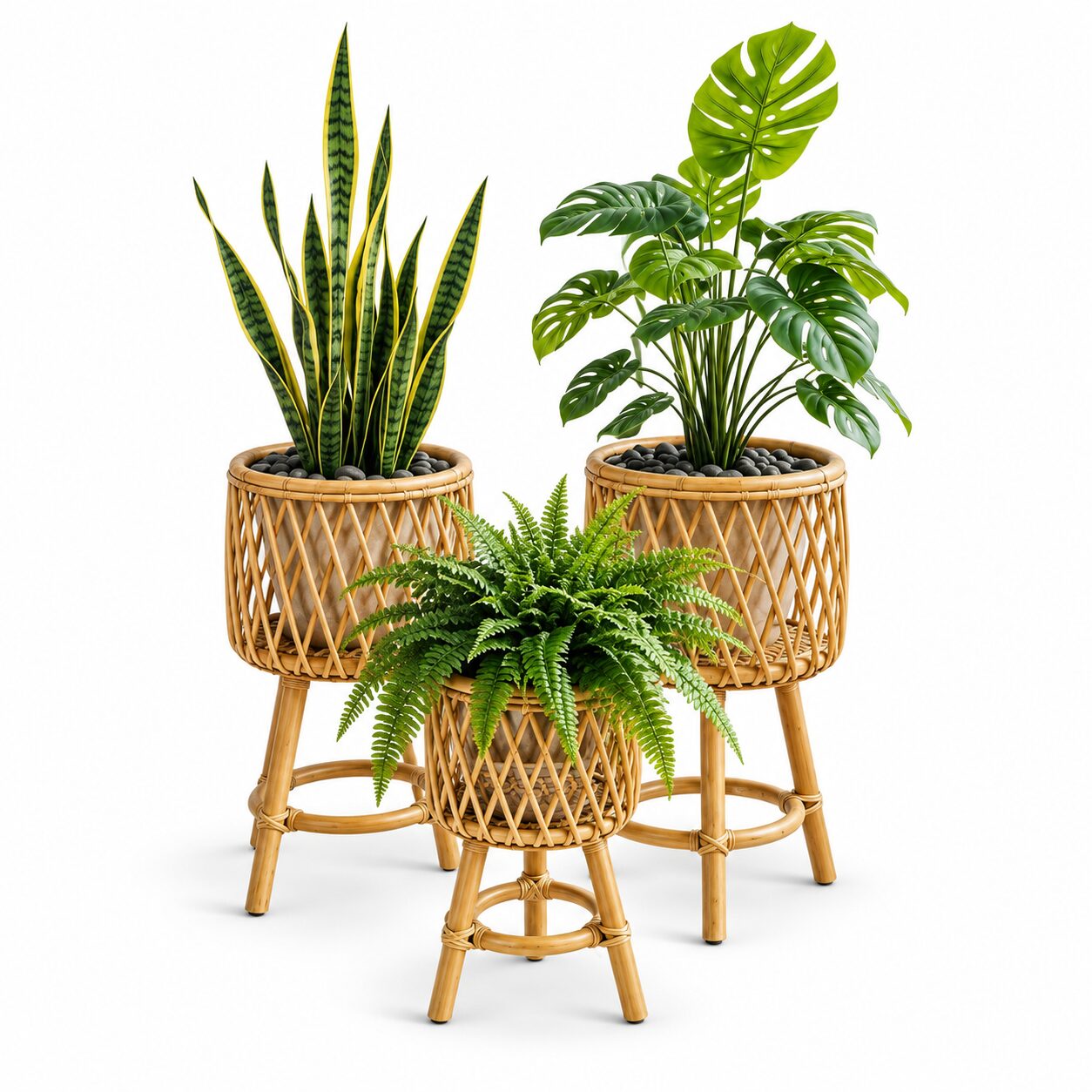
Clay and plants have always belonged together. Ceramic planters hold moisture more evenly than thin plastic pots, and they add stability to top-heavy plants. In Egyptian summers, a thicker planter also helps protect roots from sudden temperature swings on a sunny windowsill or balcony.
The Bohemian Engraved Ceramic Planter works well for succulents, snake plants or a small pothos, and its engraved geometric pattern adds interest even when the plant is small. For a bold statement at an entrance or on a terrace, a large glazed pot such as the Large Olive Green Terracotta Planter can hold a sizeable olive or fiddle-leaf fig.
Planter tips
- Check drainage. If a decorative pot has no hole, use it as a cover pot with a plastic nursery pot inside, and empty any standing water after watering.
- Protect your floors and furniture. Place a saucer, a cork mat or a woven coaster underneath to prevent water rings.
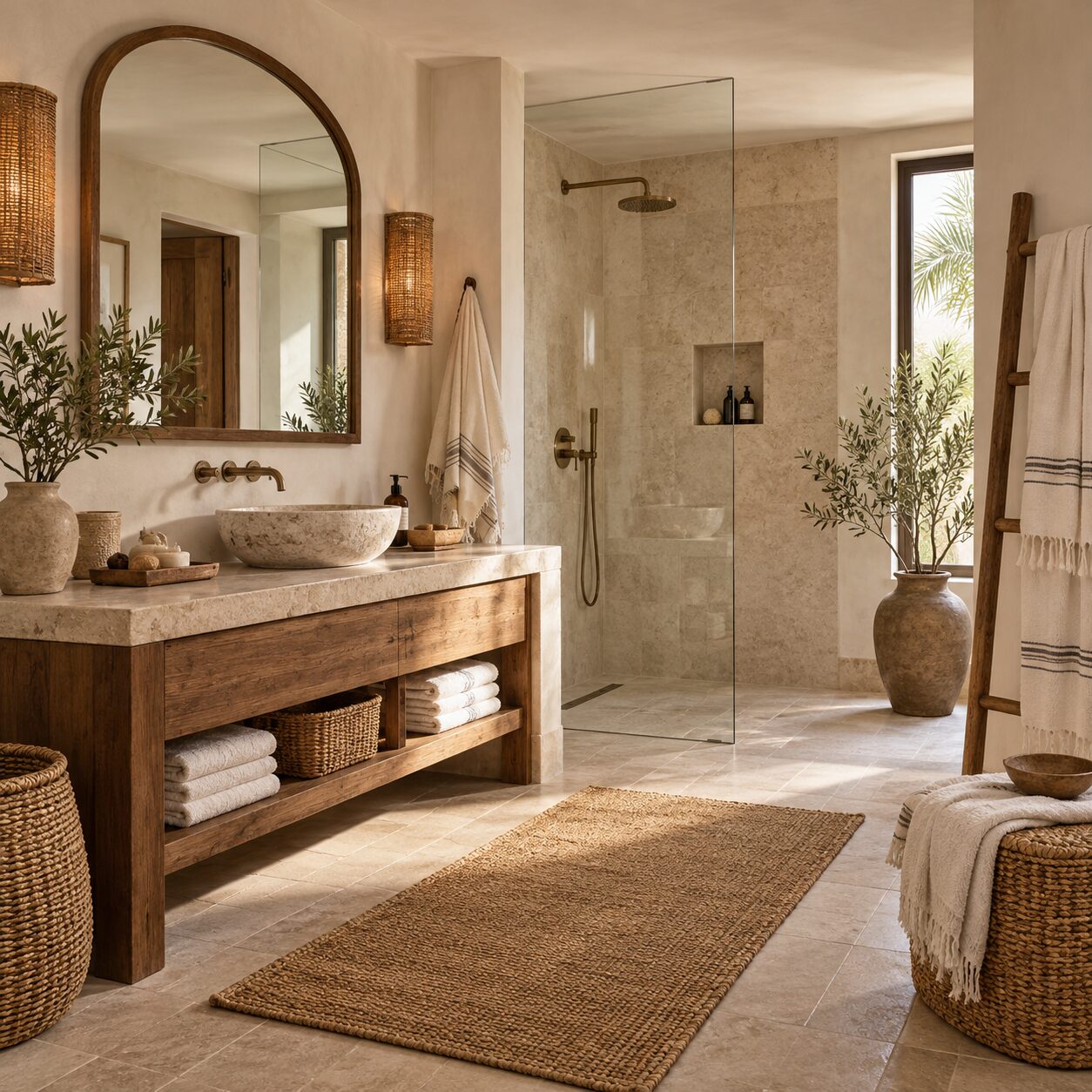
- Use faux greenery where light is poor. In a dim corridor or bathroom, an artificial olive branch in a ceramic vase gives the same effect without the maintenance.
Hand-Painted Pottery as Art
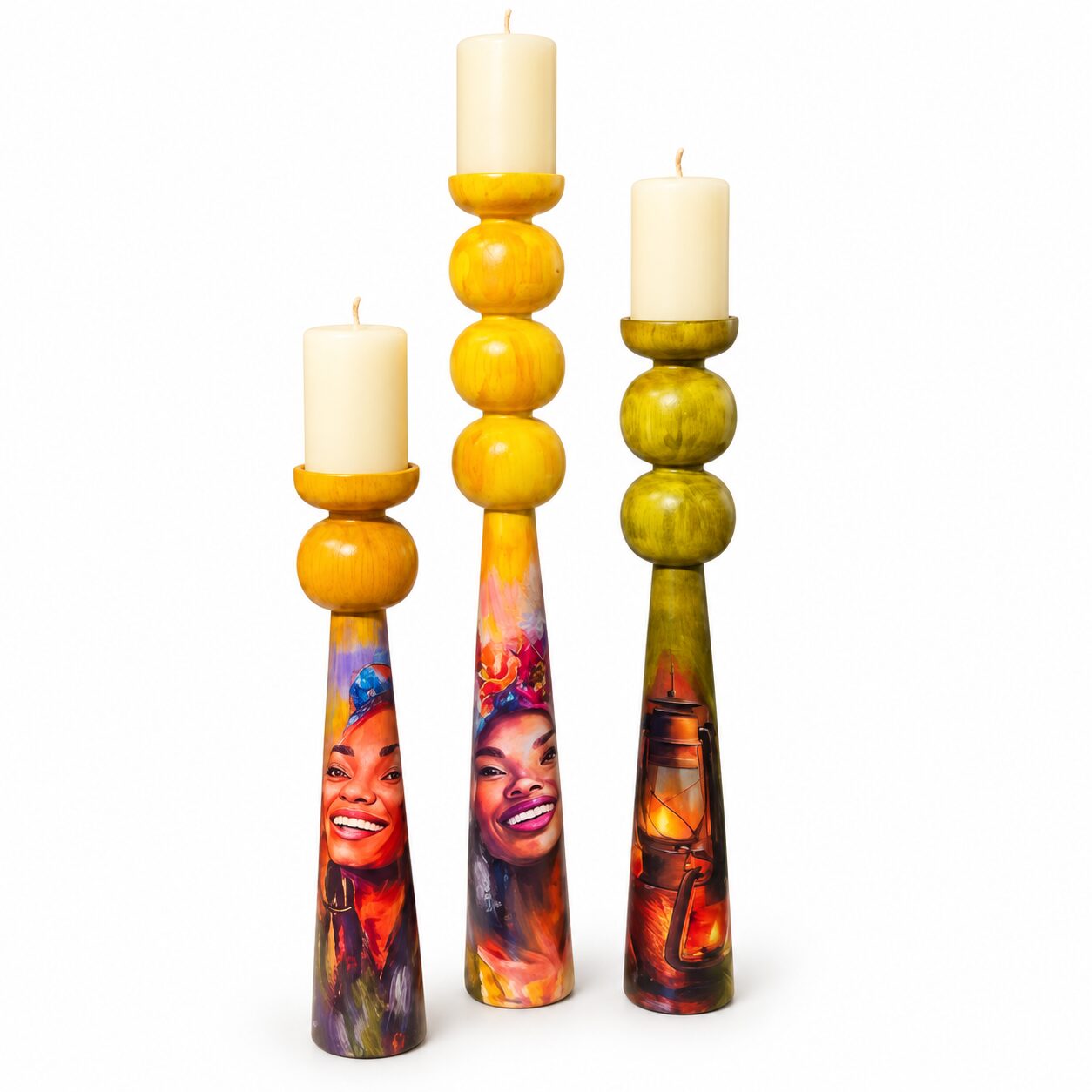
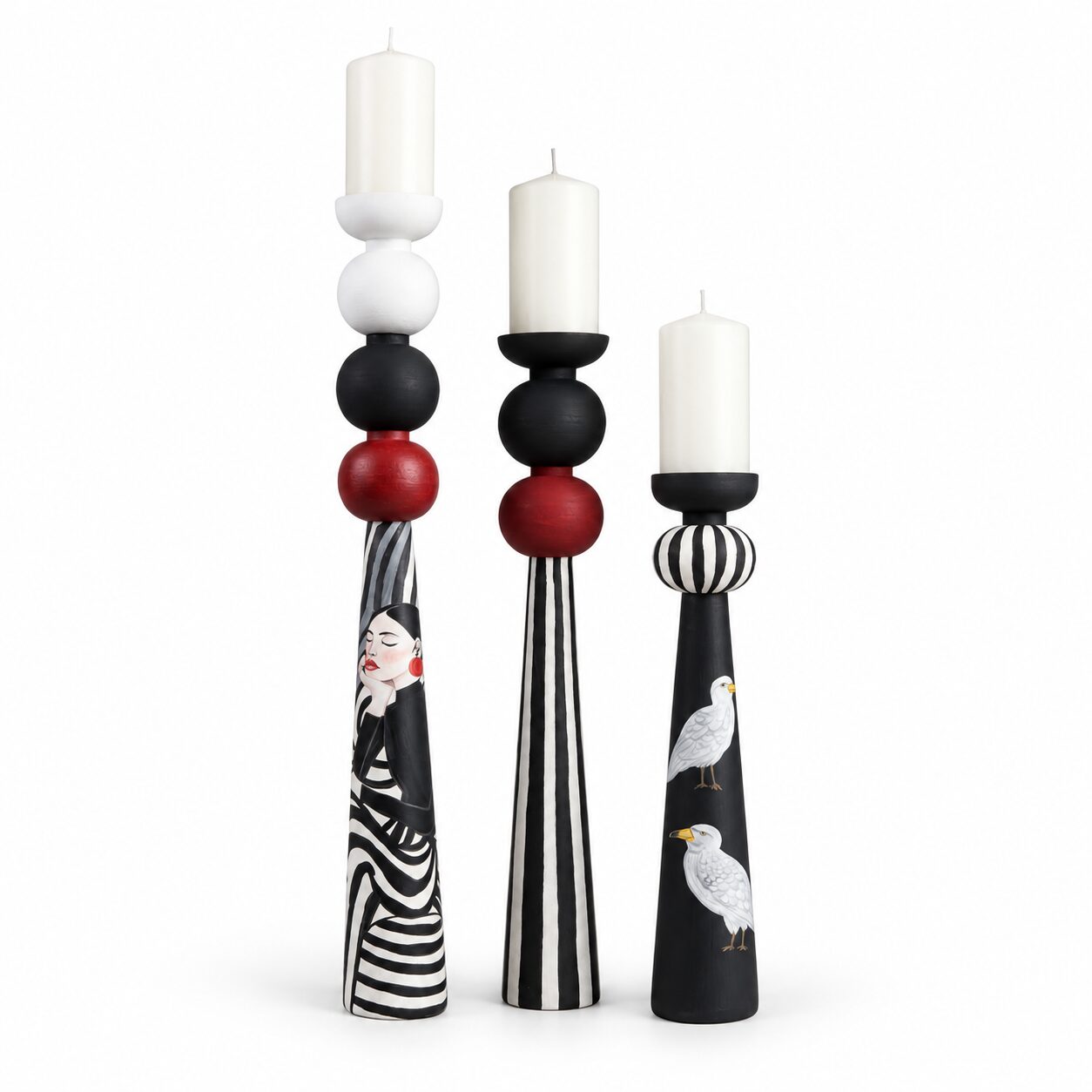
Some ceramic pieces are less about function and more about storytelling. Hand-painted pottery, with its figures, botanicals and bold colour, behaves like a painting you can place on a shelf. Pieces such as Flora and Muse Hand-Painted Pottery or The Palm Oasis Hand-Painted Vase deserve a spot where they can be seen at eye level.
When a piece is this detailed, let it stand mostly alone. Place it on a clean shelf, a side table or a bookcase with plenty of space around it. Pull one colour from the painting into a nearby textile, such as a cushion or a throw, and you will have a room that feels curated rather than busy.
Common Mistakes When Decorating With Pottery
Even beautiful ceramics can look off if they are placed without thought. Watch out for these common mistakes:
- Too many small pieces. A shelf of ten tiny pots looks cluttered. Swap half of them for one larger vase.
- Everything the same height. Vary heights so the eye moves across the arrangement rather than along a flat line.
- Ignoring the background. A cream vase against a cream wall disappears. Give light pieces a darker backdrop, or add a wooden tray beneath them.
- Using decorative pieces for food without checking. Some decorative ceramics are made for display only. Use pieces sold as mugs or tableware for food and drink, and keep decorative vases decorative.
- Leaving water in vases for weeks. Stale water stains the inside of clay and smells. Change it every two or three days when using fresh flowers.
- Placing fragile pieces on unstable surfaces. Avoid narrow ledges, wobbly stools and spots where curtains can brush against them.
Caring for Handmade Ceramics
A little care keeps pottery looking its best for years.
- Dust weekly with a soft dry cloth. For textured finishes, a clean soft brush reaches into the grooves.
- Wash mugs by hand where possible, using warm water and a gentle sponge. Hand-painted designs last longer without harsh dishwasher cycles.
- Avoid sudden temperature changes. Do not pour boiling water into a cold mug straight from an air-conditioned room, and do not move a planter from blazing sun into a cold room in one step.
- Dry thoroughly before storing. Moisture trapped in unglazed bases can leave marks on wooden furniture.
- Use felt pads under heavier vases to protect tables and marble surfaces.
Quick Checklist: Adding Pottery to Your Home
- One statement vase for the living room or entrance
- A three-piece vignette on a console, shelf or sideboard
- A pair of handmade mugs and a tray for your coffee corner
- At least one ceramic planter with real or artificial greenery
- One hand-painted piece displayed at eye level
- Felt pads and coasters to protect surfaces
- A weekly dusting routine
Bring the Craft Home
Handmade pottery is one of the simplest ways to make a home feel warm, personal and rooted in craft. Start small with a mug you will use every morning, then add a vase that anchors your living room, and let the collection grow as you find pieces you love. Each one carries the mark of the hands that made it, and that is something no mass-produced object can offer.
Explore our full collection of handmade vases, planters and ceramic mugs at coccarohome.com and find the pieces that will make your home feel more like you, with delivery across Egypt.
Shop the Look