Walk into almost any apartment and you can spot it within seconds: a painting floating far too high, closer to the ceiling than to the furniture beneath it. It is the single most common decorating mistake, and it has nothing to do with taste. Most of us simply hang things at the height that feels natural while standing on a chair holding a hammer, which is usually much too high.
The good news is that there is a clear, professional method for hanging art, and it takes ten minutes to learn. Galleries and museums use it, interior designers use it, and once you know it you will never look at a wall the same way. This guide covers the core rule, how to adjust it above furniture, how to plan groupings and how to get the nail in the right place first time.
The Golden Rule: Centre at Eye Level
Museums hang art so the centre of each piece sits at roughly 145 to 152 cm from the floor. That is the average adult eye level, and it means you look straight at the work rather than up at it.
To use the rule:
- Measure 145 cm up from the floor and make a light pencil mark. This is where the centre of the artwork should sit.
- Measure the height of your artwork and divide by two.
- Measure the distance from the top of the frame to the hanging wire or hook when pulled tight.
- Add half the height to the 145 cm mark, then subtract the hook distance. That is where your nail goes.
It sounds fussy, but it removes the guesswork. In Egyptian apartments with high ceilings, especially in older buildings in Heliopolis, Zamalek or downtown Alexandria, the temptation to hang higher is strong. Resist it. Art hung at eye level makes a tall room feel grounded and comfortable; art hung high makes it feel empty.
When to Break the Rule
The 145 cm rule assumes a bare wall and people standing. Adjust it when:
- The art hangs above furniture. The furniture sets the height instead (more below).
- The room is mostly for sitting. In a dining room or majlis-style seating area, you can lower the centre slightly, to around 135 to 140 cm, so art is enjoyed from a chair.
- The piece is very large. A tall artwork may need its bottom edge to start about 20 to 30 cm above the floor or furniture, with the centre landing where it will.
Hanging Above a Sofa
The sofa wall is where most people go wrong. The rule here is about the gap, not the floor.
- Leave 20 to 25 cm between the top of the sofa back and the bottom of the frame. Less, and heads will bump the frame. More, and the art floats away from the sofa as if it belongs to a different room.
- Aim for about two-thirds of the sofa width. A 210 cm sofa looks best with art, or a grouping, that spans around 140 cm.
- Centre it on the sofa, not the wall, unless the sofa itself is centred.
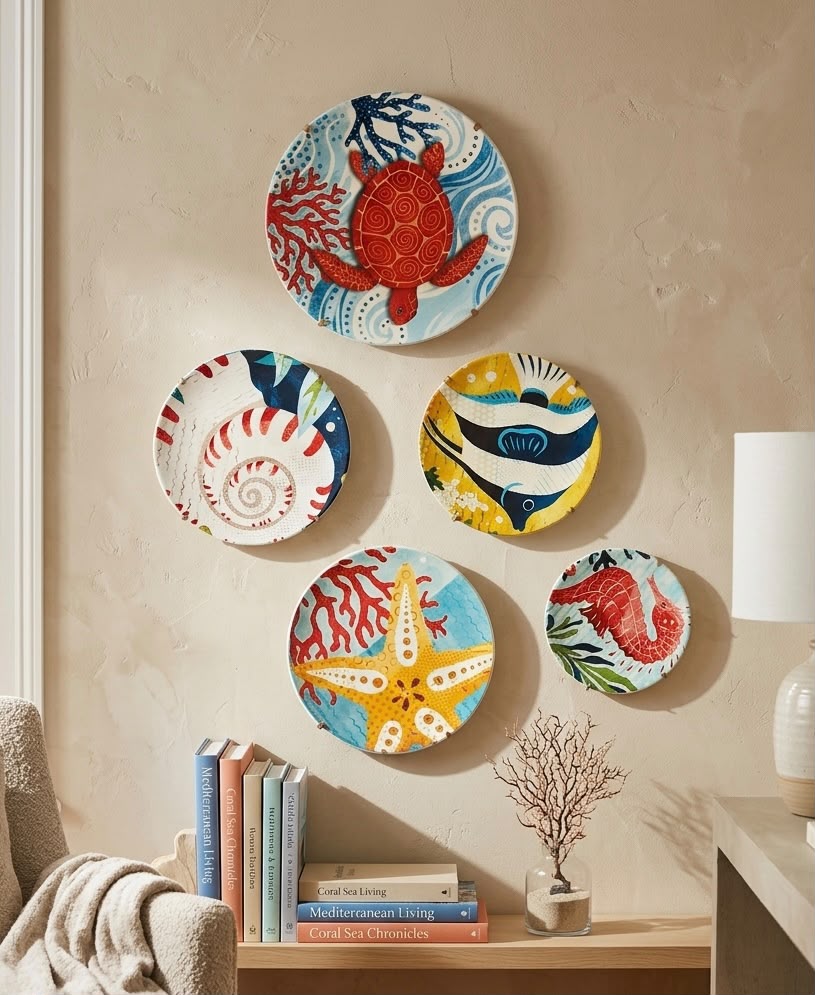
A set of plates or round pieces works brilliantly here because you can stretch the arrangement to the width you need. The Ocean Treasures Wooden Wall Plates come as a set of five hand-painted pieces, so you can arrange them in a gentle arc or a straight row to match a long sofa.
Hanging Above a Bed, Console or Sideboard
Above a Bed
Leave 20 to 30 cm above the headboard. If the headboard is tall, you may only have room for something long and low, which is often more restful than a tall piece anyway. A wide textile like the Macrame Half Circle Wall Hanging softens the space above the bed without adding a heavy frame over sleeping heads.
Above a Console or Sideboard
Here you can hang a little closer, 15 to 25 cm above the surface, because nobody leans back against a console. Art and objects should read as one composition: a mirror or painting, then a lamp, a vase or a tray on the surface below, overlapping slightly with the bottom of the frame.
A Decoupage Tile Wall Mirror above an entrance console doubles as art and as a last check before leaving the house. Hang it so the centre sits around eye level for the main adults in the home.
Planning a Gallery Wall
A gallery wall is simply several pieces hung as one large artwork. Treat the whole group as a single shape and apply the same height rules to its centre.
Choose a Layout
- Grid: identical frames in neat rows and columns. Calm, modern and very forgiving.
- Salon style: mixed sizes and shapes, arranged organically. Lively and personal.
- Linear: pieces aligned along one horizontal line, usually the centre or the bottom edge. Clean and good above long furniture.
- Cluster around an anchor: one large central piece with smaller ones arranged around it.
Keep the Spacing Consistent
The secret of a gallery wall that looks professional is even gaps. Use 5 to 8 cm between pieces. Wider gaps make the group fall apart; tighter gaps make it feel cramped. Consistency matters more than the exact number.
Plan on the Floor First
- Lay all pieces on the floor and arrange them until the group feels balanced.
- Trace each frame on paper or old newspaper and cut out the shapes.
- Mark the hook position on each paper template.
- Tape the templates to the wall with painter’s tape and live with them for a day.
- Drill or nail straight through the marked points, then tear the paper away.
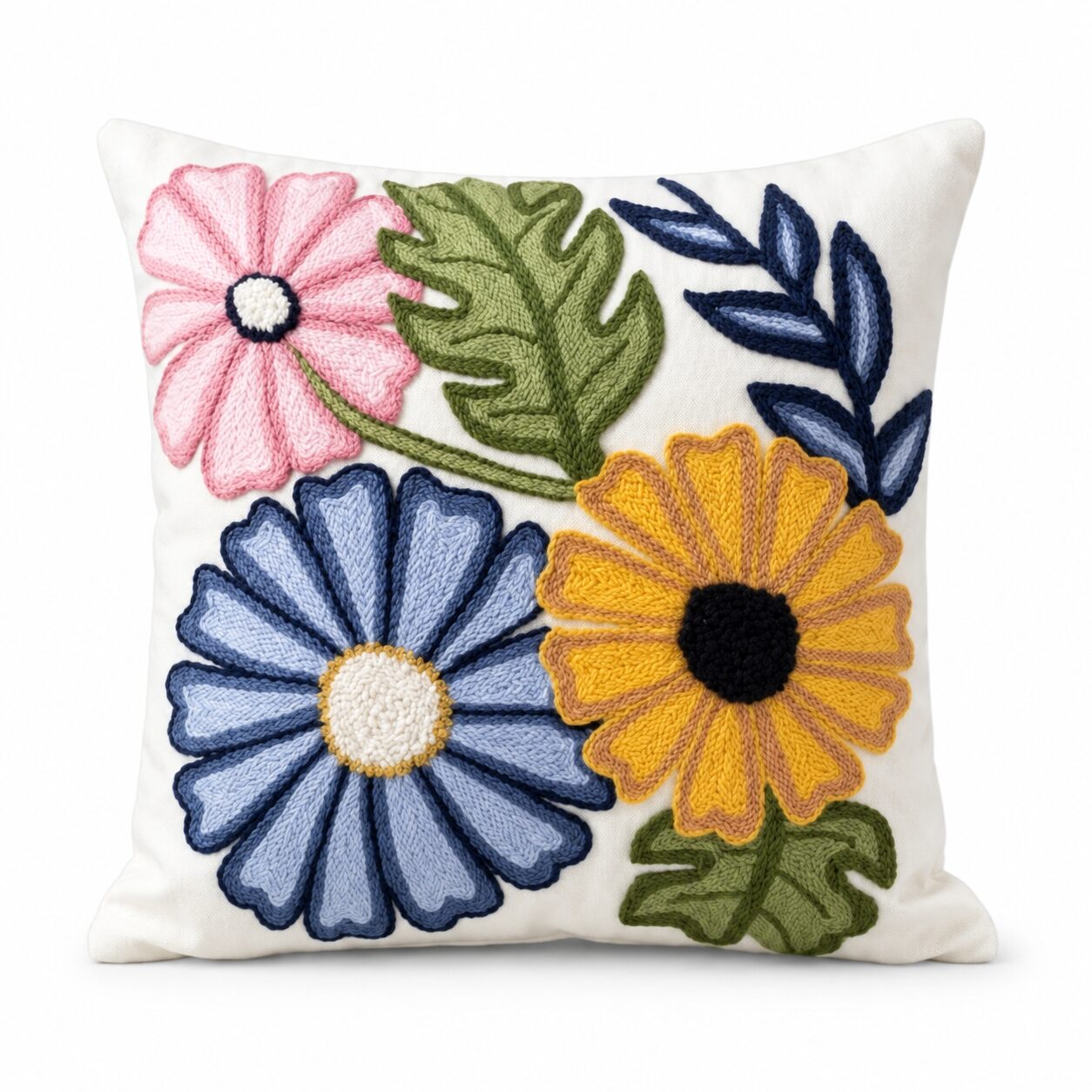
Mixing media makes a gallery wall richer. Combine framed pieces like the Mediterranean Summer Embroidery Set with a textured element and a round shape, and the wall has depth rather than looking like a page of photographs.
Tricky Spots: Hallways, Stairs, Kitchens and Bathrooms
Not every wall has a sofa or bed to measure from. These spaces need their own adjustments.
Hallways and Corridors
Hallways are seen while walking, and often from very close. Keep the centre line at 145 cm and run pieces along one continuous line so the eye travels smoothly from one end to the other. Because people pass close by, choose flatter pieces that will not catch shoulders or bags. A row of round plates or a series of small framed prints suits a long, narrow corridor far better than one large canvas you can never step back from.
Staircases
On stairs, the eye-level line climbs with the steps. Measure 145 cm up from the centre of each tread where a piece will hang, mark it, and connect the marks into a diagonal line. Hang the artwork so its centres follow that diagonal. Keep the spacing even, and the arrangement will rise naturally with the staircase.
Kitchens
Kitchen walls are usually broken up by cabinets, tiles and appliances, so there are fewer full walls to work with. Hang art between upper cabinets and the counter only if there is at least 40 cm of clear space, and keep it away from the hob, where heat, steam and splashes will damage it. Painted wooden plates handle kitchen life well; the Hand-Painted Lemon Wall Plates bring a fresh, sunny note to a breakfast corner.
Bathrooms
Humidity is the enemy here. Choose pieces that tolerate a little moisture, hang them away from the shower and above the line of splashing, and make sure the bathroom is well ventilated. A small mirror or a single textile piece is usually enough.
Getting the Size Right
Height and size work together. A small piece hung at the right height on a big wall still looks lost.
- Fill about 60 to 75 percent of the wall space you are dressing, whether that is the width above a sofa or the area between two windows.
- Go bigger than you think. Undersized art is far more common than oversized art.
- Group small pieces if you love them but they look lonely alone.
- Use vertical art to make low ceilings feel taller and horizontal art to make narrow rooms feel wider.
Tools and Fixing Tips
Egyptian walls vary a lot. Many apartments have hard concrete or red-brick walls that eat ordinary nails, while some newer buildings have gypsum board partitions that need special anchors.
- Use a spirit level or a level app on your phone. Even a slight tilt is noticeable.
- For concrete and brick, drill and use wall plugs with screws. Never hammer a nail straight in and hope.
- For gypsum board, use proper hollow-wall anchors rated for the weight.
- Use two hooks for wide pieces. They stay level and do not swing when someone brushes past.
- Check for pipes and cables before drilling, especially near sockets, switches and bathrooms.
- Hang heavy mirrors on screws into solid wall, never on adhesive hooks.
If you rent and cannot drill, lean art on a shelf, mantel or picture ledge, layering two or three pieces of different sizes for a relaxed look.
Common Mistakes
- Hanging too high. The classic error. Bring it down to eye level or to 20 to 25 cm above furniture.
- Art too small for the wall. A tiny frame alone on a large wall looks accidental.
- Uneven gallery spacing. Random gaps make a group look messy.
- Ignoring the furniture below. Art should relate to what sits beneath it.
- One nail for a wide frame. It will tilt every time a door slams.
- Forgetting sightlines. Check the view from the doorway and the sofa, not just from where you stood with the drill.
Quick Checklist
- Centre of the art at about 145 cm on a bare wall
- 20 to 25 cm above a sofa or bed, 15 to 25 cm above a console
- Art spans about two-thirds of the furniture width
- 5 to 8 cm between pieces in a gallery wall
- Paper templates taped up before drilling
- Correct plugs or anchors for your wall type
- A spirit level on every piece
A Wall That Feels Right
When art hangs at the right height, a room suddenly makes sense. Furniture and walls connect, the eye moves comfortably, and the pieces you chose finally get the attention they deserve. The difference is often just 30 centimetres.
Find hand-painted wall plates, macrame hangings, framed textile art and handcrafted mirrors at coccarohome.com, and give your walls the same care as the rest of your home.
Shop the Look
- Ocean Treasures Wooden Wall Plates — EGP 1,600 — A flexible set of five that stretches to fit a sofa wall.
- Desert Oasis Wooden Wall Plates — EGP 1,600 — Warm desert tones for a rustic gallery arrangement.
- Macrame Half Circle Wall Hanging — EGP 1,512 — A soft, frameless piece for above the bed.
- Decoupage Tile Wall Mirror — EGP 6,048 — Colourful handmade frame for an entrance console.
- Mediterranean Summer Embroidery Set — EGP 3,200 — A ready-made trio for a small gallery wall.
- Verdant Rings Wall Tapestry Set — EGP 3,600 — Four textured pieces that work in a neat grid.
- Bohemian Tufted Abstract Wall Art — EGP 2,484 — A framed tufted piece that anchors a cluster layout.
- Boho Flower Crown Portrait Fabric Art — EGP 4,200 — A striking framed portrait for a bedroom or hallway.
- Coastal Wave Macrame Wall Hanging — EGP 5,300 — A large woven statement that fills a wide wall.
- Macrame Wall Hanging Shelf — EGP 1,728 — Adds display space to a gallery wall without drilling a row of nails.