Stylists have a trick they use on almost every interiors shoot. When a room feels a little flat, they do not reach for a new sofa or repaint the walls. They roll out a second rug on top of the first. Suddenly the floor has depth, the seating area looks deliberate, and the whole room feels more collected and personal.
Layering rugs is not just a photo trick, though. It solves real problems in Egyptian homes: a beloved kilim that is too small for the room, a large natural rug that feels plain on its own, a cold tiled floor that needs extra softness in winter. Done well, two rugs look richer than one expensive one. Done badly, they look like a mistake. Here is how to get it right.
Why Layer at All?
There are four good reasons to put one rug on another.
- To make a small rug work in a big room. A favourite rug that floats in the middle of the floor looks lost. A larger base rug beneath it gives it a frame.
- To add texture and pattern. A plain natural base plus a patterned topper gives you both calm and character.
- To define a zone. In open-plan living and dining spaces, a layered rug marks out the seating area clearly.
- To add comfort and warmth. Two layers feel softer underfoot and soften the cold of ceramic or marble tiles in winter.
The Basic Formula: Big Flat Base, Smaller Statement Top
Nearly every successful layered look follows the same structure.
The Base Layer
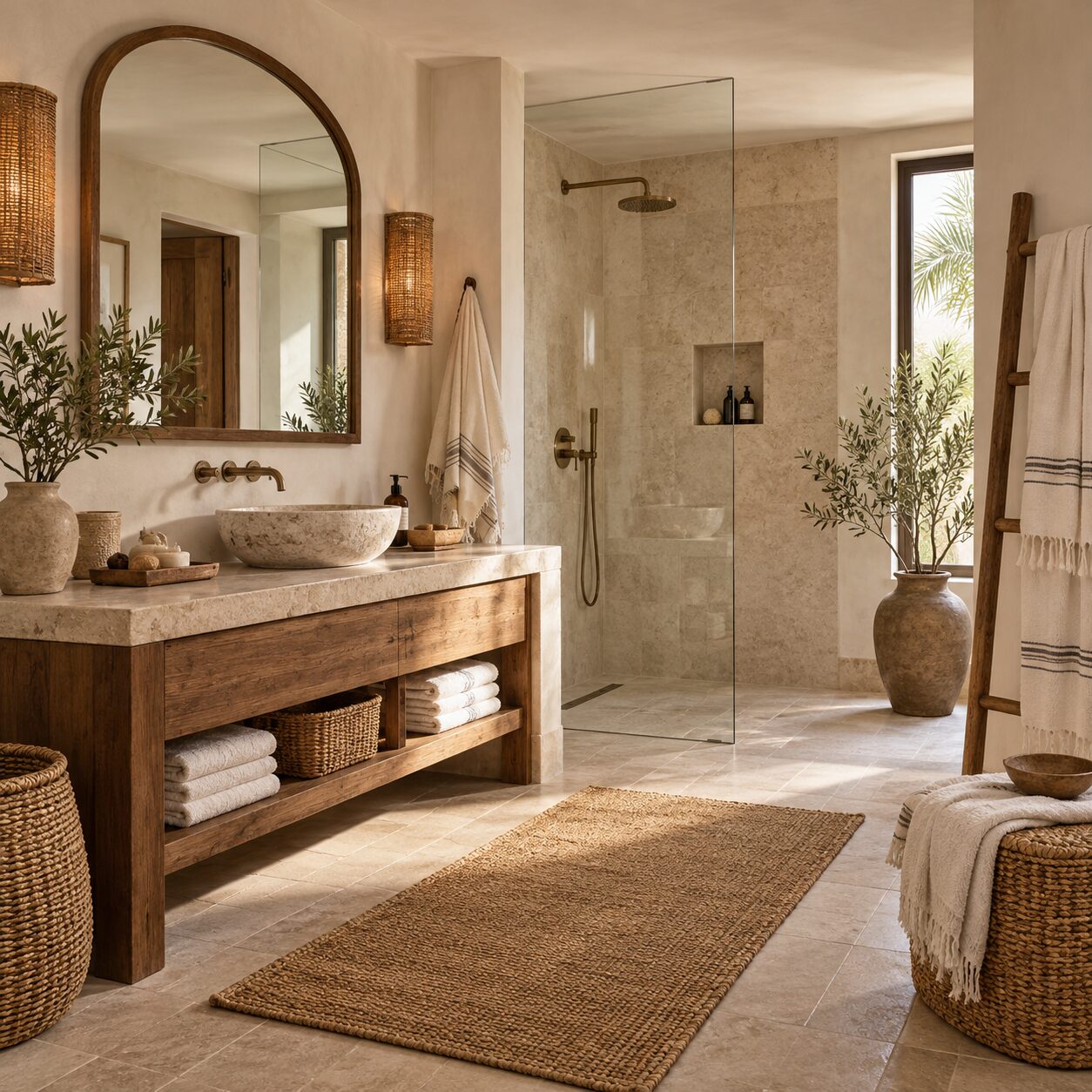
The bottom rug should be larger, flatter and quieter. Natural fibres are the classic choice because they are neutral, textured and durable. Halfa, jute and flatwoven cotton all work well.
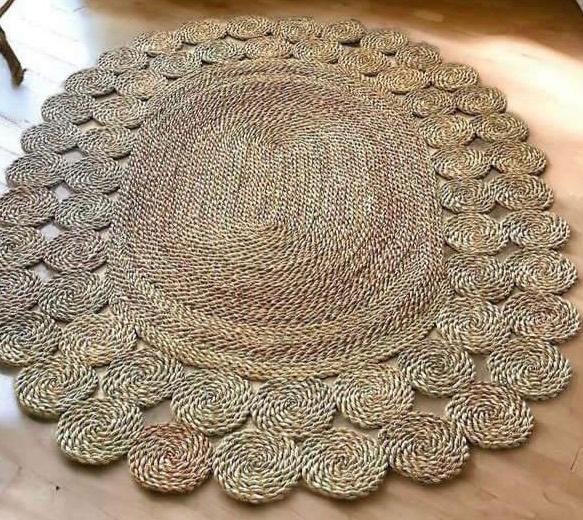
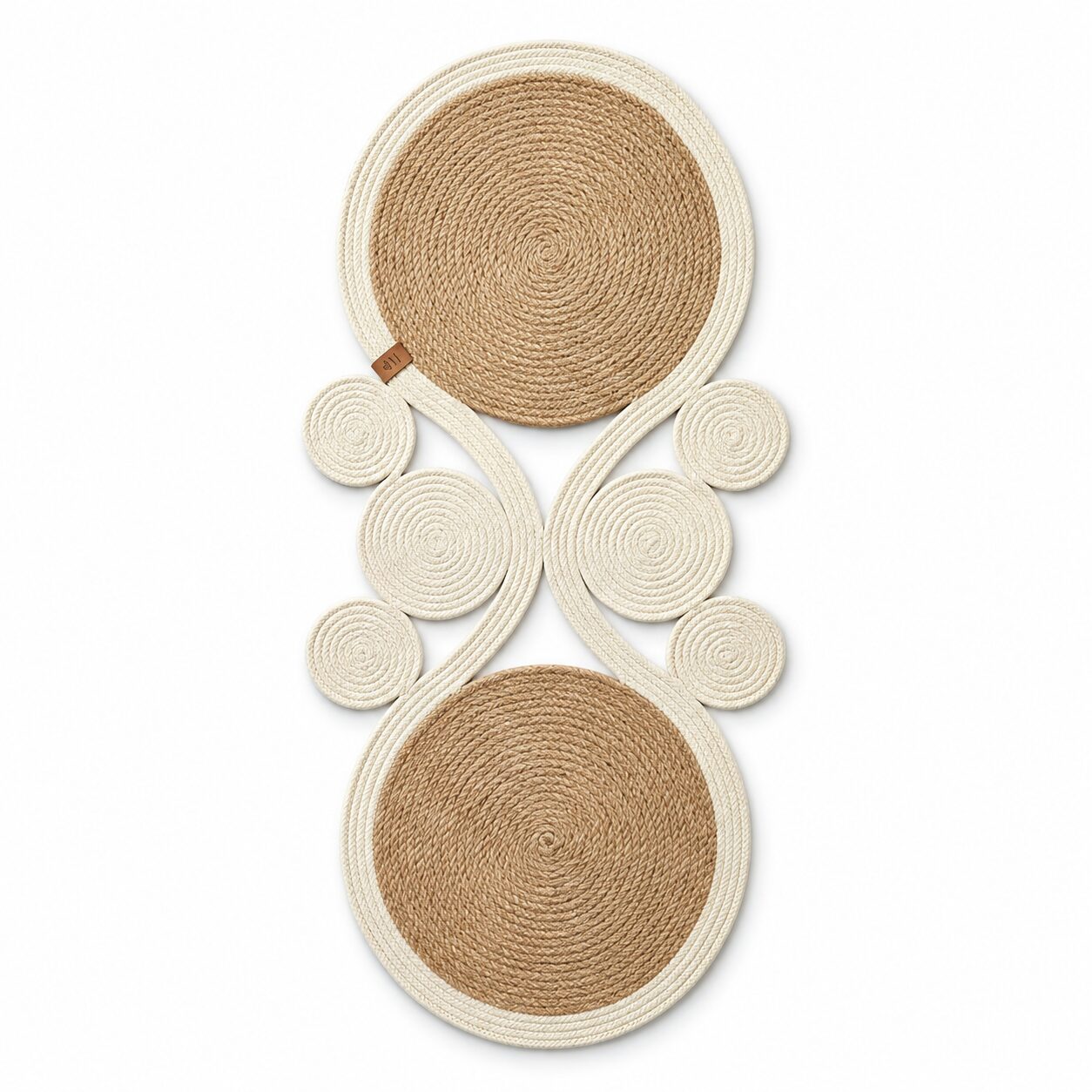
Egyptian halfa is a wonderful base. A Halfa Oval Rug brings warm golden texture and a softened shape that looks lovely under a coffee table. A Jute and Off-White Circle Rug gives a lighter, two-tone base for a calm, modern room.
The Top Layer
The top rug should be smaller and carry more pattern or colour. This is where a kilim, a crochet rug or a bold geometric shines. A Kilim Navy and Beige Carpet on top of natural halfa is a combination that never fails: the navy pattern pops against the golden fibre, and the beige ties the two together.
The Size Gap
Leave at least 20 to 30 cm of the base rug visible on all sides of the top rug. Less, and it looks like the top rug was simply too big. More is fine, especially in a large room. Think of the base as a mount around a painting.
Pairing Materials and Textures
Contrast is what makes layering work. Two rugs of the same thickness and texture just look confused.
- Natural under pattern. Halfa or jute under kilim or printed cotton. The most classic pairing.
- Flat under textured. A flatweave under a tufted or crochet rug for depth.
- Rough under soft. A coarse natural rug under something softer that feet actually touch.
- Rectangle under round. A round Crochet Mandala Rug over a rectangular base breaks up all the straight lines of sofas and tables.
Avoid layering two thick, high-pile rugs. The result is wobbly, hard to walk on and a trip hazard.
Pairing Colours and Patterns
Repeat at Least One Colour
The two rugs should share at least one colour. If your base is natural beige, choose a top rug with beige, cream or tan somewhere in its pattern. That shared thread makes the pairing look intentional.
One Pattern Leads
If both rugs are patterned, let one lead and keep the other quiet. A subtle linear stripe like the Linear Pattern Kilim Rug can sit beneath a bolder geometric because the scales are so different. Two busy patterns at the same scale will fight.
Tie It to the Room
Pull the top rug’s accent colour into a cushion, a throw or a vase. A navy kilim on the floor and a navy cushion on the sofa make the whole room feel planned.
Layering in Different Rooms
Living Room
This is the most common place to layer. Place a large base rug so the front legs of the sofa and armchairs sit on it, then centre the top rug under the coffee table. The top rug should be a little wider than the coffee table and never wider than the sofa.
Bedroom
Put a large base under the lower two-thirds of the bed so it extends beyond the sides, then angle or centre a smaller rug at the foot of the bed or on the side you step out of. Soft textures matter most here because bare feet touch them first thing in the morning.
Dining Room
Layering under a dining table is tricky because chairs drag on two layers. If you try it, make sure both rugs are flat and the top one is large enough that chairs stay on it when pulled out. Often a single flat rug is the more practical choice.
Entrance and Balcony
A small layered moment at the door is charming. A natural mat as a base with a smaller patterned rug on top makes a welcoming first impression. On balconies, keep both layers natural and easy to shake out, as dust collects quickly.
Seasonal Layering for Egyptian Homes
Our climate gives layering an extra purpose: it lets the floor change with the seasons without buying a whole new rug every time.
Summer: Strip Back
From May to September, many families roll up heavy rugs entirely because tiles feel cool and pleasant underfoot. Instead of leaving the floor bare, keep a single natural layer down. A halfa or jute rug is breathable, light and easy to shake out on the balcony, and it stops the room from echoing. If you love a little colour, add a lightweight cotton kilim on top only in the seating area.
Winter: Build Up
When the evenings turn cool in December and January, add a softer, warmer topper over the natural base. A crochet rug, a thicker cotton kilim or a tufted geometric piece brings warmth where feet rest most, in front of the sofa or beside the bed. The base stays the same; only the top changes.
Ramadan and Eid
When the family gathers and floor seating comes out, a layered rug becomes the heart of the room. A generous natural base with a patterned topper creates a defined, welcoming area for floor cushions and low trays, and it protects the base from the extra traffic of long evenings with guests. Choose a top rug in jewel tones or with a traditional pattern, and the room feels festive straight away.
Store Rugs Properly Between Seasons
Roll rugs, never fold them, with the pattern side facing in. Wrap them in a breathable cotton sheet rather than plastic, which traps moisture, and store them somewhere dry, off the floor. Before putting them back down, give them a good shake and an airing in shade for a few hours.
Choosing a Base Rug That Lasts
Because the base layer stays down year-round and takes most of the wear, it is worth choosing carefully.
- Size first. The base should be large enough to anchor the furniture group: at least the front legs of every seat should sit on it.
- Tight, firm weave. A tightly woven halfa or jute rug stays flat and holds the top layer steady.
- Neutral colour. A natural or two-tone base works with any top rug you buy in future, so you can change the look for years.
- Easy to clean. Flat natural rugs shake out quickly and do not trap sand the way deep pile does.
Placement Ideas a Stylist Would Use
- Straight and centred: calm, symmetrical and right for formal living rooms.
- Angled top rug: turn the top rug 10 to 20 degrees for a relaxed, collected feel. This works best with a rectangle on a large base.
- Offset: shift the top rug toward one side, under an armchair, to create a reading corner within a larger rug.
- Round on rectangle: a round rug centred under the coffee table softens a room full of hard edges.
- Hide on purpose: let a beautiful but small rug cover a stain or worn patch on an older base.
Keeping Layered Rugs Safe and Flat
Two layers mean two chances to slip. A few precautions make all the difference, especially in homes with children or older relatives.
- Use a rug pad or anti-slip underlay under the base rug on tiles and marble.
- Secure the top rug with double-sided rug tape or a thin non-slip mesh so it does not creep.
- Check the corners. Curled corners are trip hazards; flatten them by rolling the corner backward overnight or using corner grippers.
- Keep walkways clear. Avoid layering in narrow corridors or right at the top of stairs.
- Vacuum and shake regularly. Dust and sand collect between layers, and Egyptian dust finds its way into everything.
Common Mistakes
- Rugs the same size. The top rug must be noticeably smaller.
- No shared colour. The two rugs look like they belong to different rooms.
- Two thick piles. Unstable, uncomfortable and unsafe.
- Two equally loud patterns. They compete instead of complementing each other.
- Base rug too small for the room. Layering will not save a base that floats in the middle of the floor.
- Skipping the underlay. Layered rugs on tile slide unless they are secured.
Quick Checklist
- Larger, flatter, quieter base layer
- Smaller, bolder top layer
- 20 to 30 cm of base visible around the top rug
- At least one shared colour
- One pattern leads, the other supports
- Contrasting textures, never two thick piles
- Anti-slip underlay and secured corners
The Floor as a Foundation
Layering rugs lets you mix the warmth of Egyptian halfa and jute with the colour of handwoven kilims and crochet, and it gives a room the collected, lived-in feeling that makes a house feel like home. Start with a generous natural base, choose a top rug you love, and adjust until the floor feels balanced.
Browse handmade kilims, halfa and jute rugs and crochet carpets at coccarohome.com and build your own layered look.
Shop the Look
- Kilim Navy and Beige Carpet — EGP 2,484 — A classic patterned topper for a natural base.
- Halfa Oval Rug — EGP 2,700 — Warm Egyptian halfa that frames any kilim beautifully.
- Halfa Round Rug — EGP 1,404 — A round natural layer for under a coffee table.
- Jute and Off-White Circle Rug — EGP 2,268 — A light two-tone base for calm, modern rooms.
- Linear Pattern Kilim Rug — EGP 1,674 — A subtle stripe that supports a bolder rug.
- Florida Kilim Rug — EGP 2,430 — Beige and black pattern with strong graphic contrast.
- Geometric Kilim Rug with Tassels — EGP 4,450 — Tufted geometric texture for a statement top layer.
- Crochet Mandala Rug — EGP 3,100 — A round, intricate topper that softens straight lines.
- Moroccan-Inspired Optical Kilim Rug — EGP 6,000 — Ivory and black drama over a plain natural base.