Seven o’clock on a Tuesday. Everyone is hungry, the fridge is full of ingredients that still need washing, peeling and chopping, and the easiest option is to order in again. Most of us know this moment well. Working parents, students, newlyweds juggling two jobs, and anyone who cooks for a big household face the same daily question: what are we eating, and how fast can it be ready?
Meal prep is the answer many families have quietly adopted. It does not mean eating the same boxed chicken and rice every day. It means doing the slow, repetitive work once, on a free afternoon, so that weekday cooking takes fifteen or twenty minutes. Small kitchen appliances make that session dramatically faster. This guide shows you how to plan it, which appliances do which job, and how to store everything so it stays fresh.
What Meal Prep Really Means
There are three levels of meal prep, and you can choose whichever suits your family.
- Ingredient prep: washing, chopping, grating and portioning raw ingredients so they are ready to cook. This is the easiest place to start.
- Component prep: cooking building blocks such as rice, lentils, roasted vegetables, sauces and proteins that can be combined into different meals.
- Full meal prep: cooking complete dishes and portioning them for specific days.
Most Egyptian households find the sweet spot is a mix of the first two. Fresh, hot food matters at our tables, and nobody wants reheated everything. Prepped ingredients and components let you cook something that tastes freshly made in a fraction of the time.
Step One: Plan the Week
Planning takes fifteen minutes and saves hours.
- Choose five dinners. Leave the weekend free for family lunches, visiting, or eating out.
- Look for shared ingredients. If three dishes use onions, garlic and tomato sauce, prep all of it at once.
- Mix fresh and prepped. Plan one or two nights where you only reheat, and others where you cook quickly from prepped ingredients.
- Write a shopping list by section: vegetables, proteins, dairy, pantry.
- Pick your prep day. For many families, Friday afternoon or Saturday morning works best.
A sample week might look like this:
- Sunday: chicken pane with salad and rice.
- Monday: lentil soup with toasted bread and a green salad.
- Tuesday: kofta with tahini and roasted vegetables.
- Wednesday: pasta with a batch-cooked tomato sauce.
- Thursday: molokhia from the freezer with rice and chicken.
Step Two: Let the Appliances Do the Hard Work
The Food Processor: Your Prep Partner
The food processor is the star of meal prep day. What takes an hour with a knife takes ten minutes with the right disc or blade.
Use it to:
- Chop onions, garlic and peppers for the whole week in one go.
- Slice cucumbers, carrots and cabbage for salads.
- Grate carrots, zucchini and cheese.
- Mix kofta with onion, parsley and spices.
- Blend tahini sauce and dips in larger batches.
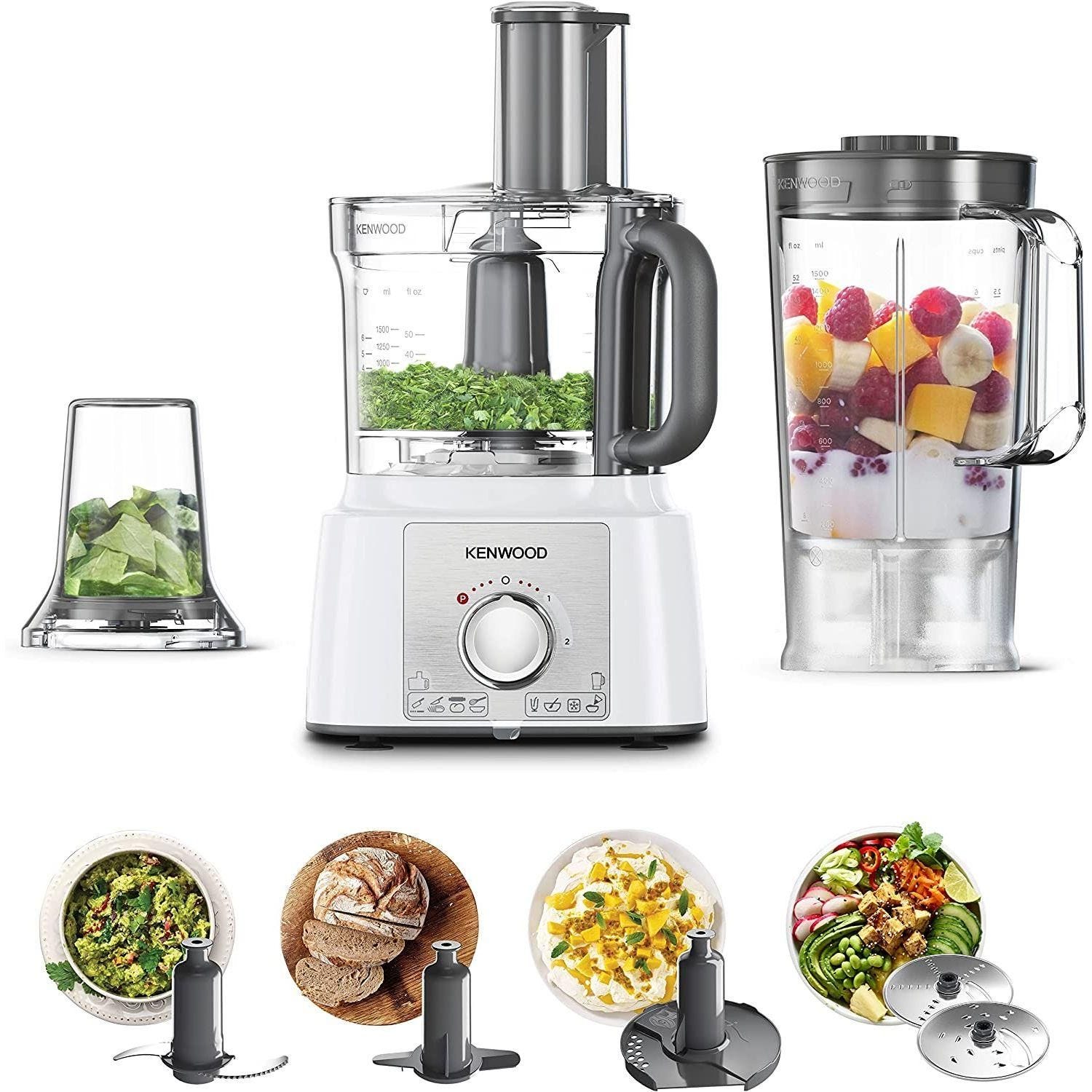
The Kenwood MultiPro Express Food Processor FDP65.400WH has a 3L bowl, a 1.5L blender, a multi mill and seven processing tools, enough to handle a week of chopping, slicing and grinding for a family. For smaller households, the Kenwood MultiPro Compact FDP31 with a 2.1L bowl is easier to store and still handles weekly prep.
A good order of work saves washing up: start with dry or mild ingredients like breadcrumbs and cheese, move to vegetables, and finish with onions and garlic, which leave the strongest smell. Rinse the bowl only when you change to something very different.
The Air Fryer: Batch Cooking Without the Oven
An air fryer is perfect for cooking proteins and vegetables in batches while you prep other things. Chicken pieces, kofta, potatoes, cauliflower and peppers all cook well. A larger basket means fewer batches, and the Kenwood Air Fryer HFM80 is a 7L digital model with 12 presets, which suits family-size cooking. For couples and small families, the Kenwood kHealthyFRY XXL 5L is a practical size.
Use the air fryer for:
- Roasting a tray’s worth of vegetables to use in salads, pasta and wraps.
- Cooking chicken pieces to slice into sandwiches or add to rice.
- Making crispy potatoes or sweet potatoes as a ready side.
- Reheating prepped food so it crisps up instead of turning soggy.
The Hand Blender: Soups and Sauces
On prep day, make a big pot of lentil soup or vegetable soup and blend it directly in the pot. Portion and refrigerate for two or three days, or freeze. The Braun MultiQuick 5 MQ5275BK is a 1,000W multifunction hand blender with a 1.5L capacity, useful for soups, sauces and quick chopping.
The Microwave: Fast Weeknight Reheating
A microwave turns prepped components into a hot meal in minutes. A model with a grill, like the Kenwood MWM30 Digital Microwave with Grill, can also brown the top of a reheated dish. Always reheat food until it is steaming hot all the way through.
Step Three: A Two-Hour Prep Session
Here is a practical order of work for a family of four.
- Start the slow things first. Put rice and lentils on the stove and start a big pot of tomato sauce.
- Wash all vegetables and herbs together, then dry them well. Wet herbs spoil quickly.
- Food processor round: chop onions and garlic for the week, slice salad vegetables, grate carrots, then mix the kofta.
- Air fryer round: while the processor works, roast a batch of vegetables, then cook chicken pieces.
- Blend the soup once the lentils are soft.
- Cool everything before it goes into the fridge. Spread rice and cooked food in shallow containers so it cools quickly.
- Label and store. Write the dish and date on each container.
- Clean as you go so the kitchen is finished when the food is.
Storing Food Safely
Good storage makes the difference between food that stays fresh and food that ends up in the bin. Egyptian summers make this especially important.
- Cool quickly. Do not leave cooked food on the counter for long, particularly in hot weather.
- Use airtight containers. Glass containers do not hold smells and can often go from fridge to microwave.
- Fridge or freezer. As a general guide, most cooked components keep for about three days in the fridge. Freeze anything you will not eat by then.
- Freeze in portions. Molokhia, soups, tomato sauce and cooked meats freeze well in family-size portions. Rice and salads do not.
- Store chopped onions separately in a well-sealed container, or they will flavour everything in the fridge.
- Keep dressings separate from salads until serving.
- Herbs: wrap washed, dried parsley and coriander in a paper towel inside a box. Chopped herbs can be frozen in a little oil for cooking.
Make Your Kitchen Prep-Friendly
A smooth prep session depends on a well-organised kitchen.
- Keep the food processor on the counter. If it lives in a cupboard, you will skip it.
- Have a large chopping board. The Heritage Wood Raw Edge Board gives you room to work and doubles as a serving board for bread and cheese.
- Store bread and onions properly. A lidded basket on the counter keeps bread fresh and out of sight. The Halfa Rectangular Basket with Cover works beautifully for this, and its natural Egyptian halfa suits any kitchen.
- Cover food on the table. When a prepped meal is served family-style, a Handwoven Food Cover with Dome Design keeps dishes covered until everyone sits down.
Meal Prep for Couples, Students and Small Households
Meal prep is not only for big families. If you cook for one or two, the risk is different: ingredients spoil before you use them. A lighter approach works better.
- Prep half-batches. Cook rice and lentils for three days, not seven.
- Use one protein two ways. Air-fry a batch of chicken, then serve it with rice on Monday and in wraps on Wednesday.
- Freeze single portions. Small boxes of soup, sauce and molokhia are perfect for nights when you are too tired to cook.
- Rely on a hand blender. For a small kitchen, a hand blender with a chopper can cover most of the chopping and blending that a full food processor would do.
- Share the session. Flatmates or a couple can split the jobs: one chops, one cooks, and the work is done in an hour.
Meal Prep for Ramadan
Meal prep is especially useful in Ramadan, when the hours before iftar are busy and energy is low. Before the month begins:
- Freeze portions of molokhia, tomato sauce and stuffed vegetables ready for cooking.
- Prepare and freeze sambousek and spring rolls, ready to go straight into the air fryer.
- Chop and freeze onions and garlic in portions.
- Make and refrigerate juice concentrates and drinks like karkade and tamarind.
During the month, a weekly prep session keeps iftar calm and gives you more time with family, worship and guests.
Common Mistakes to Avoid
- Prepping too much. Start with three or four meals, not an entire week of everything.
- Storing food while hot. Let it cool quickly first, then refrigerate.
- Forgetting labels. A freezer full of unlabelled boxes is a puzzle.
- Chopping salad too early. Cut delicate salad leaves and tomatoes on the day.
- Cooking every meal in full. Prepped components give more variety than identical boxed meals.
- Skipping the plan. Without a plan, prep day becomes a random cooking marathon.
Quick Checklist
- Five dinners planned, with shared ingredients
- Shopping list written by section
- Food processor and air fryer ready on the counter
- Containers clean and lids matched
- Labels and a marker ready
- Space cleared in the fridge and freezer
- Two hours set aside, with a clear order of work
More Time at the Table
Weekly meal prep is not about turning your kitchen into a factory. It is about doing the slow work once, with the help of a few good appliances, so that weeknight dinners become quick, calm and still home-cooked. Start small with one prep session, see how much time it saves, and build from there. Your Tuesday evenings will thank you.
Explore food processors, air fryers and kitchen essentials at coccarohome.com.
Shop the Look
- Kenwood MultiPro Express FDP65.400WH — EGP 11,699 — A 3L bowl, blender and multi mill for big weekly prep sessions.
- Kenwood MultiPro Compact FDP31 — EGP 6,434 — A 2.1L food processor sized for smaller households.
- Kenwood Air Fryer HFM80, 7L — EGP 11,114 — A digital family-size air fryer with 12 presets.
- Kenwood kHealthyFRY XXL 5L — EGP 7,019 — A practical air fryer for couples and small families.
- Braun MultiQuick 5 MQ5275BK — EGP 7,604 — A 1,000W multifunction hand blender for soups and sauces.
- Kenwood MWM30 Digital Microwave with Grill — EGP 15,209 — Fast reheating with a grill for browning.
- Heritage Wood Raw Edge Board — EGP 1,000 — A generous board for chopping and serving.
- Halfa Rectangular Basket with Cover — EGP 432 — Keeps bread or onions tidy on the counter.
- Handwoven Food Cover with Dome Design — EGP 1,059 — Covers prepped dishes on the family table.