Cushions are the fastest, most affordable way to change how a living room feels. A new set can make a tired sofa look fresh, bring a colour palette to life and make a formal room feel welcoming. Yet many of us end up with a row of identical cushions standing stiffly at attention, or a random pile that never quite looks right.
Interior designers approach cushions with a simple system. Once you know it, you can style any sofa in minutes and change the look with the seasons, for Ramadan, or simply when you feel like a refresh. This guide breaks that system down into steps you can follow at home.
Why Cushions Matter More Than You Think
A sofa is usually the largest piece of furniture in the living room, and it often comes in a safe neutral colour. Cushions are where personality enters. They carry colour, pattern and texture into the centre of the room, and they are the first thing guests see and touch.
They also do practical work. The right cushion supports your lower back, makes a deep sofa more comfortable for shorter family members, and turns a hard seat into a place you want to stay. In Egyptian homes, where the living room hosts long evenings with family and friends, comfort is not optional.
Step One: Choose the Right Number
There is no single correct number, but there are proportions that almost always work.
- Two-seater sofa: two or three cushions.
- Three-seater sofa: three to five cushions.
- Corner or L-shaped sofa: five to seven cushions, with one placed in the corner.
- Armchair: one cushion, or one lumbar cushion.
Designers often prefer odd numbers because they feel more relaxed and less formal. Even numbers create symmetry, which suits more classic rooms. Both are valid; decide which mood you want.
The most important rule is that people must still be able to sit. If guests have to move three cushions before they can sit down, you have too many.
Step Two: Play With Size
Using cushions of the same size is one of the most common reasons a sofa looks flat. Variety creates depth.
The Classic Layering Order
Build from the back to the front:
- Back layer: the largest square cushions, placed at each end of the sofa.
- Middle layer: slightly smaller square cushions in front of the large ones, usually with pattern.
- Front layer: a lumbar (rectangular) or round cushion, often in the centre or on one end.
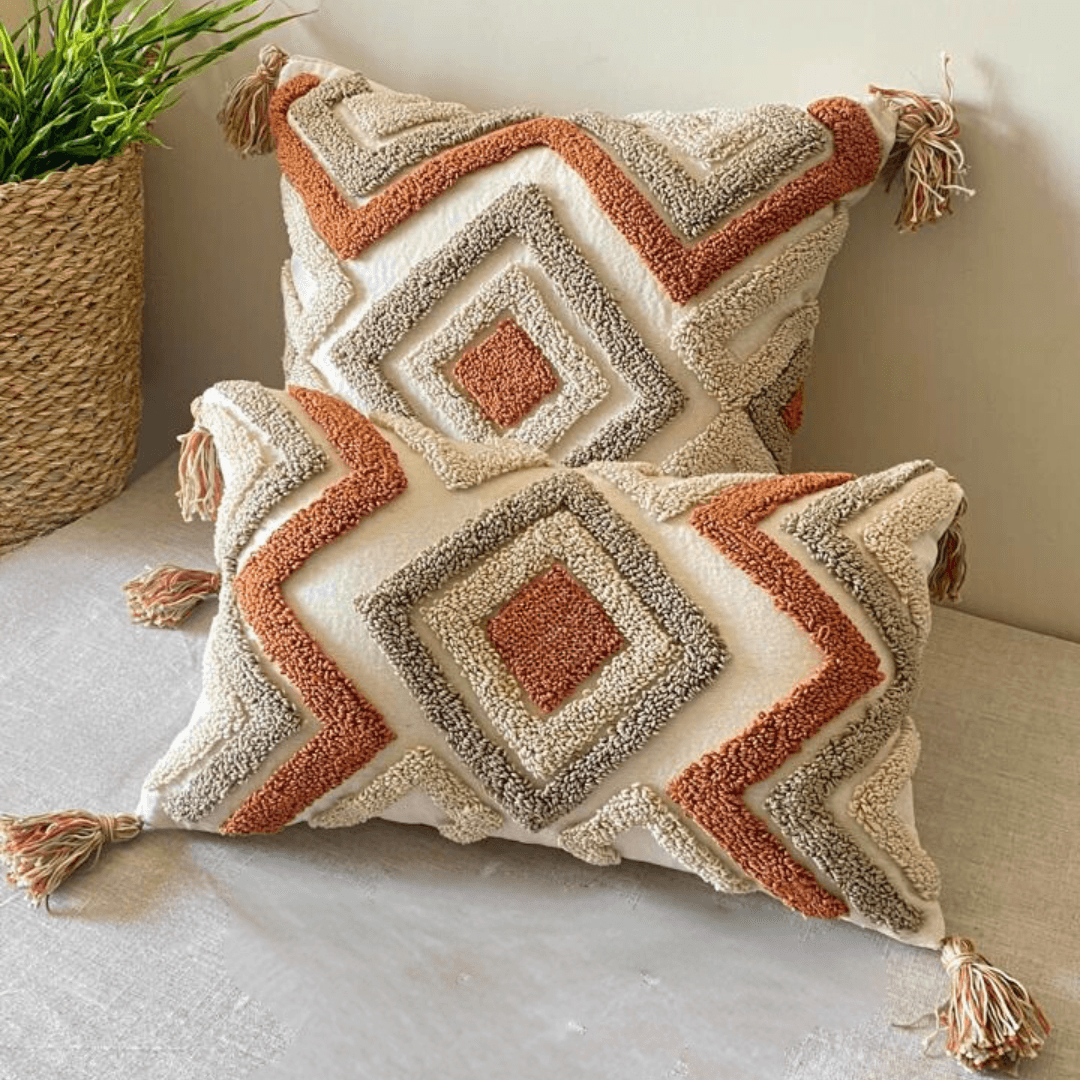
A lumbar cushion is a designer’s secret weapon. Its long shape breaks the repetition of squares and supports the lower back. The Home Letters Tufted Lumbar Cushion adds a warm, personal message to the front of the arrangement, while the Boho Lumbar Tufted Cushion brings abstract texture for a more artistic look.
Do Not Forget Round Shapes
A round or knotted cushion adds a playful accent that softens all the straight lines. The Knot Ball Cushion is a favourite for this role; tuck it in front of a square cushion or leave it alone on an armchair.
Step Three: Build a Colour Story
Colour is where most people feel nervous. A simple formula makes it easy.
- Pick two to three colours that appear elsewhere in the room: the rug, a painting, curtains or a vase.
- Use one solid colour as a calm base.
- Add one pattern that includes that solid colour.
- Finish with one accent that brings contrast or a pop of brightness.
For example, on a beige sofa you might choose a solid grey base, a geometric pattern that mixes grey with mustard and white, and a single mustard accent. Because mustard and grey appear more than once, the whole arrangement feels deliberate.
If your sofa is a strong colour, such as navy or green, keep the cushions lighter and more neutral so the sofa and cushions do not compete.
Step Four: Mix Patterns With Confidence
Pattern mixing looks complicated, but it follows one principle: vary the scale.
- One large-scale pattern, such as a big floral, a bold geometric or a botanical design.
- One medium or small-scale pattern, such as a stripe, a small geometric or a kilim weave.
- One solid or textured cushion to give the eye a rest.
The Geometric Tufted Multicolour Cushion works beautifully as the bold statement piece. Pair it with a Kilim Black and White Cushion for a smaller, graphic pattern, then add a plain textured cushion in a shade pulled from the multicolour design.
Try to keep patterns in the same colour family, or at least sharing one colour. That shared thread holds the look together.
Step Five: Layer Textures
Texture is what makes a sofa look expensive. Even a completely neutral palette looks rich when textures vary.
Combine at least three of these:
- Tufted cushions with raised patterns
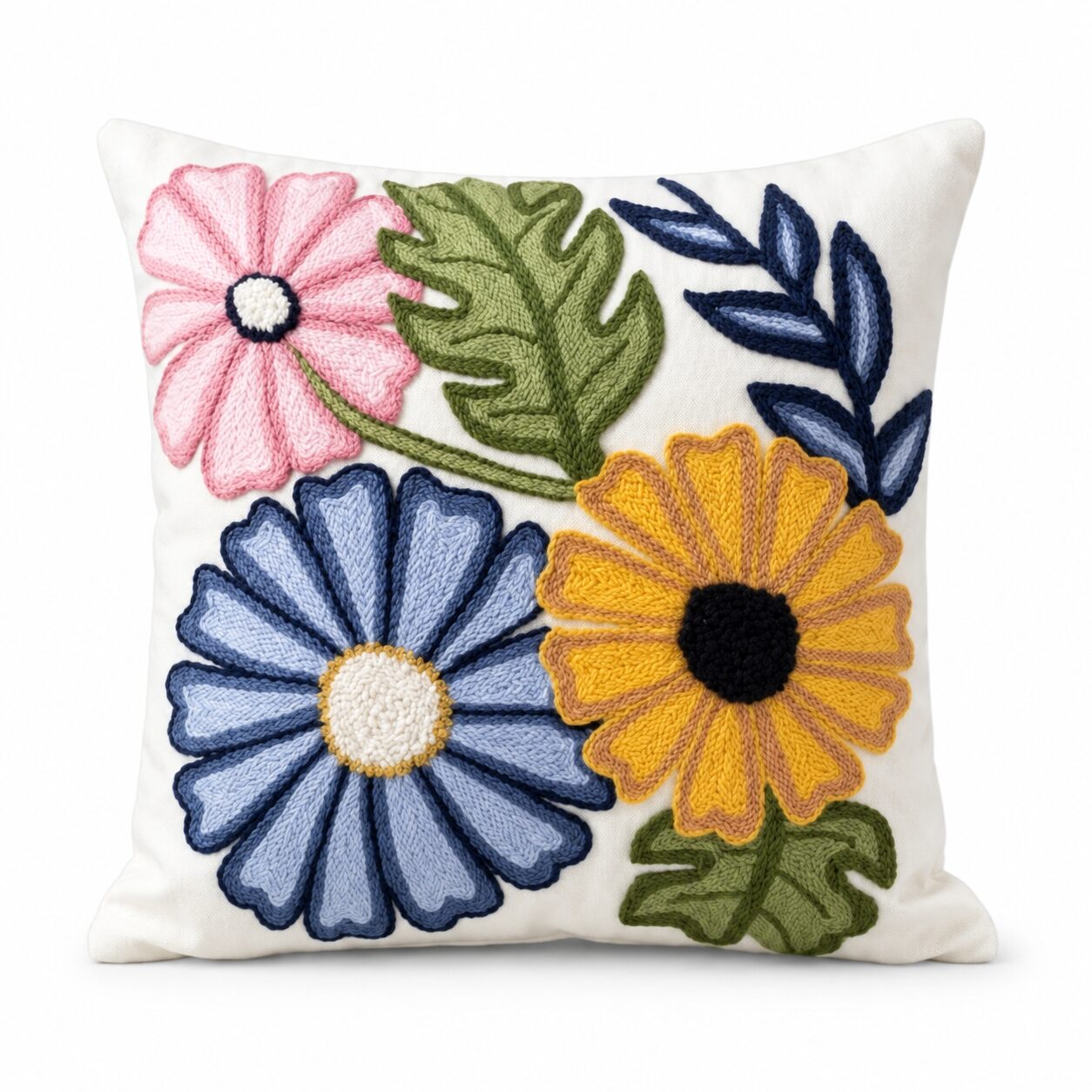
- Embroidered designs with stitched detail
- Woven and kilim fabrics with a flat, handmade feel
- Plush or fluffy surfaces for softness
- Macrame cushions with knotted texture
- Tassels and fringe for movement at the edges
A Plush White Wool-Style Cushion next to a woven kilim and a macrame piece creates a tactile arrangement that invites people to sit down, even in a palette of creams and whites.
Sofa Layouts That Always Work
Here are three proven arrangements you can copy directly.
The Balanced Classic (Five Cushions)
Two large solids at each end, two medium patterned cushions in front of them, and a lumbar in the centre. Mirror both sides for a calm, symmetrical look suited to formal reception rooms.
The Relaxed Asymmetric (Four Cushions)
On one end, a large solid with a medium patterned cushion in front. On the other end, a single large textured cushion with a small round or lumbar cushion. This looks casual and suits family living rooms.
The Minimal Trio (Three Cushions)
One large cushion at each end in a solid or subtle texture, and one statement lumbar in the middle. This works well on modern, low sofas and in smaller apartments where a crowded sofa feels heavy.
Finishing Details: The Chop and More
You may have seen designers make a small dent in the top of a cushion. This “chop” gives feather or fibre-filled cushions a relaxed, lived-in shape. It suits soft cushions and casual rooms, but skip it on firm or structured cushions, where it just looks crushed.
A few more finishing details:
- Fillers matter. A thin, flat filler makes even the prettiest cover look cheap. A full Plain White Cushion Filler gives covers a plump, generous shape.
- Fluff daily. A quick shake each evening keeps cushions looking fresh.
- Wash covers regularly. In Egypt’s dusty climate, removable covers are a real advantage.
- Rotate. Swap the front and back cushions every few weeks so they wear evenly.
Beyond the Sofa and Through the Seasons
Once your sofa looks right, carry the same thinking into the rest of the home. Repeating a colour or texture from the living room in other spaces makes the whole apartment feel connected.
Armchairs and Accent Chairs
An armchair rarely needs more than one cushion. A lumbar shape works best on chairs with a low back, while a square cushion suits deeper chairs. Use the armchair to repeat the accent colour from the sofa, or give it the one bold pattern in the room if the sofa is kept calm.
Beds
Bed styling follows the same back-to-front rule. Start with sleeping pillows against the headboard, add two decorative square cushions in front, and finish with a single lumbar or round cushion. Keep bedroom palettes softer than the living room so the space feels restful. Embroidered and tufted designs in muted tones work especially well here.
Floor Seating and Balconies
Many Egyptian families love floor seating for casual evenings, and balconies become a second living room for much of the year. Large floor cushions and poufs make both areas comfortable. Outdoors, choose cotton covers that can be removed and washed, and bring cushions inside during dusty or windy days so they stay fresh.
Reading Corners and Window Seats
A small corner with one chair, a lamp and a well-chosen cushion becomes an instant retreat. Here, comfort comes first: pick a cushion that supports your back properly, then worry about the pattern.
Seasonal and Occasion Swaps
One of the joys of cushions is how easily they change a room.
- Summer: lighter colours, cotton and linen textures, coastal blues, botanical prints.
- Winter: deeper tones, plush textures, a chunky throw folded over the arm.
- Ramadan and Eid: festive motifs, lanterns, jewel tones and gold accents that make the room feel ready for guests.
- Spring: florals, leaf patterns and soft greens.
Keep a basket or a storage box for off-season covers so switching takes minutes rather than an afternoon. Changing only the covers rather than whole cushions also saves space and money.
Common Mistakes to Avoid
- Everything matching. A set of identical cushions looks like a furniture showroom rather than a home.
- All the same size. Without size variety, the arrangement looks flat.
- Too many cushions. If you cannot sit, edit.
- Ignoring the rest of the room. Cushion colours that appear nowhere else look random.
- Flat, tired fillers. Replace them before you replace the covers.
- Only one texture. A sofa of smooth cotton cushions lacks depth, even in lovely colours.
Quick Checklist
- The right number of cushions for your sofa size
- At least two different cushion sizes, plus a lumbar or round shape
- Two to three colours repeated elsewhere in the room
- One large pattern, one small pattern and one solid
- At least three different textures
- Full, plump fillers
- Space left for people to sit comfortably
Your Sofa, Styled
Styling cushions like a designer is less about expensive pieces and more about thoughtful choices: size, colour, pattern and texture working together. Start with the layout that suits your sofa, build a small colour story, and let handmade textures do the rest. Then have fun changing it through the year.
Browse the full range of tufted, embroidered, kilim and macrame cushions at coccarohome.com and give your sofa the attention it deserves.
Shop the Look