In most Egyptian homes, ironing is a weekly ritual. School uniforms on Thursday night, work shirts on Saturday morning, a galabeya before Eid prayers, and that one dress that needs to look perfect for a cousin’s wedding. For generations, the answer was always the same: a heavy iron and an ironing board set up in the corner of the living room.
Today there is a second option. Garment steamers, once found mostly in clothing shops, have become common in homes. They hang clothes vertically and relax wrinkles with a stream of steam, no board required. That raises a real question for anyone buying a new appliance: do you need an iron, a steamer, or both?
This guide compares the two honestly. We look at how each one works, which fabrics and clothes suit each, what features matter, and how to decide based on your household, your wardrobe and your space.
How Each One Works
The steam iron
A steam iron combines three things: a heated soleplate, pressure from your hand and steam from a water tank. The heat and moisture relax the fibres, and the pressure flattens them into a crisp, smooth finish. This is why an iron is so good at sharp creases and structured garments.
The garment steamer
A garment steamer heats water into a continuous flow of steam that you direct at a hanging garment. There is no pressure and no flat surface. The steam relaxes the fibres and gravity does the rest. The result is smooth, soft fabric, but without sharp creases.
The simplest way to remember the difference:
- An iron presses. It gives crisp, flat, structured results.
- A steamer relaxes. It gives soft, natural, flowing results.
Iron vs Steamer: A Side-by-Side Look
- Crisp shirts and trousers: The iron wins. Collars, cuffs and trouser creases need pressure.
- Delicate fabrics like silk, chiffon and satin: The steamer wins. There is no direct heat on the fabric, so the risk of shine or scorching is much lower.
- Long dresses, abayas and galabeyas: The steamer is often faster, since you can work from top to bottom while the garment hangs.
- Heavy cotton and linen: The iron usually gives a better result, though a powerful steamer helps too.
- Curtains and upholstery: The steamer wins, since you can refresh curtains while they hang.
- Speed for a quick touch-up: The steamer wins. Plug in, wait briefly and go.
- Large weekly piles: The iron is usually more efficient for flat items like shirts and pillowcases.
- Space: A steamer does not need a board, although full-size steamers have their own stand.
When a Steam Iron Is the Right Choice
If your household irons school uniforms, office shirts and trousers every week, an iron remains essential. Nothing else produces a sharp collar or a trouser crease as well.
Features that matter
- Power: Higher wattage heats faster and supports stronger steam. Most good irons fall between 2000W and 2600W.
- Continuous steam and steam boost: Continuous steam handles everyday wrinkles; a strong boost tackles stubborn creases in thick cotton.
- Soleplate: Ceramic and non-stick soleplates glide easily and are simple to clean.
- Water tank: A larger tank means fewer refills during big ironing sessions.
Irons worth considering
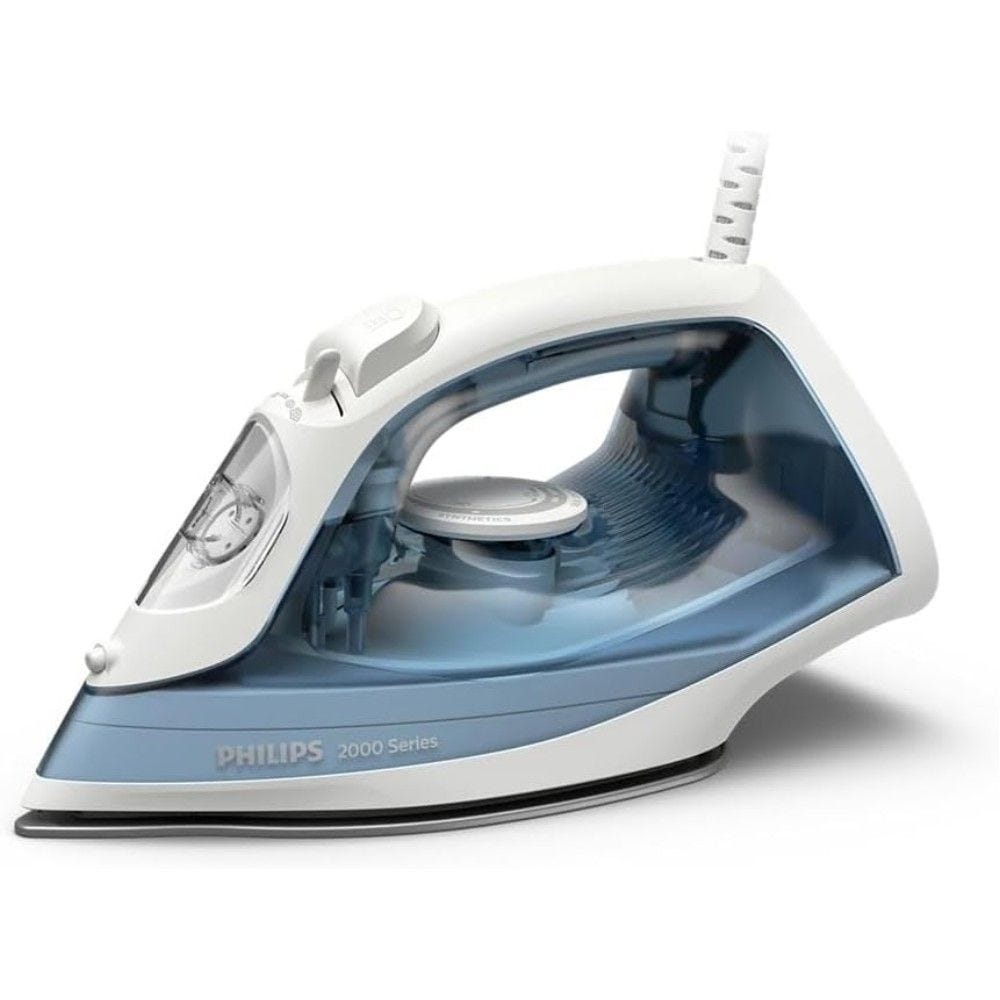
- The Philips 2000 Series Steam Iron is a sensible everyday option with 2000W, 25g/min continuous steam, a 100g steam boost and a 250ml tank.
- The Philips 3000 Series Steam Iron steps up to 2200W with a ceramic soleplate, a 160g steam boost and a 300ml tank.
- The Braun FreeStyle 3 Steam Iron offers 2400W, a ceramic soleplate and a 270ml tank for larger households.
- The Kenwood STP70 Steam Iron brings 2600W, a ceramic soleplate and a generous 350ml tank, which is useful when the weekly pile is big.
- For higher-end performance, the Philips 5000 Series combines 2400W with 40g/min continuous steam and a SteamGlide Plus soleplate.
When a Garment Steamer Is the Right Choice
A garment steamer shines in homes with lots of delicate or flowing clothes, people who dress in a hurry, or anyone who dislikes setting up an ironing board.
Features that matter
- Steam output: Measured in grams per minute. Higher output means faster results on thicker fabrics.
- Tank size: A 2-litre tank lets you steam many garments without refilling.
- Stand and hanger: A sturdy stand and hanger keep the garment steady.
- Board or pressing plate: Some steamers include a small board that helps with collars and creases, bridging the gap with an iron.
- Controls: Digital displays and adjustable settings make it easier to match steam to fabric.
Steamers worth considering
- The Kenwood GSP65 Garment Steamer offers 1500W and a 2-litre water tank, a good entry point for everyday touch-ups.
- The Kenwood GSP70 Garment Steamer moves up to 2000W with a removable 2-litre tank, 50g/min continuous steam and a digital LCD.
- The Kenwood GSP80 Garment Steamer is the most capable of the three, with 2280W, 95g/min continuous steam, a 2-litre tank and a 3-position ironing board, which gives you some of an iron’s crispness in a steamer.
The travel-friendly option
If you travel for work or spend summers on the North Coast, a portable steam iron is worth a look. The Braun QuickStyle 5 is a compact 1200W portable steam iron with a 150ml tank, handy for quick touch-ups in a hotel room or a chalet.
Which One Does Your Home Need?
Choose an iron if
- You iron school uniforms or office shirts every week.
- Your wardrobe is mostly cotton, linen and structured garments.
- You want crisp creases and sharp collars.
- You iron large piles in one session.
Choose a steamer if
- Your wardrobe includes many dresses, abayas, scarves and delicate fabrics.
- You usually need a quick refresh before leaving the house.
- You want to refresh curtains, sofa covers or suits between cleanings.
- You have limited space for an ironing board.
Choose both if
- You have a family with uniforms and work shirts, plus a wardrobe of occasion wear.
- You host often and want to refresh curtains and table linens before guests arrive.
- You want the best result for every fabric.
For many Egyptian families, owning both is the practical answer. The iron handles the weekly pile, and the steamer handles everything else, especially before Eid, weddings and family gatherings.
A Garment-by-Garment Guide
Still unsure which tool to reach for? This quick guide covers the clothes most Egyptian households deal with every week.
- School uniforms: Iron. Shirts need crisp collars and trousers or skirts need sharp pleats. Iron them inside out if the fabric tends to shine.
- Office shirts: Iron, starting with the collar, then cuffs, sleeves, back and front panels. A steamer can refresh a shirt worn once, but it will not give the same crisp finish.
- Galabeyas and abayas: Steamer for speed on long, flowing fabric; iron for heavier cotton galabeyas with embroidery around the neckline, using a pressing cloth over the embroidery.
- Hijabs and scarves: Steamer. Chiffon, jersey and silk scarves relax beautifully without the risk of scorching.
- Evening dresses: Steamer, always from the inside where possible, and never too close to sequins or beading.
- Suits and blazers: Steamer for a quick refresh between dry cleans; leave sharp trouser creases to the iron or a steamer with a pressing board.
- Bed linen and tablecloths: Iron for a hotel-crisp finish, especially on white cotton for guests.
- Curtains: Steamer, directly on the rail after washing, working from top to bottom.
- Baby clothes: Either works; a steamer is gentler and quicker for small soft pieces.
Seasons matter too. In the heat of an Egyptian summer, standing over an ironing board for an hour is exhausting, so many people lean on the steamer for quick refreshes and save the iron for the weekly essentials. In winter, heavier wool and thick cotton make a powerful iron more valuable.
Tips for Better Results With Either
- Read the care label. It tells you the right heat setting and whether steam is safe.
- Sort by temperature. Start with delicate fabrics on low heat and finish with cotton and linen.
- Use the right water. In areas with hard tap water, check the manual; many appliances recommend mixing tap water with distilled water to reduce scale.
- Iron or steam slightly damp clothes. It is easier to remove wrinkles when fabric still holds a little moisture.
- Hang immediately. Put clothes on hangers straight away so new wrinkles do not form.
- Keep a test spot. For new or delicate fabric, test on an inside seam first.
- Descale regularly. Many irons and steamers have a self-clean or anti-calc function; use it as the manual suggests.
Organizing the Laundry Routine
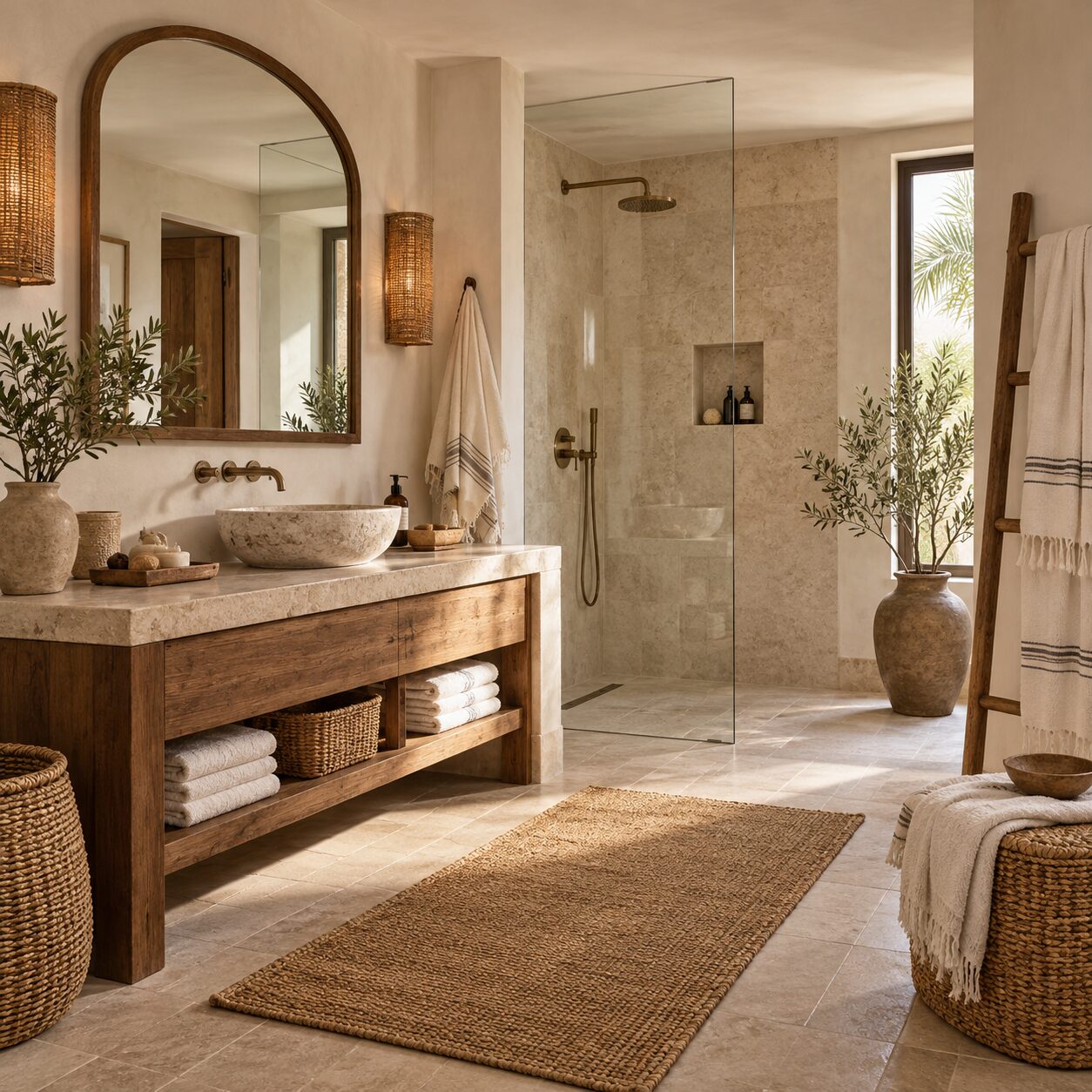
A good appliance works best with a good routine. Keep clean, unironed clothes in one place so they do not get mixed with laundry that still needs washing. A woven rope basket near the ironing corner holds clothes waiting to be pressed, while a lidded Halfa Laundry Basket keeps dirty clothes out of sight in the bathroom or bedroom. Wall-mounted woven baskets are handy for small items such as scarves and ties.
Common Mistakes to Avoid
- Using too high a temperature on synthetics. It can melt or shine fabric. Start low.
- Pressing delicate fabrics directly. Use a pressing cloth or a steamer instead.
- Leaving water in the tank for days. Empty it after use to limit scale and odours.
- Holding a steamer head too long in one spot. Keep it moving to avoid water spots.
- Steaming clothes while wearing them. Always steam garments on a hanger.
- Ignoring the anti-calc function. Scale buildup reduces steam and can stain clothes.
- Storing the iron flat on the soleplate. Stand it upright to protect the soleplate and prevent leaks.
Quick Checklist
- What fabrics make up most of your wardrobe?
- Do you iron large piles weekly, or mostly need quick touch-ups?
- Do you have space for an ironing board?
- Do you need crisp creases, or soft, natural results?
- Would you use a steamer for curtains and upholstery?
- Is your tap water hard enough to need regular descaling?
Smooth Clothes, Less Effort
There is no single right answer to the iron versus steamer question. The best choice depends on what you wear, how often you press it and how much space you have. Irons remain unbeatable for crisp, structured clothes, while steamers are gentle, fast and ideal for delicate and flowing fabrics. Many homes will find that having both makes life easier.
Browse steam irons from Philips, Braun and Kenwood, Kenwood garment steamers and handmade laundry baskets at coccarohome.com, with delivery across Egypt.
Shop the Look
- Philips 2000 Series Steam Iron — EGP 1,636.83 — A sensible everyday iron with continuous steam and a steam boost.
- Philips 3000 Series Steam Iron — EGP 2,572.83 — A ceramic soleplate and 160g boost for stubborn creases.
- Philips 5000 Series Steam Iron — EGP 3,976.83 — 40g/min continuous steam for big weekly piles.
- Braun FreeStyle 3 Steam Iron — EGP 3,391.83 — 2400W with a ceramic soleplate and 270ml tank.
- Kenwood STP70 Steam Iron — EGP 2,689.83 — A 350ml tank means fewer refills.
- Braun QuickStyle 5 Portable Steam Iron — EGP 5,029.83 — Compact touch-ups for travel and summer trips.
- Kenwood GSP65 Garment Steamer — EGP 7,018.83 — An entry-level steamer with a 2-litre tank.
- Kenwood GSP70 Garment Steamer — EGP 10,528.83 — 50g/min steam and a digital LCD for everyday use.
- Kenwood GSP80 Garment Steamer — EGP 14,038.83 — Strong steam plus a built-in ironing board.
- Handmade Halfa Laundry Basket with Cover — EGP 1,556 — Keeps laundry hidden until wash day.