Two macrame wall hangings can look almost identical in a photo and feel completely different when they arrive. One hangs straight, with crisp knots and a soft, even fringe. The other sags to one side, its knots loose and its cords already fraying. The difference is not luck. It comes down to knots, cord and the care of the maker.
You do not need to learn macrame yourself to buy it well. You just need to know what you are looking at. This guide breaks down the basic knots, the cords used, and the quality signs that separate a piece you will love for years from one you will regret.
What Macrame Is
Macrame is the art of creating textiles by knotting cord by hand, with no needles, hooks or looms. Its history is long and widespread: knotted decorative work appears in Arab weaving traditions, where fringes on textiles were knotted to finish them neatly, and sailors later carried the craft around the world, knotting during long voyages. It surged in popularity in the 1970s and returned strongly with the boho revival.
Today macrame covers far more than plant hangers. It includes wall hangings, cushions, table runners, pouf covers, lamp shades, shelves and even swings and hammock chairs.
The Knots You Will See Most Often
Most macrame pieces use a small family of knots repeated and combined in different ways. Recognising them helps you understand how a design was built and how much work went into it.
Lark’s Head Knot
This is usually the first knot in any hanging piece. Each cord is folded in half and looped over a wooden dowel, ring or branch. Neat lark’s head knots in an even row along the top are the first sign of a careful maker.
Square Knot
The workhorse of macrame. Four cords are tied in alternating directions to make a flat, symmetrical knot. Rows of square knots create the solid, woven-looking areas of a design, while alternating square knots create a net-like pattern with diamond-shaped gaps.
Half Square Knot (Spiral)
Tie the same half of a square knot repeatedly and the cords twist into a spiral. Spirals add movement and are common on plant hangers and decorative columns.
Half Hitch and Double Half Hitch
These knots wrap cords around a guiding cord to create raised lines. They form the diagonal and horizontal ridges, chevrons, leaves and wave patterns that give many wall hangings their sculptural look.
Gathering (Wrapping) Knot
A cord wrapped tightly around a bundle of cords to cinch them together. You will see it at the top of plant hangers and at the base of tassels.
Cords: What Your Macrame Is Made Of
The cord matters as much as the knots. It determines texture, softness, how the fringe looks and how long the piece lasts.
Cord Construction
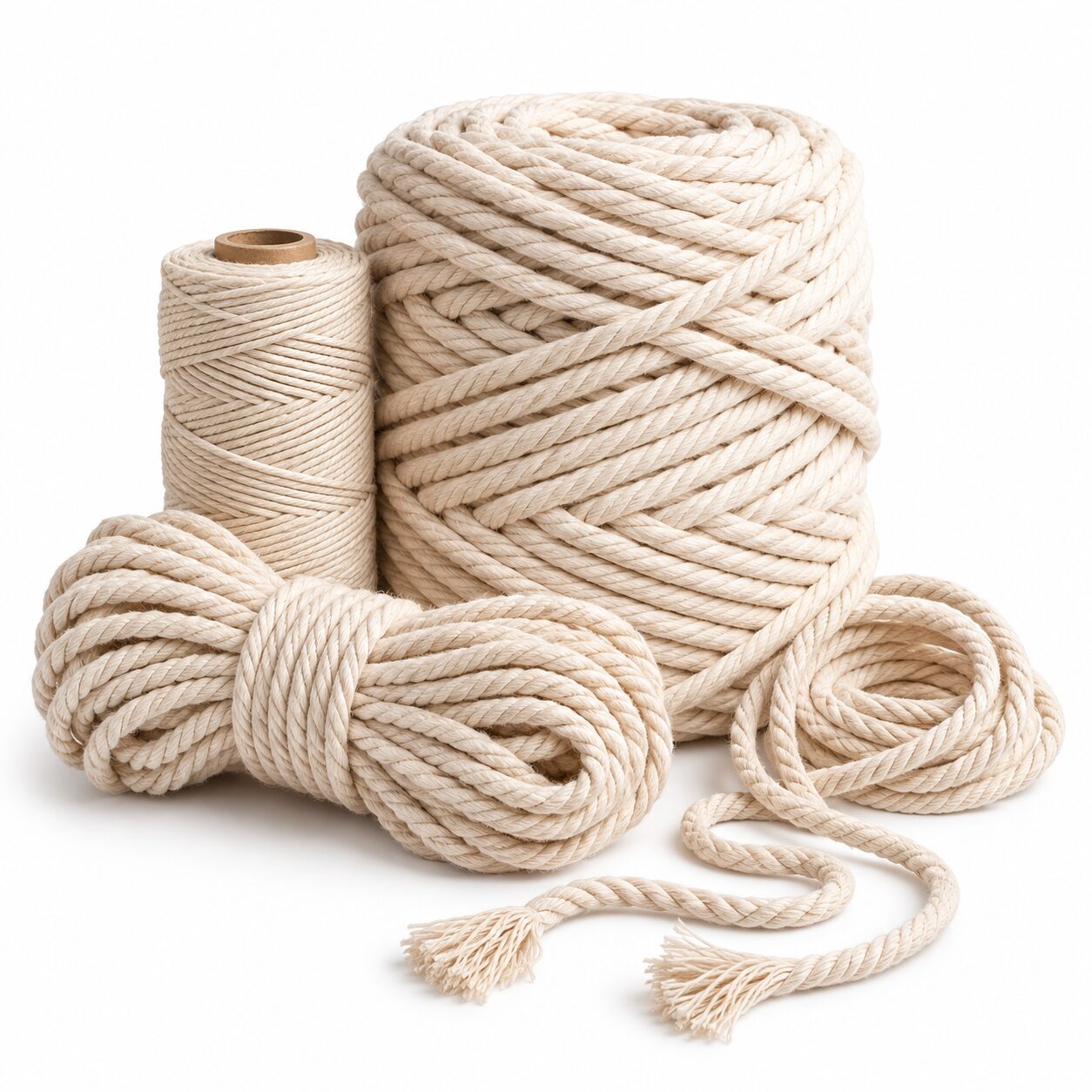
- Single-strand (twisted) cord: soft and easy to comb into a fluffy fringe. Popular for wall hangings and decorative pieces.
- Three-ply rope: three strands twisted together. It gives knots a defined, textured look and is stronger, which suits plant hangers and functional items.
- Braided cord: tightly braided and very durable, it holds shape well but does not fringe easily. It is often used for load-bearing pieces like swings.
Cord Materials
- Cotton: soft, natural, takes dye beautifully and is the most common choice for indoor decor.
- Jute: rougher, golden-brown and rustic. Jute macrame looks earthy and pairs well with wood and halfa.
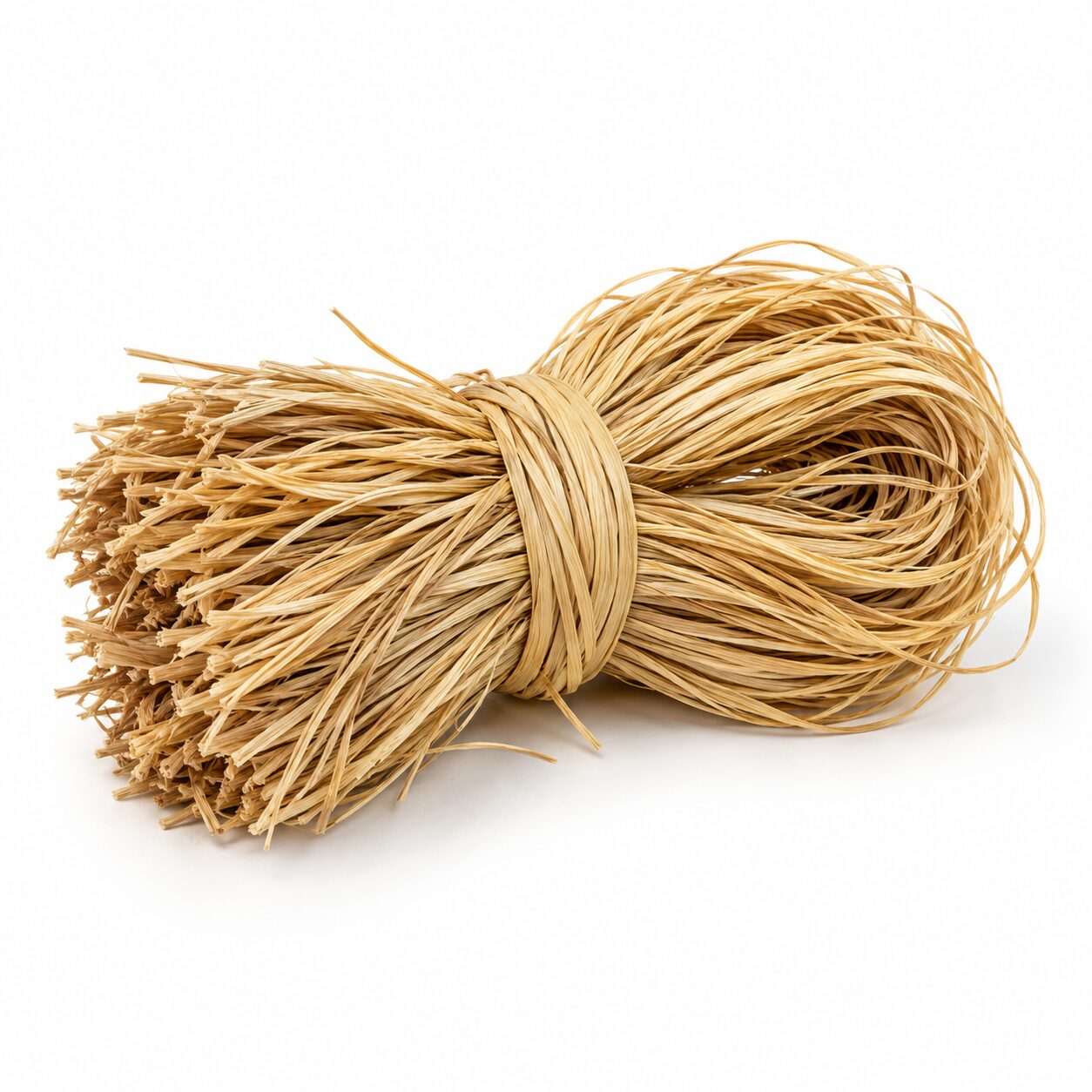
- Blends and other fibres: some pieces combine cotton with burlap, raffia or linen for added texture.
Cord Thickness
Thicker cord creates bold, chunky knots and is quicker to work, so it suits large wall hangings and pouf covers. Thinner cord allows finer, more detailed patterns, which takes more time and skill. Neither is better; they create different effects.
How to Spot Quality in Macrame Decor
When a piece arrives, or when you examine product photos closely, look for these signs.
- Even tension. Knots in a row should be the same size and spacing. Uneven tension makes a piece pull to one side.
- Straight hang. A wall hanging should hang symmetrically from its dowel without twisting.
- Neat starting knots. The lark’s head row at the top should be tidy and evenly spaced.
- Clean fringe. The ends should be trimmed evenly or in a deliberate shape, such as a V or curve, and brushed out consistently.
- Solid hardware. Wooden dowels, rings and shelves should be smooth, sturdy and well finished.
- Secure ends. On functional pieces like runners and cushions, cord ends should be tucked or finished so they do not unravel with use.
- Proportion. Dense knotted areas balanced with open space look more designed than knots crammed edge to edge.
Macrame Around the Home
Wall Decor
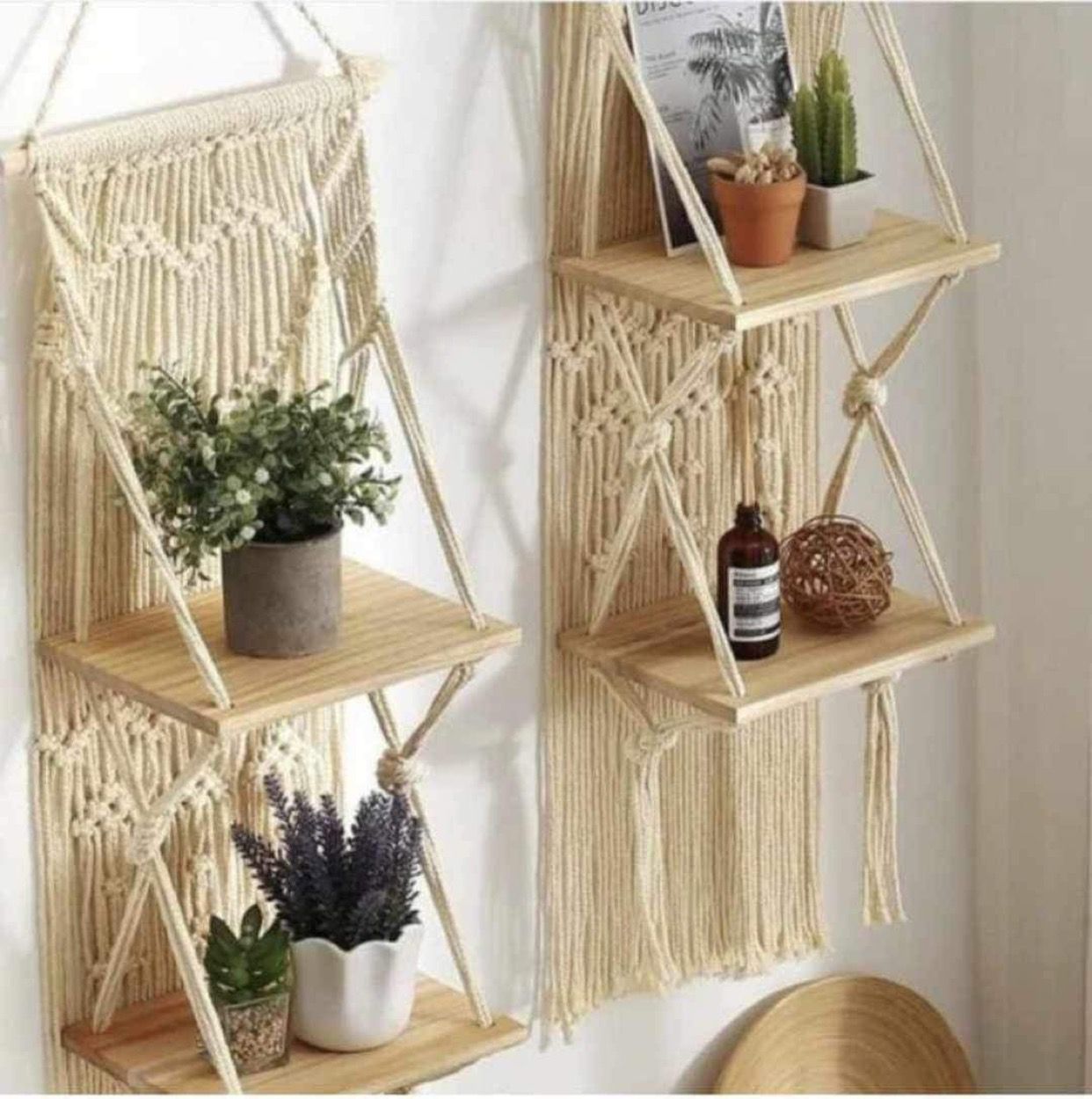
Wall hangings are the classic use of macrame, and they soften large blank walls instantly. A Macrame Wall Hanging Shelf combines knotted cord with wooden shelves, so you get texture plus a place to display a small plant or candle. For a large statement, the Coastal Wave Macrame Wall Hanging suits a bedroom or living room wall that needs one strong focal point. If you prefer a lighter, modern take, the Wooden Half Circle with Hanging Jute and Cotton Strands is inspired by macrame and works well in smaller spaces.
Table
Macrame runners add a handmade texture to dining tables and sideboards. The Tassel Macrame Hollow-Out Table Runner is a popular everyday choice with a farmhouse feel, while the Macrame Tripeloo Table Runner offers a denser handmade look for special occasions.
Seating
Cushions are an easy way to add knotted texture. The Macrame Round Cushion softens a row of square cushions on a sofa. A Handmade Macrame Pouf Cover dresses up floor seating, and for a true showpiece, the Royal Macrame Swing turns a corner or rooftop into a relaxing retreat.
Styling Macrame Well
- Give it contrast. White or cream macrame looks best against a coloured or textured wall, not stark white on stark white.
- Mind the scale. A wall hanging should be roughly two-thirds the width of the furniture beneath it.
- Pair it with wood and plants. The combination is classic for good reason.
- Avoid macrame overload. A wall hanging, one cushion and a runner in the same room is plenty.
- Mix knotted with smooth. Ceramic vases, glass and polished wood make macrame textures stand out.
Choosing the Right Macrame for Each Space
Different rooms put different demands on knotted decor. Matching the piece to the space helps it look good for longer.
Living Rooms
This is the place for statement pieces. A large wall hanging above the sofa, a macrame pouf cover and one knotted cushion create a cohesive boho corner. Choose cream or natural tones if your sofa and rug are patterned, and bolder textures if the room is plain.
Bedrooms
Macrame softens the wall behind a bed beautifully, acting almost like a textile headboard. Keep the piece slightly narrower than the bed frame, and hang it high enough that it does not brush against pillows.
Dining Areas
Runners and placemats take daily use, so choose denser knots that will not snag on cutlery or catch crumbs in large gaps. Shake runners outdoors after meals and spot clean promptly after spills.
Balconies and Rooftops
Egyptian balconies and rooftops are natural homes for swings and hanging chairs, especially on summer evenings. Keep cotton macrame out of the harshest midday sun and bring cushions inside when dust storms or rain are expected. Load-bearing pieces must always hang from a structure strong enough to carry them.
Children’s Rooms
Small wall hangings and leaf ornaments add softness without risk. Avoid long, dangling cords within reach of very young children.
Caring for Macrame
- Dust gently. Use a hairdryer on the cool setting or a soft brush to remove dust from knots.
- Spot clean. Blot stains with a damp cloth and mild soap. Avoid rubbing, which frays cotton.
- Refresh the fringe. Comb it gently with a wide-tooth comb and trim stray ends with sharp scissors.
- Straighten after hanging. If a new piece arrives creased from packing, hang it for a few days or lightly steam it from a distance.
- Keep away from moisture. Damp cords can develop marks, especially near bathrooms and kitchens.
- Check load-bearing pieces. For swings and hanging chairs, inspect cords, knots and ceiling fixings regularly, and have fixings installed securely into a suitable structure.
Common Mistakes When Buying Macrame
- Judging by photo alone. Zoom in on knots and fringe, and read dimensions carefully.
- Ignoring size. A small hanging on a big wall looks lost.
- Choosing hanging pieces for heavy loads. Decorative shelves suit light objects, not books.
- Hanging it in direct strong sun. Coloured cords can fade.
- Washing in a machine. Most macrame should be spot cleaned, not machine washed.
Quick Checklist
- Recognise the main knots: lark’s head, square, spiral, half hitch
- Check that knots are even and the piece hangs straight
- Know your cord: single-strand for fringe, three-ply or braided for strength
- Choose the right scale for the wall or furniture
- Pair macrame with wood, plants and smooth surfaces
- Dust gently and spot clean only
Buy It Once, Enjoy It for Years
Macrame is slow craft. Every knot is tied by hand, and good pieces reflect hours of patient, even work. Once you know what to look for, you can choose macrame that hangs beautifully, ages gracefully and brings genuine handmade texture into your home.
Explore handmade macrame wall hangings, cushions, runners, poufs and swings at coccarohome.com and find the knots that suit your space.
Shop the Look