Black and white is the oldest colour scheme in design and somehow still the most modern. It appears in ancient Egyptian inlay, in Moroccan tile floors, in Bauhaus posters and in the striped awnings of Mediterranean cafes. It never quite goes out of style because it does something no other palette can: it makes pattern the star.
A black and white room can feel crisp and gallery-like, or warm and handcrafted, depending on the materials you choose. The challenge is avoiding the two traps: a room so stark it feels cold, or so busy with stripes and checks that it buzzes. This guide shows how to decorate with black and white graphic patterns in a way that feels confident, balanced and genuinely livable.
Why Black and White Works So Well
Without colour to coordinate, black and white lets you focus entirely on shape, line and texture. Patterns that might clash in colour sit happily together in monochrome, because they share the same two tones.
It is also remarkably flexible. Black and white works with natural wood, woven halfa, green plants, brass and almost any accent colour you want to introduce later. If you change your mind about mustard or terracotta next year, the black and white base stays.
For Egyptian homes, the scheme has a practical advantage too. Graphic patterns on rugs and cushions are forgiving of everyday wear, and black and white pieces suit both modern apartments and homes with traditional architectural details.
A Long Tradition in Egyptian Craft
Black and white is not a borrowed trend in Egypt. It runs through centuries of local craft. Mother-of-pearl inlay sets pale shell against dark wood in intricate geometric patterns. Old Cairo floors are laid with contrasting stone and tile. Woven kilims and flat rugs have long used undyed natural wool beside dark yarn, simply because those were the colours available.
Drawing on that heritage gives a monochrome room depth. Instead of looking like a showroom copied from a catalogue, it connects to something familiar. A hand-inlaid tray, a woven kilim or a hand-painted lamp brings the scheme home, with the small irregularities that only handmade pieces have.
Getting the Proportions Right
The most important decision is how much black and how much white. Equal amounts can feel restless; one should usually lead.
Mostly White
A white-dominant room with black accents feels light, airy and spacious. This suits smaller apartments, rooms with limited daylight and anyone who wants a calm, fresh look. Walls, the sofa and large surfaces stay white or off-white; black appears in cushions, frames, a lamp and the rug’s pattern.
Mostly Black
A black-dominant room is dramatic and cocooning, but it needs plenty of light and space to work. It is better reserved for a single feature wall, a TV corner or a reading nook rather than a whole small living room.
The 70-20-10 Guide
A useful starting proportion is about 70 percent of one tone, 20 percent of the other and 10 percent for an accent, which might be natural wood, greenery or a single colour.
Start With a Graphic Rug
A rug is the best foundation for a black and white scheme because it covers a large area with pattern and sets the tone for everything else.
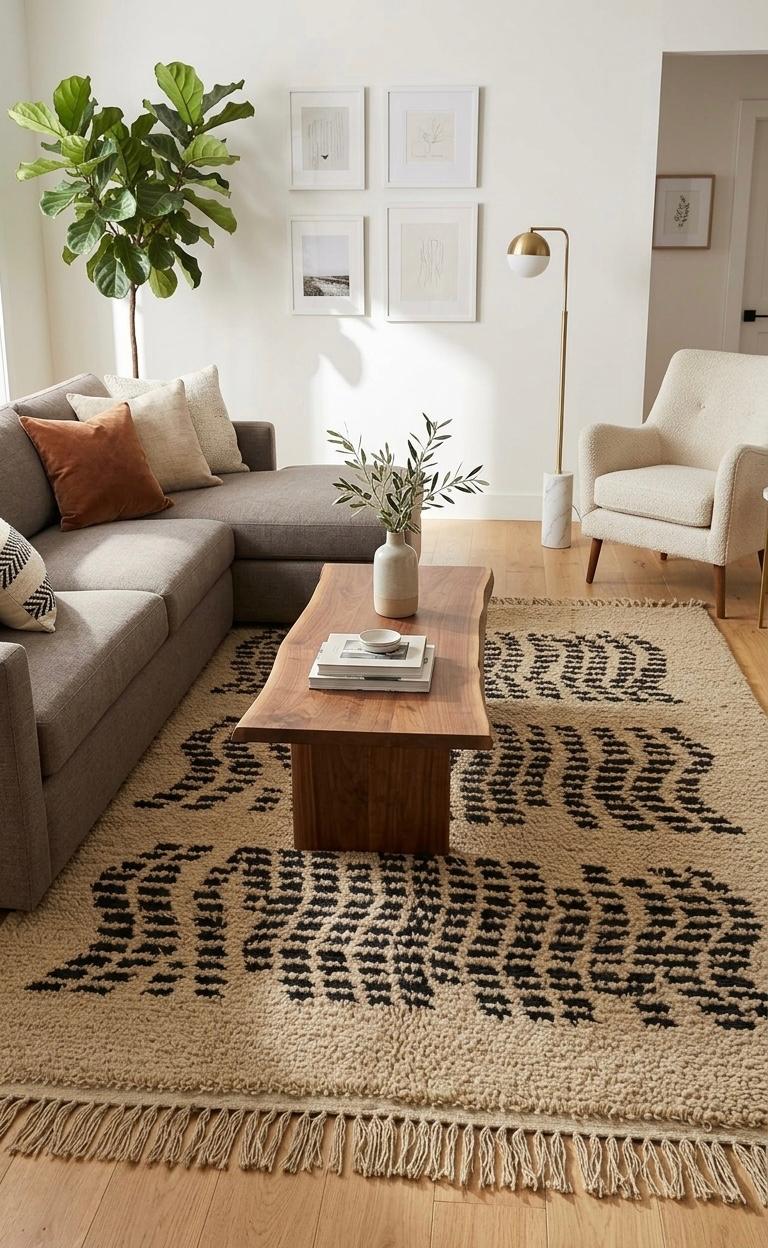
The Moroccan-Inspired Optical Kilim Rug in Ivory and Black has the kind of bold geometric pattern that instantly defines a monochrome living room. Its optical design creates movement underfoot while the ivory base keeps the room light.
For a softer approach, a linear pattern feels calmer. The Florida Kilim Rug in Beige and Black uses warm beige instead of stark white, which takes the edge off the contrast and suits rooms with wooden furniture.
Mixing Black and White Patterns
Pattern mixing is easier in monochrome, but the same principle of varied scale still applies.
Choose Three Scales
- Large: a bold geometric rug or a large abstract throw.
- Medium: kilim cushions with a repeating motif.
- Small: fine stripes or a subtle texture.
Combine Pattern Families
Pair geometric patterns with organic ones and simple stripes. A Kilim Black and White Cushion brings a medium geometric motif; a Black and Cream Botanical Tufted Lumbar Cushion adds an organic leaf pattern; a striped piece finishes the trio.
The Black and White Abstract Throw adds a looser, painterly pattern draped over a sofa arm, a welcome contrast to the crisp lines of kilim.
Leave Solids in Between
Even in a pattern-led room, include plain black, white or grey cushions and surfaces. Solids give the eye a rest and make the patterns look sharper.
Add Warmth So It Never Feels Cold
The biggest risk with black and white is a room that feels clinical. Warmth comes from texture and natural materials.
- Woven textures: Tufted, kilim and boucle cushions add depth. The Black and White Boho Tufted Kilim Cushion has a soft, raised surface that feels far warmer than a flat print.
- Natural fibres: A Jute and Black Rope Basket combines monochrome with the golden warmth of jute.
- Wood: Raw or warm-toned wood in side tables, trays and frames softens the contrast.
- Greenery: Plants look especially vivid against black and white; a single olive branch or eucalyptus stem becomes a living accent.
- Warm light: Choose warm bulbs rather than cool white, which can make monochrome rooms feel harsh.
Statement Accessories in Monochrome
Once the rug and textiles are in place, a few strong accessories pull the look together.
Lamps
A Hand-Painted Striped Black and White Pottery Table Lamp is both a light source and a piece of graphic art. Its stripes echo the rug and cushions at a different height.
Trays
A monochrome tray on the coffee table works as a focal point. The Black and White Greek Key Serving Tray brings a classic border pattern, while the Black and White Mother of Pearl Round Tray adds the shimmer of traditional inlay craft.
Candle Holders and Vases
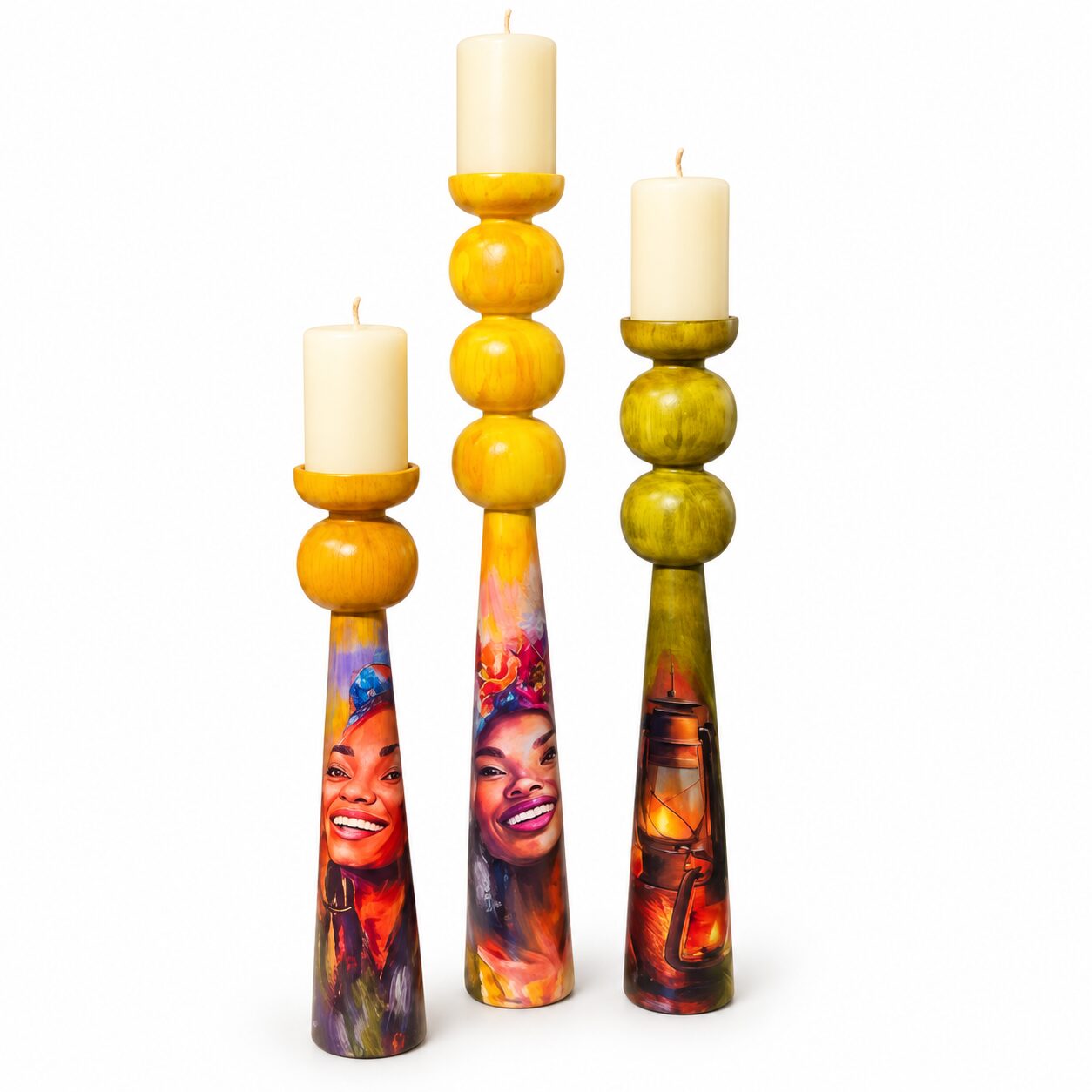
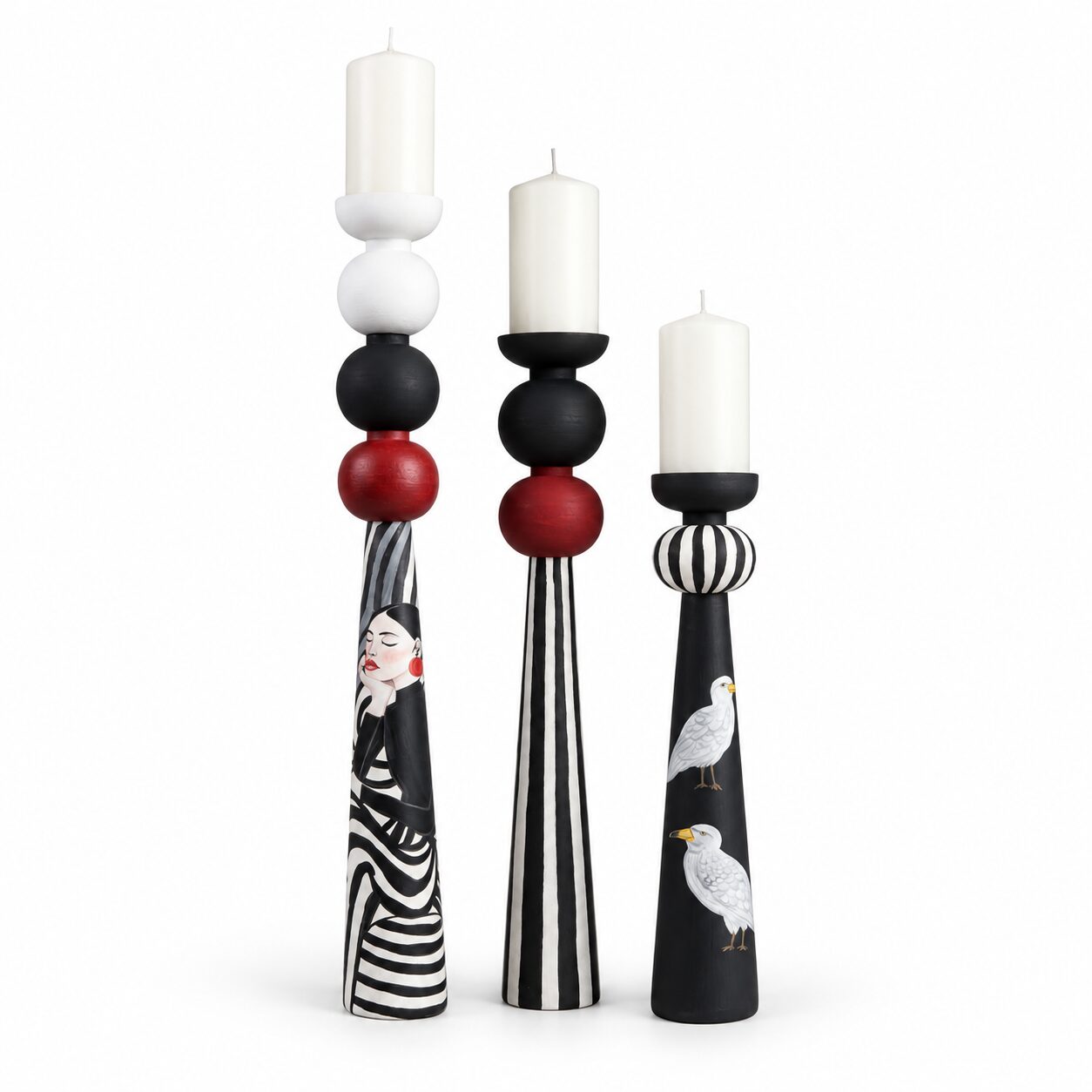
The Monochrome Hand-Painted Wooden Candle Holders bring varied heights and hand-painted pattern to a shelf or dining table. A Black Pottery Pitcher Vase with a few green stems makes a simple, striking statement.
Furniture Accents
For a bold investment piece, a graphic side table brings pattern to a new surface. The Zephyr Geometric Monochrome Side Table works as functional sculpture beside a sofa.
Black and White Room by Room
Living Room
The ideal place for a full scheme: graphic rug, mixed cushions, a monochrome lamp and tray, with wood and plants for warmth.
Dining Area
A black and white table runner, monochrome candle holders and simple white tableware create an elegant setting for family dinners and Ramadan iftars.
Bedroom
Keep it softer, with white dominant and black in small accents: a lumbar cushion, a striped throw, a framed print. Too much contrast can feel stimulating in a space meant for rest.
Bathroom
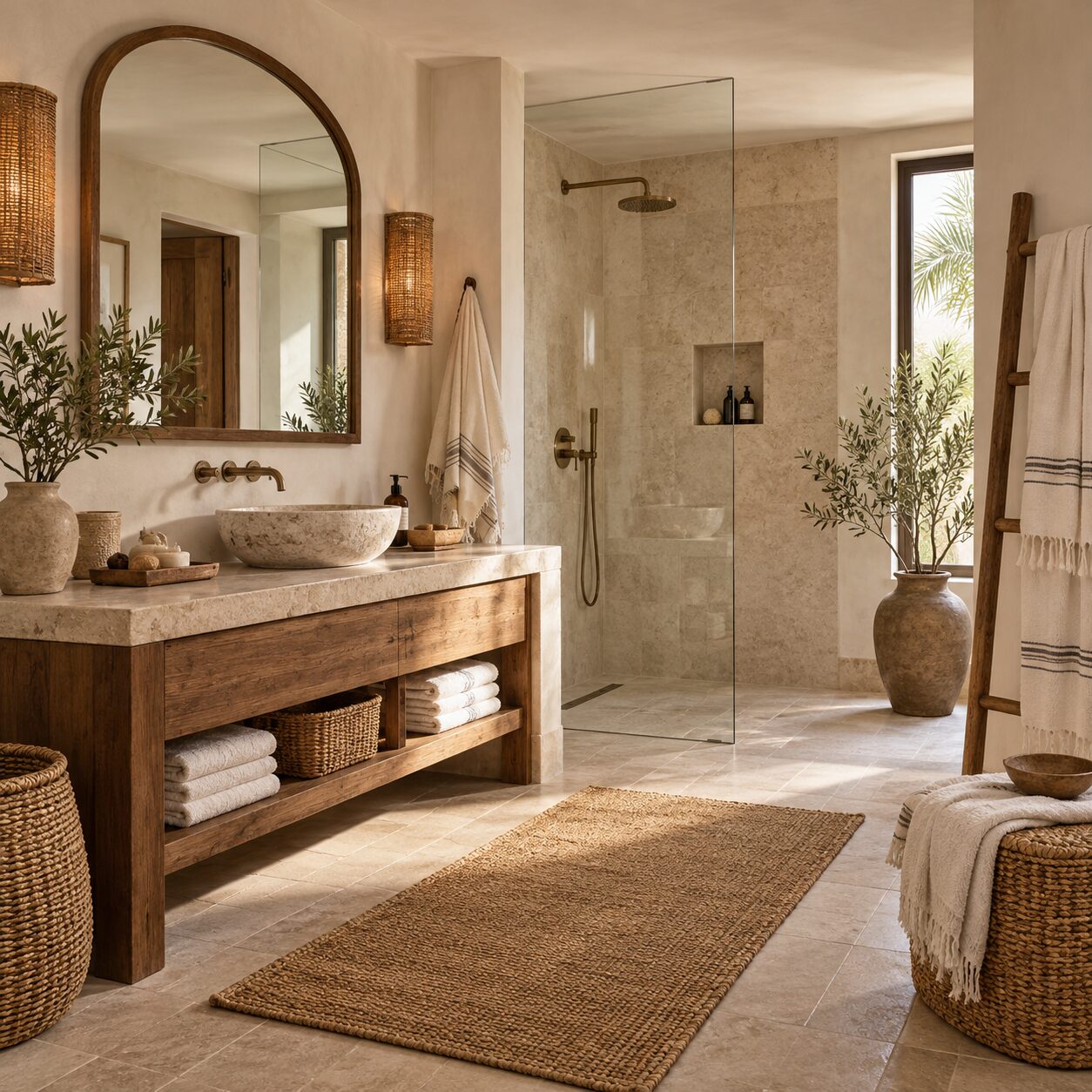
Black and white towels, a monochrome basket and a small plant give even a basic rental bathroom a hotel feel.
Entrance
The entrance is a small space where a bold graphic statement works well. A striped or geometric runner, a black-framed mirror and a woven basket for shoes or umbrellas create a striking first impression for guests, and set the tone for the rest of the home. Because entrances are usually passed through rather than lingered in, you can afford stronger contrast here than in a bedroom.
Introducing an Accent Colour
Once your black and white base is established, a single accent colour can bring new energy without disrupting the scheme.
- Mustard or ochre: warm and cheerful, especially in winter.
- Terracotta: earthy and grounded, a natural match for Egyptian homes.
- Emerald or olive green: fresh and calming, echoing plants.
- Soft blue: coastal and relaxed for summer.
Introduce the accent in two or three small doses, such as a cushion, a vase and a mug on the tray, rather than one large piece. Because the base is neutral, you can change the accent with the seasons, swapping warm mustard for cool blue in summer, at very little cost.
Keeping Black and White Looking Crisp
High contrast shows dust, lint and fading more than mid-tone schemes, so a little care keeps the look sharp.
- Shake out rugs regularly. Flat-woven kilims release dust easily; take them to the balcony and give them a good shake every week or two.
- Wash white covers separately. Keep white cushion covers away from dark loads so they stay bright.
- Rotate pieces near windows. Strong Egyptian sun can fade black textiles over time; turn cushions and throws so they wear evenly.
- Dust dark surfaces often. Black trays, lamps and side tables show dust quickly. A soft dry cloth is usually enough.
- Keep a lint brush handy. Black throws and cushions pick up fibres, especially in homes with pets.
Common Mistakes to Avoid
- Equal amounts of black and white everywhere. Let one tone lead.
- Only flat, smooth surfaces. Add tufted, woven and natural textures.
- Cool lighting. Warm bulbs keep monochrome rooms welcoming.
- Every pattern the same scale. Mix large, medium and small.
- Forgetting greenery. Plants bring life to a two-tone room.
- Too many accent colours. Choose one and repeat it.
Quick Checklist
- One tone clearly dominant, roughly 70 percent
- A graphic rug as the foundation
- Patterns in large, medium and small scales
- Solid black, white or grey pieces between patterns
- At least three warm textures: tufted, woven, wood or jute
- Greenery in two or more spots
- Warm lighting throughout
- One optional accent colour, repeated two or three times
Timeless, Graphic and Yours
Black and white decor rewards a little discipline with a room that feels striking, calm and timeless all at once. Build on a graphic rug, mix patterns by scale, warm everything with natural textures, and let a few strong accessories carry the look. The result is a home that photographs beautifully and feels even better to live in.
Discover black and white kilim rugs, cushions, trays, lamps and candle holders at coccarohome.com.
Shop the Look