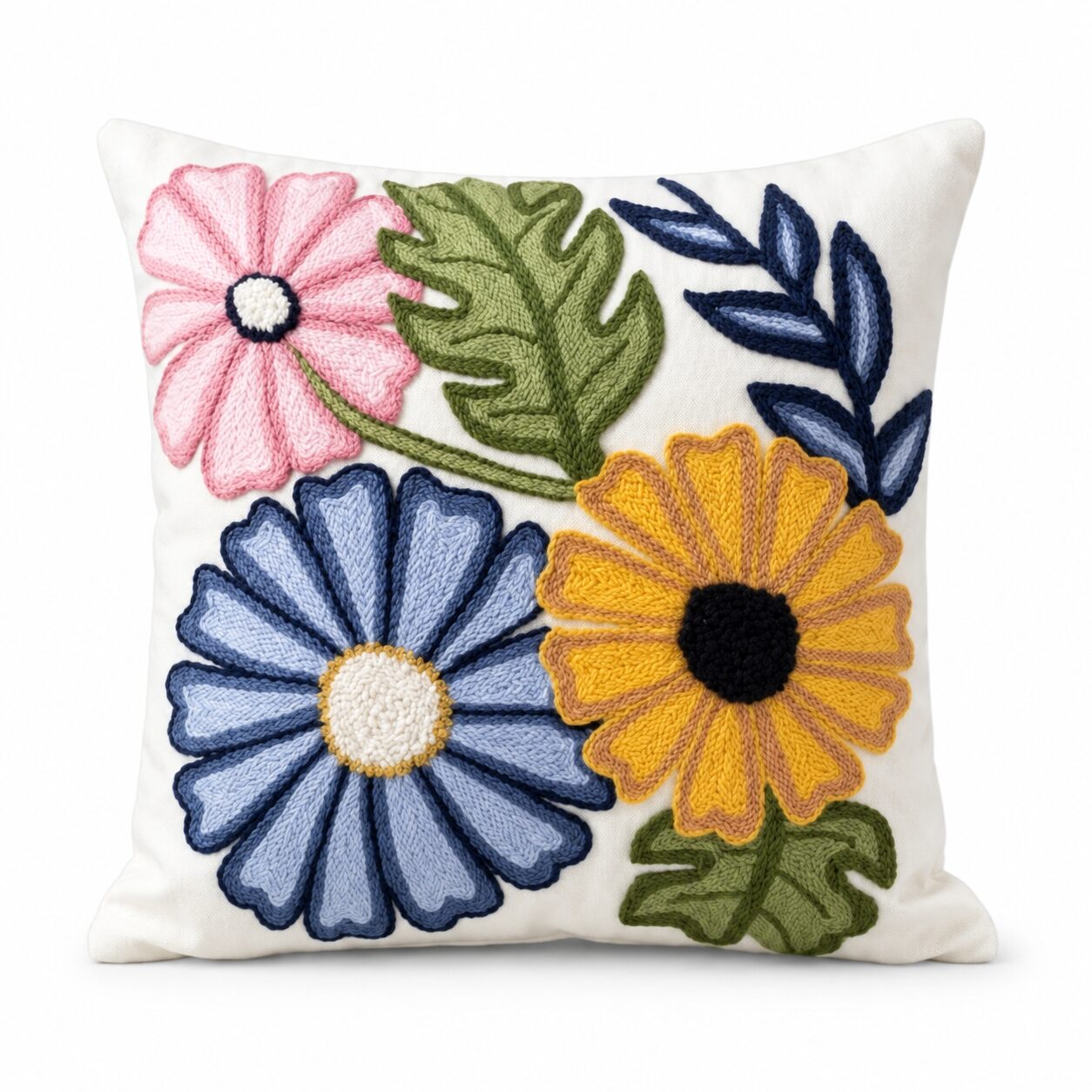
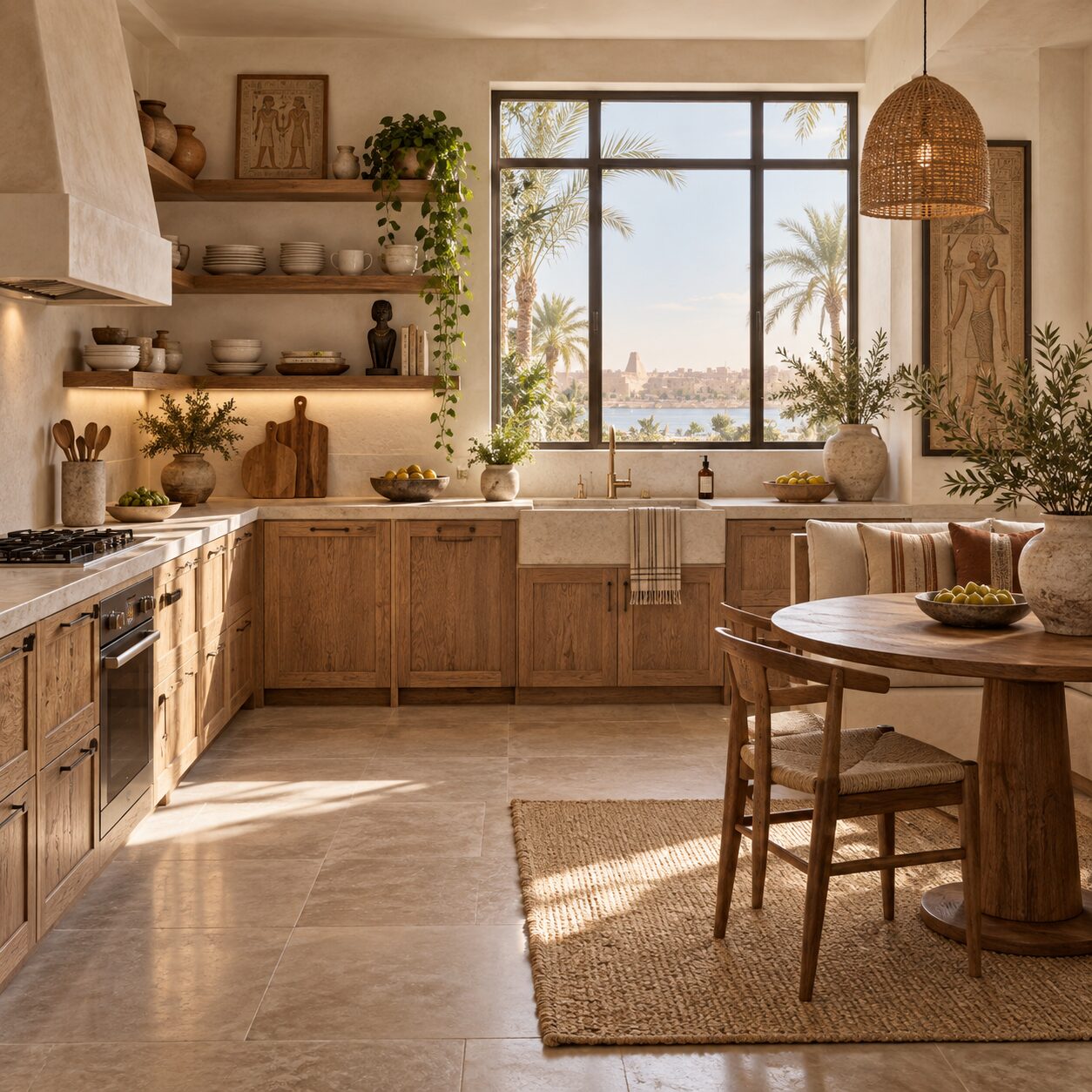
Walk through Khan el-Khalili and you will see pattern everywhere: striped kilims stacked beside floral embroidery, geometric brass lanterns hanging over painted tiles. Somehow it never feels like too much. That is because traditional craft has always mixed patterns with an instinct for rhythm, colour and scale. The same instinct can work in your living room.
Most people either avoid pattern entirely, ending up with a beige room that feels unfinished, or add pieces one by one until the sofa, rug and curtains all shout at once. The good news is that pattern mixing follows a handful of reliable rules. Learn them and you can combine stripes, florals and kilim weaves without the room tipping into chaos.
Why Pattern Deserves a Place in Your Home
Pattern carries energy. A plain room can feel calm, but it can also feel flat, especially in apartments with white walls and neutral tiles. A few well-chosen patterns add movement, guide the eye around the space, and give a room the layered, collected look that makes it feel lived in rather than bought in one afternoon.
There is a personal side too. The patterns you choose say something about you, whether that is a love of the sea, memories of a grandmother’s embroidered linens, or a taste for bold modern geometry. A room without any pattern often feels anonymous, like a hotel corridor. A room with thoughtfully mixed pattern feels like it belongs to someone.
Pattern is also practical. In family homes with children and frequent guests, a patterned rug or cushion forgives small stains and daily wear far better than a pale solid. Egypt’s dust settles quickly too, and pattern hides it between cleanings.
Rule One: Choose a Colour Thread First
The single most important rule is that patterns need something in common, and colour is the easiest connection.
Pick a palette of two or three main colours, plus one neutral. Every patterned piece in the room should include at least one of those colours. A floral cushion, a striped throw and a geometric rug can look like a family if they all share the same mint, brown and cream.
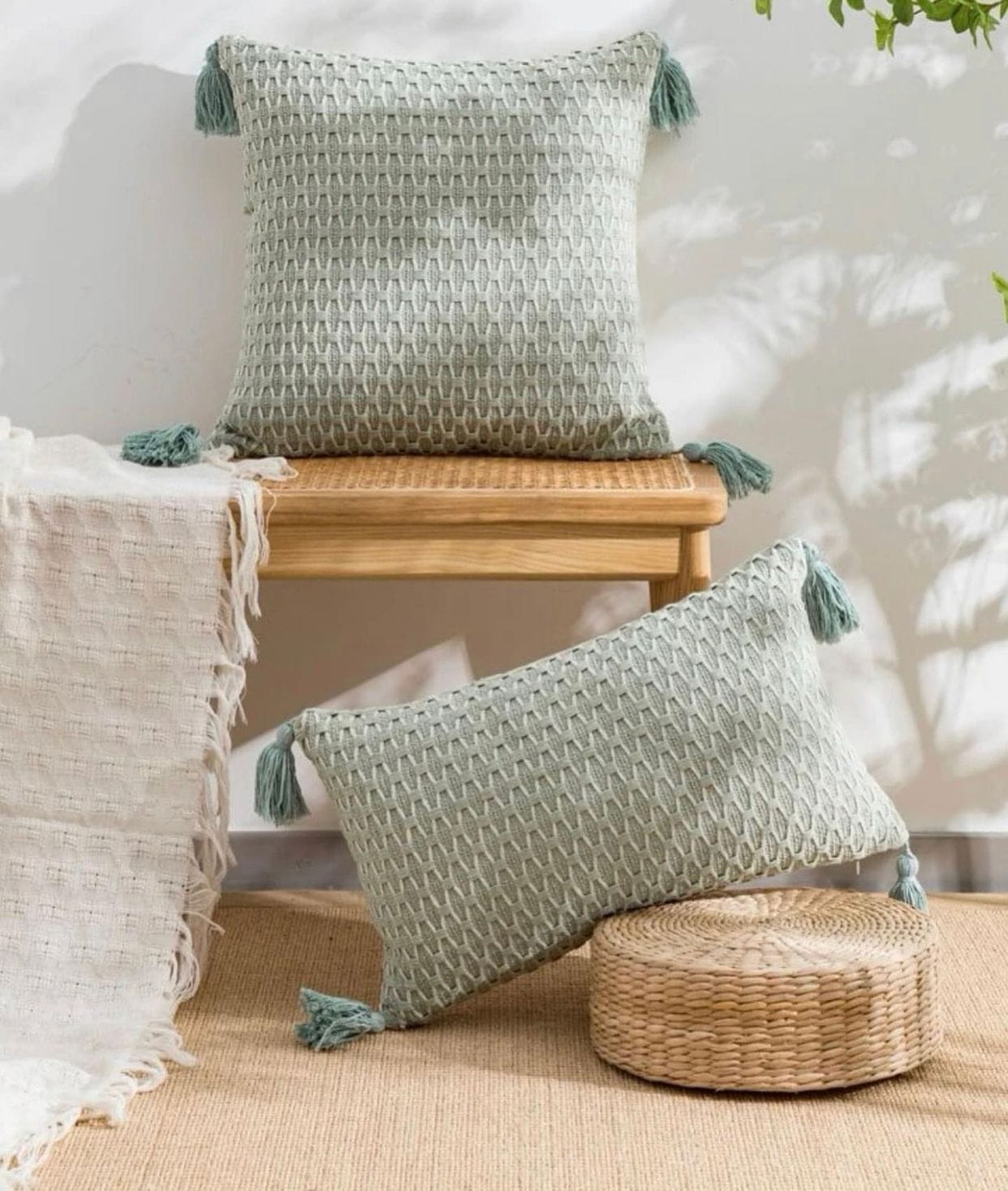
The Boho Geometric Tassel Jacquard Cushion is a useful example. Its mint green, brown and white give you a ready-made palette: pull the mint into a plant pot or a throw, the brown into wooden side tables, and the white into lamp shades or curtains. Suddenly every other choice becomes easier.
Where to Find Your Palette
- A favourite rug. Rugs often contain four or five colours in balanced amounts.
- A painting or wall plate set. Artists have already solved the colour harmony for you.
- The view. A balcony full of green plants suggests greens and earth tones.
- Your sofa. If it is a strong colour, treat it as one of your palette colours.
Rule Two: Vary the Scale
Two patterns of the same size compete for attention. Patterns of different sizes cooperate. This is the rule designers rely on most.
Think in three sizes:
- Large-scale pattern. Big florals, bold geometric blocks, wide motifs. Use it once or twice as the star.
- Medium-scale pattern. Kilim weaves, medium florals, repeating motifs a few centimetres across.
- Small-scale pattern. Thin stripes, tiny dots, fine textures that read almost as solid from across the room.
A large geometric rug, medium kilim cushions and a finely striped throw will sit together comfortably. Three large florals in different colours will not.
Stripes Are the Universal Partner
If you are unsure what to pair with a busy pattern, choose stripes. They are orderly, they come in every width, and they calm down florals and abstract designs. The Colorful Striped Print Cushion brings a cheerful rhythm beside more complex patterns, while the Lines Pattern Woven Cotton Cushion offers a quieter stripe for neutral rooms.
Rule Three: Balance Pattern Families
Patterns fall into rough families. Mixing across families is more interesting than staying within one, as long as colour and scale are controlled.
- Geometric: diamonds, chevrons, kilim motifs, grids.
- Organic: florals, leaves, birds, botanicals.
- Linear: stripes, bands, simple lines.
- Abstract: brushstroke shapes, free-form designs.
A reliable recipe is one geometric, one organic and one linear. For example, a Handwoven Cotton Kilim Area Rug with Geometric Pattern on the floor, a Leaf Tufted Cushion on the sofa, and a striped throw over the arm. Each pattern belongs to a different family, so none of them fights for the same role.
Rule Four: Give the Eye Somewhere to Rest
Pattern only reads well when there is calm around it. Solids and textures are the pauses between sentences.
A useful proportion is roughly 60 percent solid or textured surfaces, 30 percent pattern and 10 percent bold accent. Walls, the sofa and large curtains often make up the solid share. Cushions, rugs, throws and small decor carry the pattern.
Plain does not have to mean boring. A Plush White Wool-Style Cushion is technically a solid, but its fluffy surface adds depth. Woven halfa, jute baskets and wooden trays do the same job: they rest the eye without making the room feel empty.
Rule Five: Spread Pattern Around the Room
Clustering every patterned piece on one sofa makes that corner look heavy and the rest of the room bare. Distribute pattern so the eye travels.
The Triangle Trick
Place a pattern, or a colour from it, in at least three spots that form a loose triangle across the room. If your sofa cushions feature terracotta stripes, echo terracotta in a vase on a shelf and in a rug or wall piece across the room. The repetition ties the space together.
Layer Vertically
Pattern can live at different heights: the rug on the floor, cushions at seat height, a wall hanging or wall plates at eye level. Spreading pattern vertically feels richer than piling it at one level.
Black and White: The Shortcut for Nervous Mixers
If colour makes pattern mixing feel risky, start with black and white. Without colour to coordinate, you only need to think about scale and family.
A Kilim Black and White Cushion beside a Black and White Abstract Throw creates instant graphic interest. Add one warm wooden piece and a green plant, and the room feels finished. Once you are comfortable, introduce a single accent colour, such as mustard or terracotta, through one cushion.
A Step-by-Step Example
Theory is easier to trust once you see it applied. Here is how a typical living room with a grey sofa, white walls and light floor tiles could be built up, one layer at a time.
- Start with the rug. A geometric kilim in cream, grey and a touch of terracotta goes down first. It is the large-scale pattern and it sets the palette.
- Add two solid cushions. Large squares in plain grey or cream sit at each end of the sofa. They give the eye a rest right next to the busy rug.
- Bring in a medium pattern. Two kilim or embroidered cushions with a smaller motif, sharing the terracotta, go in front of the solids.
- Finish with a stripe. A narrow-striped lumbar or a striped throw adds the linear family and connects everything.
- Repeat the accent colour. A terracotta vase on the shelf and a warm wooden tray on the coffee table carry the colour across the room.
Five steps, three patterns, and a room that looks considered rather than crowded. If at any point it feels too busy, remove the last thing you added and live with it for a few days before deciding.
Patterns Beyond the Sofa
Cushions and rugs are the obvious places for pattern, but they are not the only ones. Spreading pattern across different objects makes the mix feel more natural.
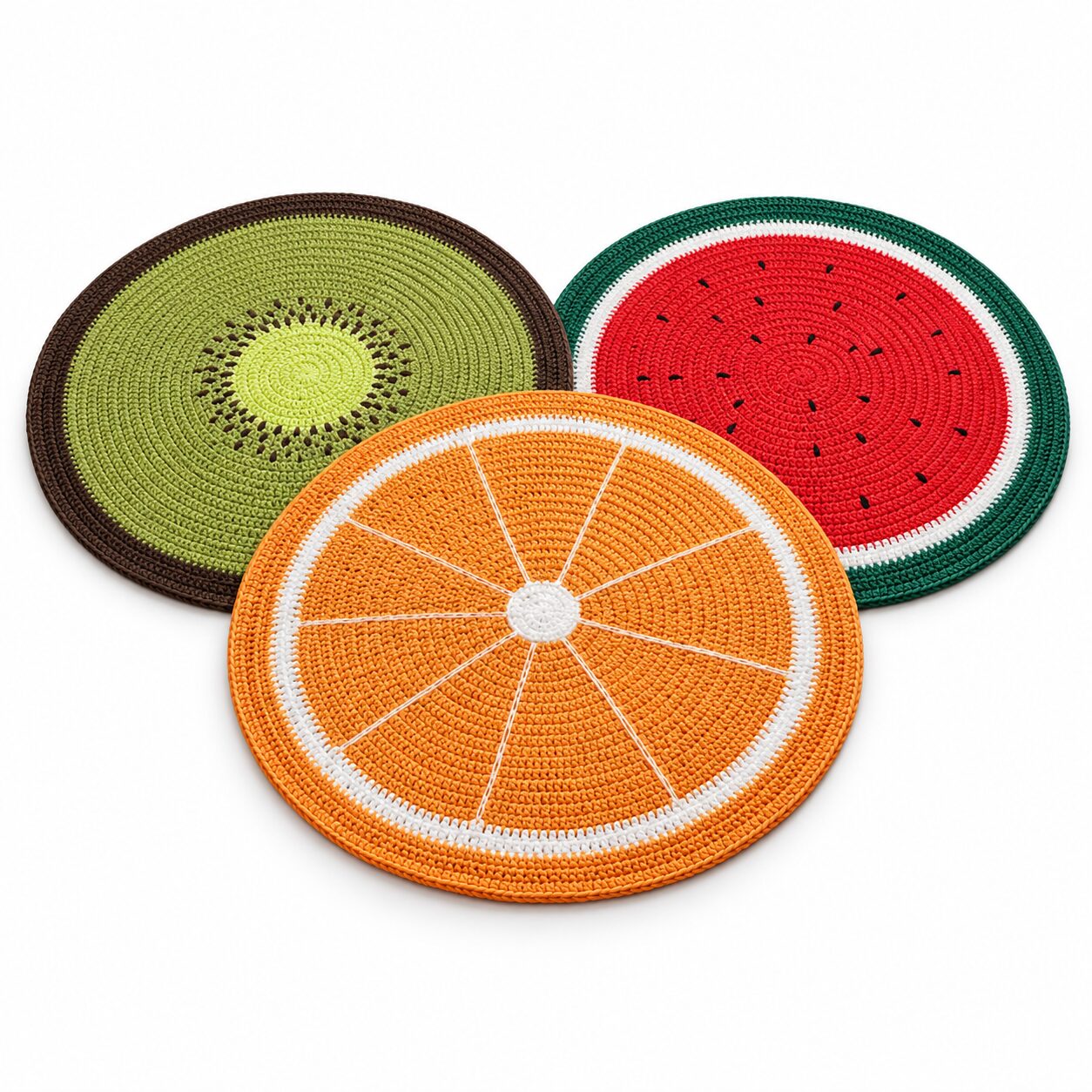
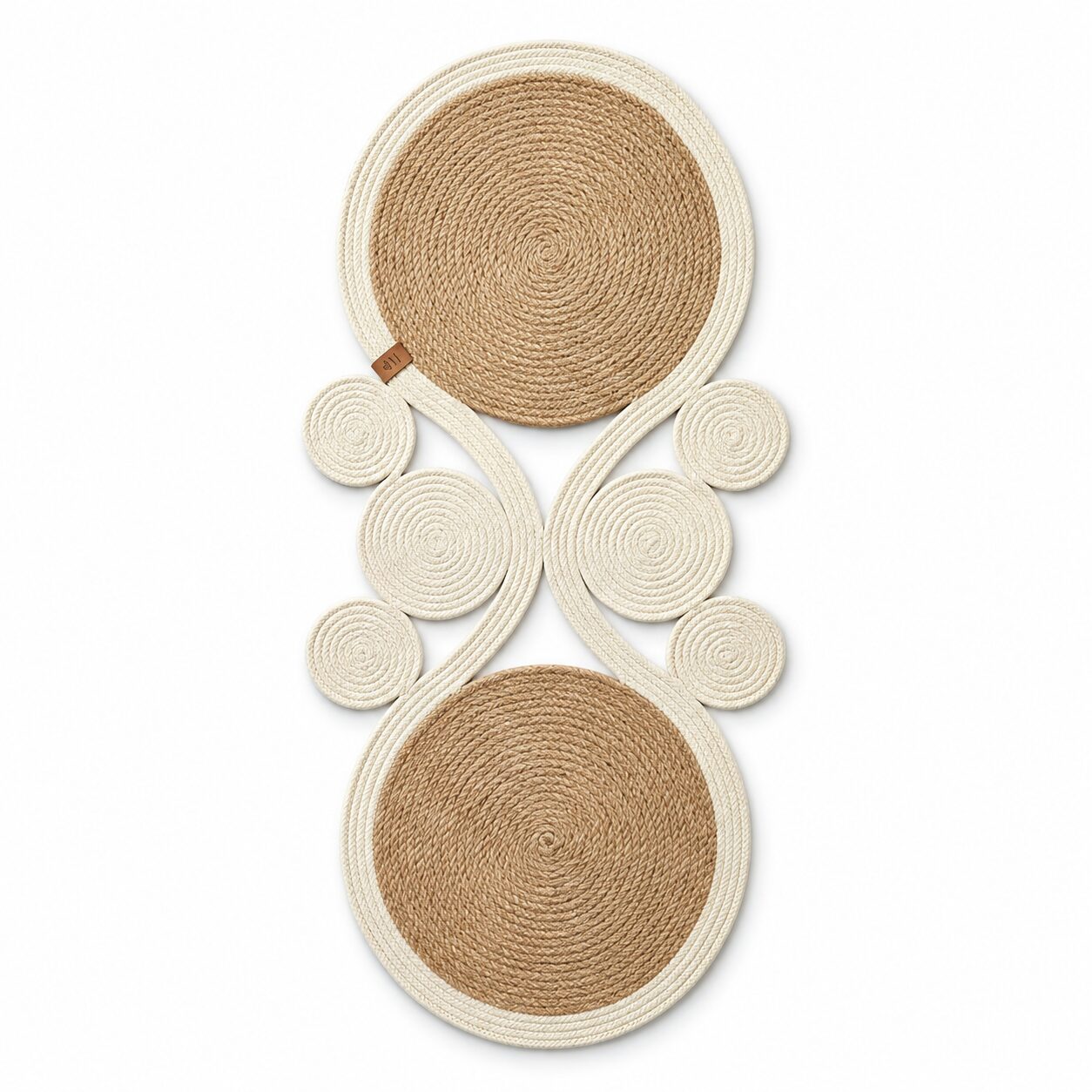
- Table runners and placemats bring pattern to the dining corner of an open-plan room.
- Wall plates and hangings add pattern at eye level without touching the furniture.
- Baskets and trays with woven stripes or painted motifs act as small-scale pattern on shelves and coffee tables.
- Curtains can carry a gentle pattern, but in most rooms they work better plain if the sofa is already busy.
Pattern Mixing for Egyptian Homes
Local homes bring their own pattern opportunities. Traditional tiles, carved wood, mashrabiya-style screens and inherited carpets often already carry strong pattern. Treat them as the starting point rather than fighting them.
- Inherited rugs and carpets: Let a family heirloom be the large-scale star and choose smaller patterns around it.
- Patterned floor tiles: Keep rugs simpler, perhaps a linear design or a natural halfa texture.
- Ramadan decor: Festive lanterns and motifs are busy by nature, so pair seasonal cushions with plain or striped pieces.
- Balconies: Outdoor seating is a good place to experiment with brighter, bolder combinations.
Common Mistakes to Avoid
- No shared colour. Patterns with nothing in common look accidental.
- Everything the same scale. Two large florals next to each other will always compete.
- Matching sets. A cushion set with identical patterns on every piece looks like a showroom.
- Pattern on every surface. Without solids, nothing stands out.
- All pattern on one sofa. Spread it around the room.
- Ignoring existing patterns. Tiles, curtains and inherited furniture count too.
Quick Checklist
- A palette of two to three colours plus one neutral
- At least one large, one medium and one small-scale pattern
- Patterns drawn from different families: geometric, organic, linear
- Roughly 60 percent solid or textured surfaces
- Each colour repeated in three spots around the room
- Pattern at floor, seat and eye level
- One plain, textured piece beside every busy one
Confident, Not Chaotic
A room full of pattern can feel joyful and personal, the way the best traditional interiors always have. The difference between charming and chaotic comes down to a shared colour thread, varied scale and enough calm surfaces in between. Start with two patterns, add a third once they feel right, and keep editing until the room makes you smile.
Find kilim, striped, floral and geometric pieces to build your own mix at coccarohome.com.
Shop the Look