In Egypt, the roof has always been a living space. Grandparents slept there on hot summer nights, families dried molokhia and hung laundry there, and neighbours called across from one roof to the next. Today, a rooftop or roof terrace in a Cairo building, an Alexandria villa or a North Coast chalet is one of the most valuable spaces a family can have, and one of the most neglected.
A well-planned roof becomes a second living room for most of the year: a place for sohour in Ramadan, a breezy spot for evening tea, a spot for children to play and adults to watch the sunset. The trick is designing for the real conditions up there, which are very different from a sheltered balcony. This guide covers how.
Know Your Roof’s Conditions
Rooftops face harsher conditions than any other part of the home. Before buying anything, spend a day noticing:
- Sun: where it hits at noon and in late afternoon. Most roofs have no natural shade at all.
- Wind: which direction it comes from and how strong it gets. Light items will move.
- Dust: roofs collect more dust than balconies, especially during the khamaseen season in spring.
- Views: what you want to look at (a sunset, the sea, a skyline) and what you want to hide (water tanks, satellite dishes, neighbouring walls).
- Access: how easily you can carry things up and down, which affects what you leave outside permanently.
Also check practical matters with your building: weight limits, waterproofing and any rules about permanent structures. Keep heavy items near walls and supporting columns rather than in the centre of the roof.
Shade Comes First
Without shade, an Egyptian roof is unusable for most of the day from April to October. Shade is the foundation of every rooftop design.
Shade Options
- A pergola or wooden frame gives permanent structure and something to hang lights and plants from.
- Shade sails or fabric canopies are flexible and affordable, but need secure fixings because of wind.
- Large umbrellas with heavy bases work for small seating areas.
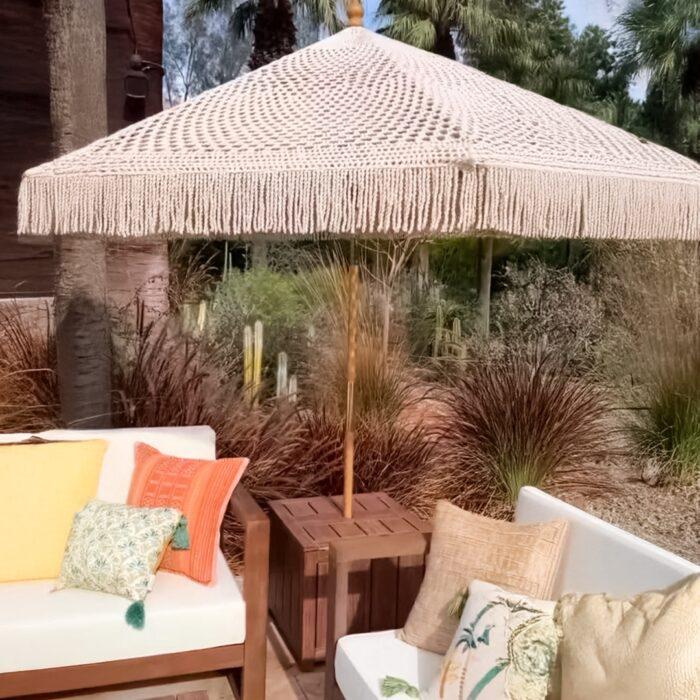
- Crochet or woven shades filter light beautifully and create patterned shadows.
The Handmade Wooden Crochet Beach and Garden Shade is a striking choice for a rooftop lounge: it shades a seating area while casting lacy patterns on the floor, turning the shade itself into decor.
Position shade over the main seating area first, then expand if needed. Even partial shade makes late afternoons comfortable.
Create Zones on a Large Roof
A roof often has more space than a living room, and an empty expanse feels awkward. Divide it into zones, each with its own purpose.
- The lounge zone: your main seating, under shade, ideally facing the best view.
- The dining zone: a table for meals, close to the stairs for easy carrying from the kitchen.
- The relaxation corner: a swing, hammock or daybed for reading and napping.
- The green zone: a cluster of planters that softens the hard edges and screens unattractive views.
- The play zone: open floor for children, kept clear of furniture.
Use rugs, planters and lighting to define each zone. Even on a small roof, separating seating from the “service” side (water tanks, laundry lines) makes a big difference.
Seating That Suits the Roof
Rooftop seating needs to handle sun, dust and the occasional strong breeze, while still being comfortable for long evenings.
Swings and Hanging Chairs
A swing is the dream piece for many rooftops, and with a sturdy pergola beam or a ceiling hook in a covered roof area, it is very achievable. The Royal Macrame Swing is designed as a comfortable hanging chair and suits a shaded rooftop corner perfectly. Always have a professional check that the beam or hook can safely carry the weight of a person in motion.
Daybeds and Lounge Chairs
For a covered or shaded lounge area, a daybed turns the roof into a real retreat. The Handcrafted Bamboo Lounge Daybed invites long afternoons with a book. Pair it with a solid wood lounge chair or two for conversation, angled towards the daybed rather than lined up in a row.
Floor Seating
Floor seating is part of Egyptian rooftop tradition, and it is ideal for large family gatherings. Lay a natural rug, add floor cushions and poufs, and you can seat many people without bulky furniture. A Handmade Halfa Pouf works as a seat, a footrest or a small side table, and halfa’s natural look sits comfortably outdoors.
Bring natural-fibre and wooden pieces under cover when not in use, especially before dusty or rainy days. This keeps them looking good for far longer.
Rugs and Cushions for Comfort
A rug instantly turns a bare roof floor into a room. Natural fibres feel right outdoors. The Halfa Round Rug defines a small seating circle, while flat-woven kilims add colour to larger lounge zones.
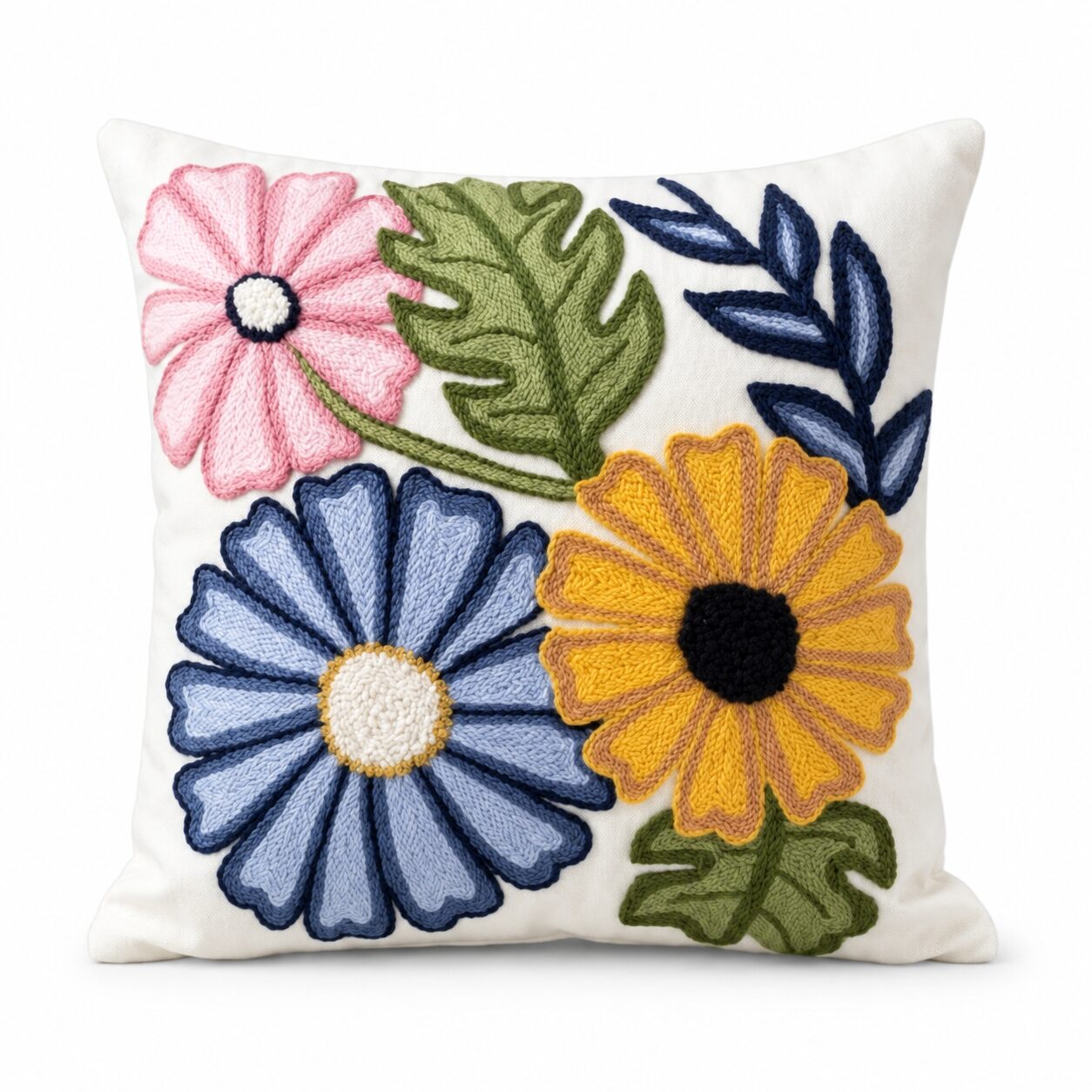
For cushions, choose cotton covers that can be removed and washed, since rooftop dust gets everywhere. The Geometric Pattern Tufted Multicolour Cushion brings cheerful colour and suits garden and outdoor seating.
Cushion care on a roof:
- Store cushions in a lidded basket or indoors overnight.
- Shake them out before guests arrive.
- Rotate covers so sun fading is even.
- Wash covers more often in the khamaseen months.
Plants and Planters: The Living Walls of Your Roof
Plants transform a roof from a concrete slab into a garden. They also provide privacy and screen unattractive views.
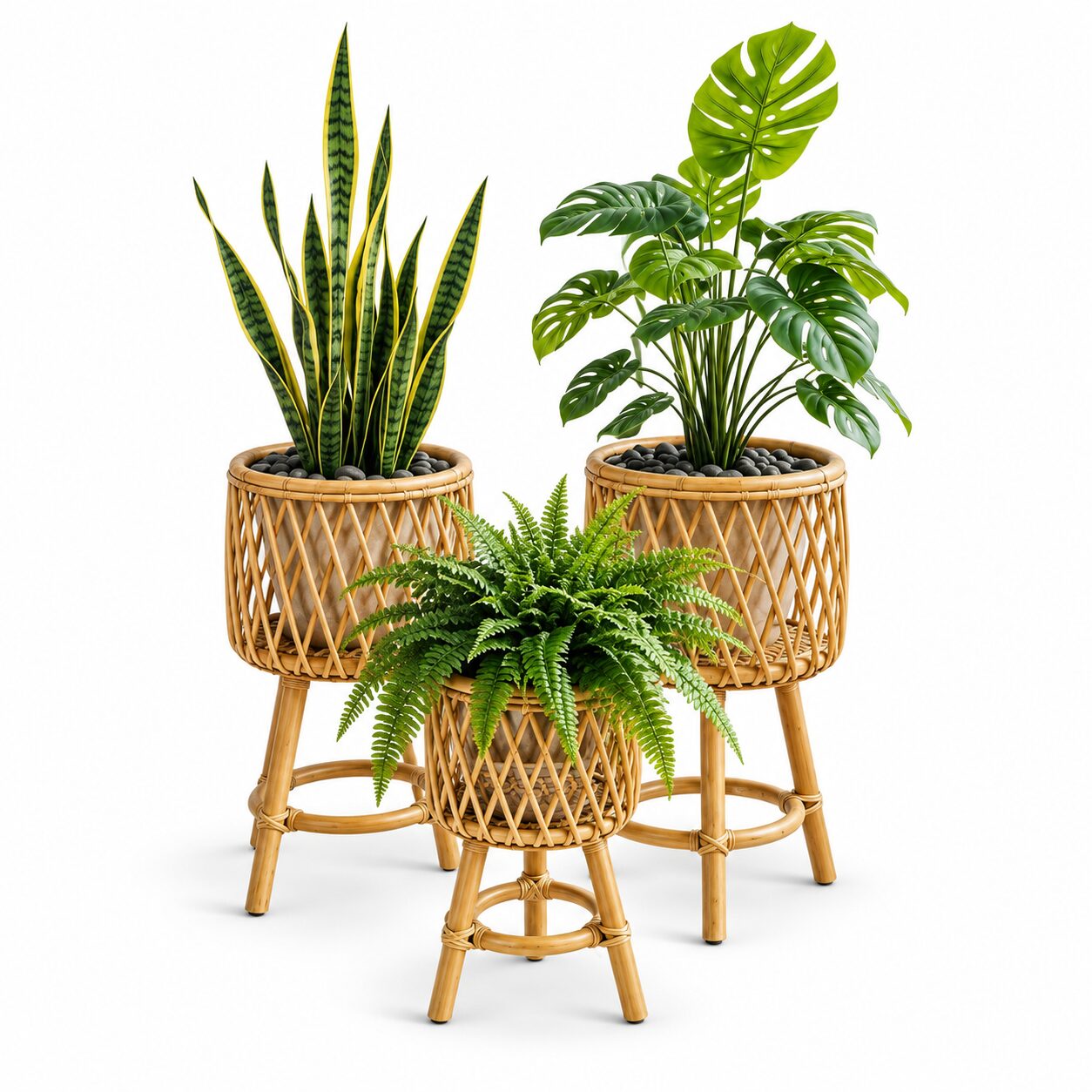
- Group planters in clusters of three or five, at different heights, rather than scattering them.
- Choose heavy pots in exposed spots so wind cannot tip them.
- Line the perimeter with tall plants for privacy, or use them to hide water tanks.
- Pick tough plants suited to full sun: bougainvillea, jasmine, oleander, rosemary, aloe and succulents.
A large terracotta pot makes a strong anchor for a planter cluster. The Large Olive Green Handcrafted Terracotta Planter Pot is made for indoor and outdoor use and brings colour to a sandy-toned roof.
Water deeply in the early morning or evening, never at midday in summer.
Lighting for Summer Nights
The rooftop truly comes alive after sunset, so lighting deserves as much attention as seating.
- String lights across a pergola or between poles create instant magic.
- Lanterns on the floor and tables add warm, low light. Ramadan fawanees look wonderful on a roof.
- A pendant hung from a pergola beam creates a focal point above the lounge.
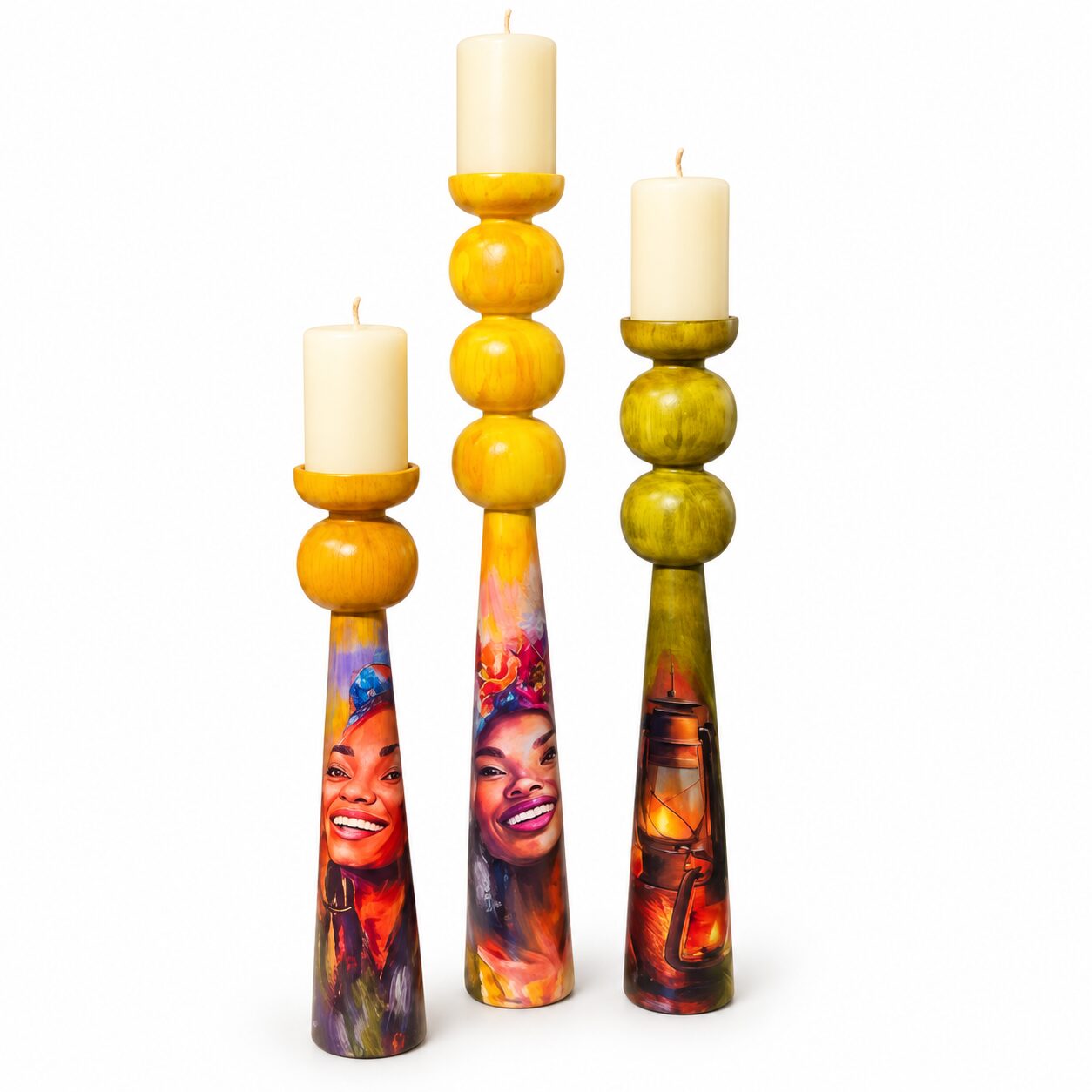
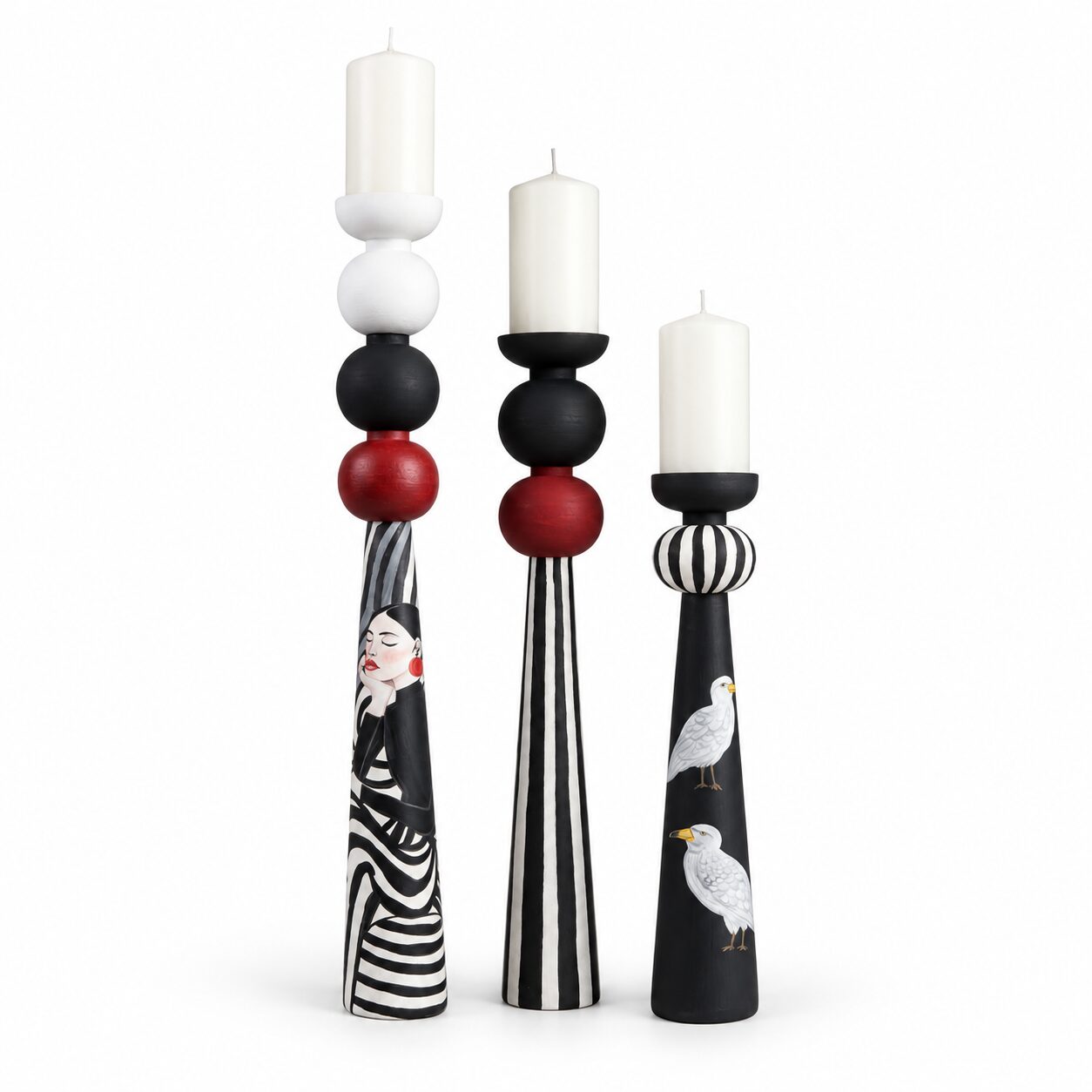
- Candles in holders add atmosphere on still evenings, kept away from fabric and dry plants.
For a covered lounge area, a woven pendant like the Tulum Macrame Pendant brings a tropical, coastal mood. Any electrical lighting outdoors should be rated for outdoor use and installed by a qualified electrician.
Hiding the Unattractive Bits
Almost every Egyptian roof shares space with water tanks, satellite dishes, pipes and laundry lines. You cannot remove them, but you can stop them from dominating the view.
- Screens: a simple wooden slatted screen or a bamboo panel hides a tank while letting air move through.
- Tall planters: a row of tall plants in heavy pots works as a living screen and softens the whole perimeter.
- Placement: turn your main seating so it faces away from the service area and towards the open sky or the best view.
- Colour: painting pipes and boxes in the same tone as the surrounding wall makes them visually disappear.
Using the Roof Through the Seasons
A roof is not only a summer space. In spring, mornings are perfect for breakfast before the heat arrives, though khamaseen days are a reason to bring textiles inside. Summer belongs to the evenings, when the roof catches whatever breeze the city offers. Autumn is arguably the best rooftop season of all, with warm days and soft, golden sunsets. In winter, a sunny corner with a throw and a cup of tea on a bright afternoon can be the warmest spot in the home. Swap cushions and throws with the seasons, and the roof stays in use all year.
Hosting on the Roof
Rooftops are made for gatherings, from Ramadan sohour to summer birthdays. A few things make hosting easier:
- A sturdy tray or two for carrying tea and food up the stairs.
- A small side table near each seating cluster.
- A lidded storage basket for napkins, candles and cushions.
- A cool box for drinks so you are not running downstairs every ten minutes.
Small Roofs and Shared Roofs
Not every family has a large private roof. In many buildings the roof is shared, or the private section is just a few square metres. Small spaces still work beautifully with a little restraint. Choose one zone rather than several: a cosy seating corner with a rug, two poufs, a small table and a cluster of pots is plenty. On a shared roof, favour pieces that are easy to carry up and down, such as floor cushions, a folding table and lightweight baskets, and agree with neighbours on which corner is yours before adding anything permanent.
Common Mistakes to Avoid
- Skipping shade. Without it, beautiful furniture simply goes unused.
- Light, unanchored items. Rooftop wind will move cushions, umbrellas and small pots.
- Scattering furniture. Without zones, a roof feels empty however much you add.
- Ignoring dust. Leaving textiles out permanently means constant cleaning.
- Overloading the roof. Check weight limits before adding large planters or water features.
- Unsafe hanging. Swings and hammocks need professionally checked fixings.
Quick Checklist
- Sun, wind and views observed through a full day
- Building rules and weight limits checked
- Shade over the main seating area
- Roof divided into clear zones
- Comfortable seating, from swings to floor cushions
- Natural rugs to define each zone
- Planters grouped and weighted
- Warm, safe lighting for the evening
- Storage for cushions and small items
Your Roof, Reimagined
An Egyptian rooftop can be a family’s favourite room, open to the sky and the evening breeze. Start with shade, divide the space into zones, add comfortable seating and plenty of plants, and finish with warm light. Then invite everyone up.
Find swings, poufs, rugs, cushions and planters for your rooftop at coccarohome.com.
Shop the Look