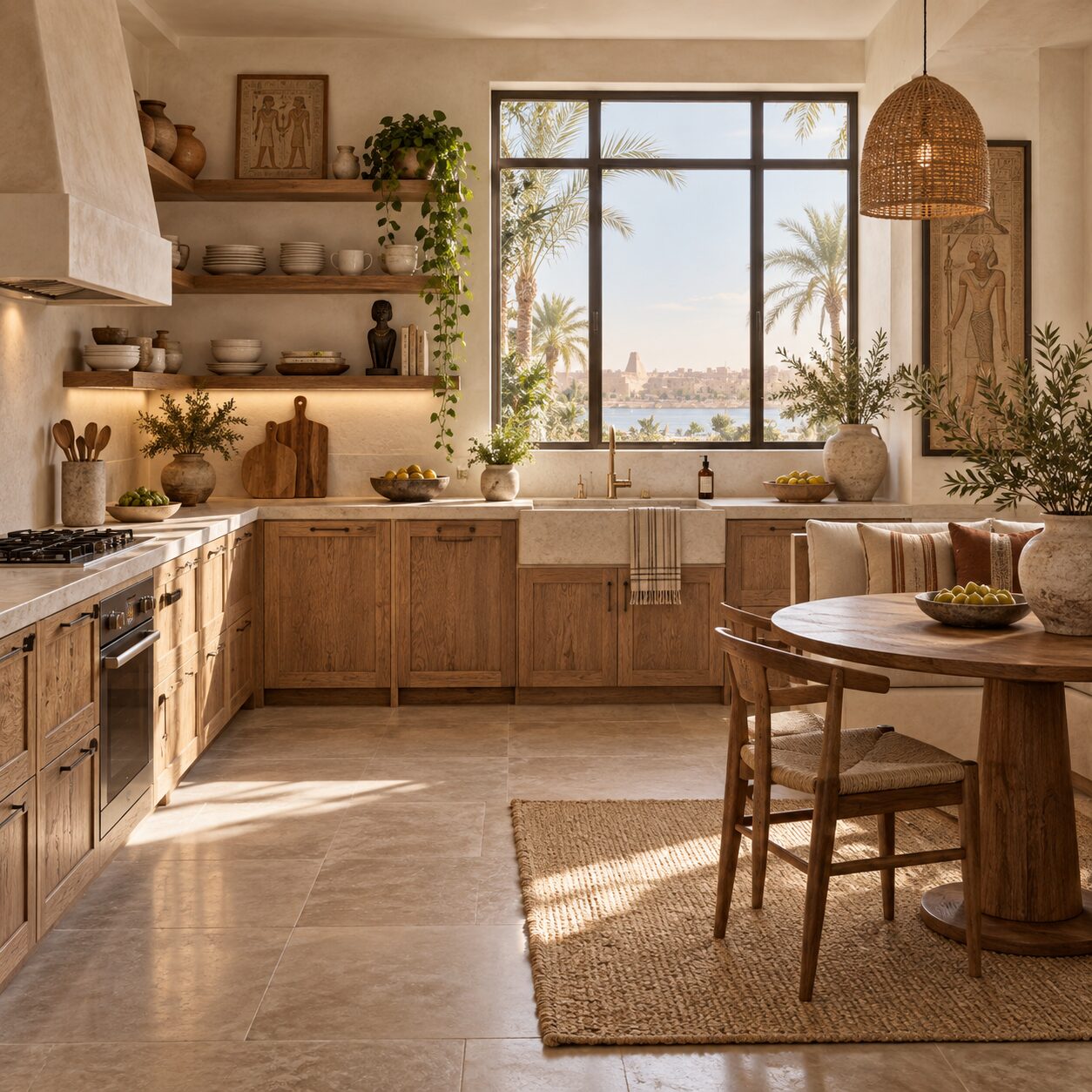
A studio apartment asks one room to do everything. It is where you sleep, eat, work, relax, host a friend for coffee and, often, cook. Without a plan, that single room quickly feels like a bedroom with a sofa squeezed in, or a living room where the bed is always on show.
Studios are becoming far more common in Egypt: young professionals renting their first place in New Cairo or Sheikh Zayed, students in Alexandria, newlyweds starting small, and owners furnishing compact units for rental. The good news is that a studio can feel generous and calm when it is divided into clear zones. Not with walls, but with rugs, light, furniture placement and a few clever pieces that do double duty. Here is how to do it.
Think in Zones, Not Furniture
The biggest shift is mental. Instead of asking “where does the sofa go?”, ask “what activities happen in this room, and where should each one live?”
Most studios need four to five zones:
- Sleep: the bed and a bedside surface.
- Living: seating for relaxing and receiving guests.
- Eating: a small table or counter.
- Working: a desk or a surface for a laptop.
- Cooking and storage: usually fixed by the kitchenette and wardrobe.
Draw a simple floor plan, even on paper, and mark windows, doors, the kitchenette, the bathroom door and power outlets. Then sketch rough areas for each zone. The sleep zone usually works best farthest from the entrance, giving it the most privacy, while the living zone sits nearer the door, where guests arrive.
Rugs: The Invisible Walls
Rugs are the most powerful zoning tool in a studio. A rug draws an invisible boundary and tells the eye “this is a separate area”.
- Living zone: a rug large enough that at least the front legs of the sofa and chairs sit on it.
- Sleep zone: a rug extending from under the bed, or a runner on one side.
- Dining zone: optional, but a round rug under a small round table looks lovely.
Use rugs that relate to each other, sharing a colour or material, without being identical. This keeps the room unified while still defining zones.
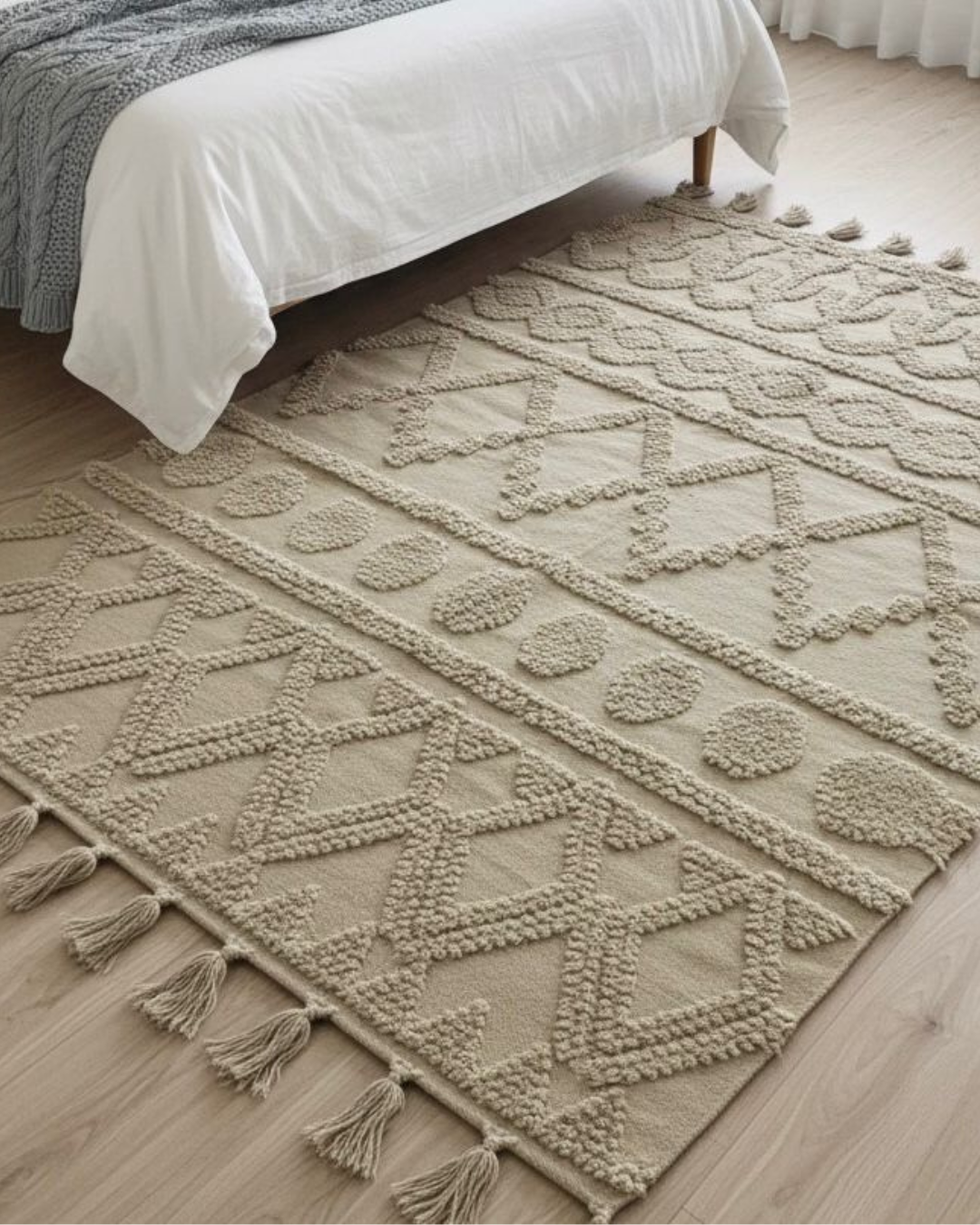
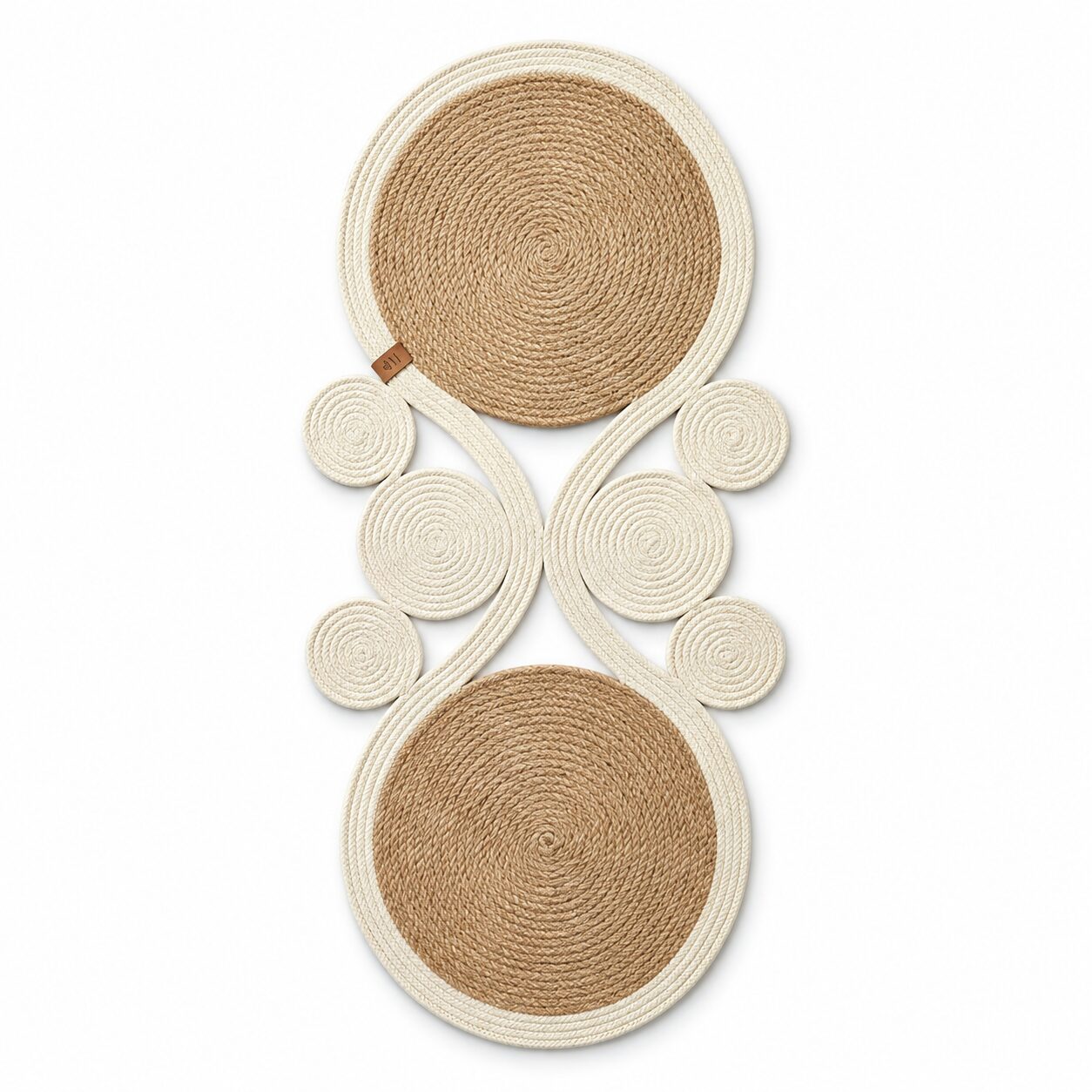
The Handwoven Cotton Kilim Area Rug with Geometric Tufted Pattern anchors a living zone with texture and tassel fringe, while a natural round piece like the Halfa Round Rug can define a small dining or reading spot nearby.
Furniture Placement as Room Dividers
Furniture can divide space just as effectively as walls, without blocking light.
Float the Sofa
Instead of pushing the sofa against a wall, place it with its back towards the bed. The sofa back becomes a low divider, separating living and sleeping without closing anything in. A slim console or a low shelf behind the sofa strengthens the boundary and adds a surface for a lamp.
Open Shelving
An open bookcase or shelving unit placed perpendicular to a wall creates a partial division while letting light through. Style it on both sides so it looks good from the bed and from the sofa. Use baskets on lower shelves for hidden storage.
Headboards and Bed Placement
Placing the bed in an alcove, or against the wall farthest from the door with a headboard, makes the sleep zone feel intentional. Dressing the bed neatly with a throw and cushions during the day helps it read as part of the decor rather than an unmade bed in the living room.
Light Each Zone Separately
A single ceiling light makes a studio feel like one undefined box. Separate light sources give each zone its own identity, and let you light only the area you are using.
- Living zone: a floor lamp beside the sofa.
- Sleep zone: a bedside lamp or wall light.
- Dining zone: a pendant hung over the table, which visually anchors it.
- Work zone: a focused desk lamp.
A pendant over a small dining table is a particularly effective zoning trick, because it marks the eating area even when the table is pushed against a wall. The Handmade Macrame Hanging Pendant Lamp Shade creates a cosy focal point over a dining spot. Beside the sofa, the Dune Minimalist Tapered Floor Lamp gives soft light with a slim footprint.
In the evening, turning off the sleep zone lights and leaving only the living zone lit helps the room feel like a lounge, not a bedroom.
Carving Out a Work Zone
Many studio dwellers work from home at least part of the week, and a laptop on the bed is bad for both your back and your sleep. Even a narrow wall-mounted shelf or a small desk tucked beside a window creates a proper work zone. Face the desk towards a wall or window rather than the bed, so the bed disappears from view during working hours. At the end of the day, close the laptop, put papers into a lidded basket and switch off the desk lamp. That small ritual tells your mind the workday is over, which matters even more when you live and work in the same room.
Multi-Use Furniture
In a studio, every piece should earn its place. Look for furniture that does more than one job.
Nesting Tables
Nesting tables are perfect for studios. Spread them out as side tables when friends visit, then stack them neatly in a corner. The Hand-Painted Wooden Nesting Tables in Blue Botanical add artistic colour while saving space.
Poufs That Do Triple Duty
A pouf can be an extra seat, a footrest or a small table with a tray on top. The Handmade Halfa Table or Pouf switches roles easily and its natural halfa weave suits most styles.
Other Smart Pieces
- A drop-leaf or extendable table that works as a desk during the day and a dining table in the evening.
- A storage bench at the foot of the bed for linens and extra seating.
- A bed with drawers underneath for clothes and bedding.
- A sofa bed if you often host overnight guests.
Storage Without Clutter
Clutter is a studio’s worst enemy, because nothing is hidden behind a closed door. Good storage keeps every zone calm.
- Go vertical: tall shelves and wall-mounted units use space above eye level.
- Use baskets: they hide small items on open shelves and look warmer than plastic boxes.
- Under the bed: store off-season clothes and spare bedding in lidded boxes.
- One home per item: if something has no home, it will end up on a surface.
A wooden stand with removable organizers is useful between zones. The Wooden Stand with Jute Organizers works in a living area, bedroom or bathroom, keeping smaller items tidy.
Plants as Soft Dividers
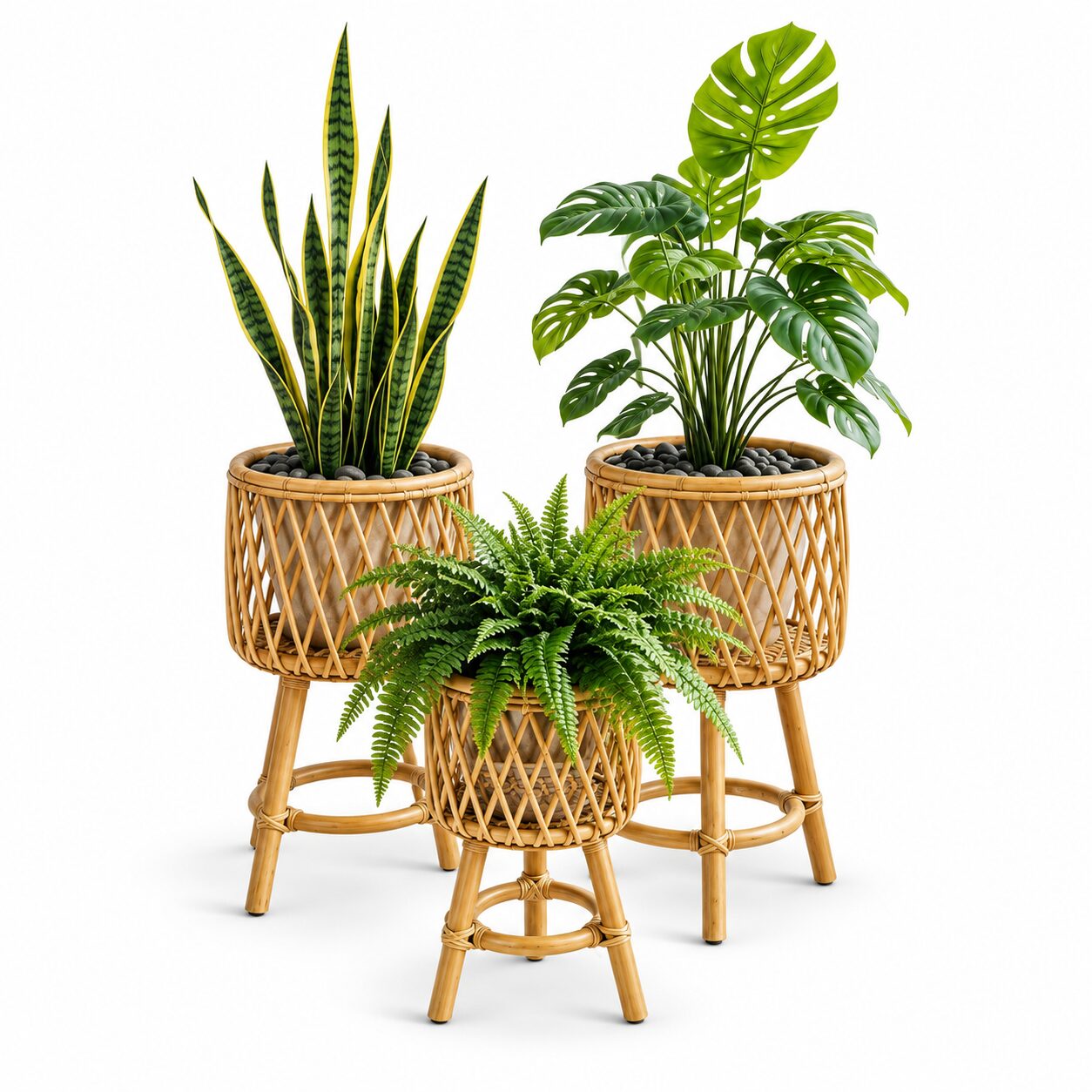
A tall plant is one of the gentlest ways to separate zones. It blocks the line of sight partially, softens the room and adds life. Place a large plant at the end of the sofa, beside a shelving divider or at the edge of the bed zone.
If your studio receives little direct sunlight, high-quality artificial plants offer the same effect without the care. The Tropical Calathea Grace Artificial Plant stands around 111 cm tall, which is ideal for a soft division between zones.
Keep a Unified Palette
With every zone visible at once, a studio looks most spacious when it follows one colour story.
- Choose two or three main colours and repeat them in every zone.
- Use one dominant material, such as natural wood or woven fibres, throughout.
- Vary texture rather than colour to add interest.
- Keep large furniture in lighter, quieter tones and add colour through cushions, throws and art.
This consistency makes the zones feel like parts of one considered home, rather than separate rooms squeezed together.
Hosting in a Studio
Studios can host wonderfully with a little planning. Before guests arrive:
- Make the bed neatly and add cushions so it reads as a daybed.
- Spread out the nesting tables and bring out the poufs.
- Dim the sleep zone and brighten the living zone.
- Clear the dining table and set a tray with drinks or sweets.
For Ramadan iftar with a friend or two, a small table moved into the living zone and lit by the pendant feels warm and special.
Planning for Real Life
Before buying anything, live with your zones for a week. Move existing furniture into the new layout, notice where you naturally drop your bag, where you drink your morning coffee and where you end up watching television. Adjust the plan to match your habits rather than forcing yourself to change them. A zone that fits your routine will stay tidy; one that fights it will collect clutter.
Common Mistakes to Avoid
- Pushing everything against the walls. It leaves an empty middle and no zones.
- One ceiling light. The room never changes mood.
- Tall, solid dividers. They block light and make the studio feel smaller.
- Too many colours. Each zone fights the others.
- Oversized furniture. A huge sofa or bed swallows the room.
- No hidden storage. Clutter becomes the main decoration.
Quick Checklist
- Floor plan sketched with four to five zones
- Sleep zone placed away from the entrance
- A rug defining each main zone
- Sofa floated to divide living from sleeping
- A separate light source in every zone
- Multi-use pieces like nesting tables and poufs
- Baskets and under-bed storage for clutter
- A tall plant as a soft divider
- One colour palette repeated throughout
Small Space, Full Life
A studio does not have to feel like a compromise. Once each activity has its own clearly defined zone, the room works harder, feels larger and becomes a home that supports every part of your day, from the first coffee to a relaxed evening with friends.
Browse rugs, lamps, poufs, nesting tables and storage at coccarohome.com and make every corner of your studio count.
Shop the Look
- Geometric Tufted Kilim Area Rug — EGP 4,450 — Anchors the living zone with texture and fringe.
- Halfa Round Rug — EGP 1,404 — Defines a small dining or reading spot.
- Macrame Hanging Pendant Lamp Shade — EGP 5,700 — Marks the dining zone with a warm focal point.
- Dune Minimalist Tapered Floor Lamp — EGP 5,500 — Slim, soft light beside the sofa.
- Blue Botanical Hand-Painted Nesting Tables — EGP 11,000 — Spread out for guests, stacked when you need space.
- Handmade Halfa Table or Pouf — EGP 1,685 — A seat, footrest and side table in one.
- Wooden Stand with Jute Organizers — EGP 2,376 — Tidy storage that works in any zone.
- Tropical Calathea Grace Artificial Plant — EGP 2,592 — A soft, green divider between zones.
- Storage Basket with Wooden Lid — EGP 1,188 — Hides everyday clutter on open shelves.
- Nordic Chunky Knitted Throw — EGP 1,944 — Helps a made bed read as a daybed during the day.