Open shelves are honest. Unlike cupboards, they show everything, which is exactly why they are so appealing and so tricky. Styled well, they become a display of the things you love: handmade pottery, a favourite vase, a little greenery, the mugs you reach for every morning. Styled badly, they become the place where everything without a home ends up.
The difference is rarely about owning expensive objects. It comes from a handful of styling principles that designers apply almost automatically: editing, grouping, varying height and leaving space. Pottery and vases are ideal for practising them, because their shapes, glazes and textures are naturally beautiful and easy to arrange. This guide shows you how to style open shelves in the living room, kitchen or bedroom so they look calm, personal and deliberately put together.
Start by Emptying Everything
It feels drastic, but it is the single most useful step. Take everything off the shelves and put it on a table or the floor. You cannot see a shelf clearly while it is still full of old habits.
Then sort your objects into three groups.
- Keep and display: pieces you love and that look good. Pottery, vases, art, a few books, small sculptures.
- Keep but hide: useful items that are not decorative. These go into baskets, boxes or cupboards.
- Let go: broken, chipped, unloved or duplicate items.
Be strict with the display pile. Open shelves need far fewer objects than you think. Most well-styled shelves use only half of what their owners first put on them.
Understand the Shelf
Before placing anything, look at the shelf itself.
- Depth: shallow shelves suit a single row of objects; deeper ones let you layer front to back.
- Height between shelves: tall gaps can take vases and branches; short ones suit low bowls, books and mugs.
- Material: pale wood loves warm earthy pottery; dark wood makes white and cream ceramics glow; white shelves are a blank canvas for colour.
- What surrounds it: a busy wall or patterned tiles call for a simpler arrangement.
A hanging shelf adds a softer feel than fixed brackets. The Macrame Wall Hanging Shelf combines knotted cotton with wooden shelves, so a few small pots and a trailing plant look effortless on it. It is also a good choice for renters, since it hangs from a single point.
The Core Styling Principles
Group in Odd Numbers
Threes and fives look natural; pairs look formal and sometimes stiff. Instead of spacing objects evenly along a shelf, gather them into small groups with a little breathing room between each group.
Vary Height
Within each group, combine a tall piece, a medium piece and a low piece. This creates a gentle triangle shape that the eye finds pleasing. A tall vase, a medium bowl and a small candle on a stack of books is a classic example.
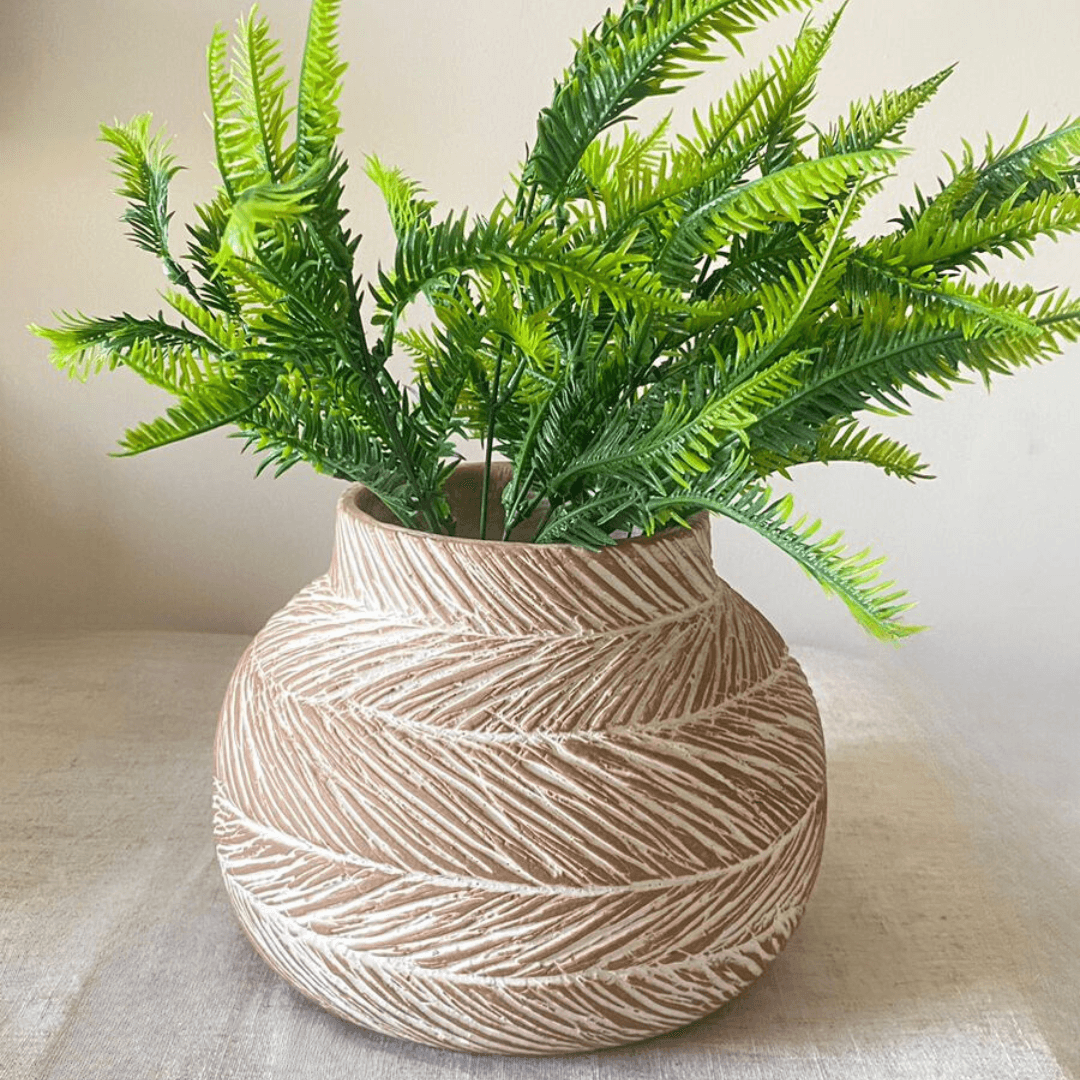
An Artisan Handmade Pottery Vase works beautifully as the tall element in a group, with its earthy handmade texture setting the tone for everything beside it.
Mix Shapes
Pair round with angular, tall and slim with low and wide. A shelf full of identical cylinders feels repetitive. Bellied vases, flat bowls, square boxes and stacked books together create rhythm.
Repeat Colours and Materials
Choose a limited palette, perhaps two or three colours plus natural wood and fibre, and repeat it across the shelves. If you have a cream vase on the top shelf, echo cream on the middle and bottom shelves too. Repetition is what makes a collection of separate objects look like a single, planned display.
Leave Negative Space
Empty space is not wasted space. It frames each group and gives the eye a place to rest. As a rule, aim for about a third of each shelf to stay clear.
Building the Arrangement Step by Step
- Place the largest pieces first. Put the tallest vases and biggest objects in position, staggering them so they do not all sit in one vertical column.
- Zigzag across shelves. If a tall vase sits on the left of the top shelf, place the next tall piece on the right of the middle shelf, then the left of the bottom. This leads the eye across and down in a natural zigzag.
- Add medium pieces next to the large ones to build groups.
- Fill in with small objects such as candles, small bowls and decorative blocks.
- Add life. A small plant or a sprig of greenery in a vase softens hard lines.
- Step back and edit. View the shelves from across the room. Remove one object from each shelf; it almost always looks better.
Pottery and Vases: Choosing and Combining
Handmade pottery has a quality that mass-produced ceramics rarely match. Every piece has small variations in glaze and form, which makes a shelf look collected over time rather than bought in one trip. Egypt also has a long, proud pottery tradition, from Fustat to Fayoum, and handmade ceramics feel naturally at home here.
Mixing Textures
Combine smooth glazes with matte, rough and textured finishes. A Round Bohemian Ceramic Planter with its engraved geometric pattern sits well beside a plain matte vase, each making the other look more interesting.
Including a Statement Piece
One hand-painted piece can become the star of the whole shelving unit. The Palm Oasis Hand-Painted Vase carries enough detail to stand alone, so give it space and surround it with quieter neutrals.
Adding Everyday Ceramics
On kitchen shelves, everyday pottery is decor. Stacks of handmade mugs and small plates look lovely and stay within easy reach. A Stoneware Mug Set with Tray can sit on a shelf as a ready coffee station, displayed and practical at once.
Beyond Pottery: Layering Other Objects
Pottery and vases shine brightest when mixed with a few other materials.
- Books: stack some horizontally to create small platforms for objects, and stand others upright. Turn spines in a consistent direction, or group them by colour for a calmer look.
- Wood: small blocks, bowls and boards add warmth. Wooden Decorative Blocks give height to a small object or stand on their own as a simple sculptural touch.
- Natural fibres: a small halfa or jute basket hides clutter and adds texture.
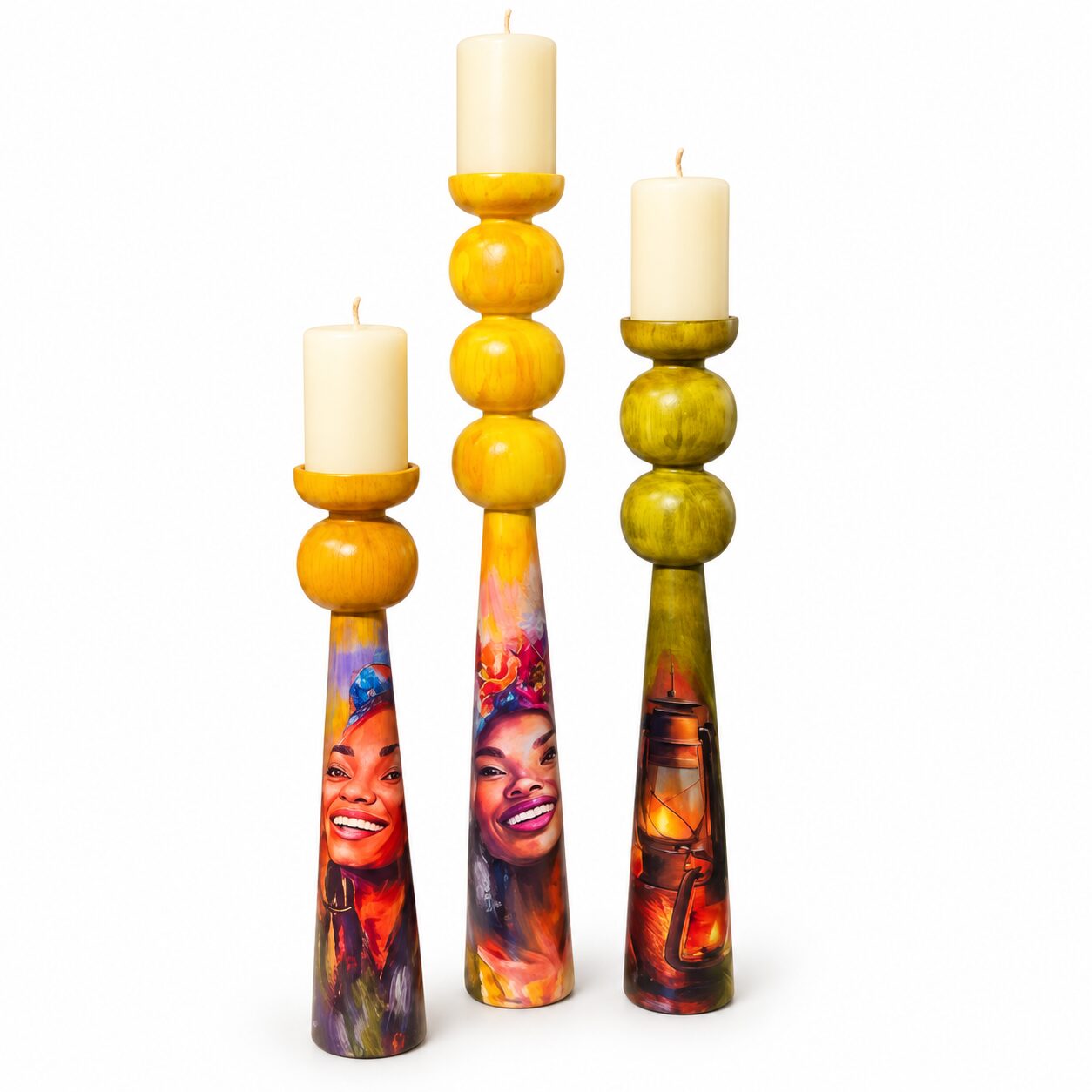
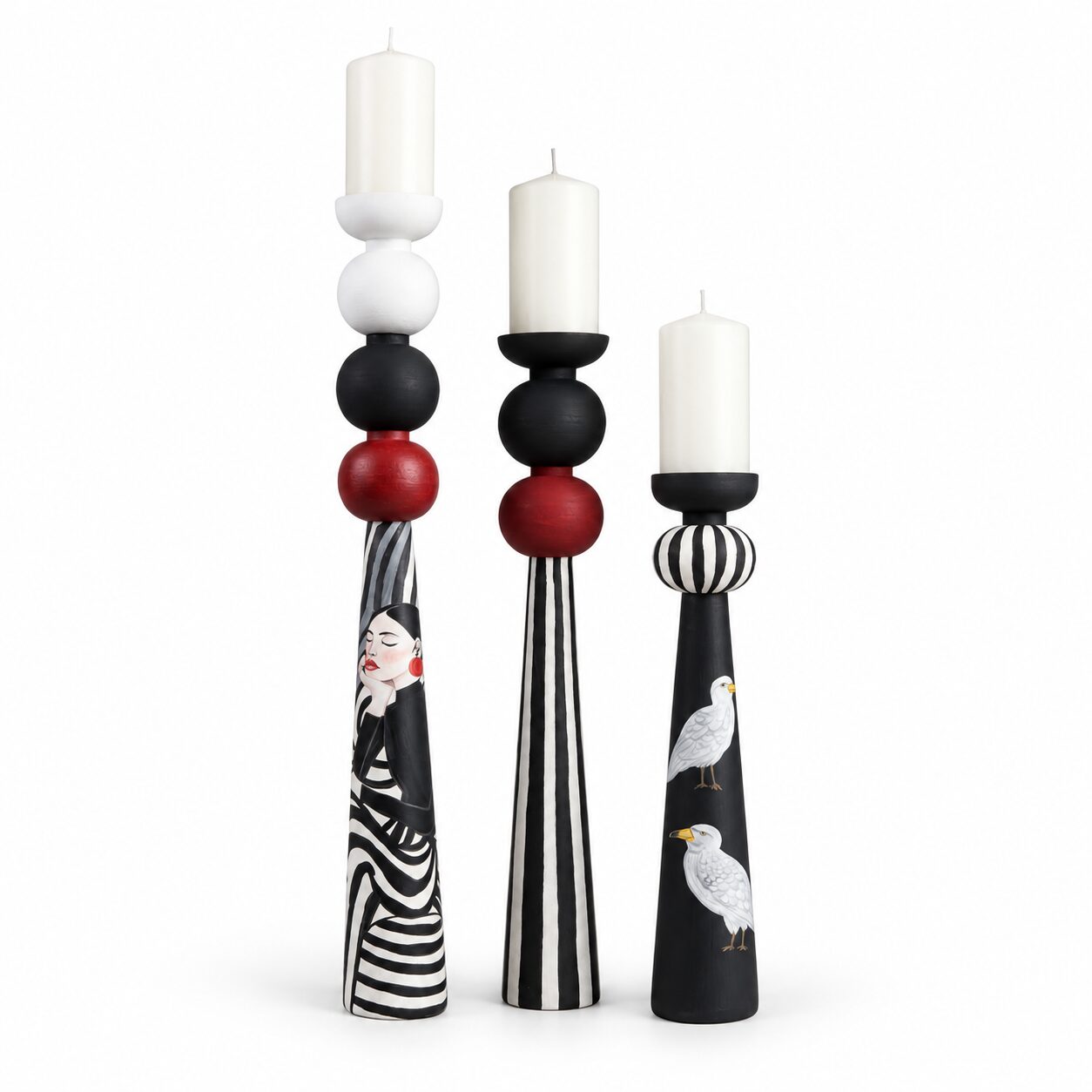
- Candles: concrete or wooden candle holders add a soft focal point, especially on living room shelves. Never leave candles burning unattended on shelves, and keep flames well clear of the shelf above.
- Art: lean a small framed print at the back of a shelf and layer an object in front of it for depth.
- Greenery: a trailing artificial stem draped over the edge softens the line of the shelf.
Kitchen Open Shelves: Beauty That Works Hard
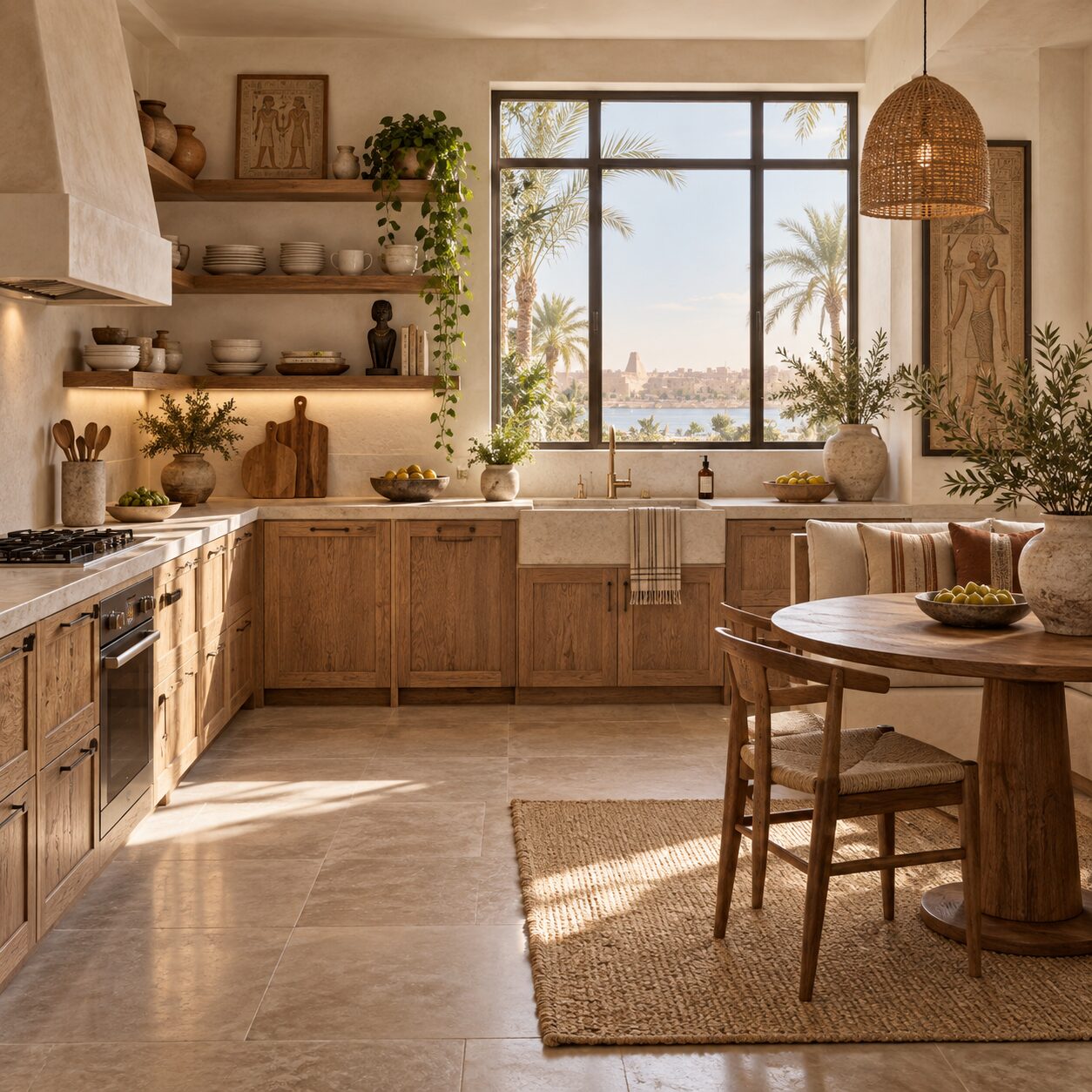
Kitchen shelves deserve a closer look, because they are the open shelves most Egyptian homes actually have, and they need to be practical first.
Display What You Use
The prettiest kitchen shelves are made of everyday things arranged with care. Stack plates by size, line up mugs with handles facing the same way, and store dry goods such as rice, lentils, sugar and coffee in matching jars. Repetition makes even ordinary items look deliberate.
Keep a Decorative Corner
Reserve one end of one shelf for something purely beautiful: a hand-painted vase, a small plant or a carved wooden bowl. That single decorative corner lifts the whole wall without getting in the way of cooking.
Think About Reach
Put the heaviest pottery on lower shelves, where it is easy and safe to lift. Lighter decorative pieces can live higher up. If children help in the kitchen, keep breakable ceramics out of their reach and give them a low shelf with their own unbreakable cups and bowls.
Clean Little and Often
Grease and dust combine quickly near a stove. A quick weekly wipe of each piece, and a wash of anything that sits close to the cooking area, keeps the display looking fresh rather than tired.
Styling by Room
Living Room
Focus on display: vases, art, books and a few personal mementos. Keep the palette consistent with cushions and rugs so the shelves feel part of the room.
Kitchen
Balance beauty with practicality. Keep the things you use often, such as mugs, bowls and jars, on lower shelves, and decorative pottery higher up. Keep shelves away from the hob, where steam and grease will settle on everything. Wipe pottery weekly, because kitchen shelves gather a sticky film faster than any other surface in the house.
Bedroom
Keep it calm and minimal. A vase, a small plant, a couple of books and a candle are enough. Avoid clutter near the bed, where it can make the room feel restless.
Bathroom
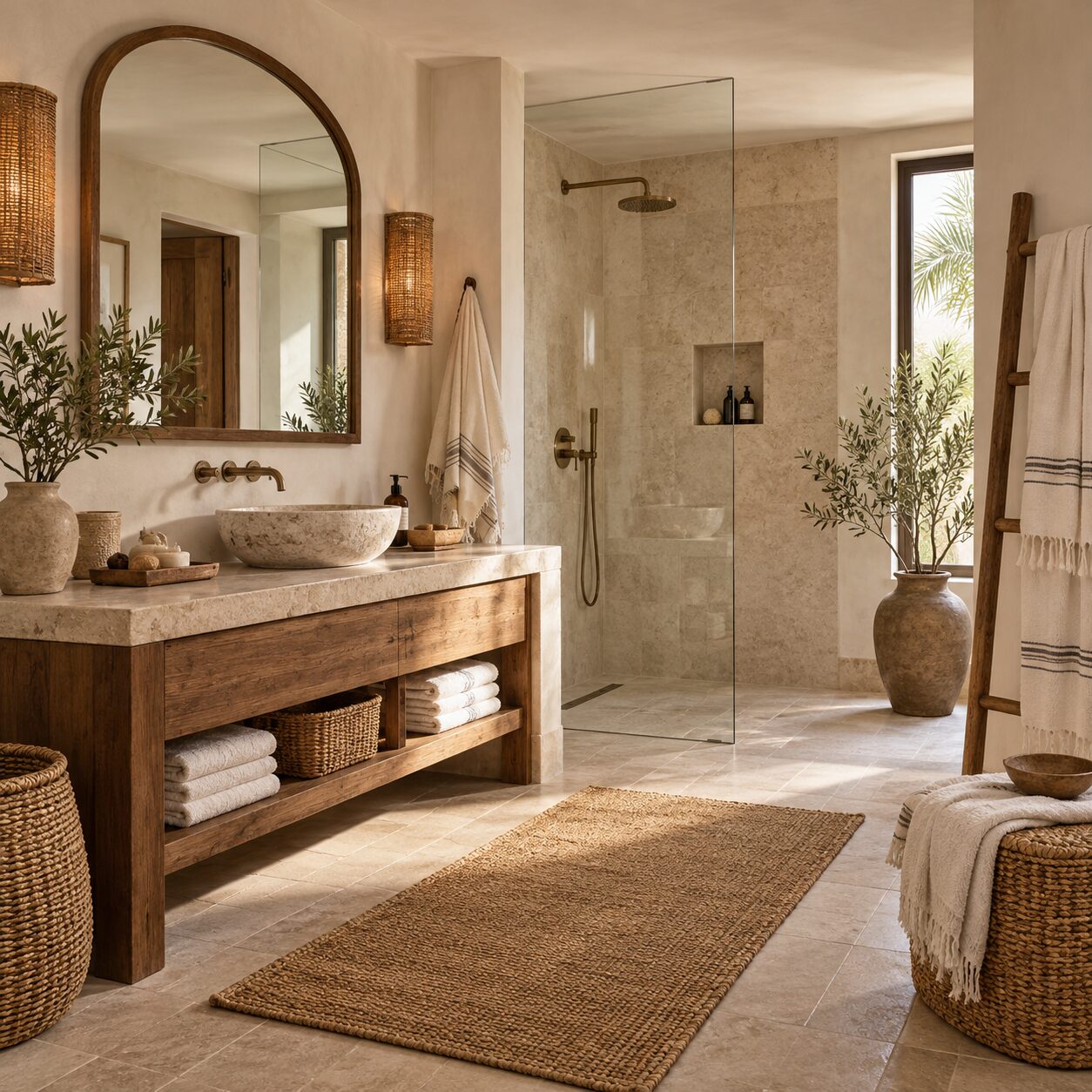
A narrow open shelf can hold rolled towels, a small vase with greenery and a pottery container for cotton pads. Choose pieces that cope well with humidity.
Seasonal Swaps
Open shelves are the easiest place in the house to refresh for a season or an occasion.
- Autumn: warm-toned stems, terracotta and rust pottery, and wooden accents.
- Winter: deeper glazes, candles and a little more layering.
- Ramadan: add a small lantern, crescent motifs or a gold accent among the pottery.
- Spring and summer: lighter glazes, white and blue ceramics and fresh greenery.
Change only a few pieces at a time and keep the core of the arrangement the same. Small changes are enough to make a shelf feel new.
Common Mistakes
- Too many objects. The most common problem. Edit hard.
- Everything in a straight line at the same height along the front edge.
- Lots of small items and nothing with presence. Every shelf needs at least one larger piece.
- No repetition, so the display looks random.
- Ignoring dust. Open shelves need weekly dusting, especially in Egyptian homes.
- Overloading floating shelves beyond what their brackets can hold. Heavy pottery is weightier than it looks.
Quick Checklist
- Empty everything and edit before styling
- Group objects in threes or fives
- Combine tall, medium and low in each group
- Zigzag large pieces across shelves
- Repeat two or three colours and materials
- Keep about a third of each shelf empty
- Add a touch of greenery and one statement piece
- Dust weekly
Shelves Worth Looking At
Beautiful open shelves tell a story about the people who live with them: the pottery they collected, the vase they love, the mugs they use every day. Edit thoughtfully, group with care and leave room to breathe, and your shelves will become one of the most personal corners of your home.
Discover handmade pottery vases, ceramic planters, mugs and decorative objects at coccarohome.com to begin your own shelf story.
Shop the Look