Wood is the quiet backbone of most homes. It is in the serving tray that carries tea to guests, the candle holders on the dining table, the plant stand by the window and the board where bread is sliced each morning. Yet for something we touch so often, most of us know surprisingly little about it.
Why does one tray feel silky and another slightly dry? Why does a board need oiling while a painted candle holder does not? And why do wooden pieces in Egypt sometimes crack in winter or swell in summer? This guide answers those questions so you can choose wooden accessories with confidence and keep them beautiful for years.
Hardwood, Softwood and Something In Between
Wood is usually divided into two broad groups. The names are a little misleading, because they describe the type of tree rather than how hard the wood feels.
- Hardwoods come from broad-leaved trees. They tend to be dense, durable and richly patterned. Acacia, elm, walnut, oak and mango fall into this group.
- Softwoods come from conifers such as pine. They are generally lighter in weight and colour and are often used for furniture frames and painted pieces.
- Bamboo is technically a grass, not a tree, but it is processed and used much like wood. It grows quickly, which is why it is often chosen for its lower environmental footprint.
Woods You Will Meet in Home Accessories
Acacia is a favourite for trays, bowls and serving pieces. It is dense, water-resistant compared with many woods, and shows warm tones with lively, contrasting grain. The Acacia Wood Serving Tray is a good example of how this wood brings warmth to a coffee table or a bathroom vanity set.
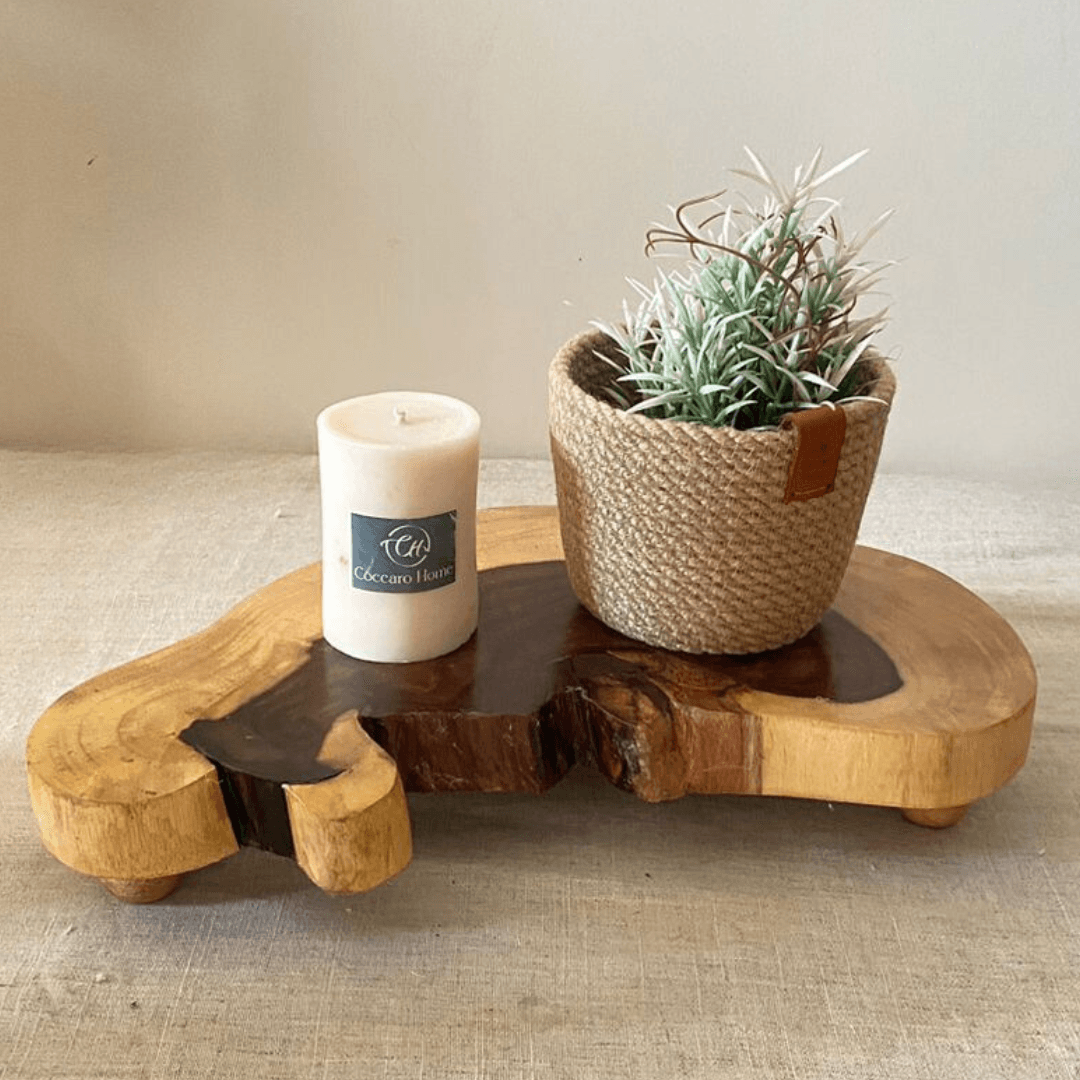
Elm has a bold, wavy grain and a rustic character. It is often cut into slices and discs. The Natural Tree Disc Tray, made from solid elm wood, shows the tree’s growth rings and natural edge, so every piece is unique.
Pine is light, pale and easy to work. It is common in stools, frames and painted decor, as seen in the Halfa and Pine Counter Stool.
Reading the Grain
Grain is the pattern created by the wood’s fibres and growth rings. Learning to read it tells you a lot about a piece.
- Straight grain: parallel lines running along the length. It looks calm and uniform and is generally stable.
- Wavy or interlocked grain: lines that ripple or swirl. It catches light beautifully and often appears in acacia.
- End grain: the cross-section of the tree, showing rings. Tree slices and some cutting boards show end grain, which is visually striking.
- Raw or live edge: the natural outer edge of the tree is left intact rather than cut straight. It gives a rustic, organic look, like the Heritage Wood Raw Edge Serving Board.
- Knots: darker spots where branches once grew. In rustic pieces, they add character rather than signal a flaw.
Natural Variation Is a Feature
Because wood comes from living trees, colour and grain vary even within the same product. Two trays from the same batch will rarely look identical. That variation is part of what makes wooden accessories feel personal, so expect it rather than worry about it.
Understanding Wood Finishes
The finish is what protects wood and changes how it looks and feels. It also decides how you should care for it.
Raw or Unfinished
Bare wood with no coating. It feels natural and dry, but it absorbs moisture and stains easily. It is best for purely decorative pieces kept away from food and water.
Oiled
Oil soaks into the wood rather than sitting on top. It deepens the colour, brings out the grain and leaves a soft, natural feel. Oiled finishes are common on serving boards and trays because they can be refreshed at home. They need re-oiling from time to time.
Waxed
Wax creates a soft sheen and a smooth, slightly silky surface. It offers light protection against moisture and is often combined with oil.
Lacquered or Varnished
A hard, clear layer sits on top of the wood. It gives strong protection against spills and makes cleaning easy, but if it gets deeply scratched it is harder to repair than oil.
Painted
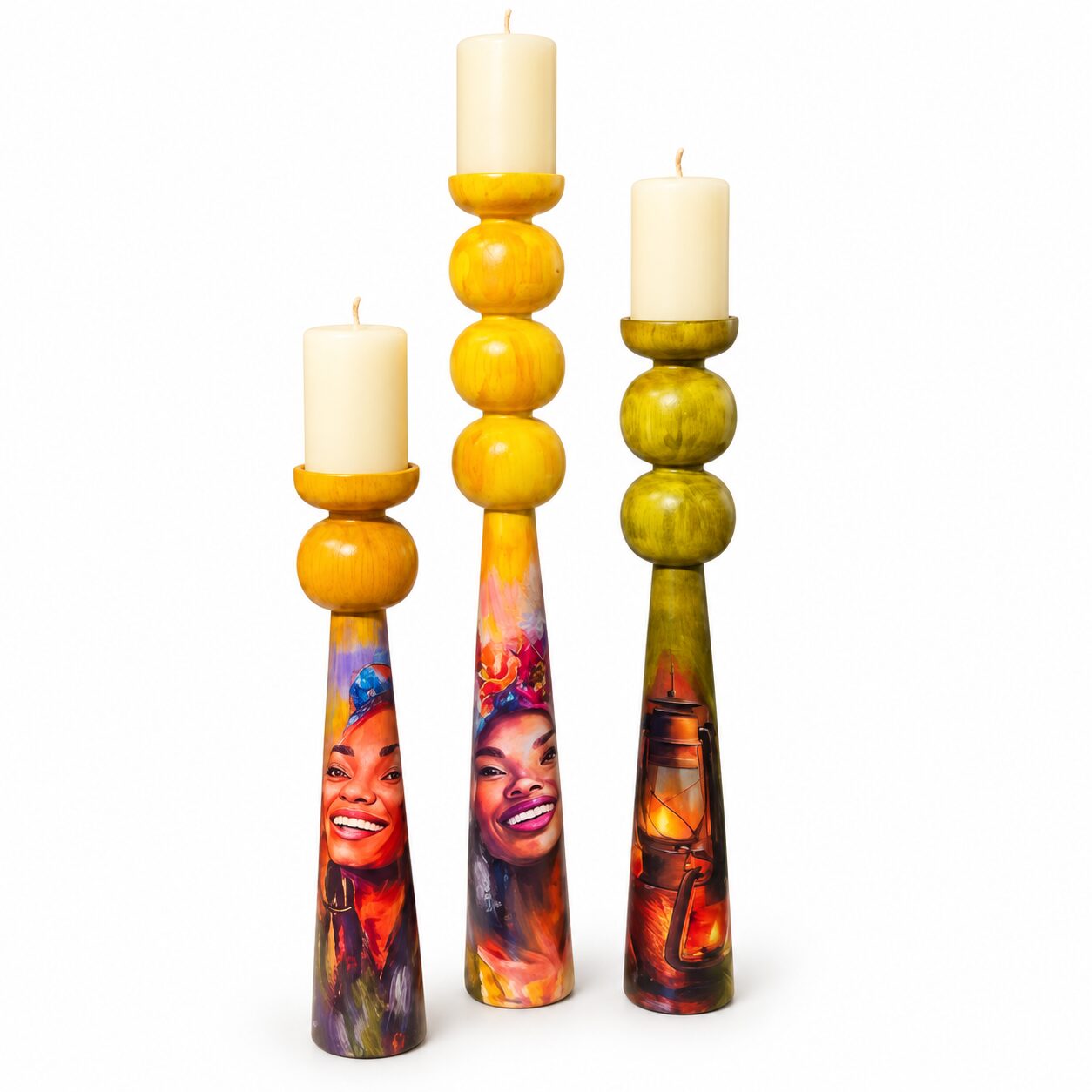
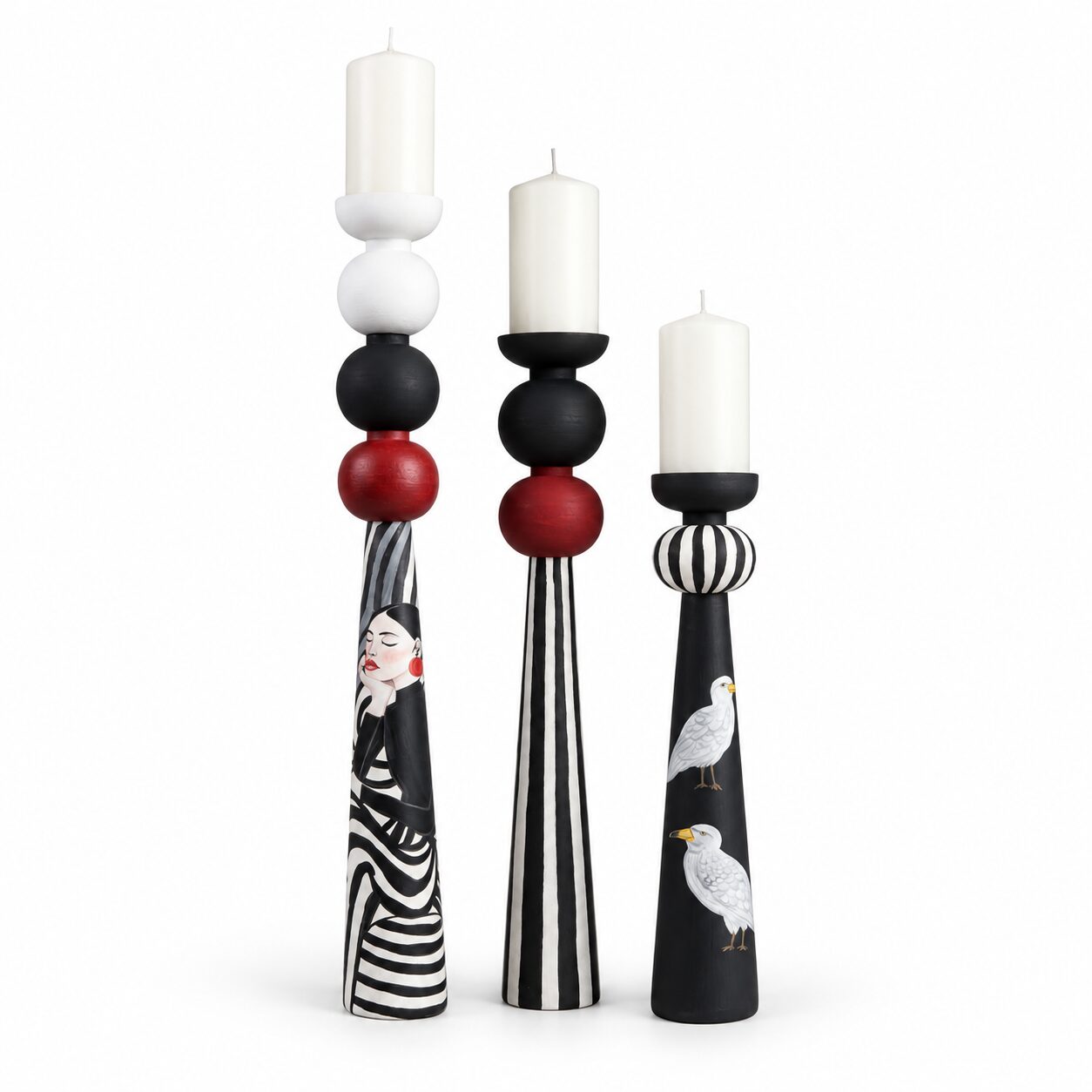
Paint completely covers or partly covers the grain to add colour and pattern. Hand-painted pieces like The Botanica Hand-Painted Wooden Candle Holders turn wood into a canvas for art. These are usually sealed to protect the paintwork.
Inlaid
Inlay sets other materials, such as mother of pearl, into carved recesses in the wood. It is a centuries-old craft closely tied to Egyptian and Levantine workshops. A Mother of Pearl Inlaid Wooden Side Table shows how wood and inlay can become an heirloom.
Matching the Finish to the Job
Choose wooden accessories with their use in mind.
- Serving and food contact: oiled or food-safe finishes on dense woods like acacia. Use boards for bread, cheese and fruit, and wipe them soon after use.
- Decorative trays and centrepieces: oiled, waxed or lacquered finishes, depending on how much they will be handled.
- Candle holders: painted or sealed wood. Always use the holder as designed, keep flames away from wood surfaces, and never leave a burning candle unattended.
- Bathroom pieces: sealed or lacquered finishes that resist splashes.
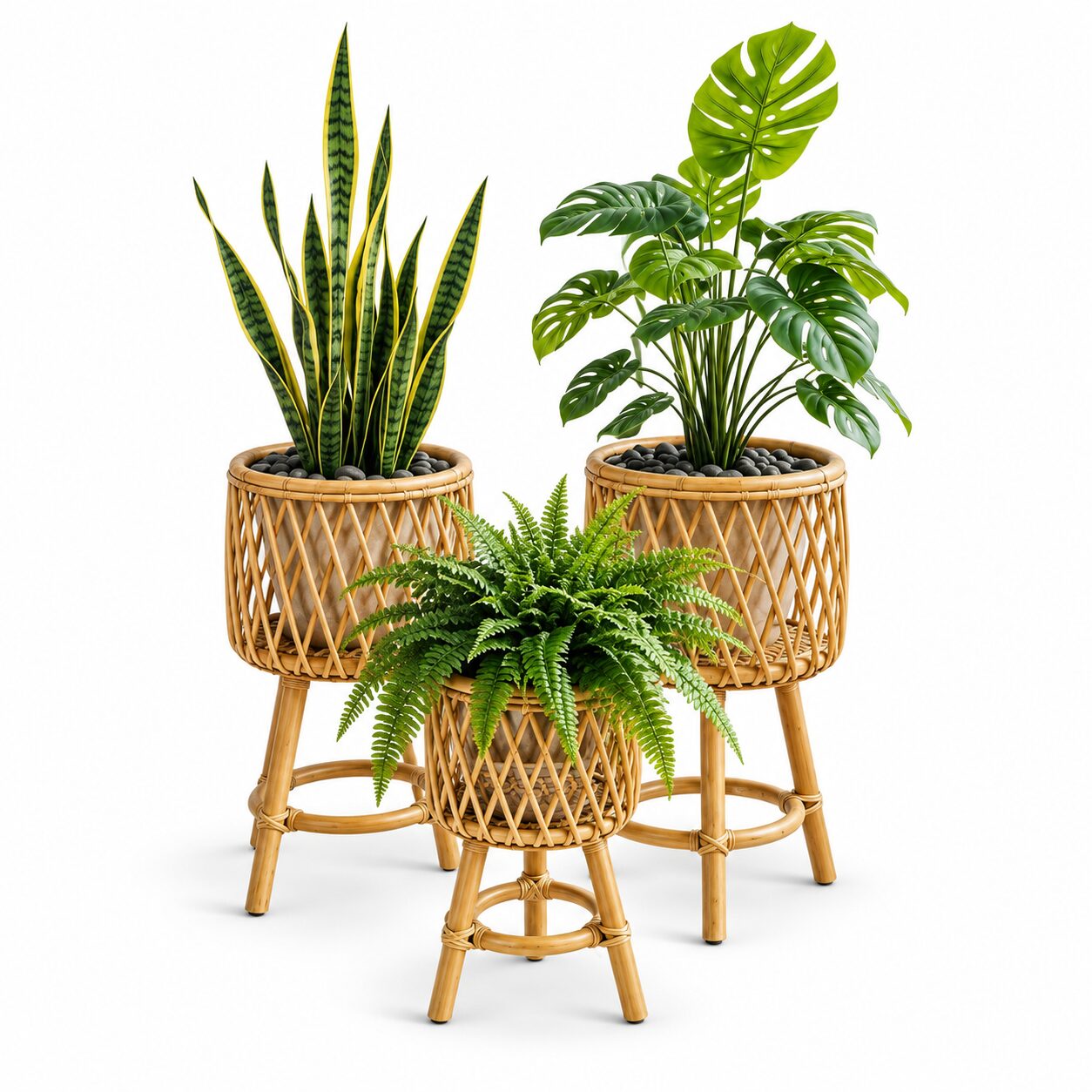
- Plant stands: sealed wood, plus a saucer under every pot to catch water.
Wood and the Egyptian Climate
Wood keeps reacting to its environment after it is made. It absorbs moisture when the air is humid and releases it when the air is dry. That is why climate matters.
- Dry inland air and air conditioning can dry wood out, making it look dull and, in extreme cases, causing small cracks.
- Coastal humidity in cities like Alexandria can make wood swell slightly.
- Strong sunlight through windows fades and dries wood over time.
The answer is not to avoid wood but to give it a stable spot and a little maintenance.
How to Care for Wooden Accessories
Everyday Care
- Wipe with a soft, slightly damp cloth, then dry immediately.
- Never soak wood or put it in a dishwasher.
- Use coasters and trivets to protect wooden surfaces from hot pots and wet glasses.
- Keep away from direct heat, including stoves, heaters and sunny windowsills.
Oiling Boards and Trays
- Clean and dry the piece thoroughly.
- Apply a thin layer of food-safe oil with a soft cloth, following the grain.
- Leave it to absorb for several hours or overnight.
- Wipe away any excess so the surface does not feel sticky.
Repeat when the wood starts to look pale or dry. In dry seasons, that might be every few weeks; otherwise, every few months is enough.
Dealing With Small Problems
- Water marks: often fade if the area is gently dried and re-oiled.
- Light scratches on oiled wood: rub lightly with very fine sandpaper along the grain, then re-oil.
- Odours on serving boards: clean promptly after use and dry fully in open air.
Styling Wood Around the Home
Wood is a natural team player, but a few tips help it shine.
- Mix wood tones on purpose. Pair light woods with dark ones for contrast, or keep tones within the same family for calm.
- Repeat wood at least twice in a room. A wooden tray and a wooden candle holder create a link.
- Pair wood with soft textures. Linen, cotton rope and jute make wood look warmer.
- Use trays to group objects. A wooden tray instantly tidies candles, coasters and a small vase on a coffee table.
What to Check Before You Buy
A few quick checks help you choose wooden accessories that will last.
- Weight: dense hardwoods like acacia feel solid for their size. A tray that feels surprisingly light may be a softer wood or a veneer.
- Smoothness: run your hand over the surface and edges. There should be no splinters or rough patches where you hold or serve.
- Joins: on boxes, stands and organizers, corners should meet cleanly with no gaps or wobble.
- Finish consistency: the finish should cover evenly, including the underside of trays and boards.
- Purpose: read the product name and description carefully to see whether a piece is intended for serving, decoration or storage, and use it accordingly.
Common Mistakes
- Putting wooden boards in the dishwasher. Heat and water will warp and crack them.
- Leaving wet glasses on raw wood. Rings can be permanent.
- Placing wood near heaters or in full sun. It dries and fades.
- Never oiling serving boards. Dry wood absorbs stains and odours.
- Expecting identical grain. Variation is the beauty of the material.
Quick Checklist
- Know whether a piece is oiled, waxed, lacquered, painted or inlaid
- Choose dense, oiled woods like acacia for serving
- Wipe and dry wood immediately; never soak it
- Oil boards and trays when they look pale
- Keep wood out of direct sun and away from heat
- Embrace grain and colour variation
Wood That Lasts
Good wooden accessories improve with age when they are understood and cared for. Know the wood, respect the finish, keep it away from extremes, and give it a little oil now and then. Your trays, boards and candle holders will reward you with a warmth that only grows richer over time.
Browse wooden trays, serving boards, candle holders, plant stands and inlaid pieces at coccarohome.com and find wood that will stay with your home for years.
Shop the Look