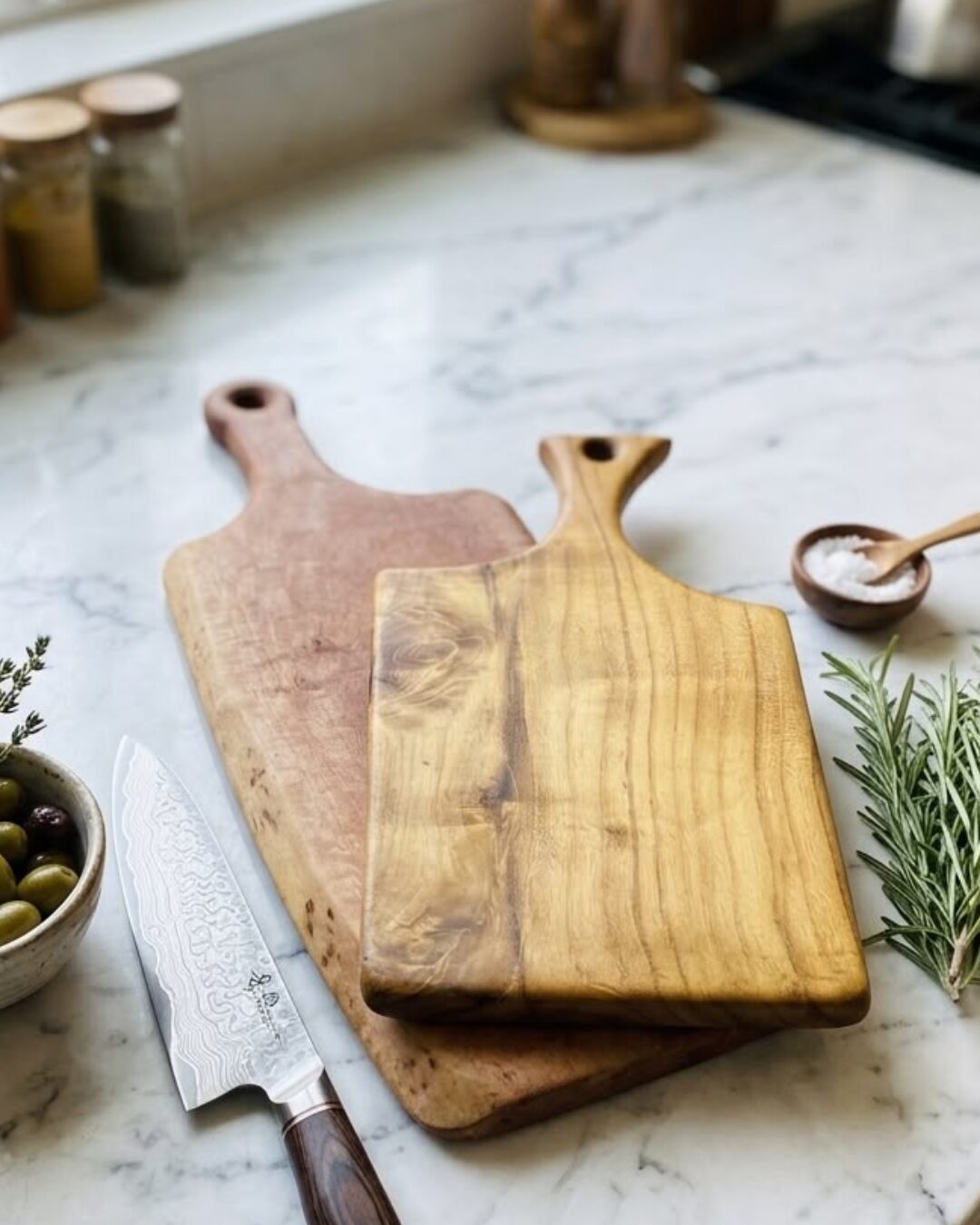
Put a wedge of cheese on a white plate and it is a snack. Put the same cheese on a slab of warm, grained wood with a few olives, some sliced cucumber and a torn piece of bread, and it becomes an invitation. Wooden serving boards have that effect. They make simple food look generous, they bring the warmth of a natural material to the table, and they move easily from the kitchen counter to the coffee table to the balcony.
They are also among the most practical things you can own. A good board works as a cutting surface, a serving platter, a trivet for a teapot and, when it is not in use, a decorative piece propped against the kitchen wall. With the right care, it will last for many years and only look better with age.
This guide covers how to choose a wooden serving board, how to style one for different occasions, and how to keep it in good condition through daily use and the dry Egyptian climate.
Why Wood Works So Well for Serving
Wood has qualities that other serving materials lack.
- Warmth: the colour and grain bring a natural softness that suits both traditional and modern tables.
- Versatility: a board serves cheese, bread, fruit, mezze, sweets and grilled food equally well.
- Gentle on knives: if you slice on the board, wood is kinder to blades than glass or stone.
- Character: every piece of wood is different. Knots, grain patterns and live edges make each board unique.
Wood also ages beautifully. Small marks and a deepening colour become part of its story, which is why well-loved boards are often passed down in families.
Choosing the Right Board
Types of Wood
Hardwoods make the best serving boards because they are dense, durable and resist moisture better than softwoods.
- Acacia: rich, varied grain with warm brown and honey tones. Durable and widely used for serving pieces.
- Olive wood: dense with a dramatic swirling grain, much loved around the Mediterranean.
- Elm: strong with an attractive open grain, often cut into rustic discs and slabs.
- Walnut and beech: classic choices with a smooth, even look.
Raw Edge or Clean Edge
A raw or live edge board keeps the natural outline of the tree along one or more sides. It feels organic and rustic, and every one is unique. The Heritage Wood Raw Edge Board is a good example: designed as both a cutting and a serving board, with a natural edge that makes even simple food look artisanal.
A clean edge board has straight, sanded sides. It feels more modern and minimal and suits contemporary kitchens.
Shape and Size
- Rectangular boards are the most versatile, good for both cutting and serving.
- Round boards and wooden discs suit cheese, cakes and centrepieces. The Natural Wooden Tree Disc Tray, made from solid elm, has the rings of the tree visible across its surface, which makes it a striking base for a cheese selection or a cake.
- Long, narrow boards are perfect for a row of appetisers down the centre of a table.
- Divided boards keep foods separate. The Natural Live Edge 3-Compartment Snack Platter combines a live edge with three hollows for nuts, dried fruit and sweets.
For a household of four, a board around 35 to 45 cm long covers most needs. For large gatherings, use two boards rather than one enormous one; they are easier to carry and to place on a crowded table.
Boards With Handles
A handle makes a board easy to lift and carry, and it gives a convenient way to hang it on the wall when not in use. Look for boards with a hole or a carved handle if you plan to display yours.
Styling a Serving Board
The Basic Formula
Every good serving board follows the same loose structure:
- Anchors: two or three larger items placed first, such as a wedge of cheese, a bowl of dip or a small loaf.
- Fillers: medium items arranged around the anchors, such as sliced vegetables, fruit, olives and crackers.
- Gaps: small items tucked into the remaining spaces, such as nuts, dates, herbs and edible flowers.
- Garnish: a sprig of mint or rosemary, a drizzle of honey or a scatter of seeds.
Place wet or oily foods in small bowls on the board so they do not soak into the wood.
An Egyptian Breakfast Board
Lay out white cheese, rumi cheese, olives, sliced tomatoes and cucumbers, a small bowl of ful, a dish of tahini with black honey, boiled eggs cut in half and torn baladi bread. Add a small bowl of salt and cumin. It is the familiar breakfast, presented in a way that makes the weekend feel special.
A Mezze Board for Guests
Arrange small bowls of hummus, baba ghanoush and tahini as anchors. Surround them with warm pita, pickled vegetables, falafel, stuffed vine leaves and slices of cucumber and carrot. Scatter fresh parsley over the top.
A Sweet Board for Tea Time
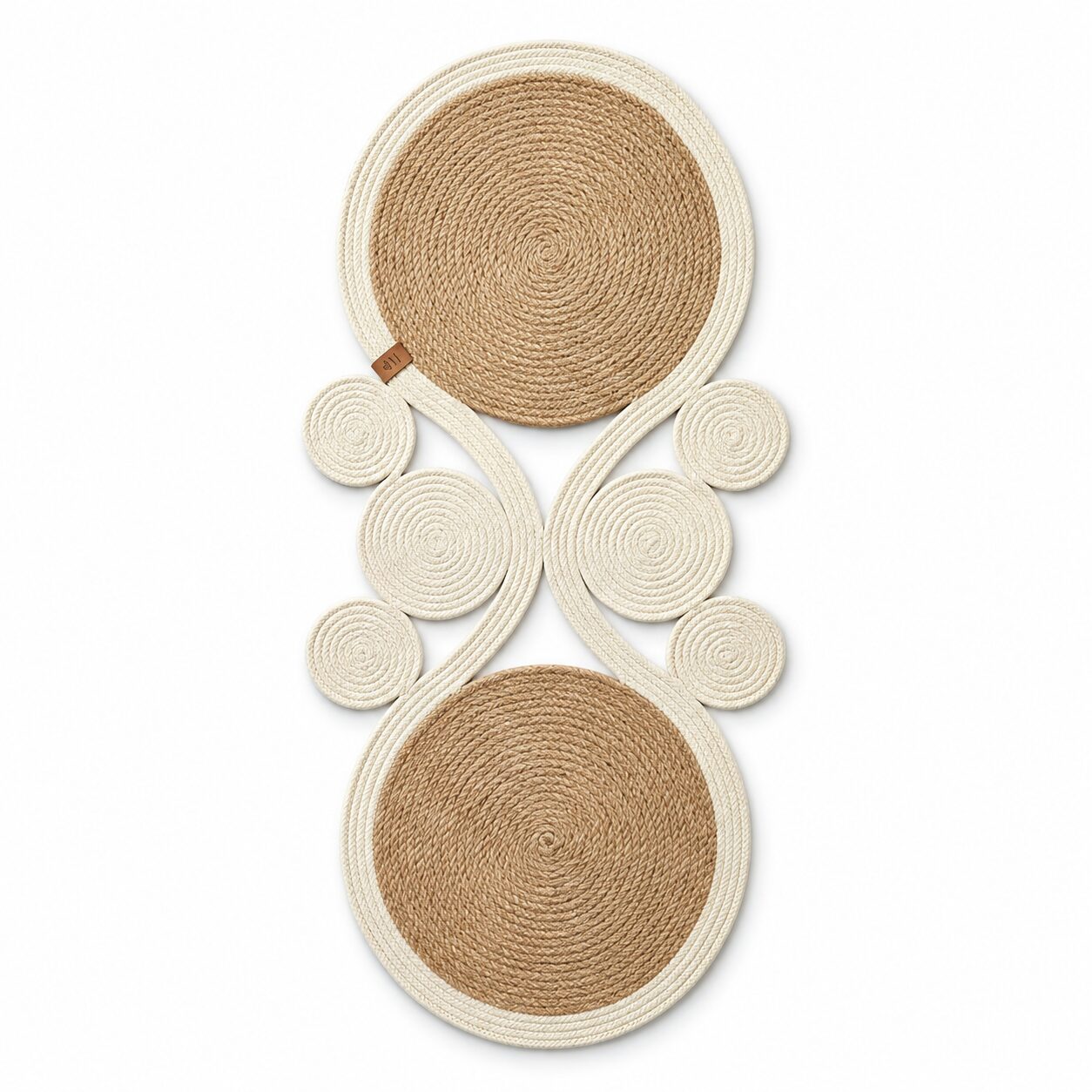
For an afternoon visit, combine dates, dried apricots, a few pieces of basbousa or kahk, nuts and fresh fruit. Serve with tea glasses on a tray beside it. Small woven bowls help keep loose items in place; the Woven Jute Snack Serving Bowls sit nicely on a large board.
A Fruit Board for Summer
Slice watermelon, melon, mango and grapes and arrange them by colour. Add mint leaves and a lemon cut in half. Serve chilled, straight from the fridge, on the balcony.
Boards Beyond Serving
Boards earn their keep even when no food is on them.
- On the kitchen counter: lean two or three boards of different sizes against the wall behind the stove or sink. They add warmth and look like a curated display.
- As a trivet: a thick board protects the table from a hot teapot or a dish straight from the oven.
- As a centrepiece base: set candles, a small vase or a bowl of fruit on a board in the centre of the dining table.
- On the wall: decorative boards make cheerful kitchen art. The Ceramic Decorative Cutting Board with Blue Tropical Leaf Design is made to be hung, bringing colour to a kitchen wall.
For a coordinated look, pair your boards with other wooden pieces, such as the Acacia Wood Serving Tray for carrying glasses and a set of Handcrafted Wooden Mandala Coasters for drinks.
Caring for Wooden Boards
Wood is natural and needs a little attention, especially in Egypt’s dry, dusty climate, where boards can dry out and crack if neglected.
Everyday Cleaning
- Scrape off food with a spatula or the back of a knife.
- Wash quickly with warm water and a little mild dish soap.
- Rinse and dry immediately with a clean towel.
- Stand the board on its edge to air-dry completely, so both sides get air.
What to Avoid
- Never soak a wooden board or leave it in the sink.
- Never put it in the dishwasher. The heat and water warp and crack wood.
- Avoid harsh chemicals and bleach, which dry out the fibres.
- Do not store it wet or flat on a damp surface.
Removing Smells and Stains
Sprinkle coarse salt over the board and scrub with half a lemon. Rinse, dry and stand on its edge. This is a traditional method that lifts stains from onion, garlic and fruit juice.
Oiling
Every few weeks, or when the wood looks pale and dry, rub a thin layer of food-safe mineral oil or a board conditioner into the surface with a soft cloth. Leave it to soak in overnight, then wipe away any excess. Oiling keeps the wood supple and helps it resist moisture and stains. Avoid cooking oils such as olive or sunflower oil, which can turn rancid over time.
Food Safety
If you cut raw meat or chicken, use a separate board kept only for that purpose, and clean it thoroughly straight after use. Keep your serving boards for bread, cheese, fruit and cooked foods.
Common Mistakes to Avoid
- Soaking or dishwashing. The fastest way to ruin a wooden board.
- Never oiling. Dry boards crack, especially in hot, dry weather.
- Placing wet or oily food directly on the wood. Use small bowls.
- One giant board for a big crowd. Two medium boards are easier to handle.
- Using cooking oil to condition wood. It can go rancid. Use food-safe mineral oil.
- Hiding boards in a cupboard. Display them; they are as decorative as they are useful.
Quick Checklist
- Choose a hardwood such as acacia, olive or elm
- Pick a shape for your main use: rectangular, round, long or divided
- Around 35 to 45 cm for a family of four
- Style with anchors, fillers, small items and garnish
- Put wet foods in small bowls on the board
- Wash quickly, dry immediately, stand on edge
- Oil every few weeks or when the wood looks dry
- Keep a separate board for raw meat
A Board That Grows With You
A good wooden serving board is one of those simple objects that becomes part of family life. It carries the Friday breakfast, the tea-time sweets, the summer fruit and the mezze for unexpected guests, and with every use it gains a little more character. Choose one you love, care for it well, and it will serve you for years.
Explore handcrafted wooden boards, platters and trays at coccarohome.com and bring the warmth of natural wood to your table.
Shop the Look