Nobody is born with a cupboard full of beautiful serving dishes. Look inside the kitchen of any experienced host, the aunt whose table always looks generous or the friend who can turn a plate of cheese into a spread, and you will find a collection built slowly. A tray from a wedding gift, a board picked up on holiday, a set of small bowls bought for one Ramadan and used every year since.
That is the right way to do it. Buying a full matching set of serveware at once is expensive, and it often leaves you with pieces you never use and gaps you did not anticipate. Building piece by piece lets you buy what you actually need, choose things you love, and end up with a collection that has character.
This guide maps out a sensible order for building a serveware collection, whether you are newly married, setting up your first apartment, or simply tired of serving guests from cooking pots.
Start by Watching How You Serve
Before buying anything, spend two or three weeks noticing how food actually moves in your home.
- Who do you feed most often? A couple, a family of five, or regular large gatherings?
- What do you serve most? Tea and sweets for visitors, family lunches, breakfast spreads, or dinner parties?
- Where do you serve it? The dining table, the coffee table, the balcony, or all three?
- What do you reach for and not have? That gap is your first purchase.
In many Egyptian homes, the honest answer is that tea for visitors and the weekly family lunch account for most serving. That tells you to prioritise a good tea tray and a few large dishes before anything delicate.
Stage One: The Foundation Pieces
These are the pieces you will use every week. Buy them first, buy them well, and choose neutral or classic designs that will match whatever you add later.
A Medium Serving Tray
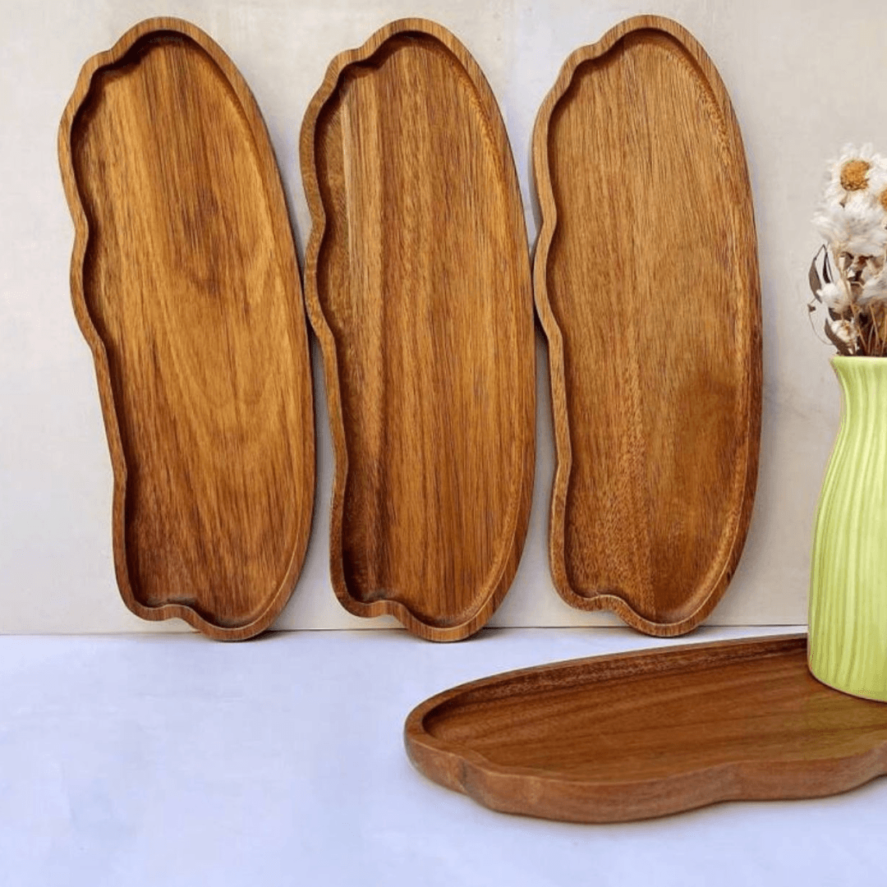
The most useful piece of serveware in an Egyptian home is a tray. It carries tea to the living room, brings sides to the table and holds dessert on the sideboard. A wooden tray of around 35 to 45 cm is the ideal first choice: large enough for six tea glasses and a sugar bowl, small enough to carry easily.
The Acacia Wood Serving Tray is a versatile starting point. Its natural wood works with any decor, and it moves easily from serving to display.
Small Bowls in a Set
A set of four to six small bowls covers olives, nuts, dips, pickles, sauces and sweets. Choose a set that stacks for easy storage. For dry snacks, a woven set like the Woven Jute Snack Serving Bowls adds texture; for wet foods, ceramic or stoneware is more practical.
A Simple Dining Set
A few matching plates and a serving bowl in one material give your collection a calm, consistent core. The Pottery Beige Marble Caramel 3-Piece Dining Set is a good example: handmade pottery in a warm neutral colour that pairs well with wood and woven pieces.
A Board
A wooden board for bread, cheese and cut fruit is endlessly useful. The Heritage Wood Raw Edge Board works as both a cutting board and a serving board, so it earns its place from the kitchen counter to the table.
Stage Two: Fill the Gaps
Once the foundation is in place, you will start noticing specific gaps. This is where a collection becomes yours.
A Divided Platter
Mezze, breakfast spreads and snack evenings all benefit from a divided platter that keeps foods separate. The Natural Live Edge 3-Compartment Snack Platter holds nuts, dried fruit and sweets in one handsome piece, perfect for the coffee table when friends drop in.
A Cutlery Caddy
When you start hosting family-style meals regularly, a cutlery caddy becomes essential. It keeps serving spoons upright and clean. The Wooden Cutlery Organizer with Decorative Tiles is practical and decorative enough to leave on the table between meals.
Tea and Coffee Accessories
If guests come often, a dedicated set for tea and coffee saves time and looks considered. The Wooden Tea and Coffee Accessories Set with Mosaic Design brings handcrafted detail to the moment of serving, and it keeps all the small pieces together.
A Food Cover
For bread, sweets and anything that waits on the table, a woven cover is a small but valuable addition.
Stage Three: The Statement Pieces
Every collection needs one or two pieces that make people stop and look. These are the trays you bring out for engagement visits, Eid mornings and important guests, and the ones that sit on display between uses.
A Handcrafted Decorative Tray
Hand-painted and inlaid trays are among the most beautiful objects in Egyptian and regional craft. A round tray of around 45 cm becomes a centrepiece on the coffee table, a serving piece for guests and, when not in use, a piece of art on a stand.
The Classic Quatrefoil Emerald Green Wooden Serving Tray is a strong example: a rich colour and a timeless pattern that look wonderful loaded with tea glasses and equally good standing empty on a shelf. If you prefer ceramic, the Handcrafted Arabesque Ceramic Serving Tray brings traditional pattern to the table in a different material.
A Platter With a Cloche
For sweets, a cake or a display of dates, a platter with a clear cover adds drama and keeps the food fresh. The Aura Inlay Serving Platter with Clear Acrylic Cloche makes even a plate of homemade biscuits look like a pastry shop window.
Stage Four: Occasion Pieces
Last come the pieces you use a few times a year. Buy them when you know you need them, not before.
- Ramadan: dates bowls, a large tray for iftar juices, a cutlery holder with a crescent motif.
- Eid: a large platter for kahk and biscuits, extra tea glasses.
- Birthdays and celebrations: a cake stand or cloche platter.
- Summer gatherings: light woven trays and bowls for the balcony.
These pieces can be more playful and seasonal, because they do not have to work every day.
How to Mix Pieces Into a Collection
A collection built over years will never match perfectly, and it should not. The trick is to make different pieces feel related.
Choose a Common Thread
Pick one or two elements that tie everything together:
- A material, such as natural wood throughout.
- A colour, such as greens and creams.
- A style, such as handmade and rustic.
Balance Pattern and Plain
For every patterned statement piece, have two or three plain ones. A hand-painted tray looks best surrounded by simple white bowls and wooden boards, not by three other patterned trays.
Vary Heights on the Table
A collection allows you to build height into a spread: a cloche platter at the back, a tray in the middle, small bowls in front. That variety makes even a simple meal look abundant.
Storage and Care
Good serveware lasts decades if it is stored and cared for properly.
- Store trays upright in a narrow cupboard or between dividers, like books. They take less space and are easier to reach.
- Never soak wooden pieces. Wash quickly with mild soap, dry immediately and stand them on edge to air.
- Oil wooden boards occasionally with food-safe oil to stop them drying and cracking.
- Hand wash hand-painted and inlaid trays. Wipe with a soft damp cloth and dry at once.
- Stack ceramic bowls with a cloth or paper between them to protect the glaze.
- Keep woven pieces dry, and shake rather than wash them where possible.
Serveware as a Gift
Serveware also makes one of the most thoughtful gifts for newlyweds, a family moving into a new home, or a host who has welcomed you many times. A single handcrafted tray or a good wooden board is useful from the first week and becomes part of the household’s own collection. When giving serveware, choose classic shapes and natural materials that will suit any kitchen, and add something to fill it, such as a box of dates or homemade sweets.
Common Mistakes to Avoid
- Buying a huge matching set at once. You will pay for pieces you never use.
- Starting with occasion pieces. Buy everyday foundations first.
- All statement, no basics. Too many decorative pieces compete with each other and with the food.
- Ignoring storage space. Measure your cupboards before buying large trays.
- Choosing only what is fashionable. Classic shapes and natural materials outlast trends.
- Hiding beautiful pieces away. Display your best trays when they are not in use.
Quick Checklist
- Observe how and what you serve for a few weeks
- Stage one: a medium tray, small bowls, a simple dining set, a board
- Stage two: a divided platter, a cutlery caddy, tea accessories, a food cover
- Stage three: one or two handcrafted statement trays and a cloche platter
- Stage four: seasonal pieces, bought when needed
- Tie it together with a common material, colour or style
- Store upright, hand wash wood and painted pieces, oil boards occasionally
A Collection With a Story
The best serveware collections are not bought; they are gathered. Each piece arrives for a reason, carries memories of the meals it served, and earns its place by being used. Start with what you need this month, add a beautiful piece when the occasion calls for it, and in a few years you will have a collection that feels entirely your own.
Browse handcrafted trays, boards, platters and serving sets at coccarohome.com and add the next piece to your collection.
Shop the Look
- Classic Quatrefoil Emerald Green Wooden Serving Tray — EGP 3,700 — A statement 45 cm tray that serves and displays beautifully.
- Acacia Wood Serving Tray — EGP 594 — A versatile first tray for everyday serving.
- Woven Jute Snack Serving Bowls — EGP 1,134 — A set of five small bowls for dry snacks.
- Pottery Beige Marble Caramel 3-Piece Dining Set — EGP 1,296 — A warm, neutral core for your collection.
- Heritage Wood Raw Edge Board — EGP 1,000 — Cutting board and serving board in one.
- Natural Live Edge 3-Compartment Snack Platter — EGP 3,400 — Keeps nuts, fruit and sweets neatly separated.
- Wooden Tea and Coffee Accessories Set with Mosaic Design — EGP 2,052 — A handcrafted set for serving guests.
- Handcrafted Arabesque Ceramic Serving Tray — EGP 3,700 — Traditional pattern in ceramic.
- Aura Inlay Serving Platter with Clear Acrylic Cloche — EGP 3,400 — Turns homemade sweets into a display.
- Wooden Cutlery Organizer with Decorative Tiles — EGP 1,836 — Keeps serving spoons upright and tidy.