Laundry never ends. In a family home in Egypt, the washing machine may run once or twice every day, and the cycle of washing, drying, ironing and putting away is one of the biggest invisible jobs in the house. When the space where it happens is chaotic, the job feels twice as heavy.
Very few Egyptian apartments have a dedicated laundry room. More often, the washing machine lives in the kitchen, in a bathroom, or out on the service balcony next to the drying lines. That is exactly why organization matters: a small, shared space needs a clear system even more than a large one. This guide focuses on the methods that genuinely hold up in daily family life, not just in photographs.
Start With the Flow, Not the Baskets
Before buying anything, follow a load of laundry through your home. Where do dirty clothes collect? Where are they sorted? Where do they dry? Where are they ironed? Where do they wait before being put away?
Most homes have five stages:
- Collect: dirty clothes gathered from bedrooms and bathrooms.
- Sort: separated by colour, fabric or family member.
- Wash and dry: machine, drying rack, balcony lines or dryer.
- Iron or steam: the stage where piles tend to grow.
- Return: folded clothes carried back to each room.
Problems usually appear where one stage blocks the next. If clean clothes sit on a chair waiting to be ironed for days, the problem is the ironing stage, not the washing. Organize around the bottleneck first.
Stage One: Collecting Without Clutter
Clothes thrown on floors and chairs are the start of most laundry chaos. Give every bedroom and the main bathroom its own hamper, so dirty clothes have an obvious place to go.
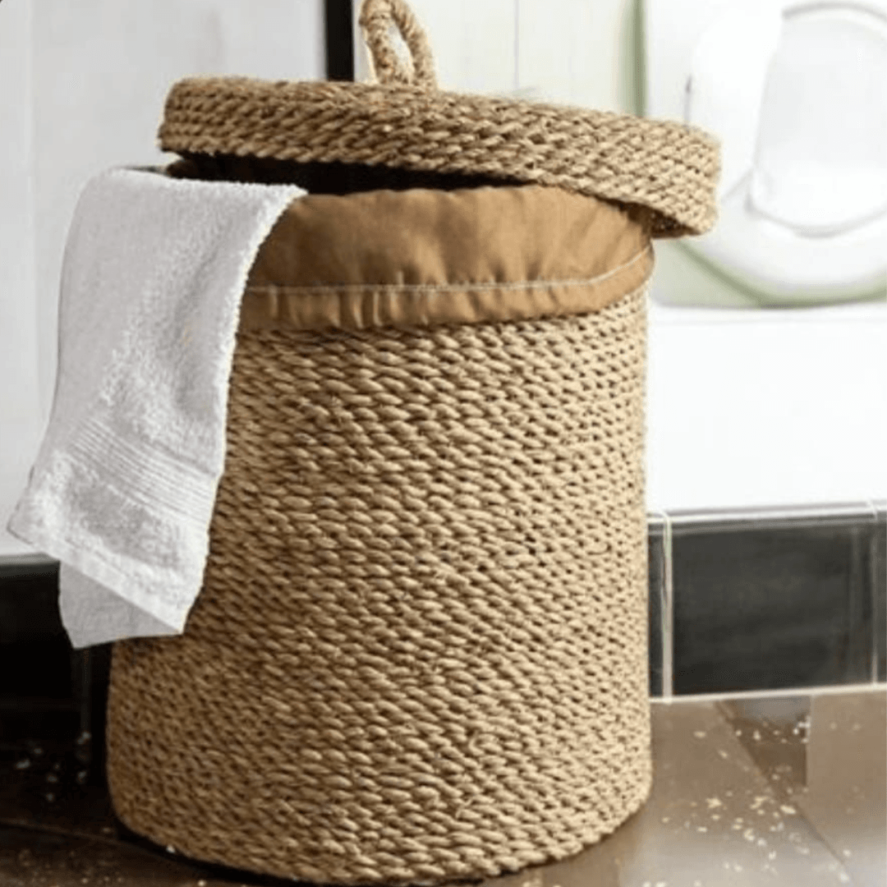
A lidded hamper keeps the room tidy and hides the contents. The Handmade Halfa Laundry Basket with Cover is woven from natural golden grass and looks like a piece of decor rather than a laundry bin, so it can sit comfortably in a bedroom corner. In a bathroom or a child’s room, the Halfa Storage Sack Laundry Basket with Lid is a slimmer option.
Hamper Tips
- Choose a size that holds roughly one machine load, so a full hamper means “time to wash”.
- Pick hampers with handles so they can be carried straight to the machine.
- Lids keep out dust and prying pets.
- Let natural-fibre hampers breathe; avoid putting very wet towels inside.
Stage Two: Sorting Made Simple
Sorting is where many systems collapse. The trick is to sort as you collect, not on laundry day.
The Multi-Basket Method
In the laundry area, keep three or four baskets labelled by category:
- Whites and lights
- Darks
- Colours
- Delicates or hand-wash
When a basket is full, that load goes into the machine. No more sorting a mountain of clothes on the floor.
Large woven baskets work well for this. The Large Woven Rope Laundry Hamper with Handles holds a full load and is easy to carry. If space is tight, use two hampers and a smaller basket for delicates.
Sorting by Person
Some large families prefer to sort by person rather than colour, especially when children are old enough to put away their own clothes. Each person gets a basket for clean, folded laundry, which goes straight to their room. This one change can save a surprising amount of time each week.
Stage Three: Making the Most of a Small Space
Kitchen, bathroom or balcony, the space around the machine is usually tight. Vertical and hidden storage are your best friends.
Use the Walls and Doors
Wall-mounted and over-the-door storage keeps supplies within reach without eating floor space. The 3-Tier Wall Hanging Basket in Woven Cotton Rope can hang on the back of a door or on a wall to hold pegs, stain removers, sponges and small cloths. A small crochet hanging basket is useful for odds and ends like socks that lost their pair.
Lidded Boxes for Supplies
Detergents, softeners and refills look messy on open shelves. Store them in lidded baskets on a shelf above the machine, with the bottles you use every day kept in front. The Jute Storage Basket with Wooden Lid keeps supplies hidden and adds a natural, tidy look to an open shelf.
Safety comes first with cleaning products: keep them high, closed and out of children’s reach, and never decant them into containers that could be mistaken for food or drink.
Make Use of the Machine Top
If your washing machine is front-loading, its top is valuable flat space. A sturdy tray or a shallow basket turns it into a folding or staging spot. Clear it before running the machine, as vibration can move things.
Stage Four: An Ironing Station That Gets Used
The ironing pile is where laundry systems most often break down. The fix is to make ironing easy to start.
- Keep the board set up if you have space, or store it right where you iron.
- Keep the iron and water in one basket so setup takes seconds.
- Iron a little every day rather than facing a mountain on the weekend.
- Hang clothes immediately after ironing so they do not crease again.
The right tool also helps. A reliable steam iron like the Philips 2000 Series Steam Iron (2000W) handles everyday shirts and school uniforms. For galabeyas, abayas, curtains and delicate fabrics, many families find a garment steamer quicker; the Kenwood GSP65 Garment Steamer with 2L Water Tank lets you steam clothes as they hang.
General safety: always unplug irons and steamers after use, let them cool fully before storing, and keep cords away from small hands.
Stage Five: Getting Clothes Back Where They Belong
Folded laundry left on the sofa is a familiar sight in many homes. The last stage needs as much attention as the first.
- One basket per person for clean clothes, carried to each room.
- Fold straight from the line or dryer, while clothes are still smooth.
- Set a rule: clean baskets are emptied the same day.
- Teach children to put away their own basket from an early age.
A lightweight handled basket makes this easy. The Woven Rope Basket for Blankets and Laundry is light enough for children to carry and attractive enough to sit in a bedroom while it waits.
A Weekly Rhythm for Busy Families
Systems work best with a simple routine attached. A rhythm many families find realistic:
- Daily: one load washed, hung and brought in; ten minutes of ironing; clean baskets returned to rooms.
- Twice a week: towels and kitchen cloths washed on their own, at a higher temperature if the care label allows.
- Weekly: bed linen changed and washed, ideally on the same day each week so it becomes automatic.
- Monthly: wipe the machine seal and detergent drawer, empty, shake out and air the hampers, and clear lint from filters.
Before Ramadan and Eid, when guests arrive and table linens, prayer clothes and guest towels all need washing, plan a few extra loads in the week before rather than the night before.
Storing Linens and Seasonal Clothes
The laundry system includes what happens after: clean linens and off-season clothes need a home too. Keep each bed’s set of sheets folded together inside one of its own pillowcases, so a full set can be grabbed in one go. Store winter blankets and heavy clothes in lidded baskets or boxes during the summer, adding a sachet of dried lavender to keep them fresh. Label baskets clearly so anyone in the family can find what they need.
Drying in Egyptian Conditions
Sun and heat dry laundry quickly for much of the year, but dust is the enemy. A few habits help:
- Shake clothes well before hanging to reduce creasing.
- Dry dark clothes inside out to limit fading in strong sun.
- Bring laundry in promptly, especially on windy or dusty days.
- In winter or during the khamaseen season, use an indoor drying rack near a window.
- Keep pegs in a small basket or hanging pouch by the line.
Making the Space Pleasant
Laundry is done more willingly in a space that feels good. Even a corner of a balcony or bathroom can be made pleasant with small touches: matching natural baskets instead of mismatched plastic tubs, a small artificial plant on a shelf, good light for spotting stains, and a hook for an apron or a cloth. When the laundry area looks tidy and calm, every family member is more likely to put things back where they belong.
Common Mistakes to Avoid
- One giant hamper for everything. Sorting becomes a dreaded weekly job.
- Open shelves of mismatched bottles. Lidded baskets look calmer and keep products safer.
- No home for the iron. If setup takes ten minutes, ironing gets postponed.
- Clean clothes with no return system. The pile simply moves to the sofa.
- Ignoring vertical space. Doors and walls hold more than you think.
- Wet towels in closed hampers. They create smells; dry them first.
Quick Checklist
- Laundry flow mapped from collection to return
- A lidded hamper in each bedroom and bathroom
- Sorting baskets in the laundry area
- Wall or door storage for small supplies
- Lidded baskets for detergents, kept out of children’s reach
- Iron or steamer stored ready to use
- One clean-clothes basket per person
- A drying routine that accounts for dust
Lighter Laundry Days
Organized laundry is not about a perfect room; it is about a system that keeps clothes moving from one stage to the next without piling up. With the right hampers, smart storage and an easy ironing setup, laundry becomes just another small daily task rather than a mountain.
Find handwoven hampers, storage baskets, irons and steamers at coccarohome.com and build a laundry system that works for your family.
Shop the Look