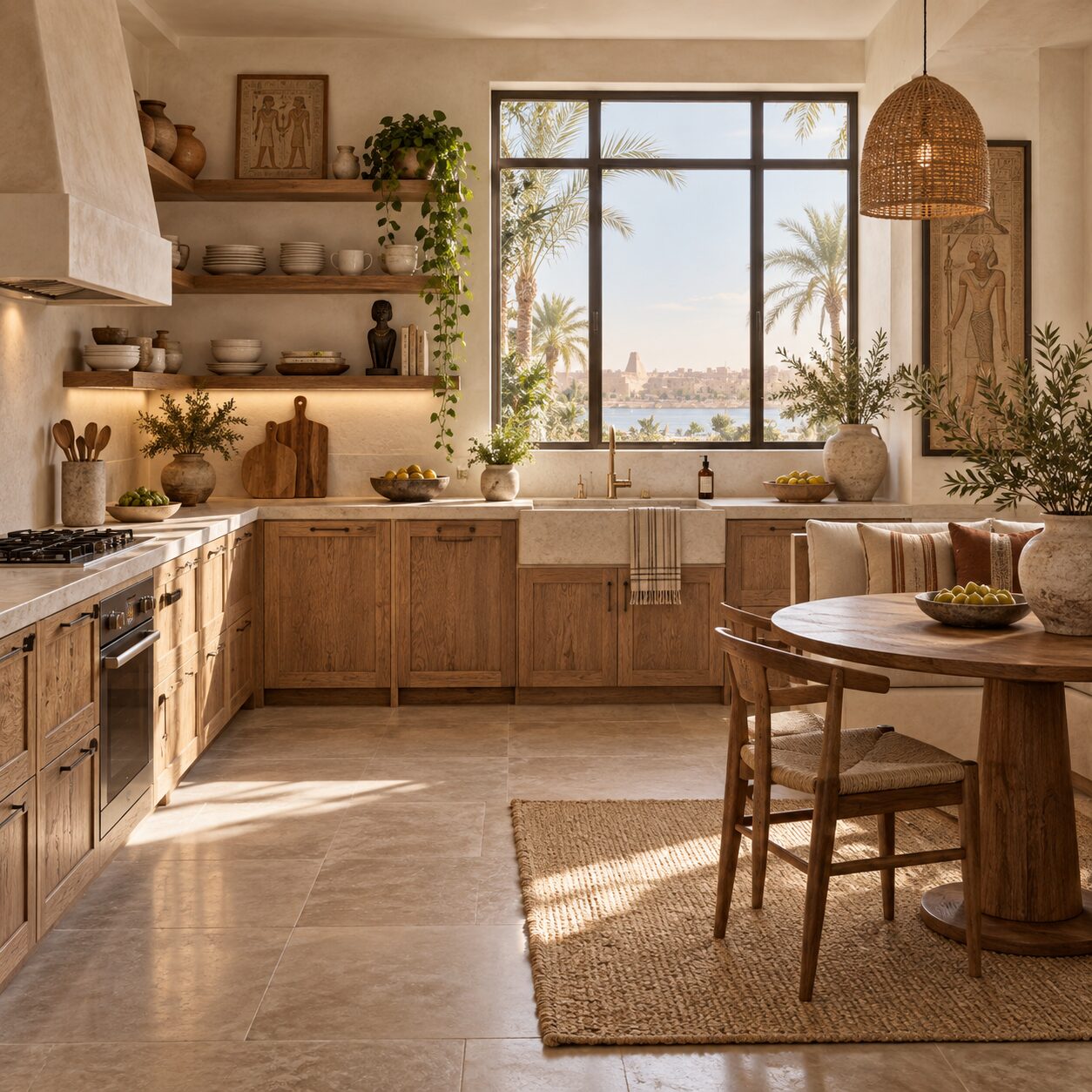
Picture a living room on a hot August afternoon in Cairo. The curtains are half drawn, the floor is cool underfoot, and there is almost nothing on the coffee table except a single wooden tray and a small vase. Nothing shouts. The room feels like a deep breath. That feeling is the heart of Japandi, and it suits Egyptian homes far better than most people expect.
Japandi is the meeting point of two design traditions: Japanese minimalism, with its respect for craft and empty space, and Scandinavian comfort, with its soft textiles and warm, practical rooms. The result is calm without being cold, simple without being bare. This guide shows how to adapt it to Egyptian apartments, family life and climate, using natural materials that our own artisans have worked with for generations.
What Japandi Really Means
Before buying anything, it helps to understand the principles. Japandi is less a shopping list and more a way of editing.
- Fewer, better objects. Every item should be useful, beautiful or both. Decoration for its own sake is kept to a minimum.
- Natural materials. Wood, clay, linen, cotton, jute and woven grasses. Plastic and high gloss are avoided.
- A muted palette. Warm whites, sand, oatmeal, soft grey, charcoal and the many tones of wood.
- Visible craft. A slightly uneven glaze or a hand-tied knot is valued, not hidden.
- Low, grounded furniture. Pieces sit close to the floor and have clean lines.
- Breathing room. Empty space on a shelf or wall is part of the design, not a gap waiting to be filled.
The Japanese side brings restraint and a love of imperfection. The Scandinavian side brings hygge: blankets, soft light and the sense that a room is meant to be lived in. Together they make a home that is both serene and welcoming, which matters in Egypt, where the living room is rarely empty for long.
Why It Works So Well in Egypt
At first glance, a style born in Kyoto and Copenhagen might seem far from Egyptian life. In practice, the fit is natural.
Our climate rewards light colours and uncluttered surfaces. A pale, airy room simply feels cooler in summer, and fewer objects mean less dust to fight, a daily battle in most Egyptian cities. Natural fibres like cotton and jute breathe better than synthetics, too.
There is also a cultural thread. Egypt has a long tradition of handmade natural materials: halfa grass weaving, pottery, carved wood and hand-woven cotton. Japandi celebrates exactly these crafts. Instead of importing a look, you can build it from pieces made by local hands, which gives the style an Egyptian accent that no catalogue photo can copy.
Build a Calm Colour Palette
Colour is the foundation. Get it right and even an ordinary apartment begins to feel considered.
The Base
Start with walls in warm white, cream or very soft greige. Avoid stark, blue-toned white; it can feel clinical under strong Egyptian sunlight. If you rent and cannot paint, let your textiles and rug carry the warmth instead.
The Middle Tones
Add sand, oatmeal, taupe and light grey through cushions, throws and rugs. A Simple Grey Cushion on a cream sofa is a perfect Japandi move: quiet, soft and grounded.
The Anchors
Finish with a few darker notes: charcoal, black or deep walnut wood. These keep the room from looking washed out. A black picture frame, a dark wooden bowl or a charcoal cushion is enough.
A useful rule is roughly 60 percent light base, 30 percent mid tones and 10 percent dark accents. Green appears only through plants.
Let Wood Lead the Room
If Japandi had a signature material, it would be wood. It brings warmth to the cool palette and connects the room to nature.
Choose wood with visible grain and a matte or oiled finish rather than heavy varnish. Mixing two wood tones is fine, such as light oak-style furniture with a darker accent piece, but avoid four or five competing shades.
Small wooden pieces do a lot of work. The Natural Wood Slice Tray shows the rings of the tree it came from, which makes it a perfect centrepiece for a low coffee table. Place a candle and one small vase on it and stop there.
In the kitchen or dining area, a Raw Edge Wooden Serving Board can live on the counter as both a tool and a quiet sculpture. When guests come for dinner, it becomes a board for cheese, dates or bread.
If you are investing in a statement piece, a chair with a solid wood frame and a woven seat embodies the style completely. The Nordic Lounge Chair, with its woven rope seat and backrest, is exactly the kind of honest, crafted furniture Japandi is built on.
Layer Natural Textures
A room with only smooth surfaces feels flat, especially in a muted palette. Texture is what makes Japandi feel rich rather than empty.
Aim to combine at least four of these in each room:
- Knitted cotton for softness
- Jute and halfa for an earthy, woven feel
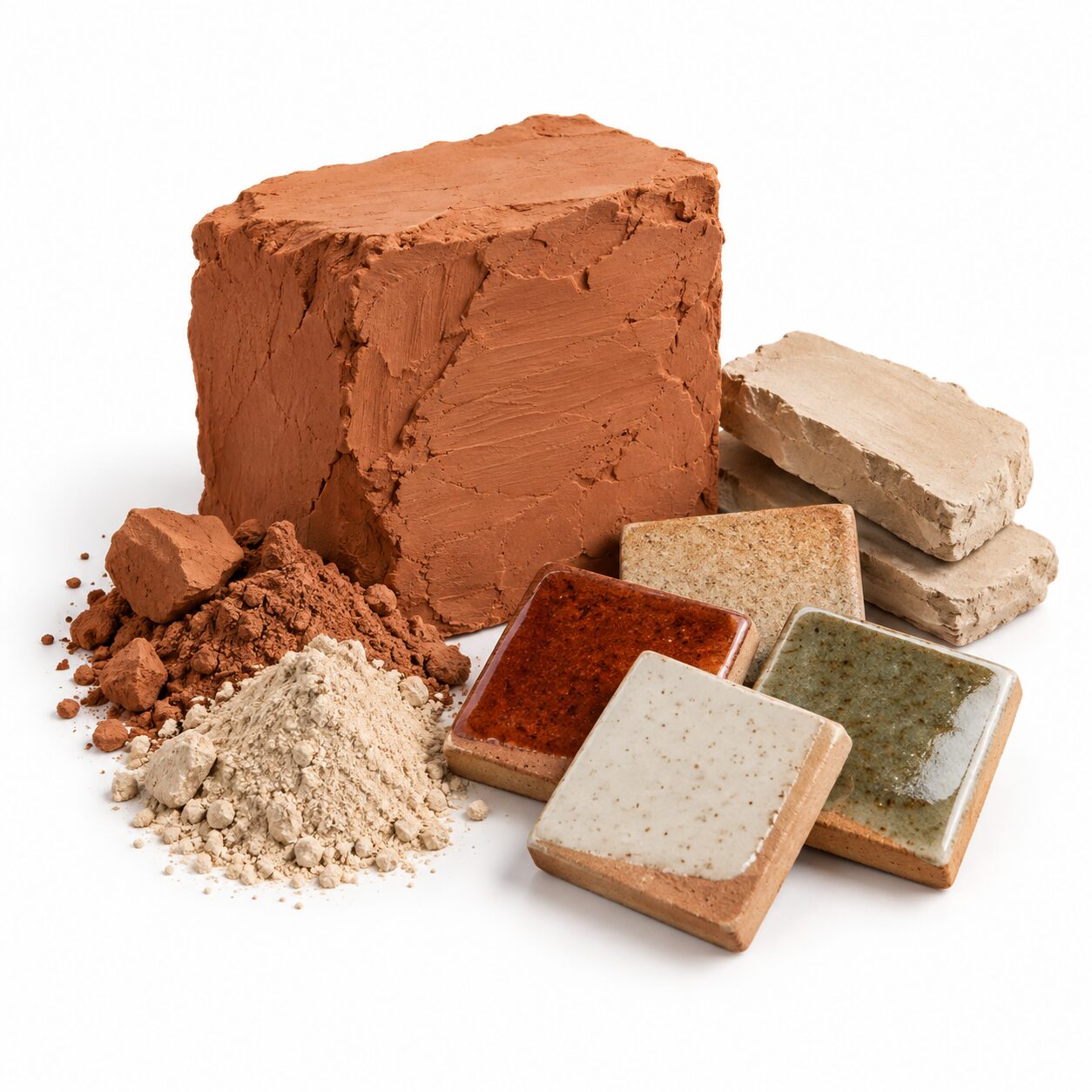
- Matte ceramic and pottery for a cool, hand-shaped touch
- Linen for relaxed, slightly crumpled elegance
- Raw or oiled wood for warmth
- Rope and braided cotton for structure
The single most loved texture in a Japandi living room is a chunky knit. The Chunky Knitted Nordic Throw folded over the arm of a sofa adds instant comfort, and on a winter evening it does real work. For a lighter alternative, the Waffle Knit Cotton Throw has a fine texture that suits warmer months.
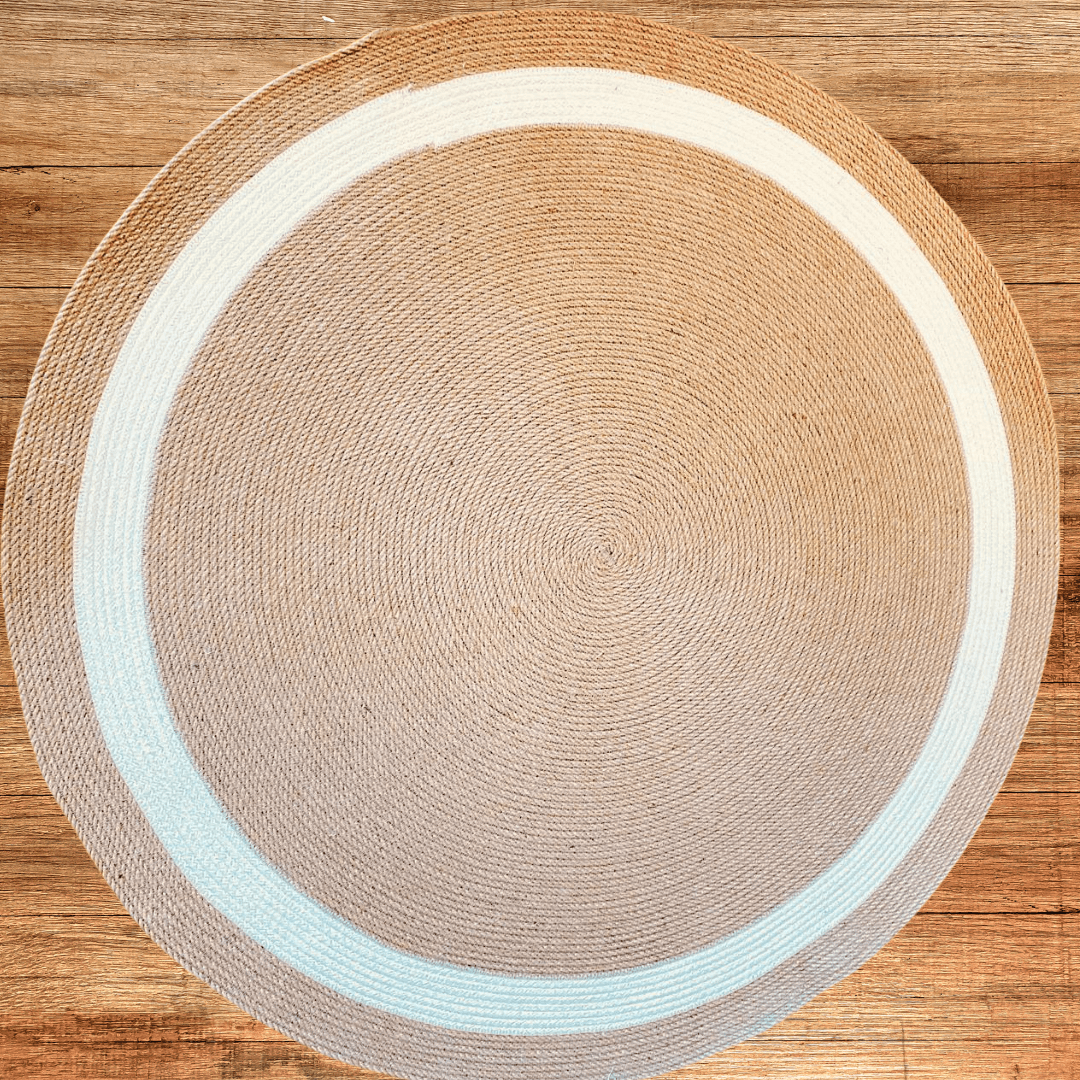
Underfoot, a natural rug ties the room together. The Jute and Off-White Circle Rug brings a round, soft shape that breaks up the straight lines of furniture.
Japandi Room by Room
The Living Room
Keep the furniture low and the layout open. A sofa, one armchair, a low table and a rug are often enough. Instead of a large wall unit packed with ornaments, use a simple console or a few floating shelves with plenty of space between objects.
For extra seating that does not crowd the room, a Halfa Pouf with Wooden Legs works beautifully. It is light enough to move when the family gathers and handmade from a traditional Egyptian material.
The Dining Area
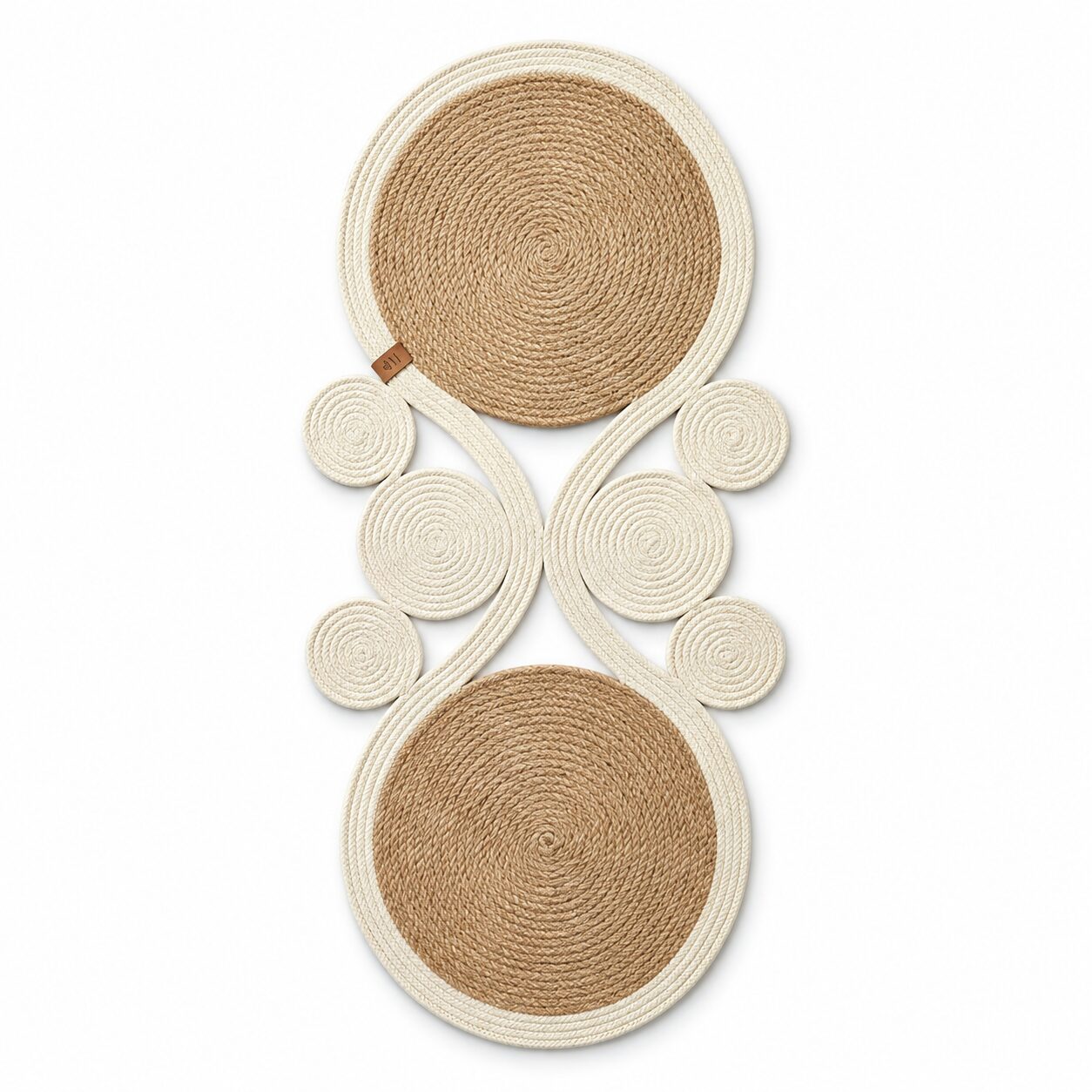
Japandi dining is about a calm table. Skip the busy tablecloth and use a runner or individual placemats in natural fibres. The Off-White Rope Table Runner has a soft wave pattern that adds interest without noise. For everyday meals, simple Natural Jute Placemats do the job.
During Ramadan, when the table hosts long iftars, resist the urge to pile on decorations. One low arrangement, a few candles and good handmade serving pieces will look more generous than a crowded centre.
The Bedroom
The bedroom is where Japandi shines brightest. Choose white or oatmeal bedding, one textured throw at the foot of the bed and a bedside table with only a lamp, a book and perhaps a small dish for jewellery. Hide everything else in closed storage.
Small Apartments
Many Egyptian families live in apartments where the living room, dining area and entrance share one space. Japandi is ideal here, because it relies on restraint rather than square metres. Choose one rug to define the seating zone and a runner or placemats to define the dining zone, so each area reads clearly without walls. Keep the colour palette identical across both zones so the whole space feels like one calm room. Pick furniture with visible legs, which lets light pass underneath and makes the floor look larger. Finally, give every family member a basket or drawer for their own things; shared surfaces stay clear only when personal clutter has a home.
Entrances and Corners
A narrow entrance needs only a small bench or shelf, a woven basket for keys and shoes, and one object to greet you. In an awkward corner, a tall vase with dried or artificial branches adds height and softness.
Styling Objects the Japandi Way
The way you arrange objects matters as much as which objects you choose.
- Group in odd numbers. Three objects of different heights look natural; two can feel stiff.
- Vary height and shape. Pair a tall vase with a low bowl and a flat tray.
- Leave space around each group. If a shelf feels full, remove one thing.
- Use one hero piece per surface. Let it be seen.
Pottery is ideal here. The Artisan Handmade Pottery Vase has the earthy, hand-shaped quality the style loves. In a corner, the Pearl White Floor Vase adds height and calm; fill it with a few stems of Artificial Eucalyptus for soft, muted green that needs no watering in the heat.
Light matters too. Japandi rooms glow rather than blaze. Choose warm-toned bulbs, use lamps instead of a single bright ceiling light in the evening, and add candles in wooden holders such as the Carved Acacia Bowl Candle.
Common Mistakes to Avoid
- Confusing minimal with empty. A room with no texture, no plants and no soft furnishings feels like a waiting room. Japandi is warm.
- Choosing cold greys everywhere. Lean towards warm neutrals so the room does not look grey and tired.
- Too many small objects. Twenty little ornaments create clutter. Three good pieces create calm.
- High-gloss finishes. Shiny lacquer and chrome fight the natural, matte character of the style.
- Ignoring storage. Calm surfaces depend on hidden storage. Baskets with lids, closed cabinets and drawers are essential.
- Buying a whole room at once. Japandi rooms are collected slowly, piece by piece.
Quick Checklist
- Warm white or cream walls, with sand and grey mid tones
- At least one wooden piece with visible grain in every room
- Four or more natural textures layered together
- Low, simple furniture with space around it
- One hero object per surface
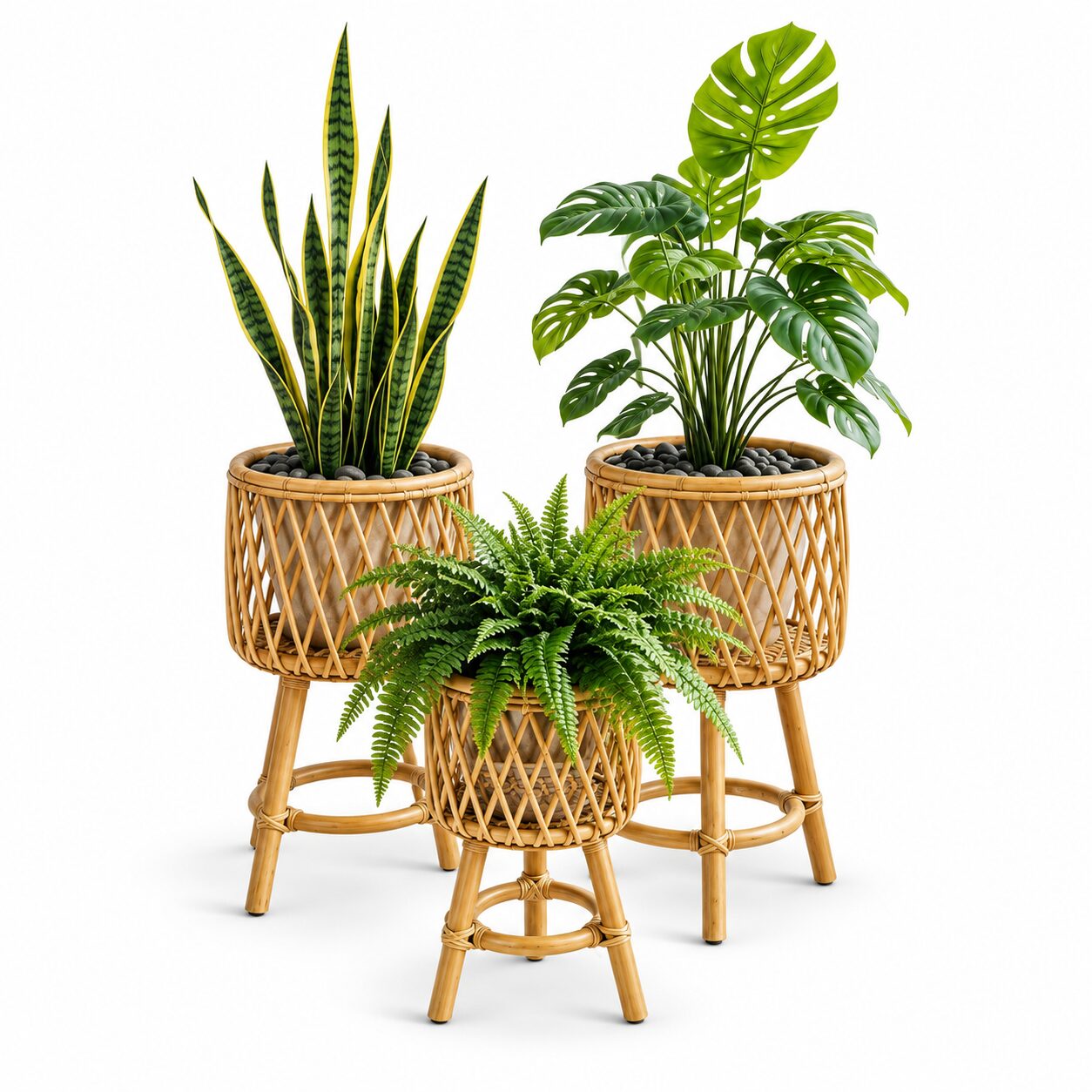
- Plants or branches for a touch of green
- Warm, low lighting in the evening
- Closed storage for everyday clutter
Living Calmly
Japandi is not about owning less for its own sake. It is about choosing pieces you love, made from honest materials, and giving them room to be seen. In a busy Egyptian household, that calm is a gift you give yourself every time you walk through the door.
Start small: clear one surface, add one wooden piece and one handmade texture, and see how it feels. Then build from there. You will find natural wood, pottery, jute and knitted textiles to begin with at coccarohome.com.
Shop the Look
- Natural Wood Slice Tray — EGP 1,037 — Raw tree rings make it the ideal Japandi coffee table centrepiece.
- Chunky Knitted Nordic Throw — EGP 1,944 — The Scandinavian half of the style in one cosy layer.
- Simple Grey Cushion — EGP 1,100 — A quiet mid tone for a calm, neutral sofa.
- Artisan Handmade Pottery Vase — EGP 1,296 — Hand-shaped character that celebrates imperfect craft.
- Pearl White Floor Vase — EGP 1,620 — Adds height and serenity to an empty corner.
- Halfa Pouf with Wooden Legs — EGP 1,944 — Light, low seating woven from Egyptian halfa grass.
- Off-White Rope Table Runner — EGP 1,296 — A soft, textured runner for a calm dining table.
- Raw Edge Wooden Serving Board — EGP 1,000 — Useful and sculptural, the essence of Japandi.
- Jute and Off-White Circle Rug — EGP 2,268 — Grounds the room with natural fibre and a soft round shape.
- Carved Acacia Bowl Candle — EGP 864 — Warm evening glow in a hand-carved wooden bowl.